Artwork
Welcoming Descent of Amida Buddha (Raigō)
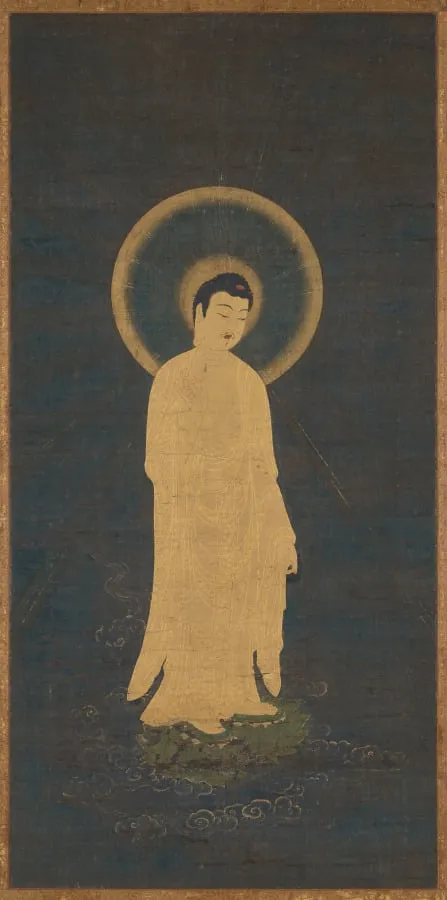
Welcoming Descent of Amida Buddha (Raigō) is an unspecified painting by the Joseon dynasty painting artist Unknown. It dates from 1302 and is held in the collection of the Cleveland Museum of Art.
- Accession no.
- 1993.42
- Credit line
- Mr. and Mrs. William H. Marlatt Fund
About this work
Overview
The work titled Welcoming Descent of Amida Buddha (Raigō) is a painted image depicting a solitary figure in a white robe standing upon a modest expanse of ground. The figure’s expression is tranquil, and a luminous golden circle behind the head suggests a halo. The surrounding space is rendered in deep blue, punctuated by faint, cloud‑like forms, establishing a calm visual atmosphere.
Subject & Meaning
The central figure represents Amida Buddha, whose descent to receive the souls of the departed is a core theme in Pure Land Buddhism. The serene posture, hands at the sides, and the radiant halo convey the compassionate arrival of the Buddha, offering salvation and peace to believers.
Technique & Style
Executed in a limited palette of white, gold, and indigo, the painting relies on flat color fields and subtle gradations to evoke depth. The brushwork is smooth and controlled, typical of the Kamakura period’s emphasis on refined, realistic rendering within a spiritual context.
History & Provenance
The piece originates from the Kamakura era (1185–1333), a time when Buddhist iconography flourished under the patronage of the warrior class. While specific ownership records are scarce, the work aligns with other surviving Raigō images produced for temple altars during that period.
Context
During the Kamakura period, the concept of Amida’s descending to the Western Paradise resonated with a populace seeking reassurance amid political upheaval. Paintings like this one were intended for devotional use, helping viewers visualize the Buddha’s promised arrival.
Legacy
Images of Amida’s descent continued to influence Japanese Buddhist art well into the Edo period, shaping visual conventions for depictions of divine intervention. This painting remains a representative example of early Kamakura religious art, illustrating the era’s blend of spiritual narrative and refined aesthetic.
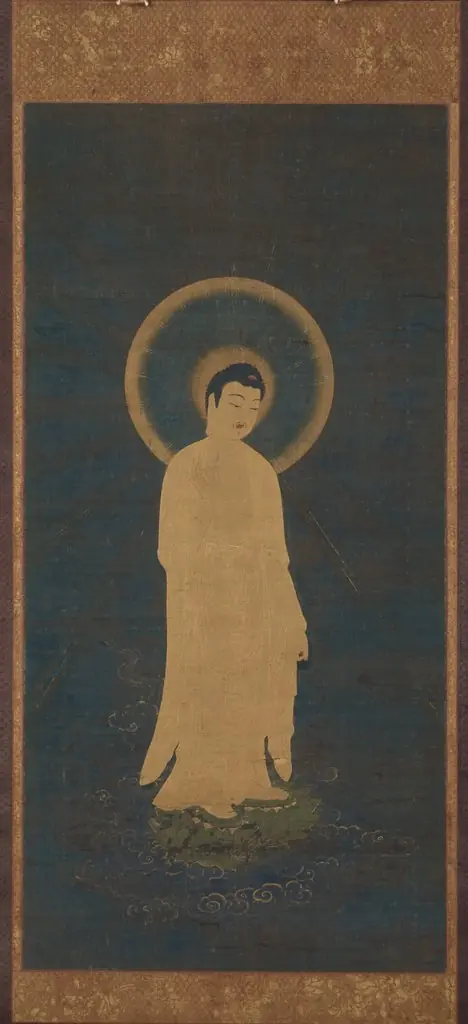
Artist & collection









- Welcoming Descent of Amida Buddha (Raigō)
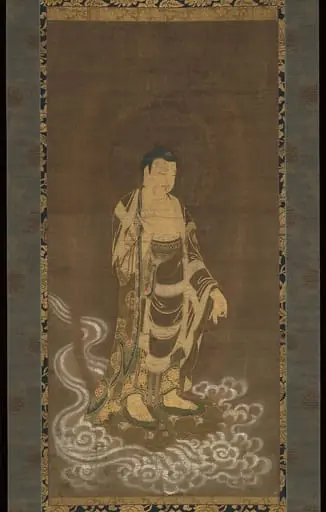 阿弥陀如来像|Welcoming Descent of Amida Buddha
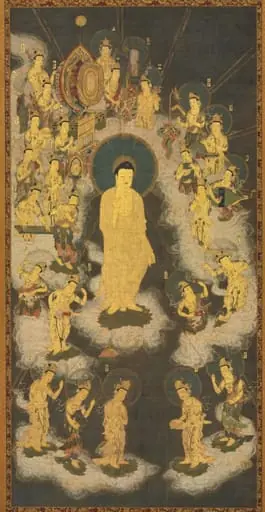 Welcoming Descent of Amida (Amida Raigō)
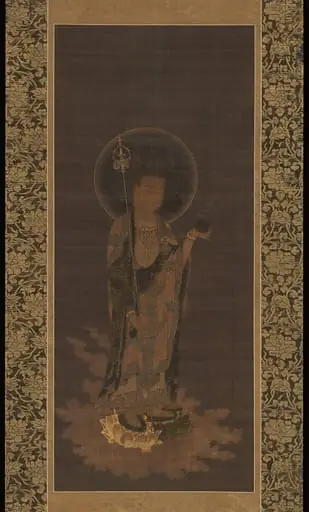 地蔵菩薩来迎図|Welcoming Descent of the Bodhisattva Jizō
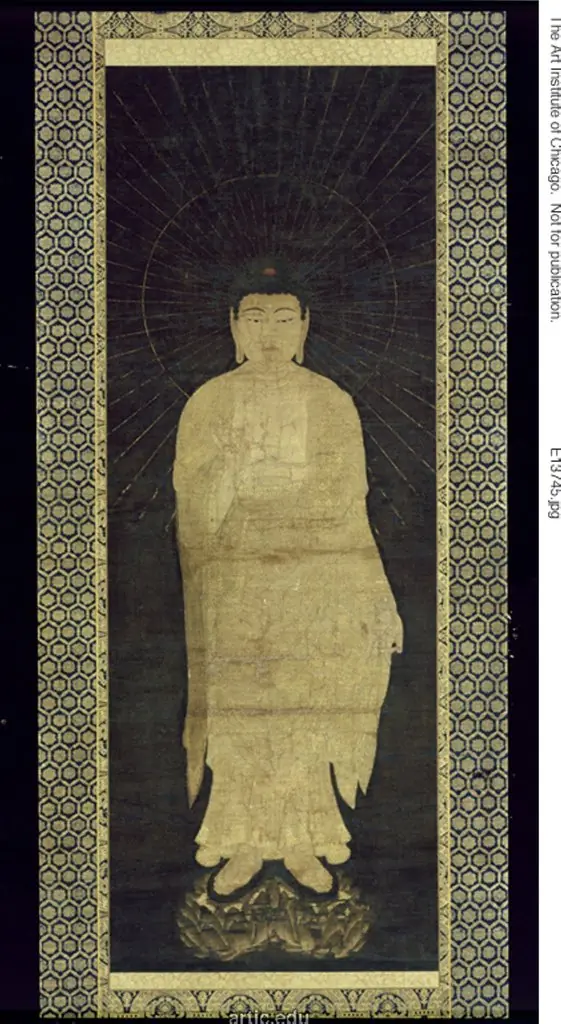 The Buddha Amida, from the triptych Approach of the Amida Trinity
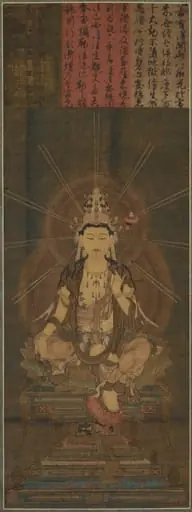 Miroku (Maitreya)
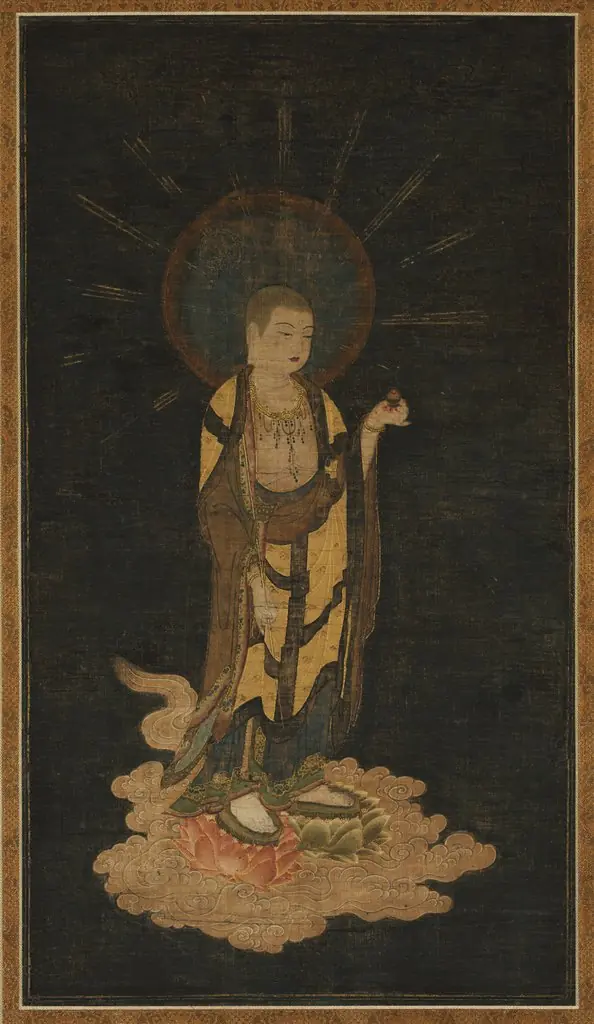 Welcoming Descent of Jizō
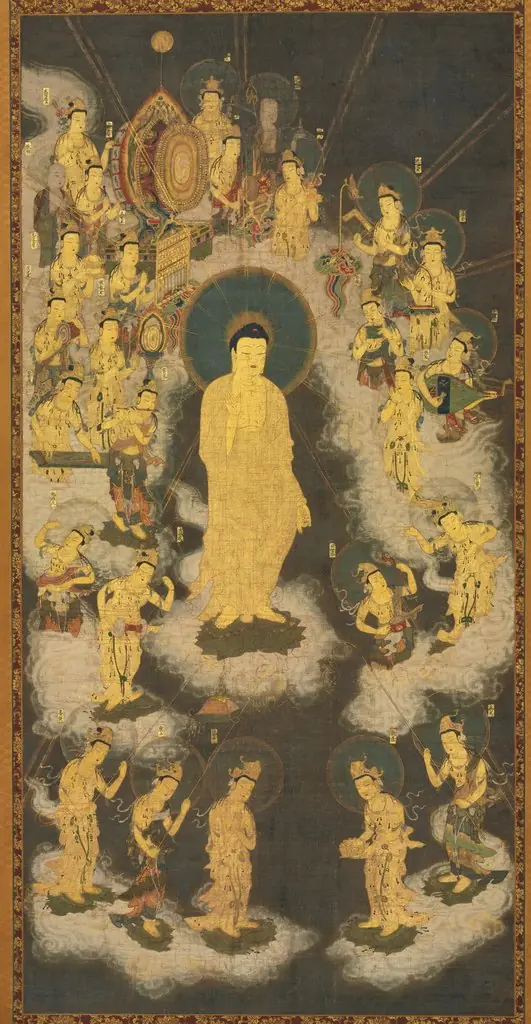 Welcoming Descent of Amida (Amida Raigō)
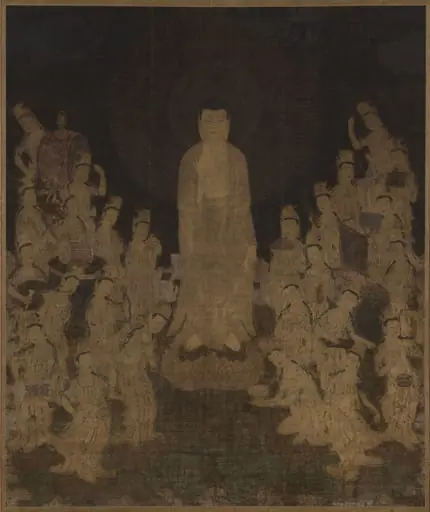 Welcoming Descent of Amida with Twenty-Five Bodhisattvas
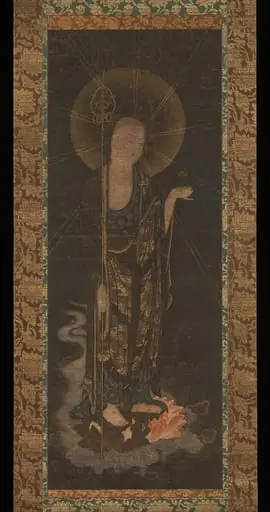 地蔵来迎図|Welcoming Descent of Jizō
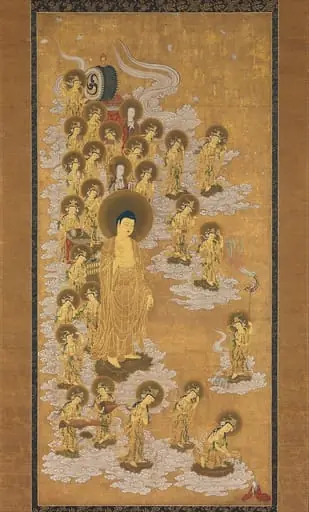 阿弥陀二十五菩薩来迎図|Welcoming Descent of Amida Buddha and Twenty-five Bodhisattvas