Artwork
Christ on the cross
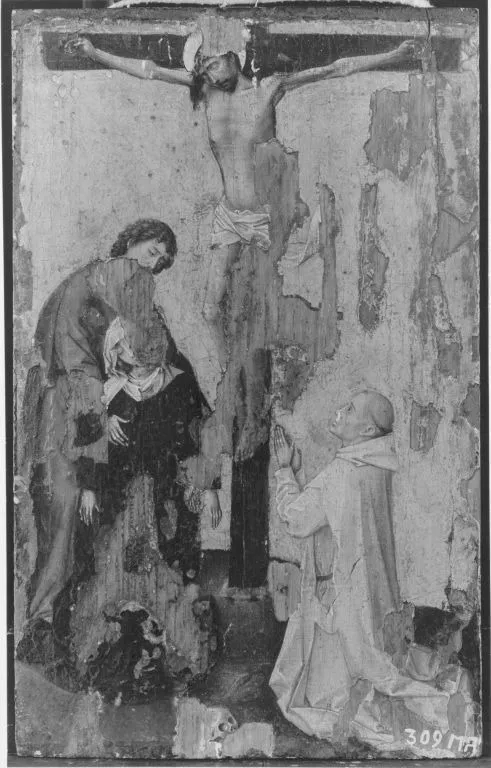
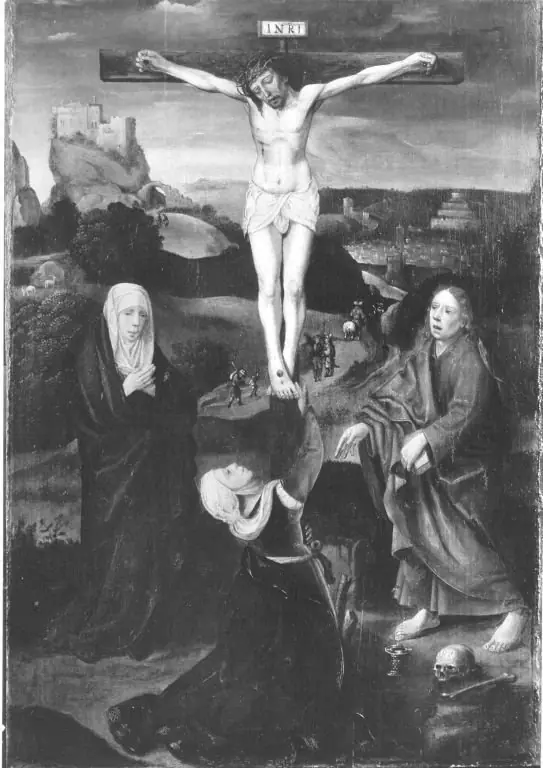
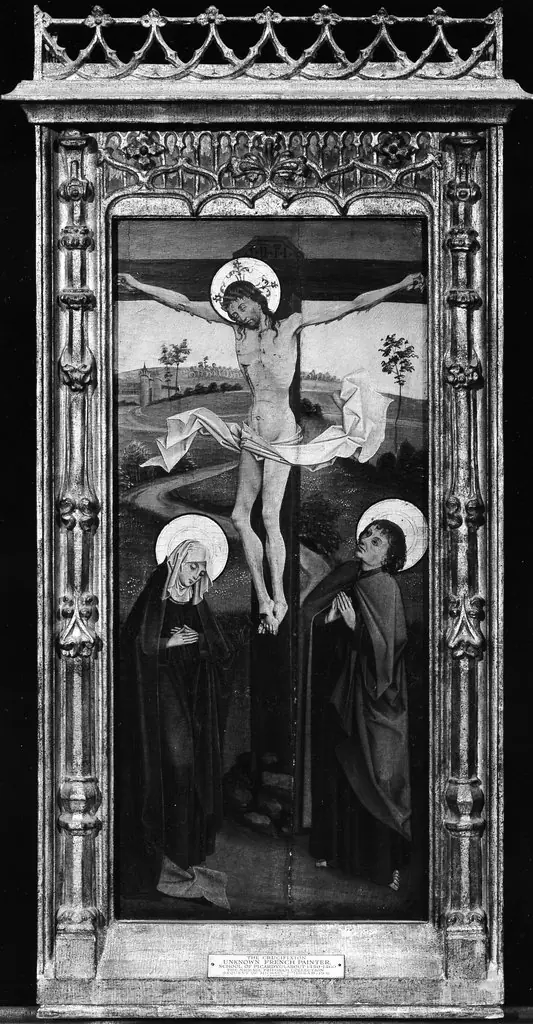
Christ on the cross is an oil painting by the Northern Renaissance artist Unknown. It dates from 1493 and is held in the collection of the Alte Pinakothek. The work presents a crucifixion tableau rendered in oil on canvas.
About this work
Subject & Meaning
Its meaning draws from theological narratives of atonement, reflecting the artist's adherence to devotional practices within the religious genre.
The subject depicted is the crucifixion of Jesus Christ, a central motif in Christian religious art symbolizing sacrifice and redemption. Iconographically, the work aligns with early Netherlandish traditions, emphasizing detailed realism and devotional focus on Christ's suffering. Its meaning draws from theological narratives of atonement, reflecting the artist's adherence to devotional practices within the religious genre.
The painting's composition and symbolism reinforce themes of faith and spiritual contemplation, consistent with its classification as religious art from the Early Netherlandish movement.
The work is attributed to a follower of Rogier van der Weyden and is housed in the Bavarian State Painting Collections at the Alte Pinakothek, where it remains part of their religious art holdings.
Measured at 20.6 cm in height and 13 cm in width, the small-scale panel underscores intimate devotional use, typical of devotional works from this period.
Technique & Style
The work is an Early Netherlandish religious painting executed in oil on panel. Measuring 20.6 cm by 13 cm, it depicts the crucifixion of Jesus Christ and was created in 1485. The piece belongs to the collection of the Bavarian State Painting Collections at the Alte Pinakothek.
History & Provenance
The work titled Christ on the cross was painted in 1485 using oil on panel, depicting the crucifixion of Jesus. It is classified as Early Netherlandish religious art and was created as a devotional painting for the Bavarian State Painting Collections, Alte Pinakothek in Munich, where it remains on display. The piece measures 20.6 cm in height by 13 cm in width and was executed by an artist identified as a follower of Rogier van der Weyden.
The painting entered the collection of the Alte Pinakothek in Munich, which acquired it as part of its holdings of early Netherlandish works. Its provenance traces directly to the museum's acquisition, with no further documented ownership changes recorded.
Overview
The work presents a crucifixion tableau rendered in oil on canvas. Central to the composition is a nude male figure affixed to a cross, arms outstretched. To his left, a woman in a robe cradles a child, while a bald man kneels on the right, hands joined in prayer. The background is muted and textured, allowing the cross to dominate the visual field.
Context
Executed in oil, the painting aligns with a tradition of European religious art that sought to convey spiritual intensity through stark composition and limited color range. Its somber atmosphere and simplified forms reflect a devotional purpose, likely intended for private contemplation rather than public display.
Artist & collection









- Christ on the cross
 Christ on the cross
 Christ on the Cross
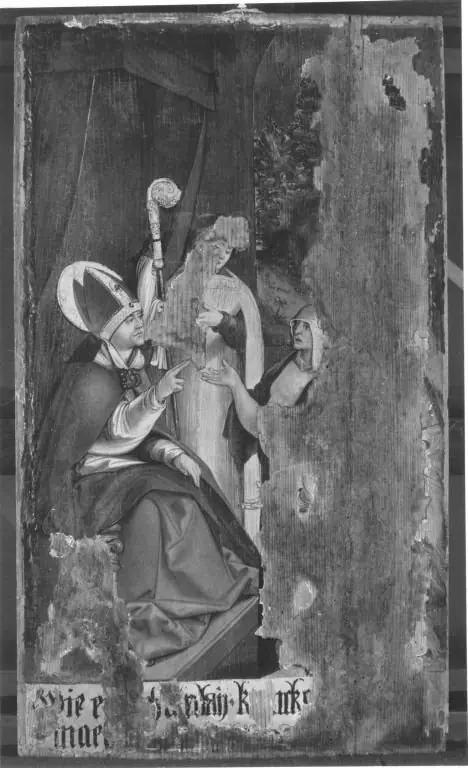 Der hl. Ulrich heilt Kranke
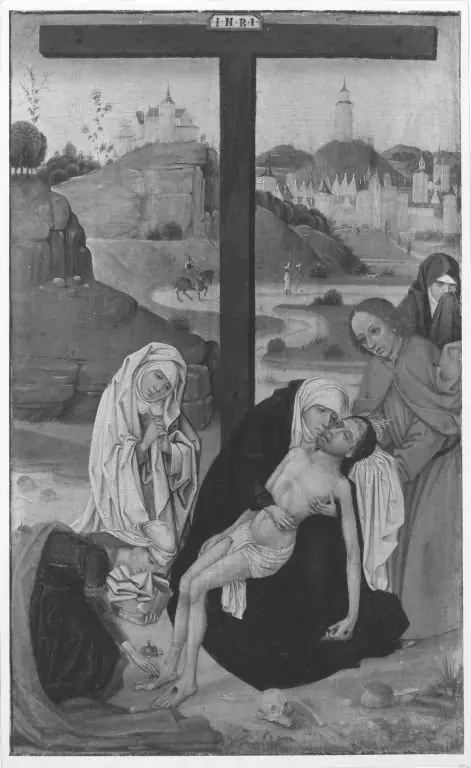 Lamentation of Christ
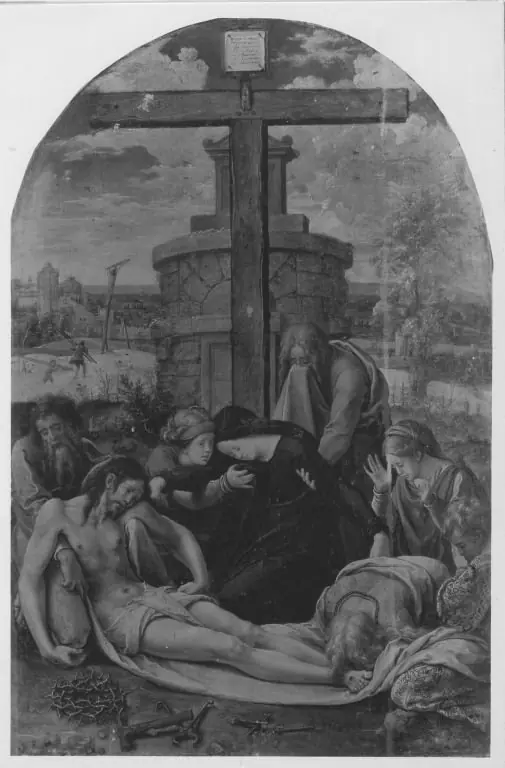 Lamentation of Christ (after Raphael)
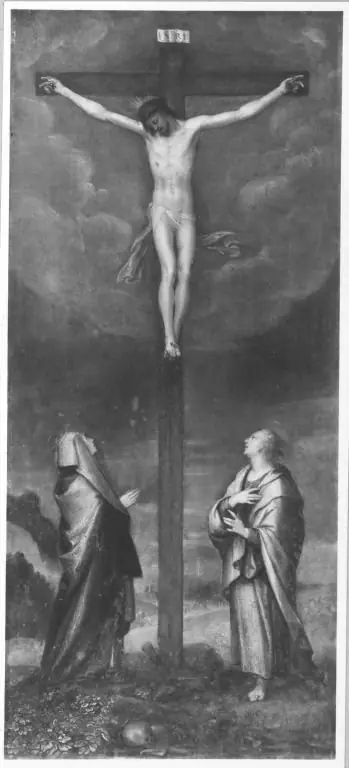 Christus am Kreuz
 The carrying of the cross
 Die Vermählung der hl. Katharina
 The crucifixion
 The Crucifixion, (reverse) Saint Francis of Assisi; The Resurrection, (reverse) An Abbot Saint, Possibly Saint Benedict
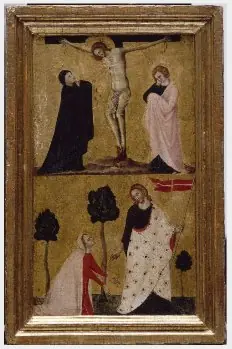 The Crucifixion, Noli Me Tangere