Artwork
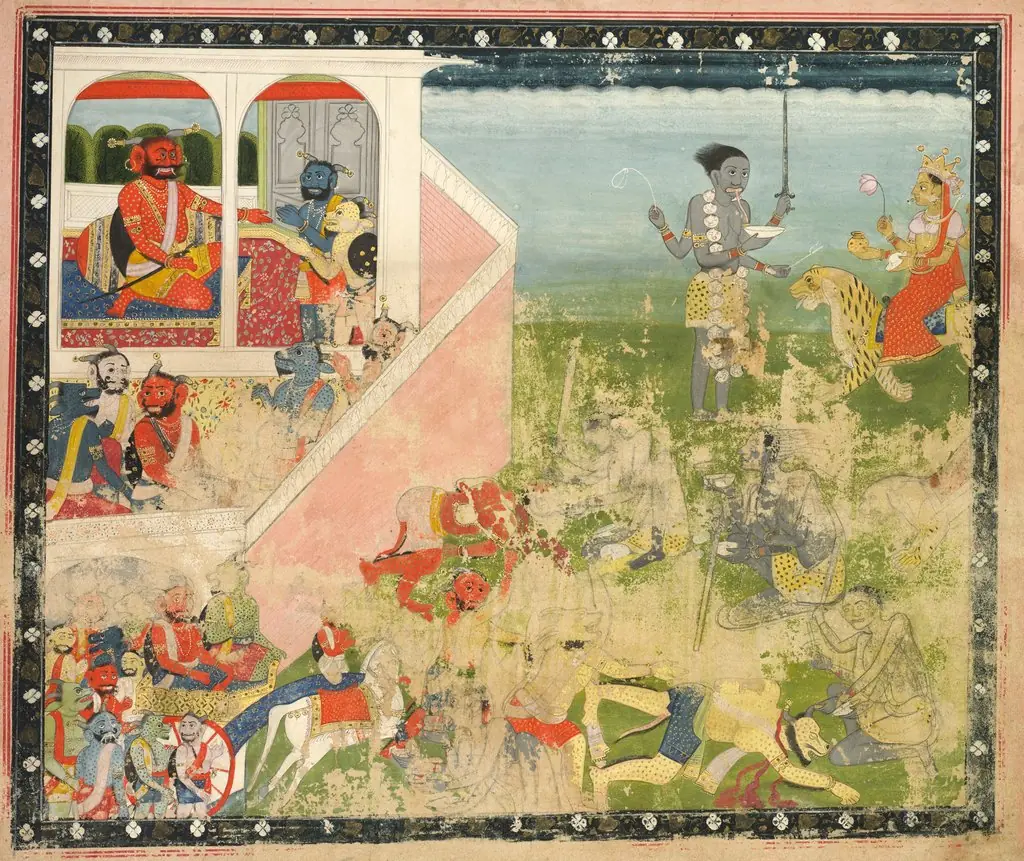
Cremation of the demon Putana, from a Krishna-Lila
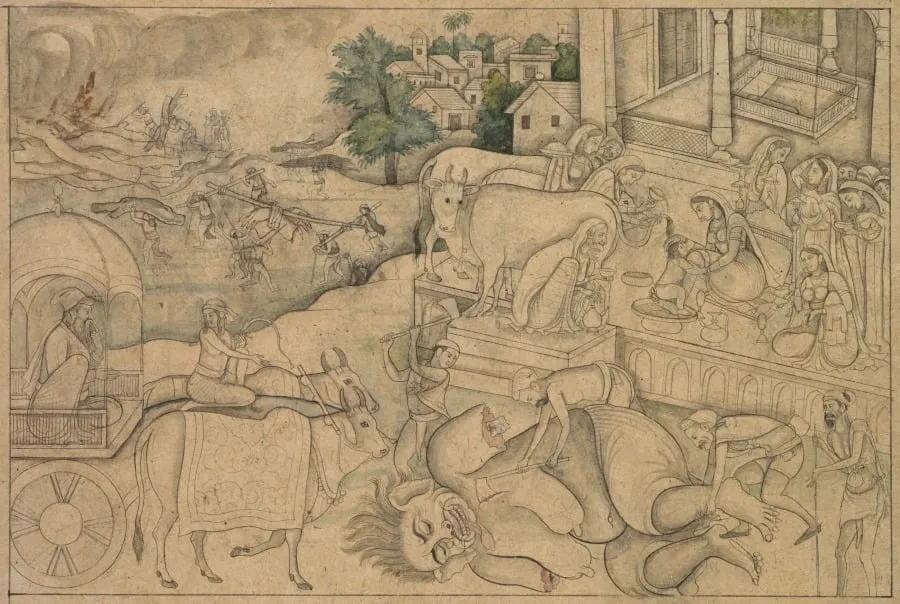
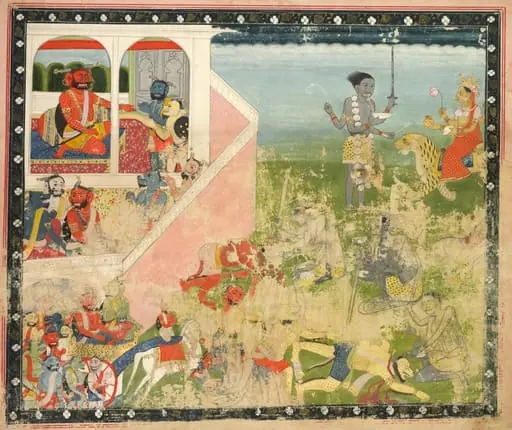
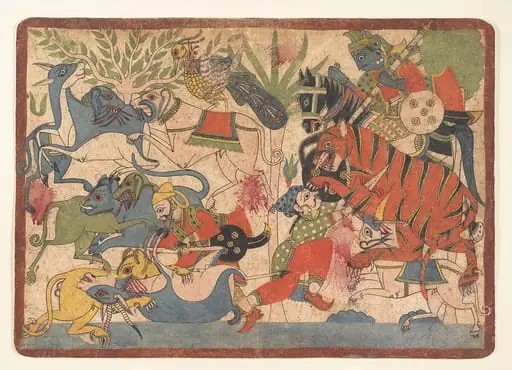
Cremation of the demon Putana, from a Krishna-Lila is an unspecified painting by the Mughal Painting artist Unknown. It dates from 1790 and is held in the collection of the Cleveland Museum of Art. The painting captures a dramatic episode from the Krishna‑Lila, depicting the aftermath of the infant deity’s defeat of the demoness Putana.
- Accession no.
- 1984.4
- Credit line
- Delia E. Holden Fund
About this work
Overview
The painting captures a dramatic episode from the Krishna‑Lila, depicting the aftermath of the infant deity’s defeat of the demoness Putana.
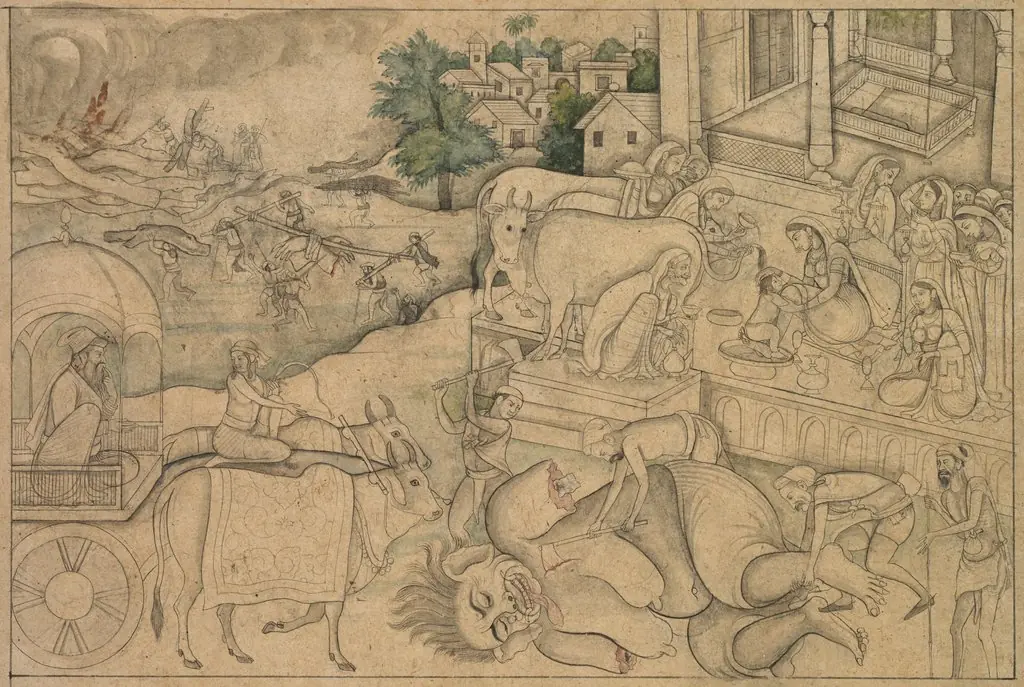
The painting captures a dramatic episode from the Krishna‑Lila, depicting the aftermath of the infant deity’s defeat of the demoness Putana. In the bustling foreground, villagers are engaged in dismembering the enormous corpse, while a bullock‑drawn cart arrives with the village elder Nanda, his hand raised in astonishment. To the right, baby Krishna is being bathed as onlookers watch the scene unfold.
Subject & Meaning
According to Hindu tradition, Putana disguised herself as a nurturing maid to poison the child Krishna, but the divine infant turned her lethal milk against her, causing her death and revealing her true form. The painting emphasizes the triumph of divine innocence over malevolent forces, illustrating the protective role of Krishna and the communal response of the Vraj cowherders to the demon’s demise.
Technique & Style
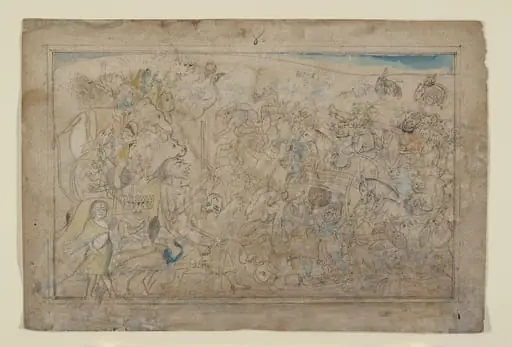
Executed in a bold, graphic manner, the work employs vivid coloration and clear outlines reminiscent of early Pahari mural traditions. The artist’s draftsmanship is evident in the careful rendering of individual figures and their gestures, despite the piece remaining unfinished. Shading is applied sparingly, lending a flat, narrative quality that heightens the scene’s theatrical intensity.
History & Provenance
The canvas originates from the northern Indian Pahari schools, which flourished under the patronage of regional kingdoms in the 18th and early 19th centuries. Though the exact date and creator are not documented, the work reflects the period’s devotional art practices, where episodes from Krishna’s life were commonly visualized for both worship and instruction.
Artist & collection