Artwork
Elokeshi
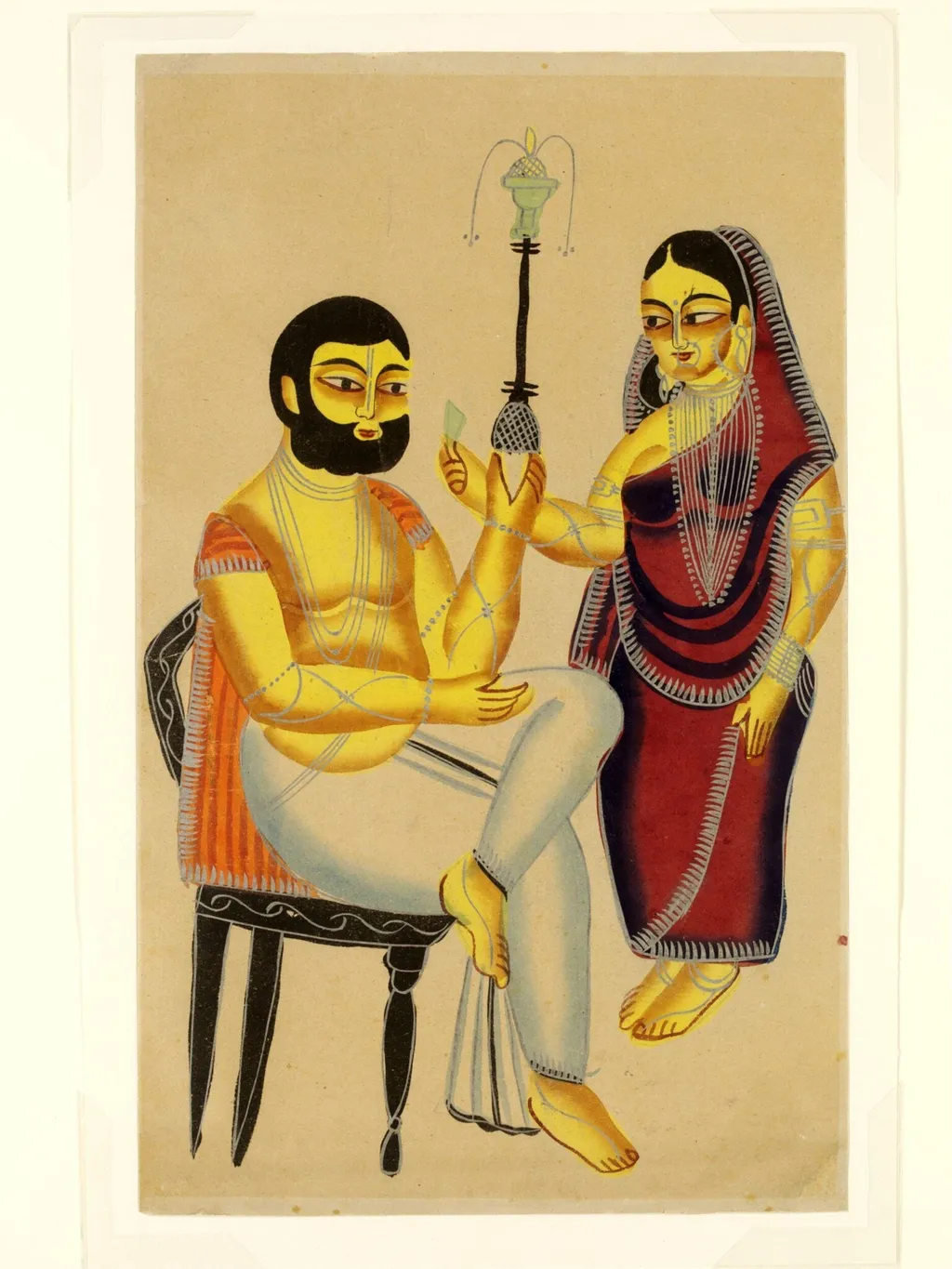
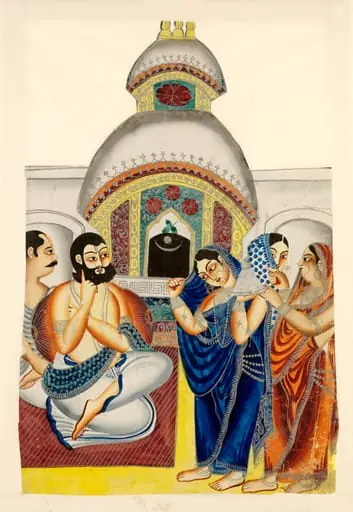
Elokeshi is a paint painting by the Impressionist artist Unknown. It dates from 1890 and is held in the collection of the Victoria and Albert Museum.
About this work
Overview
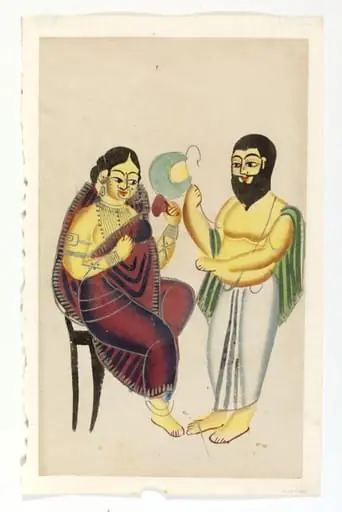
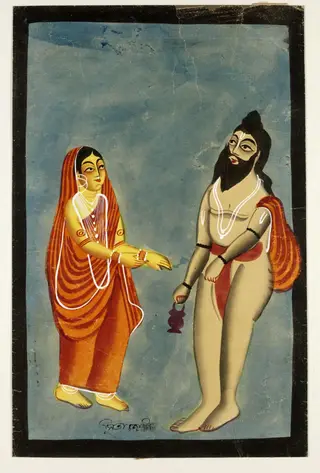
A painting titled 'Elokeshi' depicts a scene from a scandalous affair in 19th-century Calcutta, diverging from the traditional themes of its style.
Subject & Meaning
The painting illustrates the Tarakeshwar Affair of 1873, involving a forbidden relationship between a Brahmin priest and Elokeshi, the wife of Nabin Chandra Banerjee. The scene shows Elokeshi offering betel leaf to the priest, who is depicted as a 19th-century Bengali Babu.
Technique & Style
Executed in the Kalighat style, characterized by bold colors and quick brushstrokes, the painting brings the scene to life. The style typically featured mythological or traditional themes, but here is used to depict a contemporary scandal.
History & Provenance
Kalighat paintings originated around 1830 near the Kalighat Temple in Calcutta, created by scroll painters from rural Bengal. This painting is an example of how the style was adapted to depict real events.
Context
The artwork reflects the cultural and social dynamics of 19th-century Calcutta, where traditional practices intersected with European influences, as seen in the depiction of the priest as a Bengali Babu.
Artist & collection