Artwork
Ravana and Sita
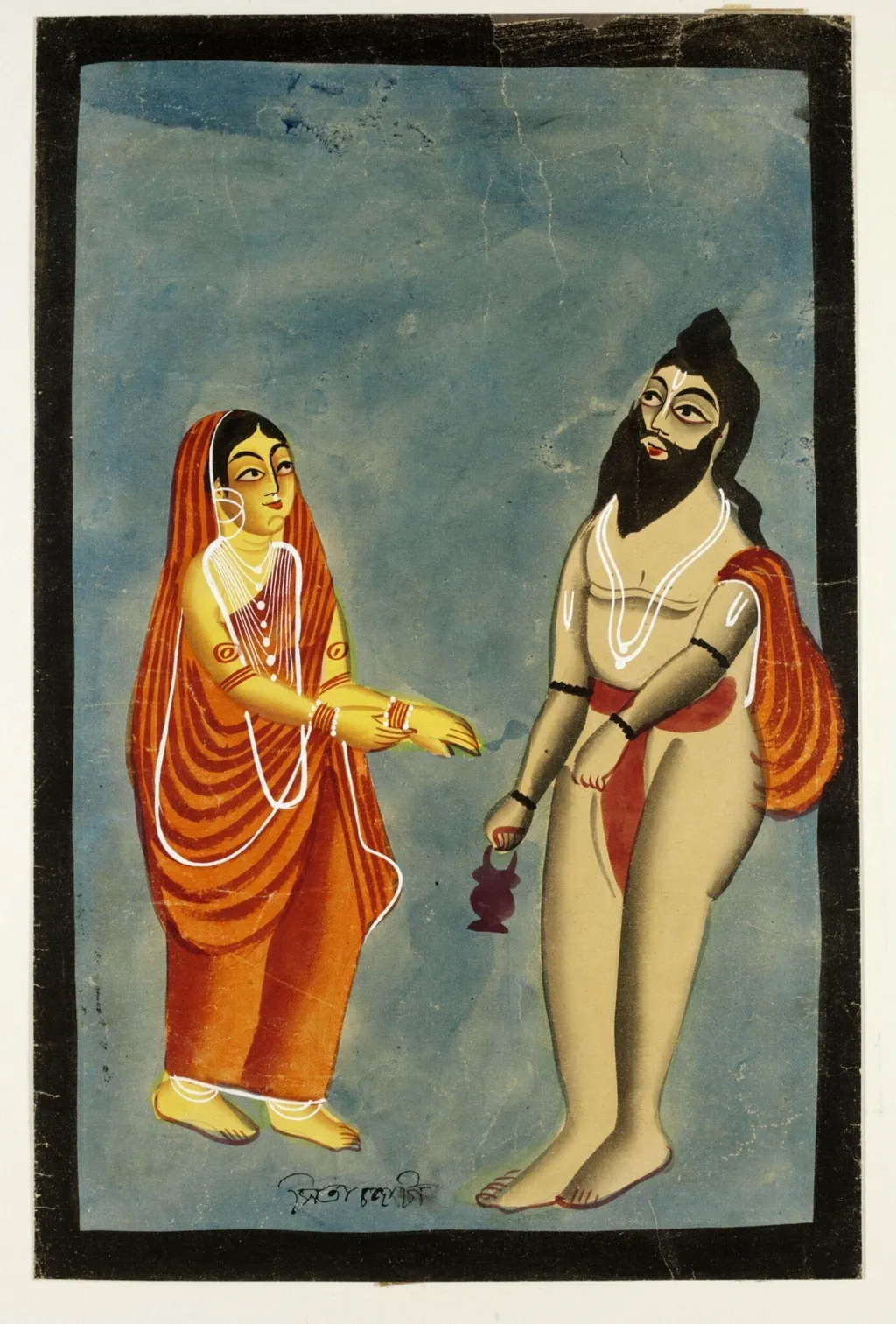
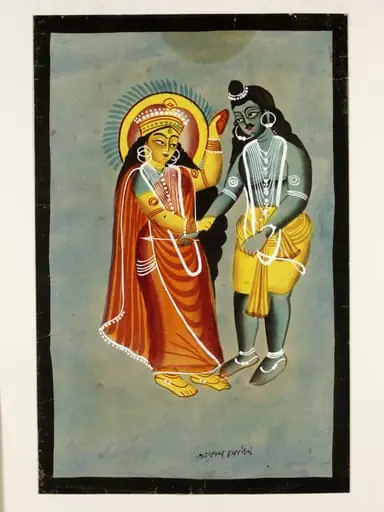
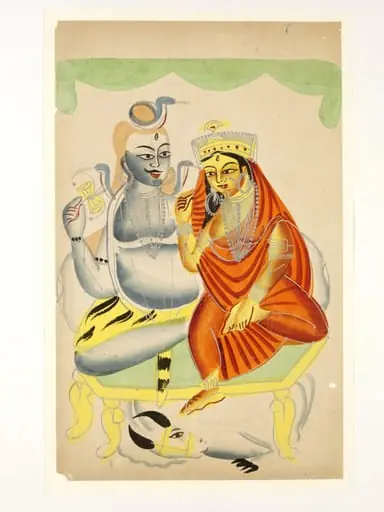
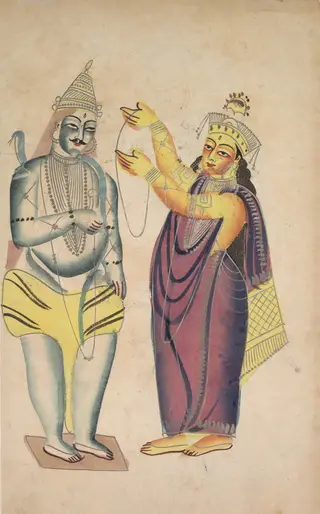
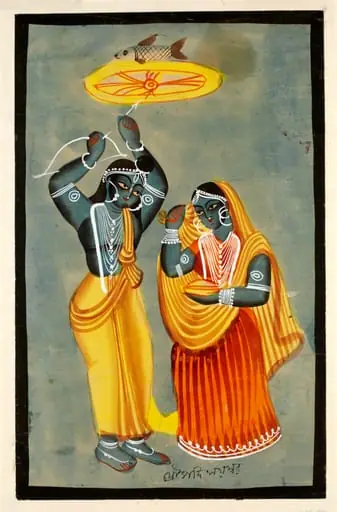
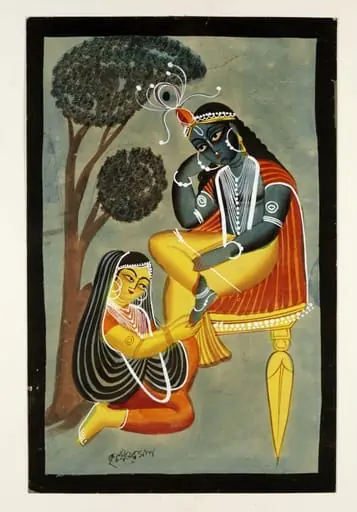
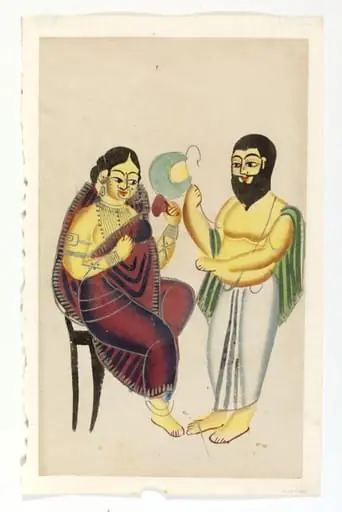
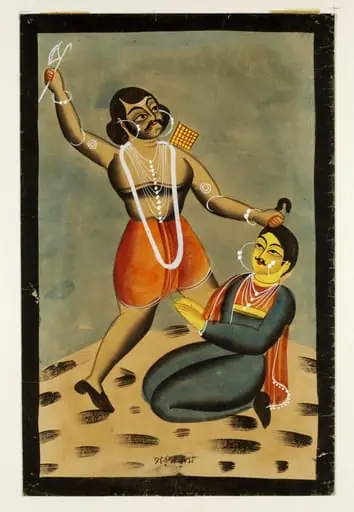
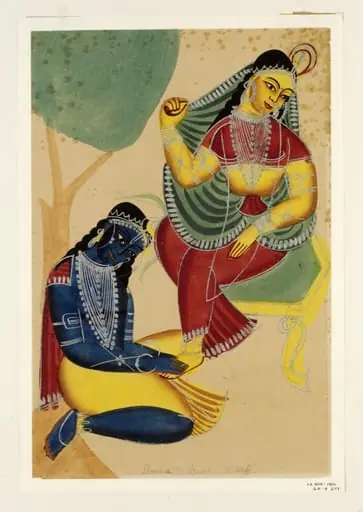
Ravana and Sita is a paint painting by the Impressionist artist Unknown. It dates from 1885 and is held in the collection of the Victoria and Albert Museum. This 1885 opaque watercolor on paper illustrates a moment from the Ramayana, showing Ravana disguised as a beggar approaching Sita.
About this work
Overview
This 1885 opaque watercolor on paper illustrates a moment from the Ramayana, showing Ravana disguised as a beggar approaching Sita.
This 1885 opaque watercolor on paper illustrates a moment from the Ramayana, showing Ravana disguised as a beggar approaching Sita. Executed in vibrant pigments with strong outlines, the work reflects regional Indian painting traditions of the late 19th century. It was acquired by the museum in 1894 from Miss M. Steele, who inherited it through her family’s connection to Sanskrit scholarship and possible travel in India.
Subject & Meaning
The scene captures Ravana’s deception, as he assumes the guise of a humble ascetic to gain Sita’s trust. Her gesture of offering alms underscores her virtue and adherence to dharma, while his disguise reveals his hidden intent. The moment is pivotal in the Ramayana, foreshadowing Sita’s abduction and the ensuing conflict. The narrative relies on subtle visual cues rather than dramatic action, emphasizing moral tension over spectacle.
Technique & Style
The painting employs opaque watercolor with bold, clean lines typical of Indian miniature traditions. Rich reds and earth tones dominate, enhancing the figures’ presence against a flat, unmodeled background. Subtle shading suggests volume without full chiaroscuro, creating a restrained sense of depth. The meticulous detail in jewelry and fabric folds reflects artisanal craftsmanship rooted in regional courtly styles.
History & Provenance
The painting passed through the Steele family, whose matriarch was a Sanskrit scholar at Cambridge. Miss M. Steele, who donated it in 1894, noted her grandmother may have collected Indian artworks during time spent in the subcontinent. The work’s journey from private Indian collections to a British academic household reflects 19th-century patterns of cultural exchange and the preservation of South Asian visual heritage by Western scholars.
Context
Created during British colonial rule, this painting emerged amid renewed interest in Hindu epics among Indian and European audiences. While many artists adapted traditional styles for commercial markets, this work retains the formal qualities of pre-colonial manuscript illustration. Its survival in a scholarly family suggests it was valued for its narrative and cultural authenticity rather than as a decorative object.
Legacy
The painting contributes to the documentation of regional Indian painting practices in the late 1800s, a period when many traditional forms were being displaced by Western techniques. Its preservation in a museum collection ensures continued access to pre-modern visual interpretations of the Ramayana. It stands as a quiet testament to the endurance of mythic storytelling through artisanal art.
Artist & collection