Artwork
Emperor Hsien-tsung of the Ming Dynasty
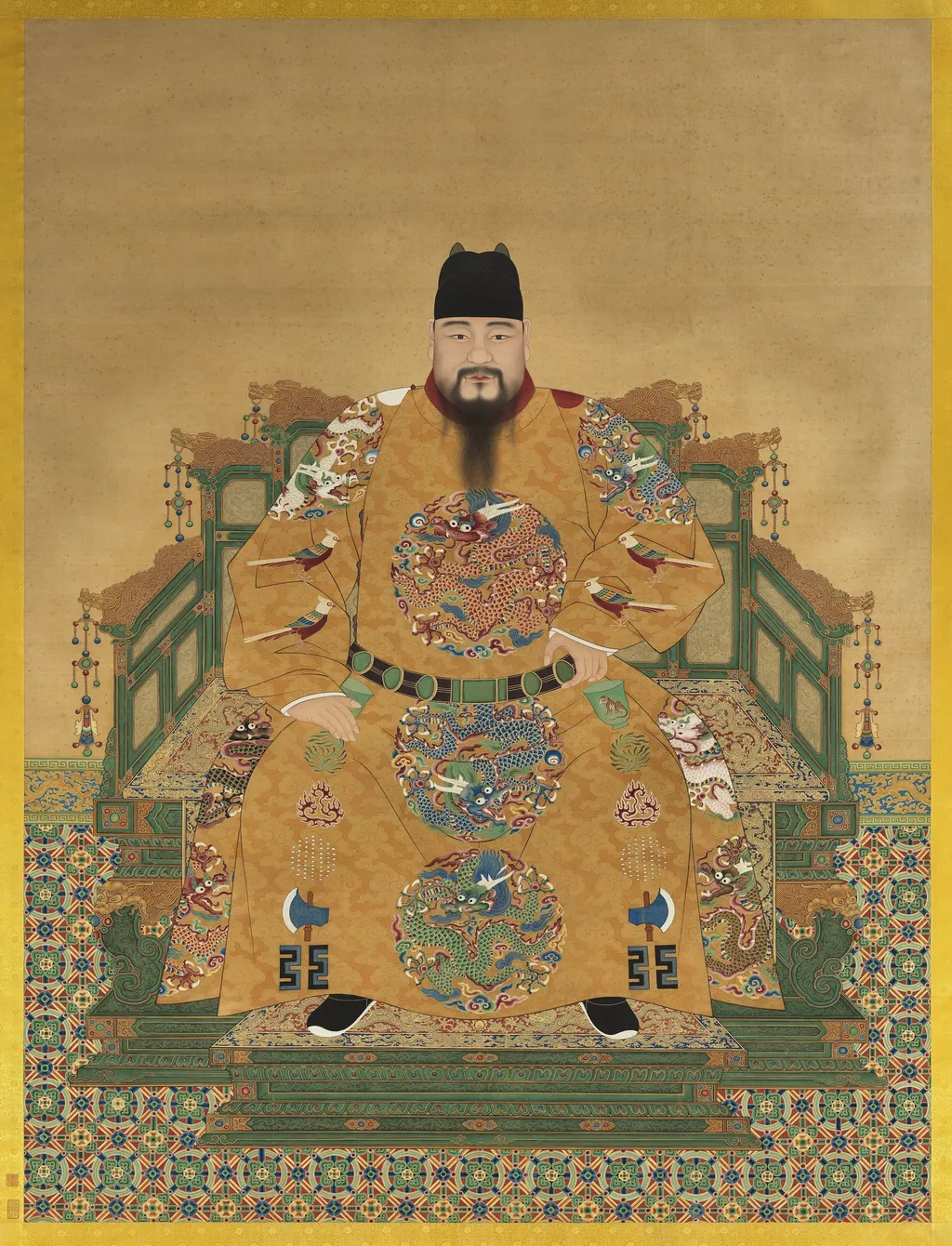
Emperor Hsien-tsung of the Ming Dynasty is an unspecified painting by Unknown. It is held in the collection of the National Palace Museum. The work portrays an imperial figure seated upon an elaborately carved throne.
About this work
Overview
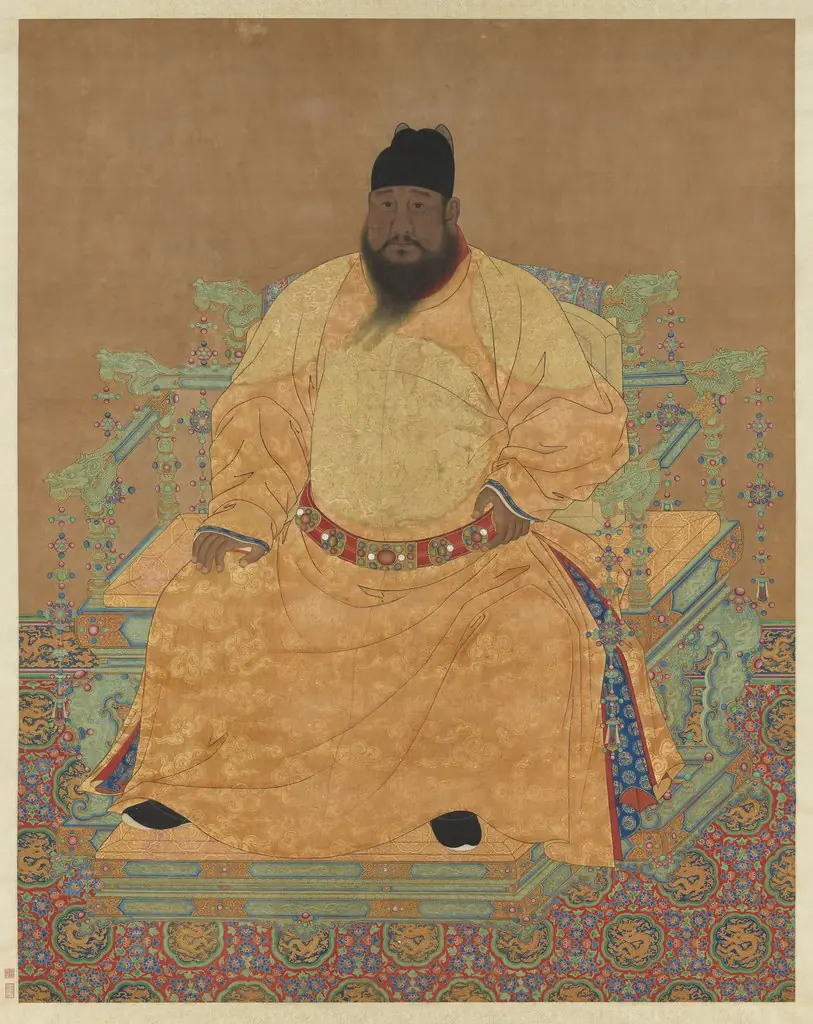
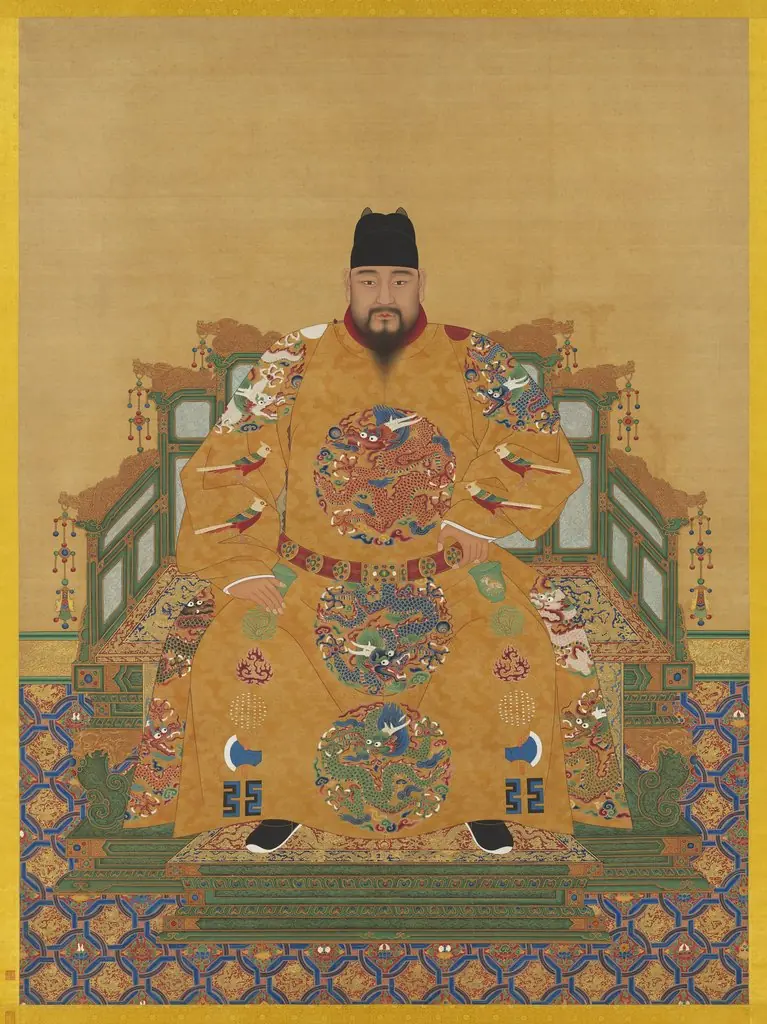
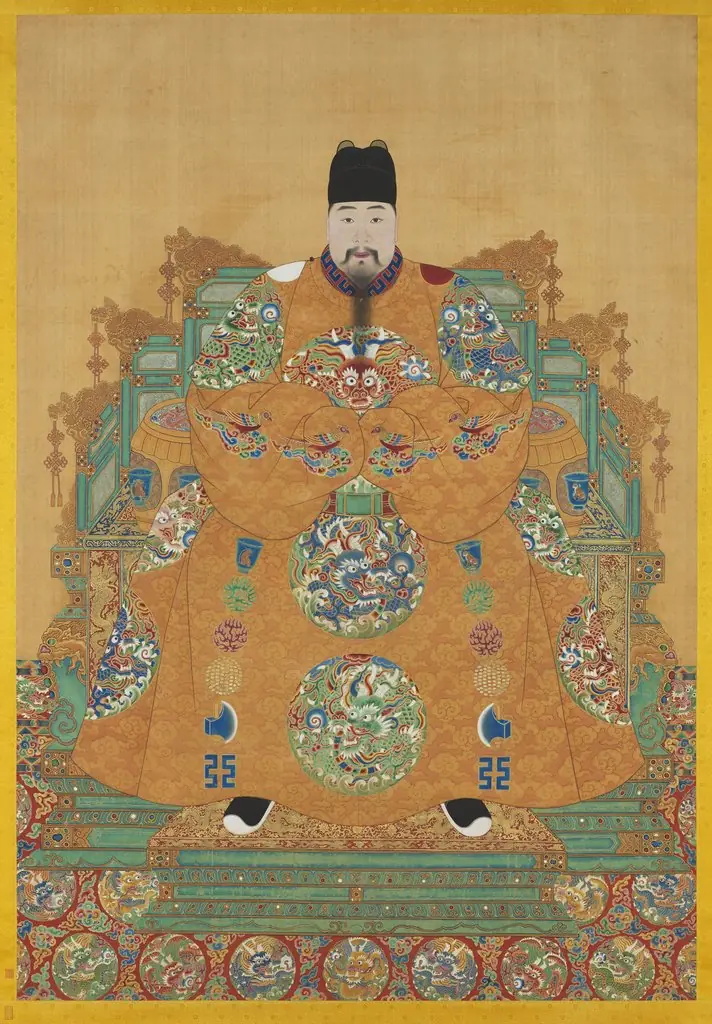
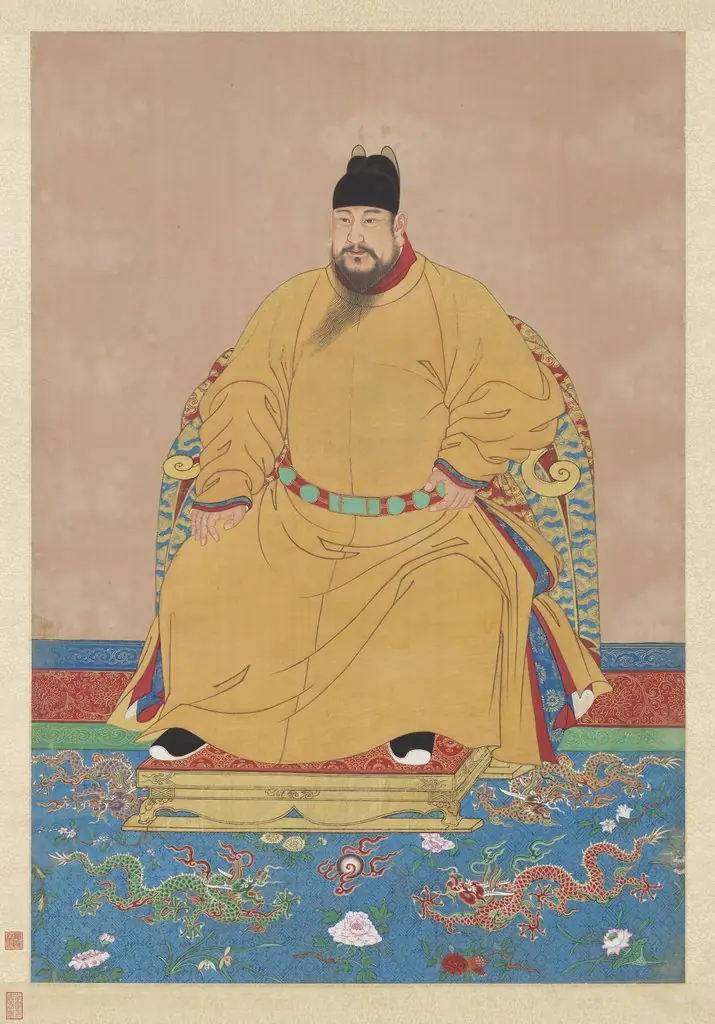
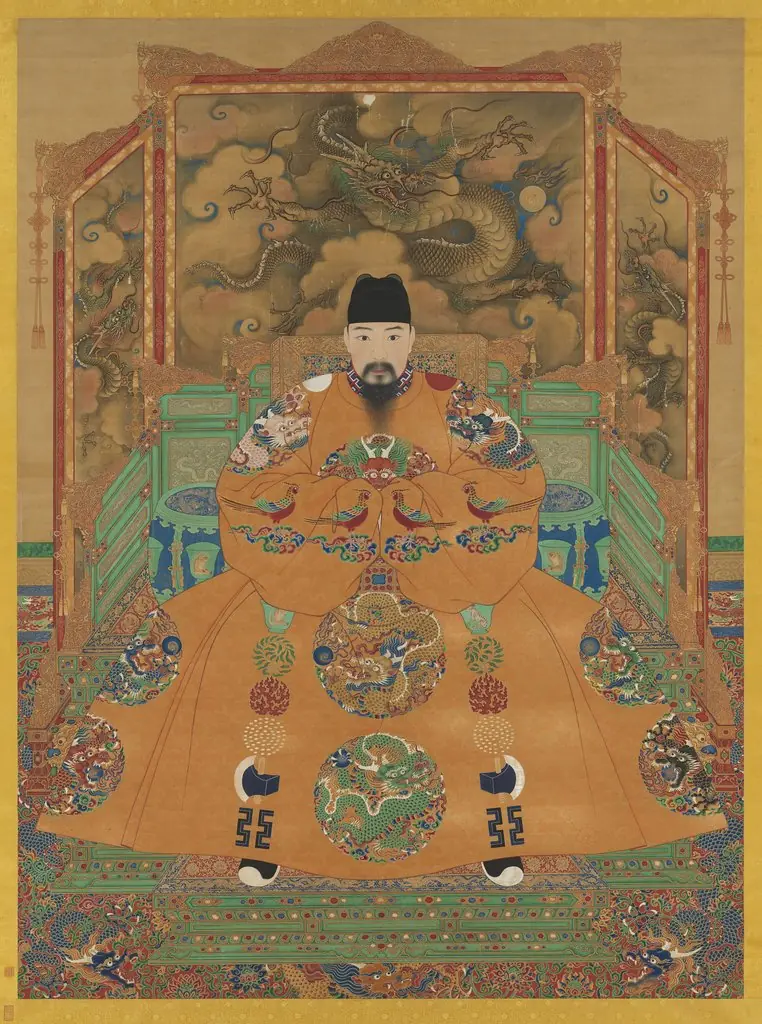
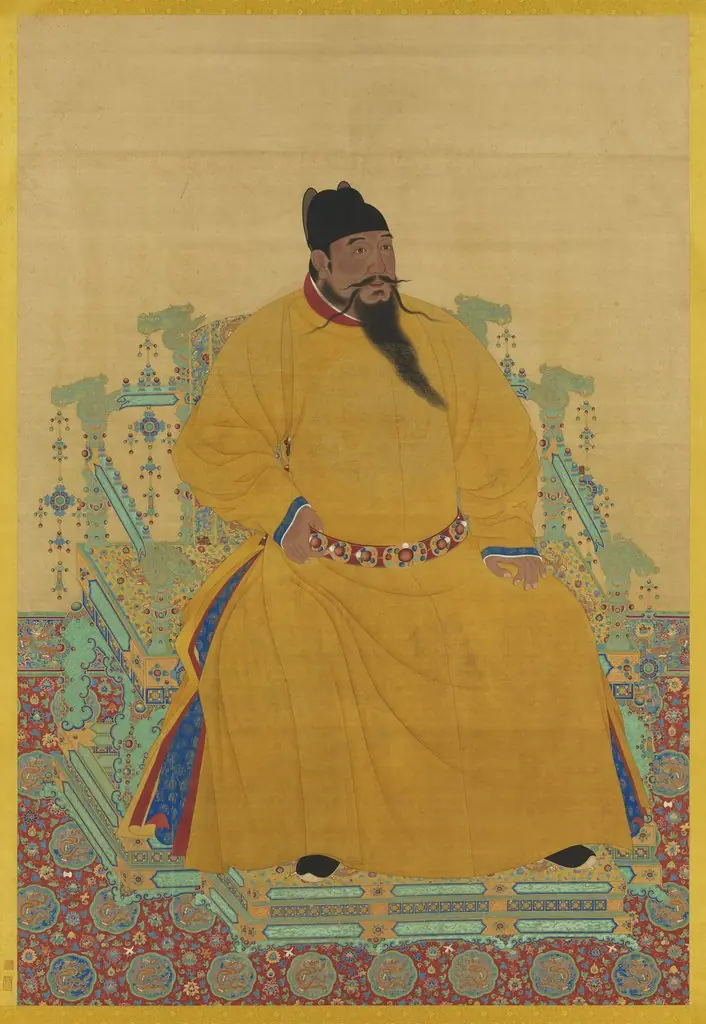
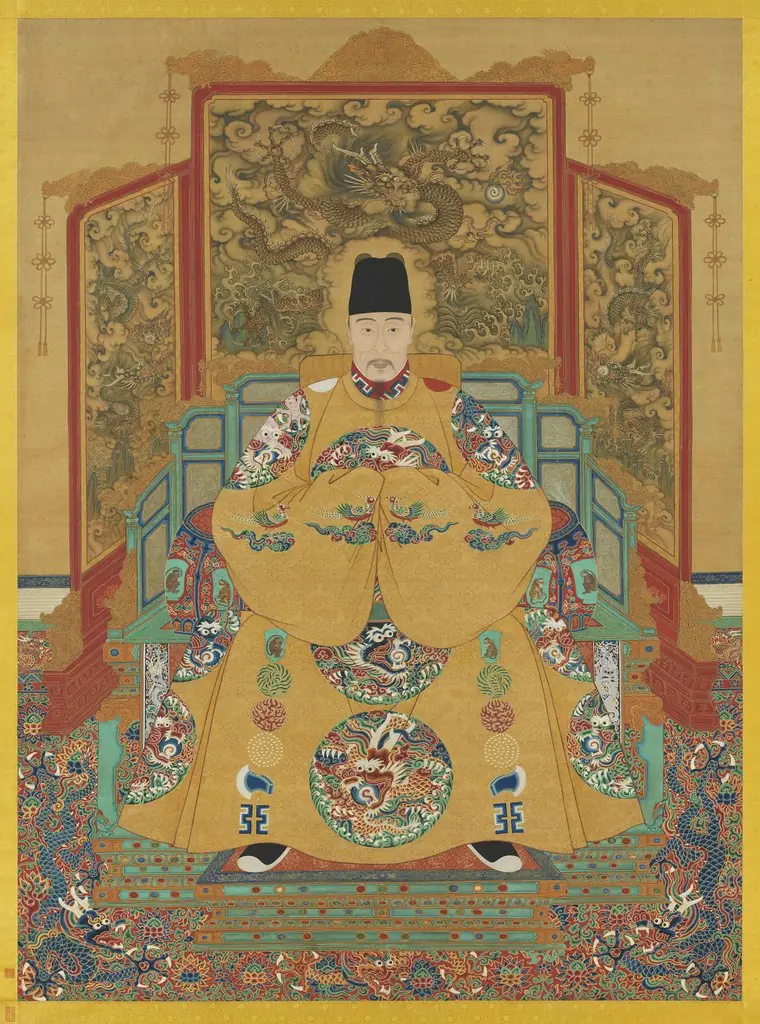
The work portrays an imperial figure seated upon an elaborately carved throne. He is dressed in a long, yellow robe richly patterned with motifs such as dragons, birds and floral designs, and wears a black hat. The throne itself is adorned with green and gold ornamentation, while a muted brown backdrop frames the scene, creating a sense of regal presence.
Subject & Meaning
The central figure represents Emperor Hsien‑tsung, a ruler of the Ming dynasty, emphasizing his authority through sumptuous attire and the elevated throne. The inclusion of traditional symbols, dragons for imperial power, birds and blossoms for auspiciousness, reinforces the ideological link between the emperor and the cosmic order, a common visual language in court portraiture.
Technique & Style
Executed with meticulous brushwork, the painting achieves a high level of detail in the textile patterns and the throne’s carvings. The artist employs a restrained palette of yellows, greens, golds and earth tones, allowing the intricate designs to stand out against the soft brown background. Fine line work and subtle shading convey texture in the fabrics and woodwork.
History & Provenance
While the exact date of creation is not recorded, the style aligns with the visual conventions of the early 16th‑century court.
The piece belongs to the corpus of Ming court paintings that documented imperial personages. While the exact date of creation is not recorded, the style aligns with the visual conventions of the early 16th‑century court. It has been preserved within a collection of Chinese imperial artworks, passing through several private and institutional holdings before its current location in a museum repository.
Artist & collection