Artwork
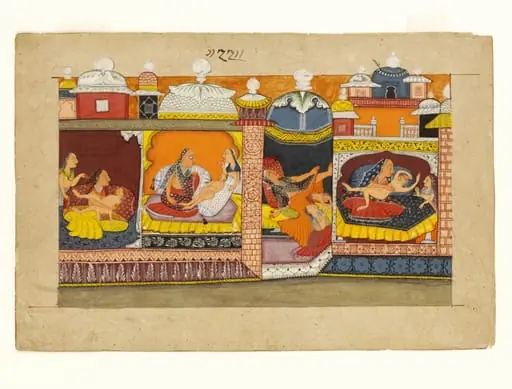
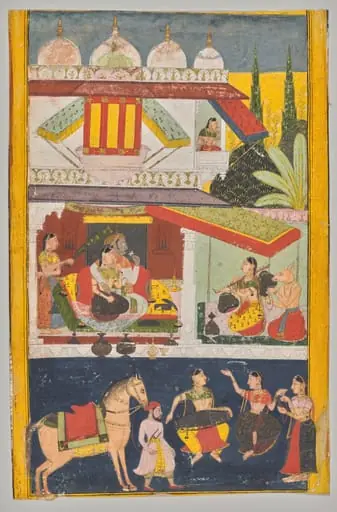
Five Poses of Krishna Making Love, from a Bikaner Bhagavata Purana
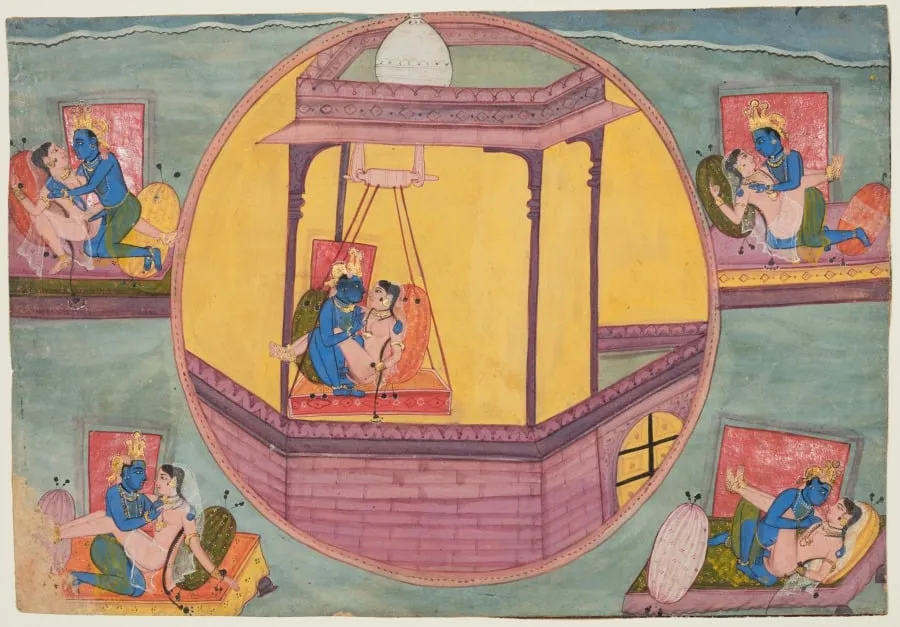
Five Poses of Krishna Making Love, from a Bikaner Bhagavata Purana is an unspecified painting by the Mughal Painting artist Unknown. It dates from 1600 and is held in the collection of the Cleveland Museum of Art. The painting presents five simultaneous episodes of the deity Krishna interacting with different women, all set within a verdant grove.
- Accession no.
- 2018.187
- Credit line
- Purchase and partial gift from the Catherine and Ralph Benkaim Collection; Severance and Greta Millikin Purchase Fund
About this work
Overview
Each figure of the blue‑skinned god is shown in a distinct embrace, creating a narrative tableau that compresses multiple moments into a single visual field.
The painting presents five simultaneous episodes of the deity Krishna interacting with different women, all set within a verdant grove. Each figure of the blue‑skinned god is shown in a distinct embrace, creating a narrative tableau that compresses multiple moments into a single visual field. The composition functions as a continuous story strip, allowing the viewer to follow the divine episode at a glance.
Subject & Meaning
Derived from a passage in the Bhagavata Purana, the scene illustrates Krishna’s miraculous ability to duplicate himself so that each milkmaid may experience his presence and affection individually. The work emphasizes the theological concept of divine love being abundant and accessible, portraying the god’s playful intimacy as a means of granting spiritual bliss to his devotees.
Technique & Style
Executed in the Rajput court tradition of Bikaner, the painting employs delicate brushwork and a palette dominated by blues for Krishna’s skin and greens for the surrounding foliage. Linear outlines define each figure, while the overlapping poses create a sense of depth without a single vanishing point, reflecting a narrative rather than strictly perspectival approach common to North Indian manuscript art.
History & Provenance
The piece originates from the Bikaner kingdom, a Rajput state that flourished in the 17th–18th centuries and patronized Hindu devotional art. It was likely commissioned for a private devotional setting or a temple collection, and later entered a museum collection through acquisition from a regional estate sale in the early twentieth century.
Context
Krishna’s youthful exploits are a recurring motif in Hindu visual culture, especially in the Pahari and Rajput schools that favored intimate, courtly scenes. This work aligns with the broader devotional movement (bhakti) that celebrated personal relationships with the divine, and it reflects the regional aesthetic that blended narrative clarity with ornamental richness.
Artist & collection









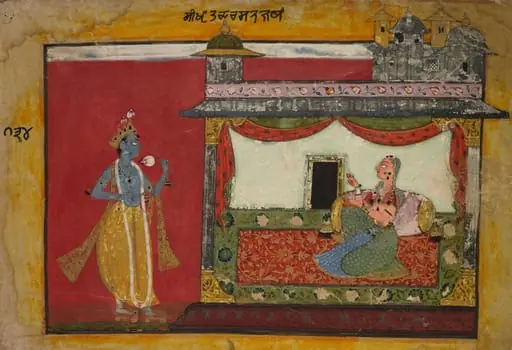 The Approach of Krishna. Page from a Rasamanjari
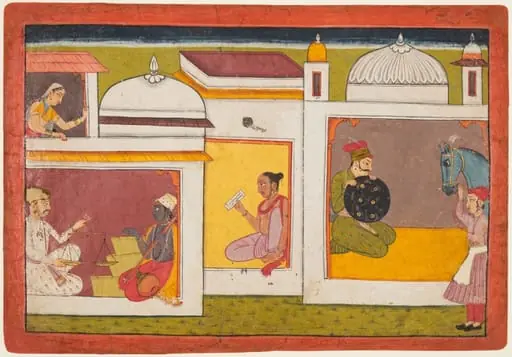 Madhava faces a man holding a scale, folio 1 from a Madhavanala-Kamakandala
 Untitled
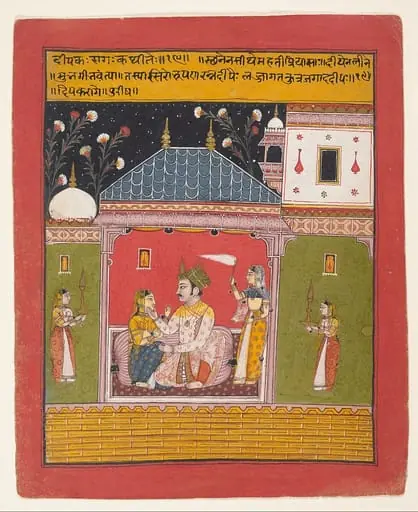 Untitled
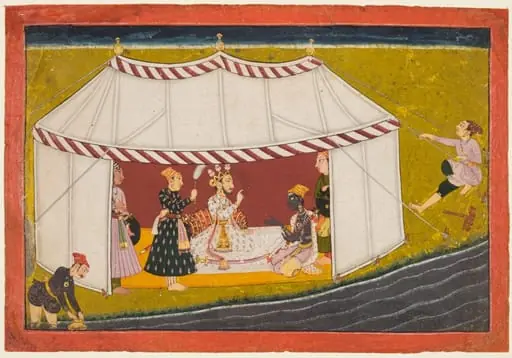 King Vikrama summons Madhava, folio 15 from a Madhavanala-Kamakandala
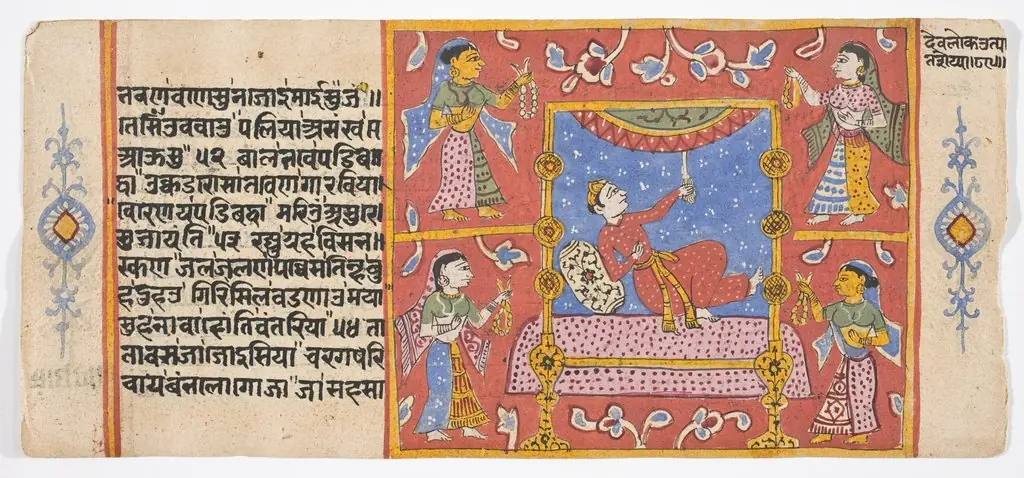 Tantric Manuscript "Sangrahani Sutra"
 Shri Raga, from a Ragamala
![The Marriage of Rukmini [Mangal], by Unknown](https://artifactworldgallery.com/img/unknown--the-marriage-of-rukmini-mangal--7178947364f7bdb5-w320.webp) The Marriage of Rukmini [Mangal]
The Marriage of Rukmini [Mangal]