Artwork
Gibbons in a Landscape
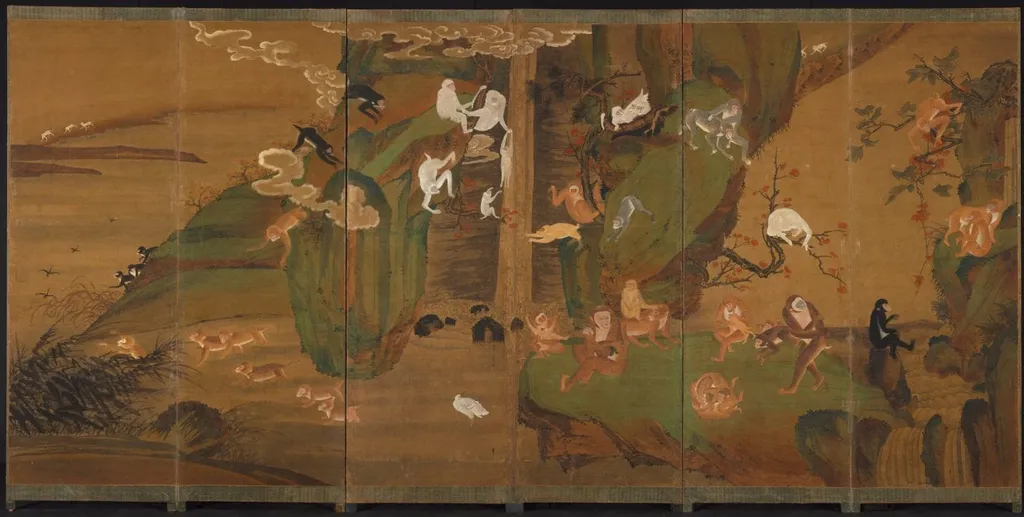
Gibbons in a Landscape is an unspecified painting by Unknown. It dates from 1904 and is held in the collection of the Cleveland Museum of Art. This folding screen depicts two gibbons moving dynamically through a landscape of pine trees and vibrant autumn foliage.
- Accession no.
- 1996.256
- Credit line
- Leonard C. Hanna Jr. Fund
About this work
This folding screen shows two gibbons swinging through pine trees with red autumn leaves.
This folding screen shows two gibbons swinging through pine trees with red autumn leaves. One grabs a branch while the other reaches for a pinecone.
Gibbons weren’t common in Korean art until the late 1800s. Here, they stand for good luck and success, maybe even passing a government exam. The bright red leaves make the wish for promotion feel urgent.
To see more art like this, look up Korea, Joseon dynasty (1392–1910).
Overview
This folding screen depicts two gibbons moving dynamically through a landscape of pine trees and vibrant autumn foliage. Created during the late Joseon dynasty, the work reflects a shift in Korean artistic subject matter, as gibbons, rarely featured earlier, gained popularity in the 19th century under the influence of neighboring Chinese and Japanese decorative traditions.
Subject & Meaning
The gibbons are not merely decorative; they carry layered symbolic weight. Their playful interaction, particularly one reaching for a pinecone and another holding a ripe peach, alludes to aspirations of professional advancement and enduring prosperity. The peach signifies longevity, while the crimson leaves evoke the urgency of seasonal change, subtly reinforcing the hope for timely success, such as passing state examinations.
Technique & Style
The painting employs fluid brushwork to capture the gibbons’ motion and the texture of bark and leaves. Color is used deliberately: the vivid red of autumn foliage contrasts with the muted greens and browns of the pines, drawing focus to the animals and their symbolic gestures. The composition balances naturalism with stylized rhythm, typical of late Joseon decorative painting.
History & Provenance
Though gibbons appeared occasionally in earlier Korean art, their prominence emerged in the late 1800s, coinciding with increased cultural exchange with China and Japan. This screen likely originated as a domestic or scholarly commission, reflecting elite tastes influenced by imported aesthetics. Its survival suggests it was valued as both art and auspicious ornament.
Context
During the late Joseon period, Confucian ideals still dominated official culture, yet decorative arts increasingly incorporated folk and symbolic motifs. The gibbon’s association with scholarly success made it a fitting subject for households seeking favor in civil service exams. This work sits at the intersection of traditional symbolism and evolving visual culture.
Legacy
The screen represents a transitional moment in Korean painting, where foreign influences were absorbed into local traditions without displacing indigenous symbolism. It remains a rare example of gibbon imagery in Korean art, offering insight into how symbolic animals were adapted to express personal and societal aspirations in a changing era.
Artist & collection









- Scenes from the Tales of Ise
 花見・紅葉狩図屏風|Cherry-Blossom and Maple-Leaf Viewing
 Scenes from the Tales of Ise
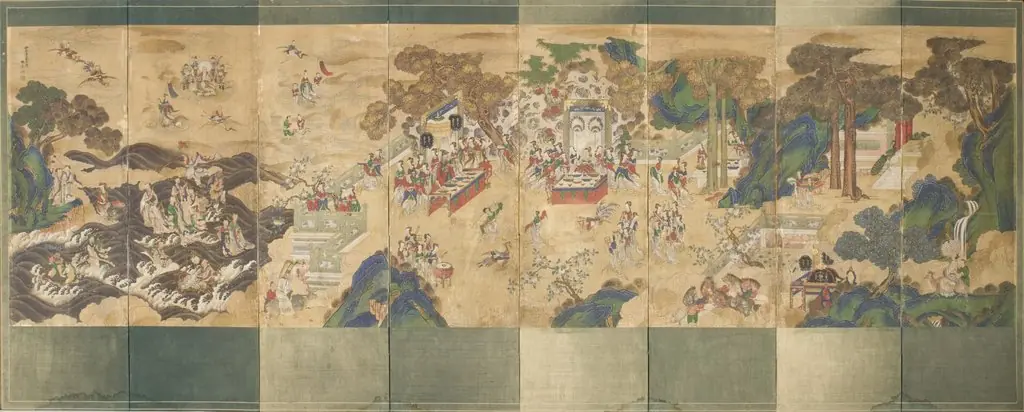 The Banquet of Seowangmo (Xiwangmu), Queen Mother of the West
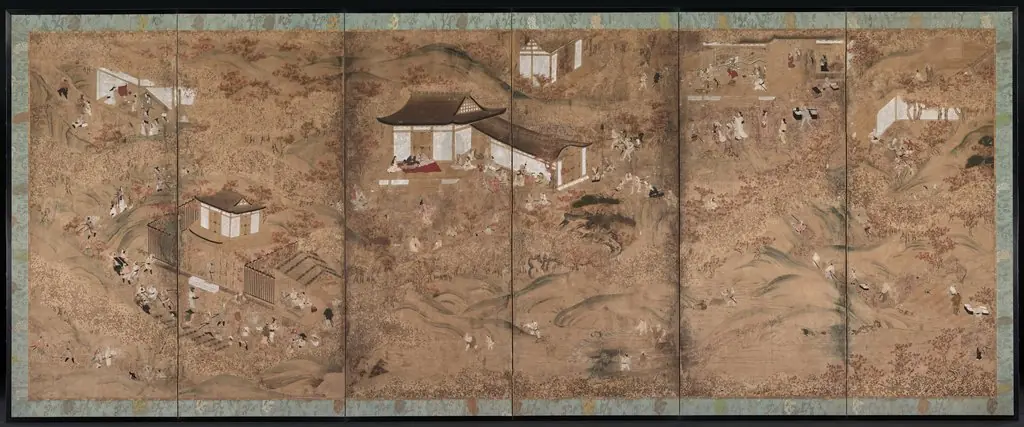 Autumn in the Mountains
 Autumn in the Mountains
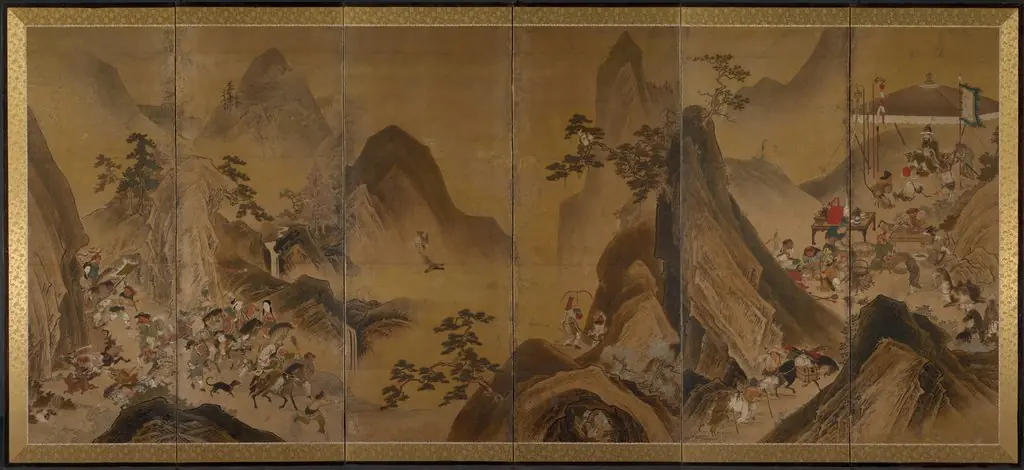 Tartars Hunting in a Mountain Landscape
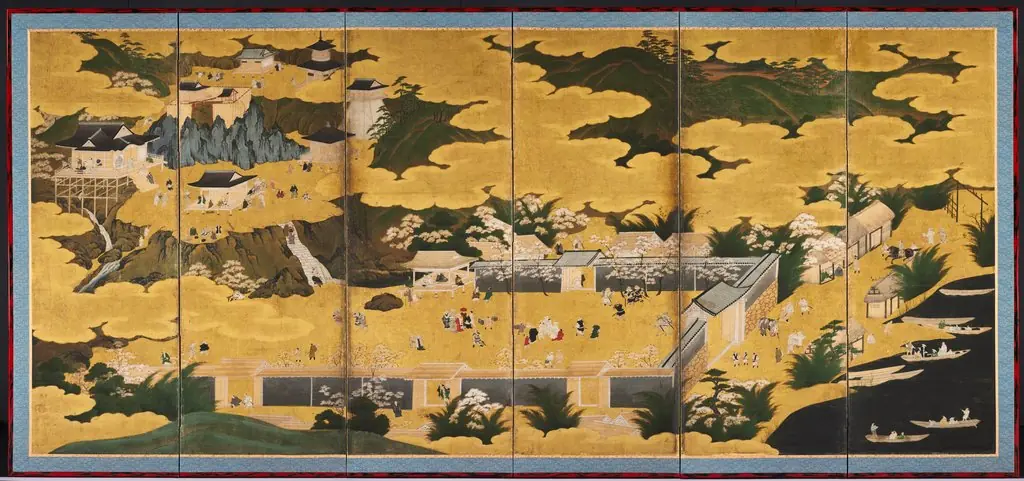 Famous Views of Ōmi
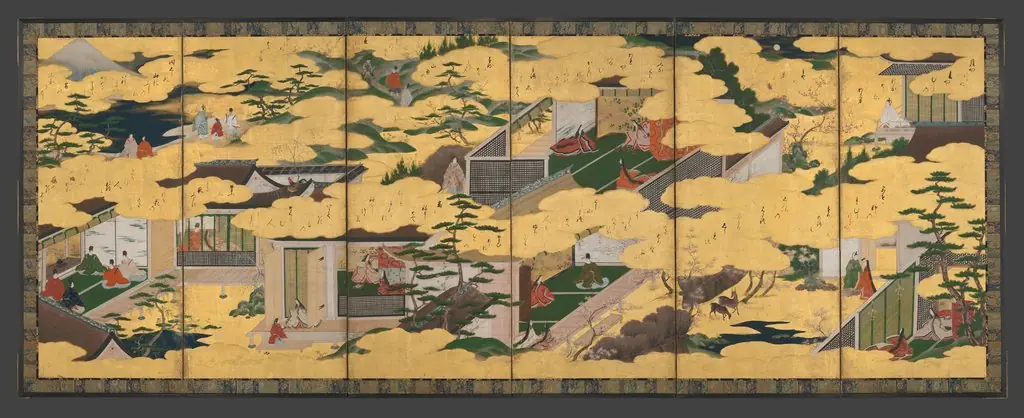 Scenes from the Tales of Ise
 平家物語図屏風 「小督」 「大原御幸」|"Kogō" and "The Imperial Procession to Ōhara", from The Tale of the Heike (Heike monogatari)
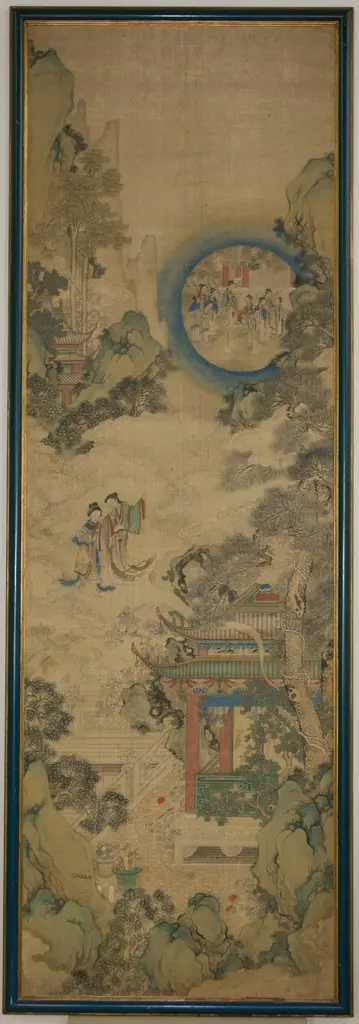 Three scenes from festivals of the twelve months
 Scene from "The Tale of Genji": from the chapter "The Maiden"