Artwork
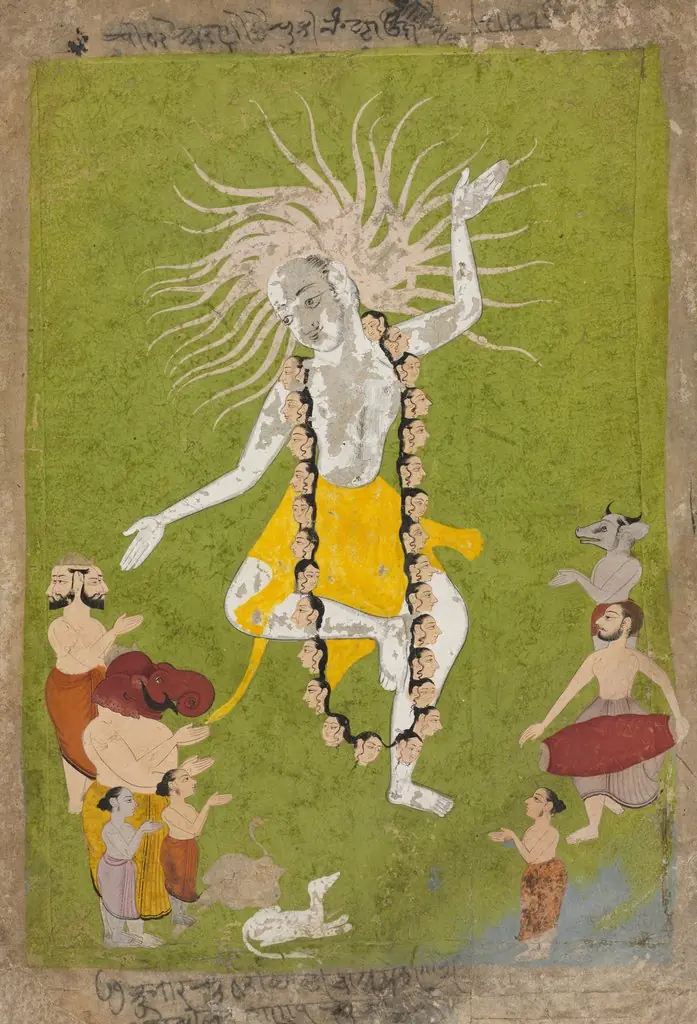
God Shiva in His Ferocious Aspect as Mahakala Dancing
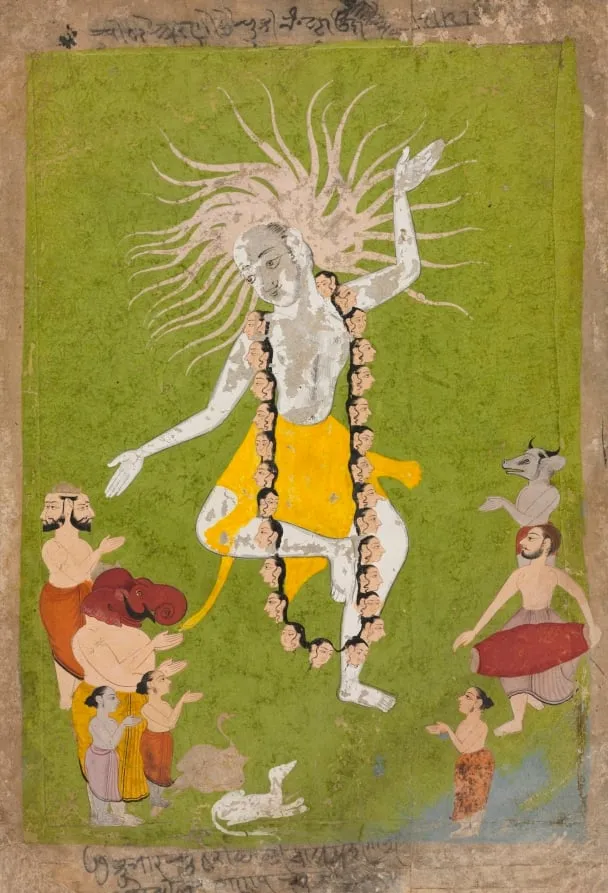
God Shiva in His Ferocious Aspect as Mahakala Dancing is an unspecified painting by the Baroque artist Unknown. It dates from 1705 and is held in the collection of the Cleveland Museum of Art. The work depicts a dynamic figure with four arms, wild hair, and a bright yellow skirt, positioned centrally in a flat green background.
- Accession no.
- 1955.296
- Credit line
- Gift of George P. Bickford
About this work
Overview
The work depicts a dynamic figure with four arms, wild hair, and a bright yellow skirt, positioned centrally in a flat green background. The dancer is surrounded by onlookers, some kneeling, others standing, and one holding a cow, creating a lively tableau rendered in bold reds, yellows, and whites.
Subject & Meaning
The central figure represents the Hindu deity Shiva in his fierce form known as Mahakala, a manifestation associated with destruction and transformation. The surrounding figures appear to be worshippers or participants in a ritual, emphasizing the deity’s power and the communal aspect of the dance.
Technique & Style
Executed in a painting format, the composition relies on strong, contrasting colors and simplified forms. The dancer’s body is adorned with numerous small, round motifs resembling beads or skulls, a decorative element that adds texture and symbolic weight. The flat green backdrop and bold palette evoke a stylized, almost theatrical visual language.
History & Provenance
The piece is identified as a painting of Shiva as Mahakala dancing, though specific details about its creation date, artist, or ownership lineage are not provided in the source material.
Context
Shiva’s Mahakala aspect is traditionally linked to cosmic cycles of destruction and renewal, often portrayed in dance to symbolize the rhythmic nature of creation. The inclusion of a cow, a sacred animal in Hindu tradition, reinforces the ritual context of the scene.
Artist & collection









- God Shiva in His Ferocious Aspect as Mahakala Dancing
 Shiva
Shiva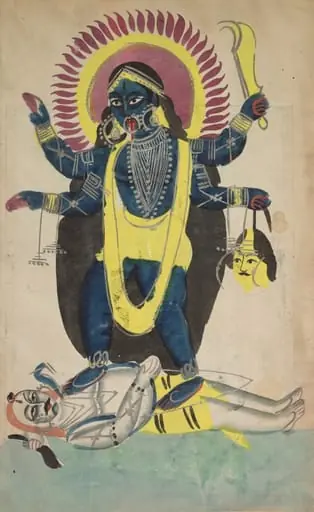 Kali Dancing on Shiva (recto), from a Kalighat album
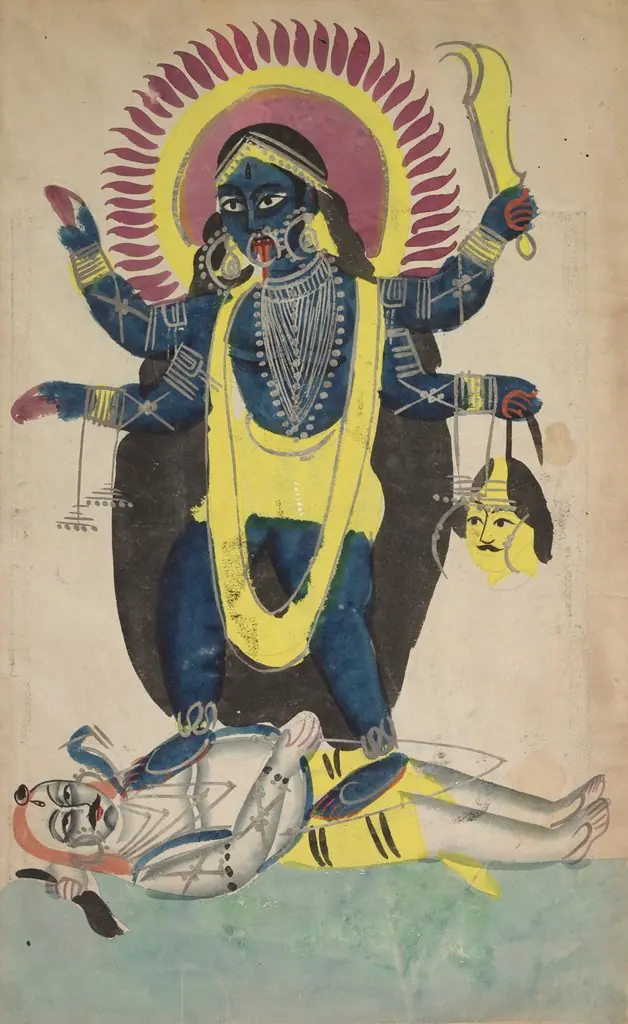 Kali Dancing on Shiva (recto), from a Kalighat album
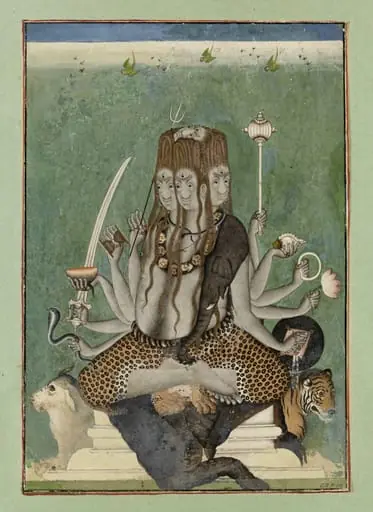
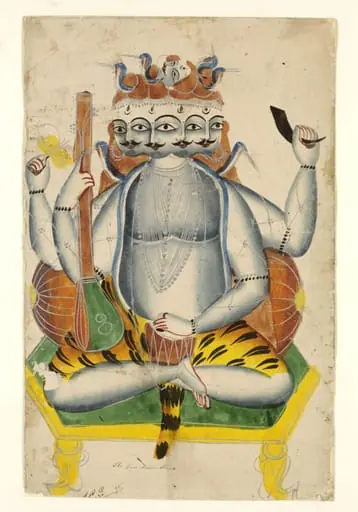 Shiva Panchanana
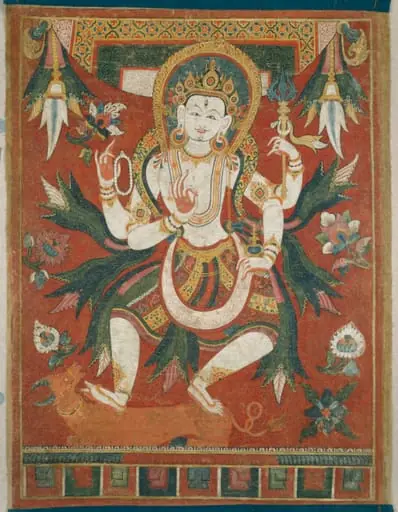 Double-Sided Painted Banner (Paubha) with God Shiva
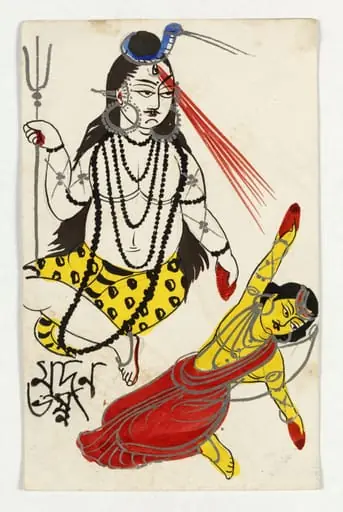 Shiva and Kama (Madana)
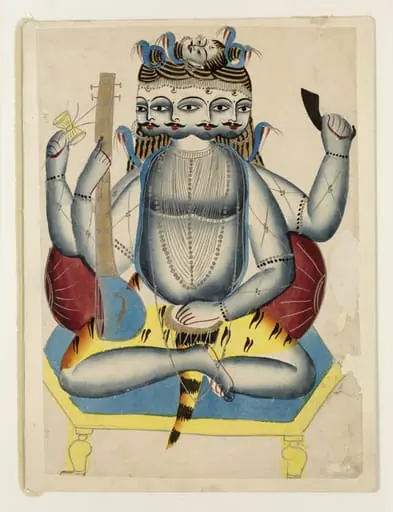 Shiva Panchanana
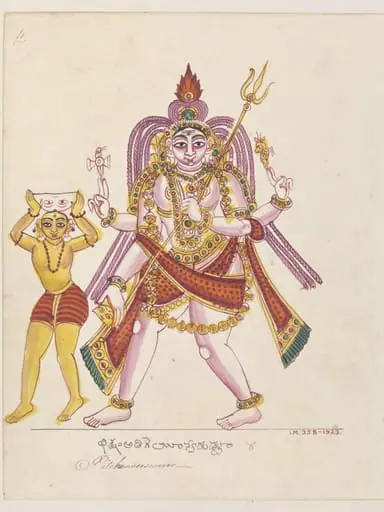 Shiva in his form as Bichandi or Bhikshatana
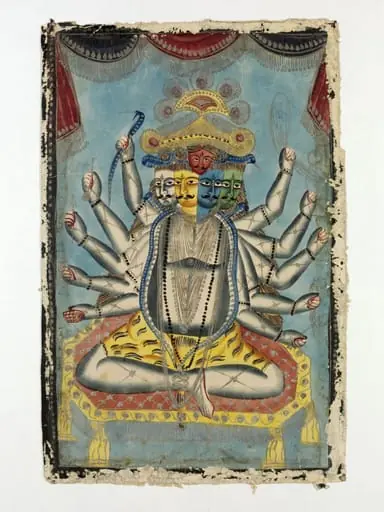 Shiva Panchanana