Artwork
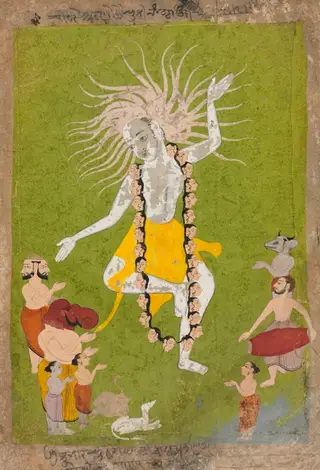
God Shiva in His Ferocious Aspect as Mahakala Dancing
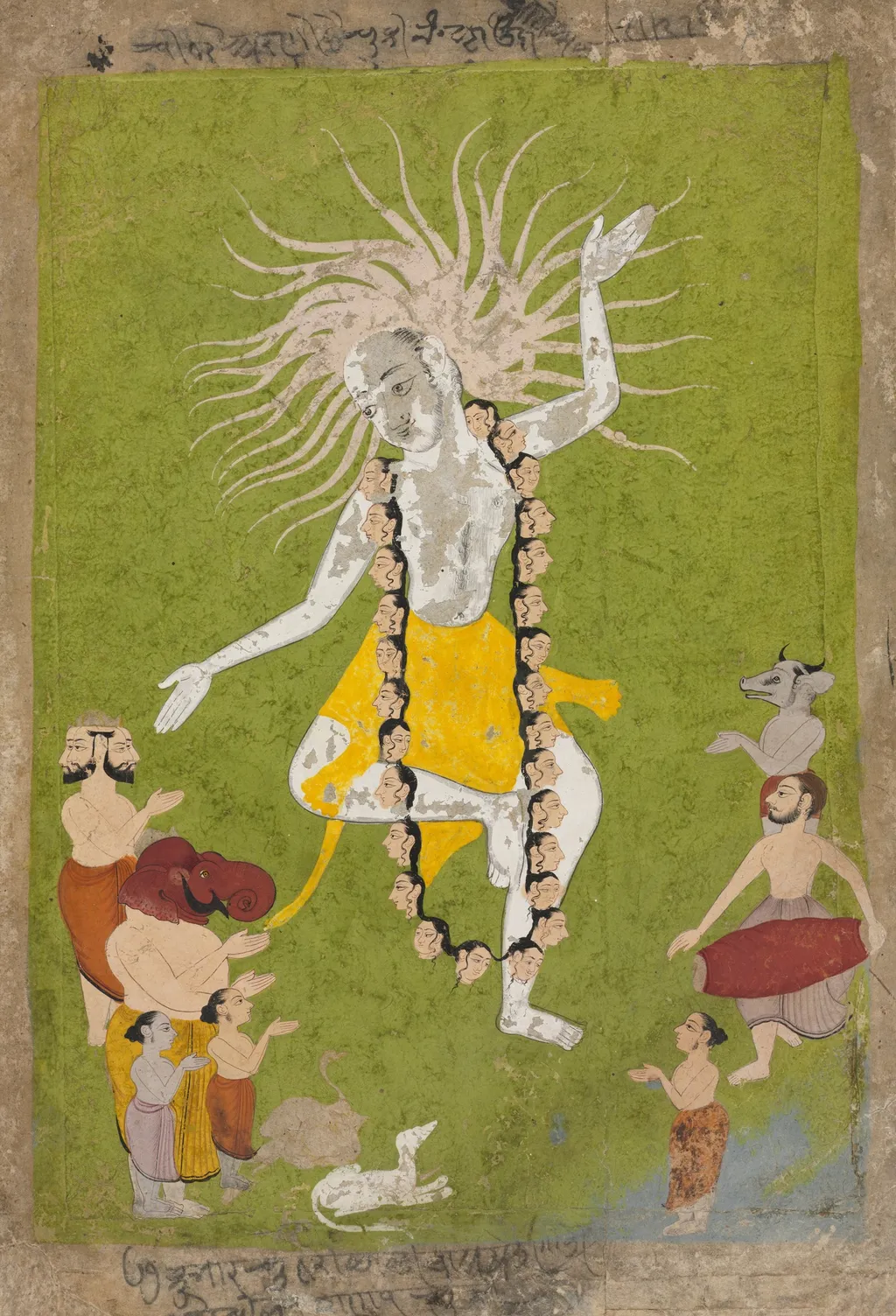
God Shiva in His Ferocious Aspect as Mahakala Dancing is an unspecified painting. It dates from 1705 and is held in the collection of the Cleveland Museum of Art.
About this work
Technique & Style
The composition balances rhythmic gesture with symbolic iconography, reflecting the stylistic conventions of Rajasthani court art.
The work depicts Shiva as Mahakala in a dynamic dance form, rendered on canvas using traditional pigments and brushwork characteristic of 18th-century Indian painting. The surface exhibits fine line work and layered washes that convey movement and divine intensity. The composition balances rhythmic gesture with symbolic iconography, reflecting the stylistic conventions of Rajasthani court art. The painting is executed on a rectangular support typical of miniature and devotional works from the period.
The Cleveland Museum of Art holds the piece, which was created in 1705 and remains in stable condition, with only minor surface abrasions noted in conservation records.
History & Provenance
The painting "God Shiva in His Ferocious Aspect as Mahakala Dancing" is dated to 1705, a creation date recorded for the work as a whole rather than tied to a documented commission or patron. No information is available on the original circumstances of its making, the workshop responsible, or any intermediary owners from the period of its creation through its modern history. The work is now held in the Cleveland Museum of Art, where it is catalogued under accession number 1955.296, indicating that it entered that collection in 1955. The chain of custody between 1705 and its 1955 acquisition is not documented in the available sources.
The painting is held in the collection of the Cleveland Museum of Art in Cleveland, Ohio. Its accession number is 1955.296, and it was acquired by the museum in 1955. The work has been part of the museum's permanent collection since its acquisition, with no recorded temporary exhibitions listed in the available documentation.
Context
The painting depicting God Shiva in His Ferocious Aspect as Mahakala Dancing was created in 1705 and is part of the Cleveland Museum of Art collection. It was initially attributed to an unknown artist in 1955 and later linked to a specific historical context through its classification as a painting from that year. The work reflects religious themes prevalent in Indian art traditions during the early 18th century, particularly the dynamic portrayal of Shiva as Mahakala, the destroyer of time and ignorance.
This representation aligns with devotional practices in Hindu temple art and showcases the spiritual intensity characteristic of Shaivite iconography.
Overview
The work entitled God Shiva in His Ferocious Aspect as Mahakala Dancing is a painted composition that presents a monumental, multi‑armed deity in motion against a verdant backdrop. The figure is adorned with a vivid yellow skirt and a flowing white headdress, while numerous faces cover its torso, a visual convention associated with the deity’s mythic narratives. Smaller human and animal figures, including an elephant and a cow, are positioned around the central dancer, appearing to observe or reach toward the divine presence.
Subject & Meaning
The painting depicts Shiva in his Mahakala form, a fierce manifestation that emphasizes destruction and transformation. The multiple arms and faces symbolize the god’s omnipotence and ability to perceive all directions, while the dynamic dance conveys the cyclical nature of creation and dissolution. The surrounding spectators, both mortal and animal, reflect the universal impact of Shiva’s power across all realms of existence.
Artist & collection

- God Shiva in His Ferocious Aspect as Mahakala Dancing
 Shiva
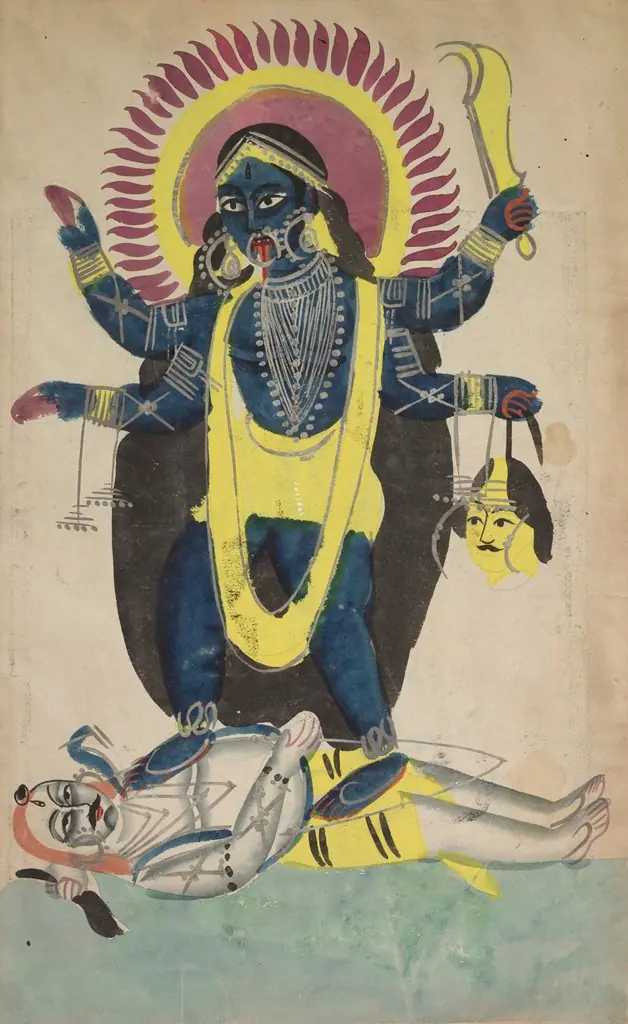
Shiva Kali Dancing on Shiva (recto), from a Kalighat album
 Double-Sided Painted Banner (Paubha) with God Shiva
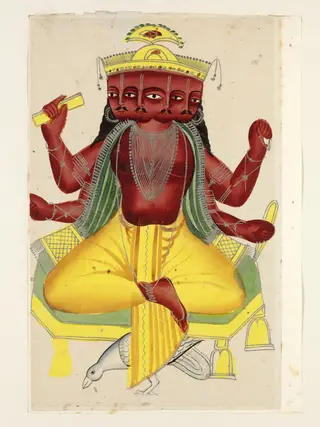
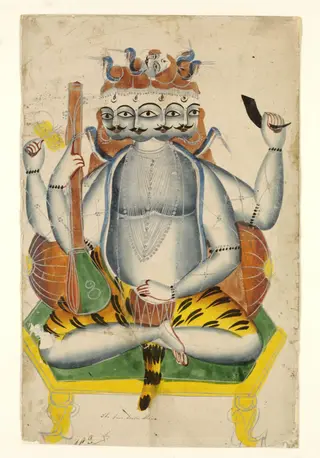 Shiva Panchanana
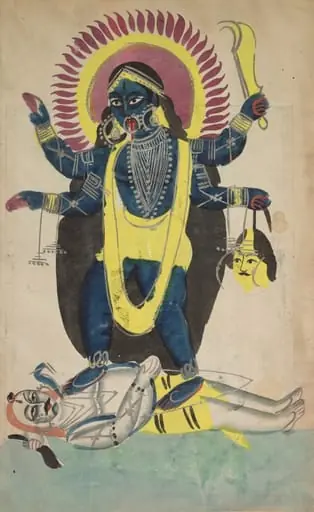 Kali Dancing on Shiva (recto), from a Kalighat album
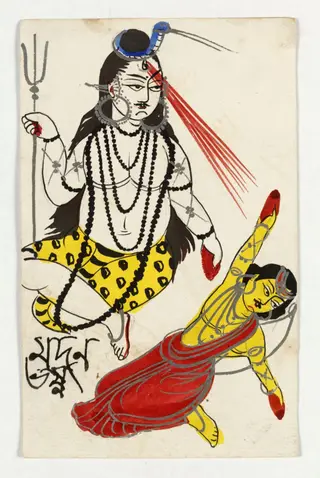 Shiva and Kama (Madana)
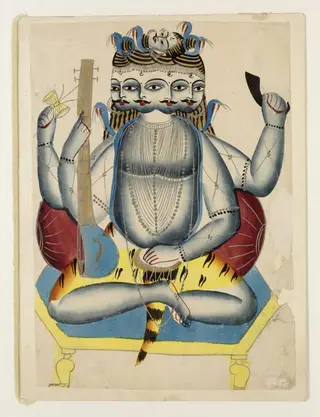 Shiva Panchanana
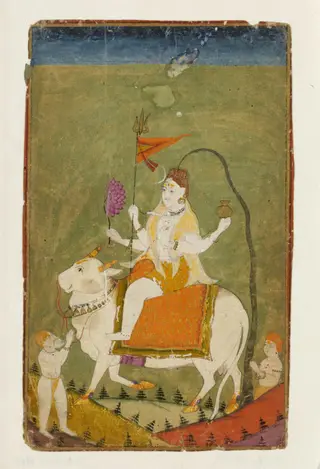 Shiva on Nandi
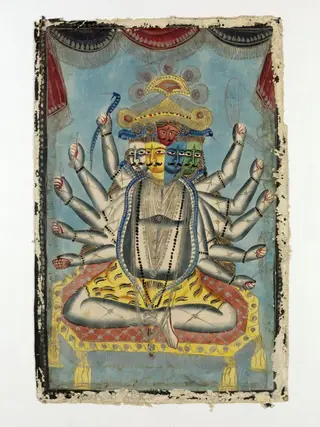 Shiva Panchanana
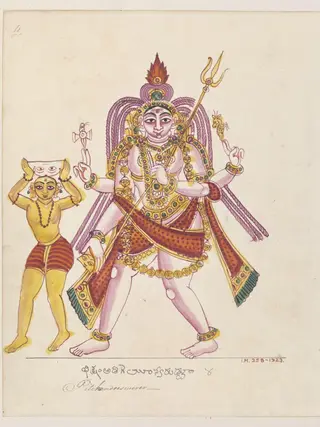 Shiva in his form as Bichandi or Bhikshatana
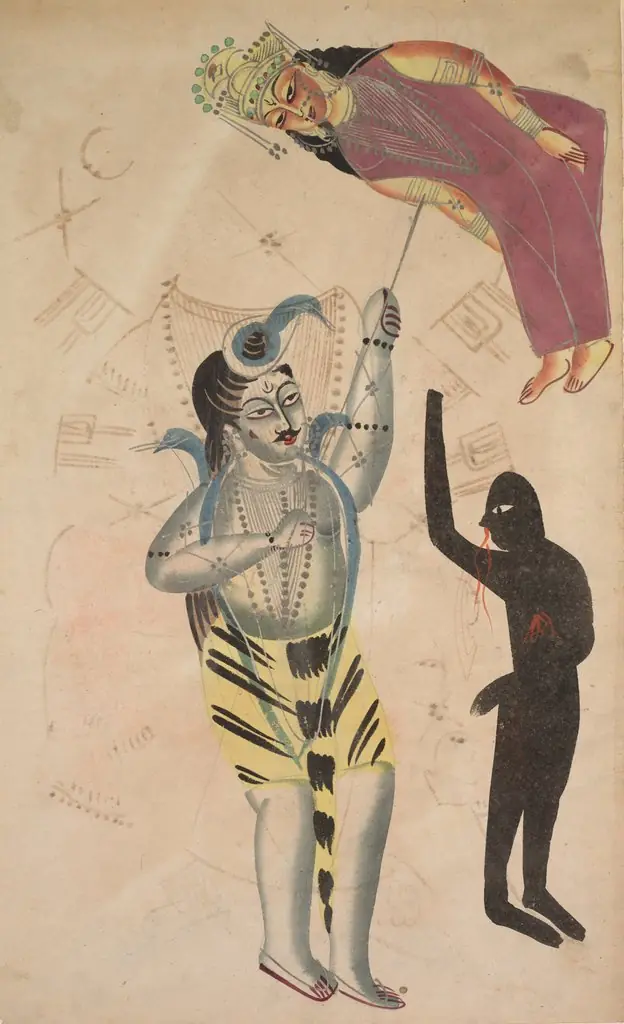 Shiva Bearing Aloft the Body of His Sati