Artwork
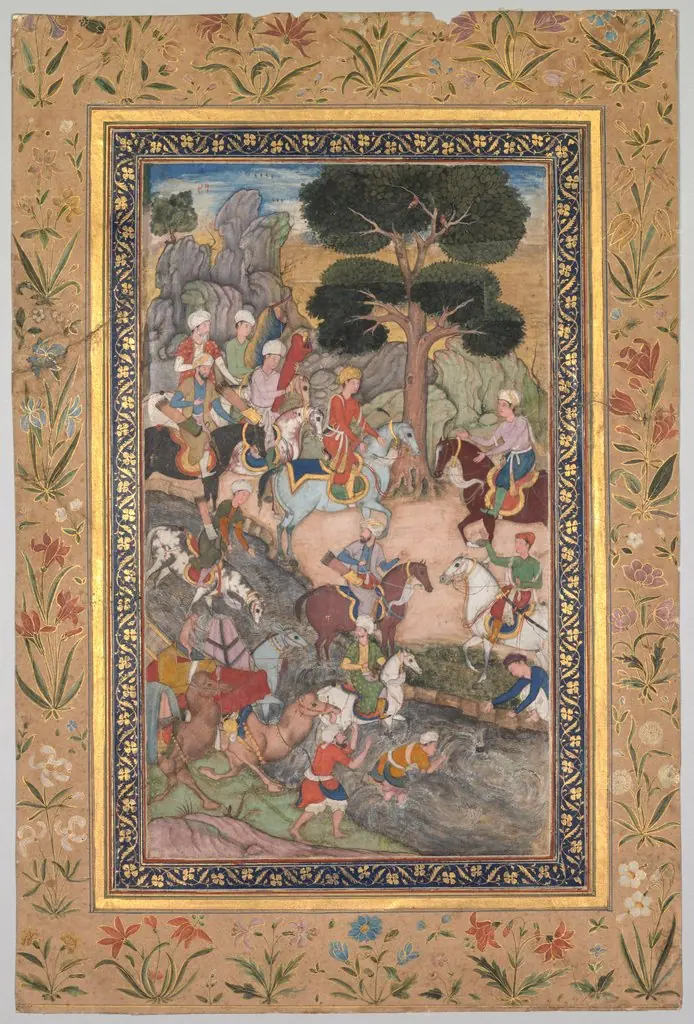
Habbaza meets Bashir under a tree, from a Tuti-nama (Tales of a Parrot): Twenty-fourth Night
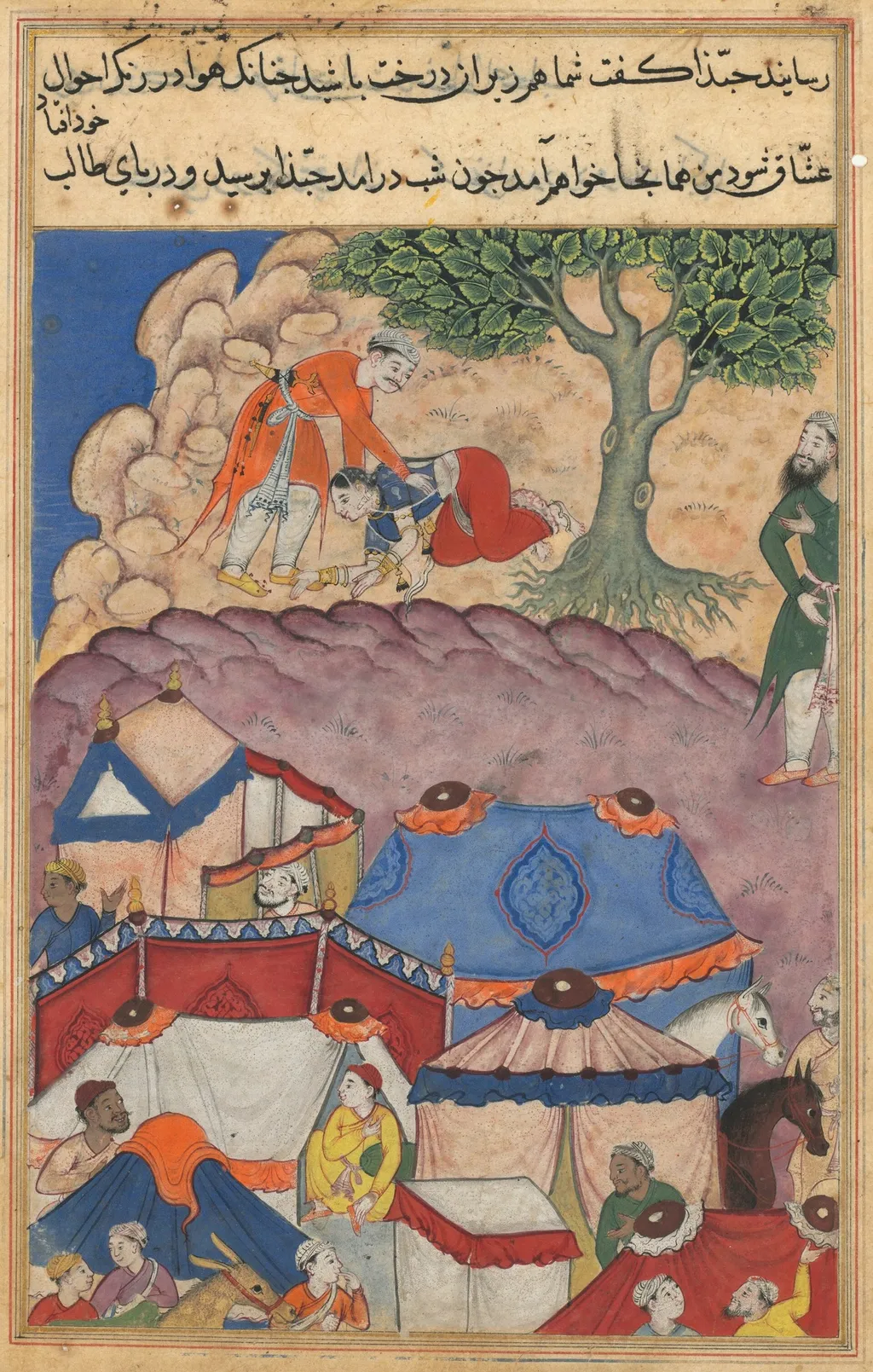
Habbaza meets Bashir under a tree, from a Tuti-nama (Tales of a Parrot): Twenty-fourth Night is an unspecified painting. It dates from 1560 and is held in the collection of the Cleveland Museum of Art. The work depicts a bustling outdoor gathering centered around a red tent, set against a modest hill and a large tree.
About this work
History & Provenance
The work is currently held in the collection of the Cleveland Museum of Art, where it is cataloged under the accession number 1962.
Created in 1560 within the Mughal Empire, this painting illustrates the Twenty-fourth Night of the Tuti-nama (Tales of a Parrot). The specific scene depicts Habbaza meeting Bashir under a tree and was executed by an unknown artist. The work is currently held in the collection of the Cleveland Museum of Art, where it is cataloged under the accession number 1962.279.168.b.
While the exact commissioning details and the original patron are not specified in the available records, the piece represents a significant example of mid-16th-century Mughal manuscript illumination. Its creation coincides with the early development of the Mughal painting tradition under Emperor Akbar.
Context
Habbaza meets Bashir under a tree, from a Tuti-nama (Tales of a Parrot): Twenty-fourth Night, is attributed to an unknown Mughal-era artist active circa 1560 in the Mughal Empire, as indicated by its classification as a painting and documented provenance in a 16th-century manuscript context. The work is part of the Cleveland Museum of Art's collection, which identifies it as a miniature painting from the Tuti-nama series, reflecting the synthesis of Persian narrative illustration and Mughal artistic conventions during the late 1500s. Scholarly attention to this piece is limited, but its inclusion in major collections underscores its significance within the corpus of Indian miniature painting, particularly in studies of cross-cultural storytelling and visual storytelling traditions in pre-colonial South Asia.
Overview
The work depicts a bustling outdoor gathering centered around a red tent, set against a modest hill and a large tree. Figures in vivid red, orange, blue and green garments occupy the scene, some climbing the slope while others sit or stand beneath the canopy. A horse is positioned to the right, and the sky is dotted with fluffy white clouds, creating a lively atmosphere.
Subject & Meaning
The composition illustrates a moment from the "Tuti‑nama" (Tales of a Parrot), specifically the twenty‑fourth night in which Habbaza meets Bashir beneath a tree. The gathering suggests a social encounter or storytelling event, with the tent and the surrounding figures emphasizing hospitality and communal interaction typical of the narrative’s setting.
Technique & Style
Rendered in bright, saturated pigments, the painting employs a flat decorative approach characteristic of Persian miniature traditions. Figures are outlined with fine lines, and patterned turbans and garments display intricate detailing. The use of bold reds and oranges against cooler blues and greens creates visual contrast, while the stylized clouds and foliage convey a sense of ornamental space rather than realistic depth.
Artist & collection

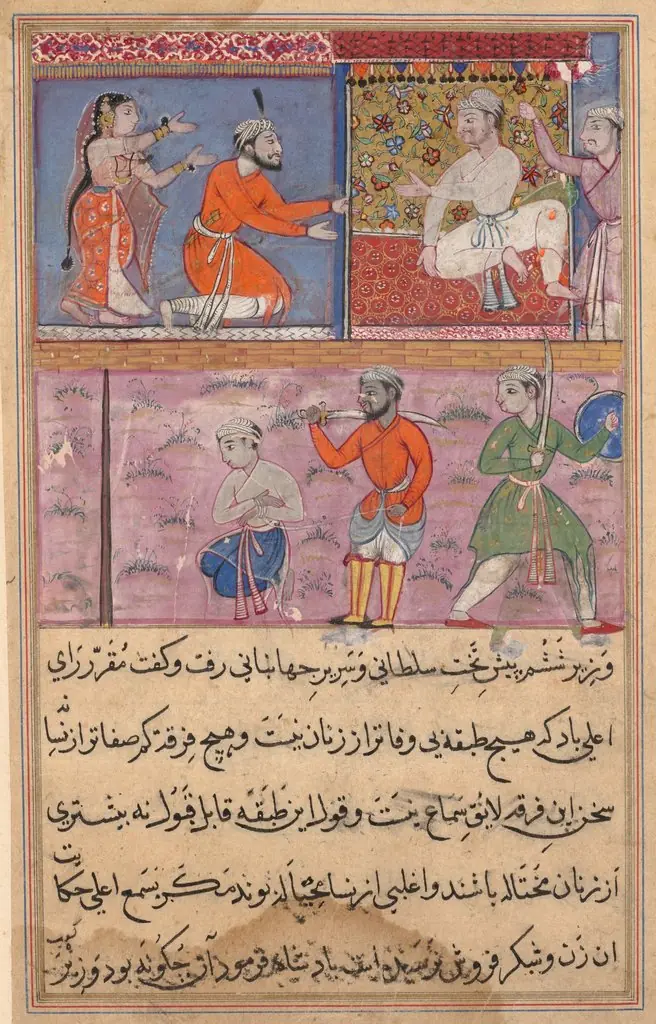 Page from Tales of a Parrot (Tuti-nama): text page
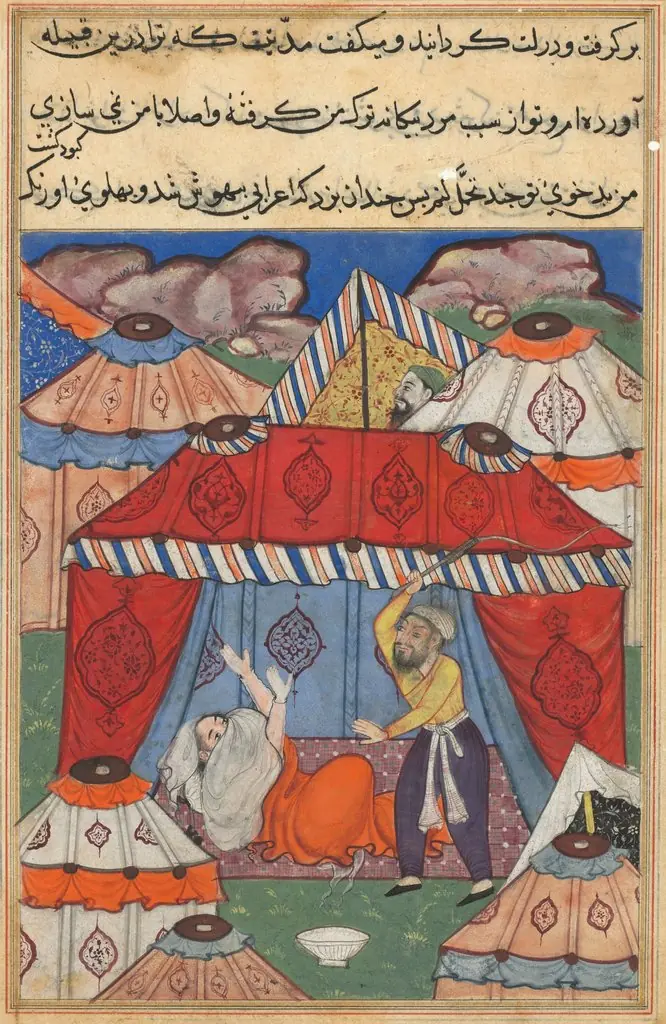 The disguised Arab, substituting for Habbaza, is whipped by her husband for refusing a bowl of milk, from a Tuti-nama (Tales of a Parrot): Twenty-fourth Night
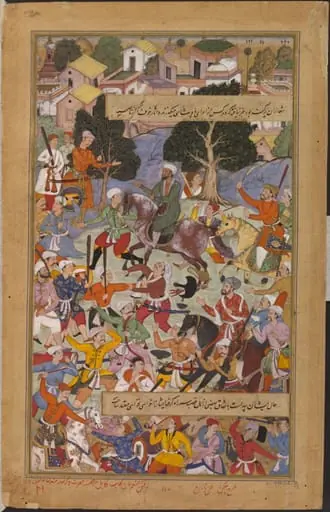
 Babur meeting with Sultan Ali Mirza at the Kohik River, from a Babur-nama (Memoirs of Babur)
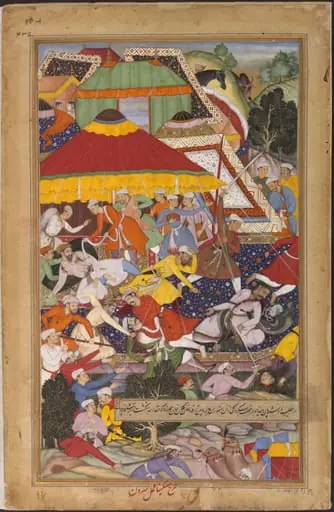
 Mu'nim Khan
 Khan-i Kilan
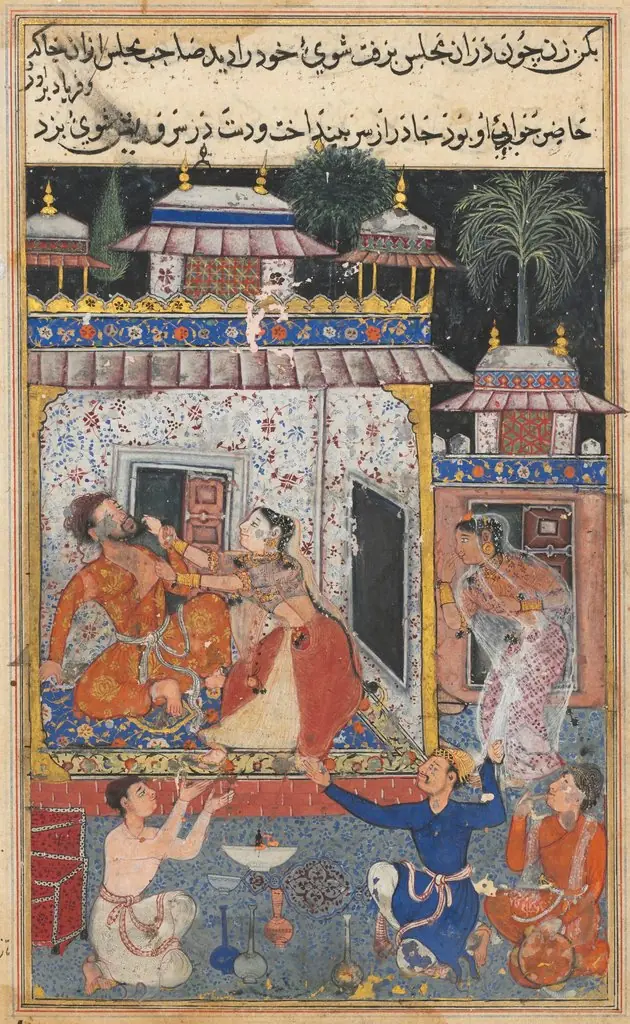 The deceitful wife assaults her erring husband, from a Tuti-nama (Tales of a Parrot): Eighth Night
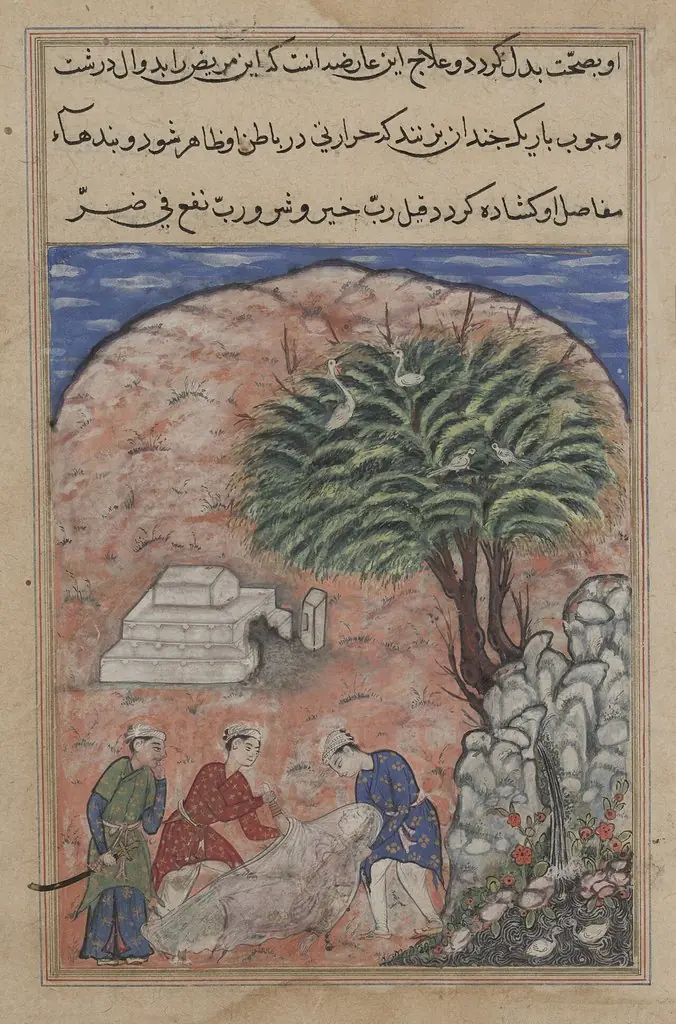 The suitors take the devotee’s daughter out of her tomb after breaking it open, when the physician discovers she is still alive, from a Tuti-nama (Tales of a Parrot): Twentieth Night
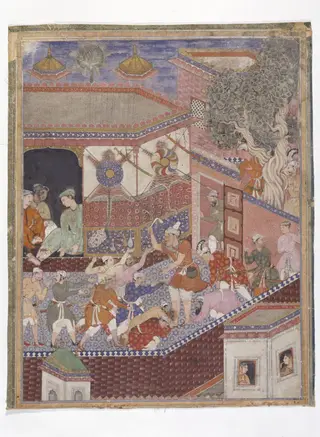 Umar searches for Hamza
- Habbaza meets Bashir under a tree, from a Tuti-nama (Tales of a Parrot): Twenty-fourth Night
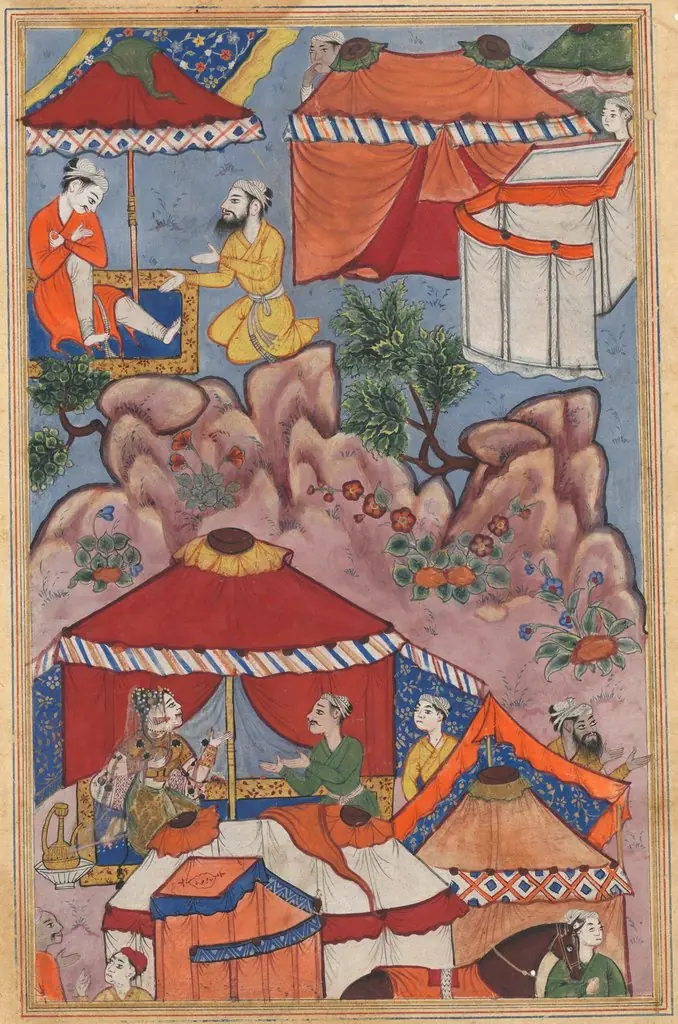 Bashir confides his love for Habbaza to an Arab friend, and sends him to her with a message, from a Tuti-nama (Tales of a Parrot): Twenty-fourth Night
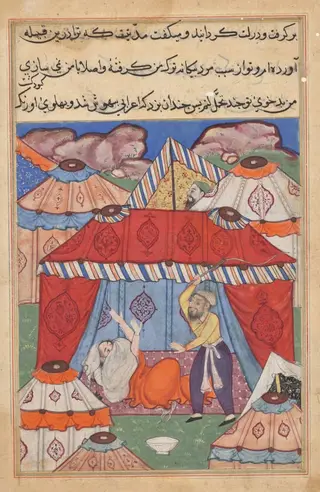 The disguised Arab, substituting for Habbaza, is whipped by her husband for refusing a bowl of milk, from a Tuti-nama (Tales of a Parrot): Twenty-fourth Night
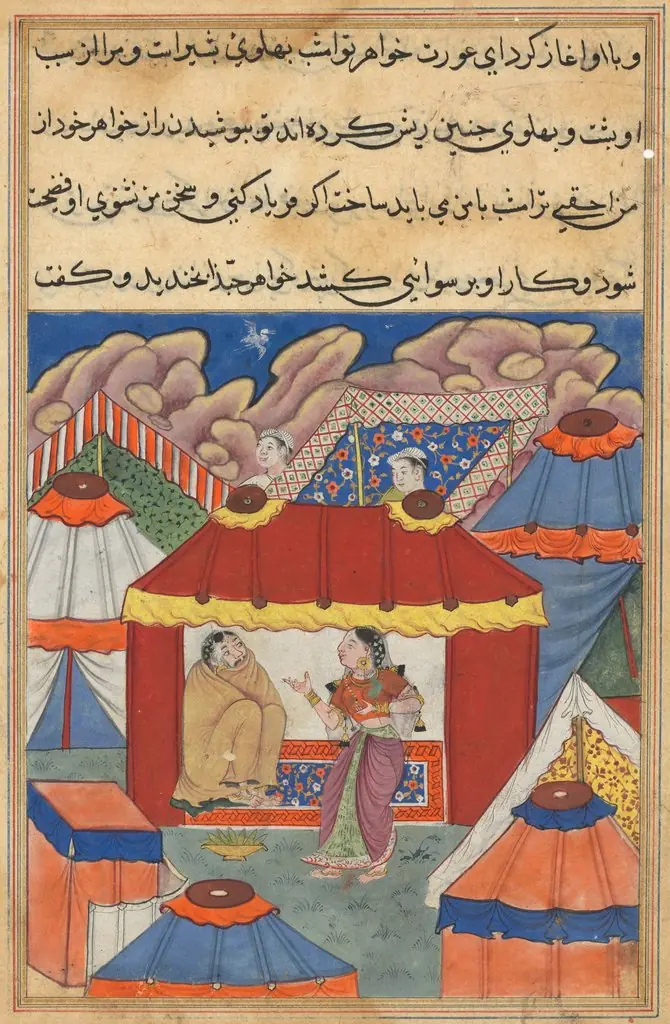 Habbaza’s sister, who is sent to console her, discovers the disguised Arab in her place, from a Tuti-nama (Tales of a Parrot): Twenty-fourth Night