Artwork
Heavenly King Virudhaka
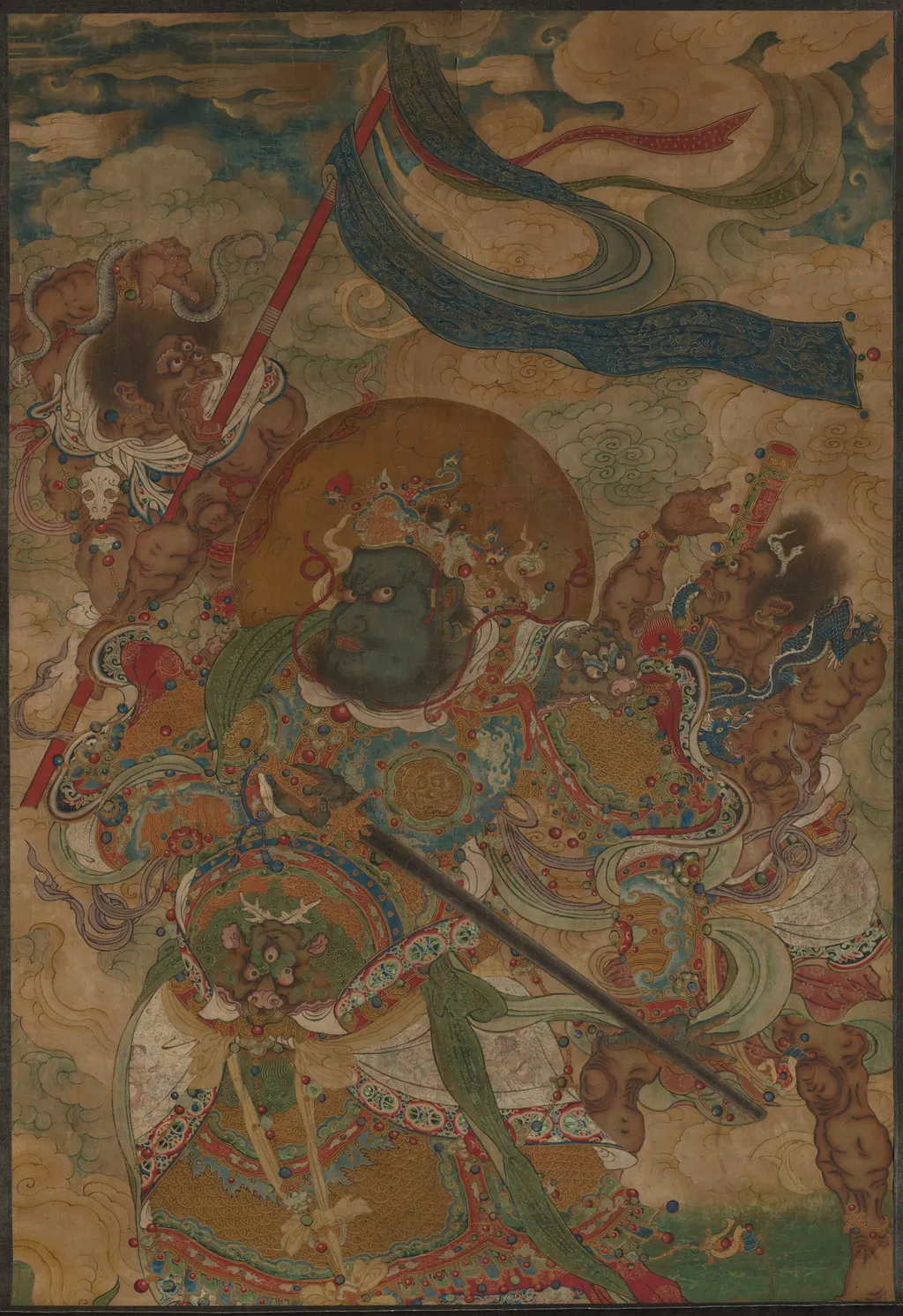
Heavenly King Virudhaka is an unspecified painting. It dates from 1506 and is held in the collection of the Cleveland Museum of Art.
About this work
Subject & Meaning
As a subject, it represents the divine overseer of the northern direction in Buddhist cosmological symbolism, a motif commonly found in East Asian Buddhist art.
Heavenly King Virudhaka depicts a celestial guardian within Buddhist cosmology, embodying one of the Four Heavenly Kings who protect the world. The figure is rendered with regal attributes signifying divine authority and martial protection, reflecting esoteric Buddhist iconography associated with the west and the element of water. As a subject, it represents the divine overseer of the northern direction in Buddhist cosmological symbolism, a motif commonly found in East Asian Buddhist art.
The work, painted in 1506, originates from China and is housed in the Cleveland Museum of Art, where it forms part of their collection of Asian religious artworks.
History & Provenance
The painting Heavenly King Virudhaka was created in 1506 in China. The work is attributed to an unknown artist and is currently held in the collection of the Cleveland Museum of Art. The museum's records assign the accession number 1918.544 to this piece, indicating its entry into the institution's holdings during that year.
While the specific commission details and the full chain of ownership prior to the museum acquisition are not detailed in the provided records, the work is firmly dated to the early sixteenth century.
Context
The Heavenly King Virudhaka painting was created in China in 1506 and is housed in the Cleveland Museum of Art. It belongs to a tradition of Buddhist narrative paintings produced during the early modern period in East Asia. Scholarship situates this work within the broader context of transregional artistic exchanges that shaped devotional imagery across Eurasia in the early 16th century.
Its attribution to an unknown follower of the Miao school reflects evolving patterns of artistic influence and religious representation in Ming dynasty visual culture.
Legacy
The Heavenly King Virudhaka was painted in 1506 in China and entered the Cleveland Museum of Art collection, where it remains on view. Its status as a Ming‑era work contributed to renewed scholarly interest in early Chinese religious painting and influenced later reconstructions of court iconography in the 20th century.
Overview
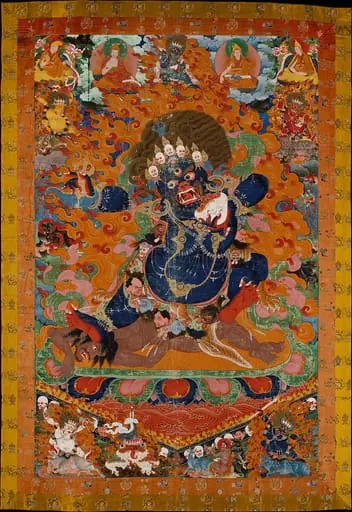
The work portrays a dark, formidable figure astride a dragon‑like creature, surrounded by a host of hybrid beings that combine human faces with animal bodies. These figures are set amid swirling clouds rendered in vivid reds, blues and golds, creating a densely populated yet orderly composition.
Technique & Style
The painting employs bright, saturated pigments and intricate decorative motifs that adorn both the robes of the figures and the scales of the dragon. The use of swirling cloud forms and the careful placement of each element convey a sense of movement while maintaining visual balance.
Artist & collection

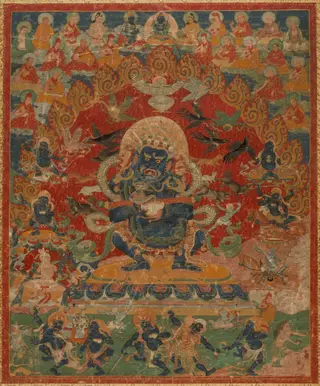 Mahakala Panjarnata (Lord of the Pavilion)
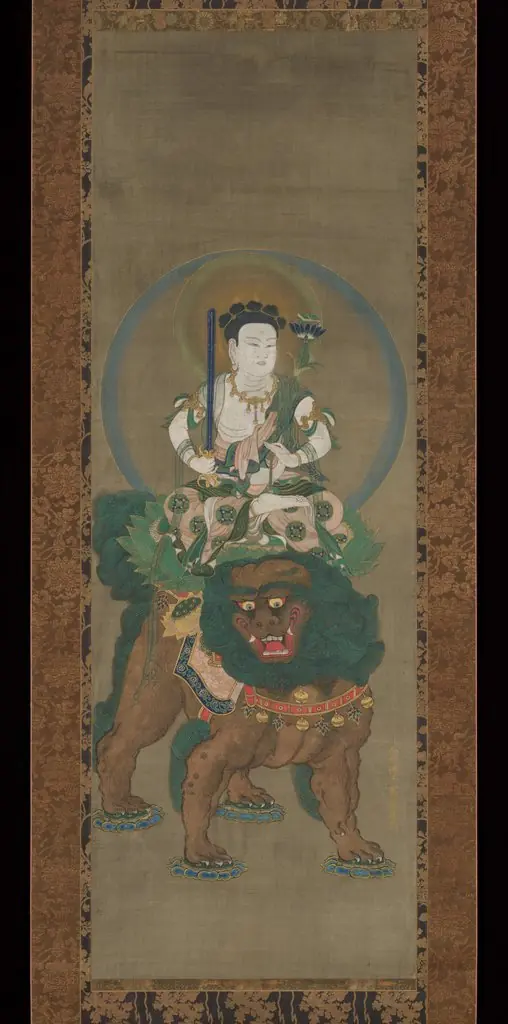 The Bodhisattva Five-Topknot Monju (Manjushri) (Gokei Monju Bosatsu zō)
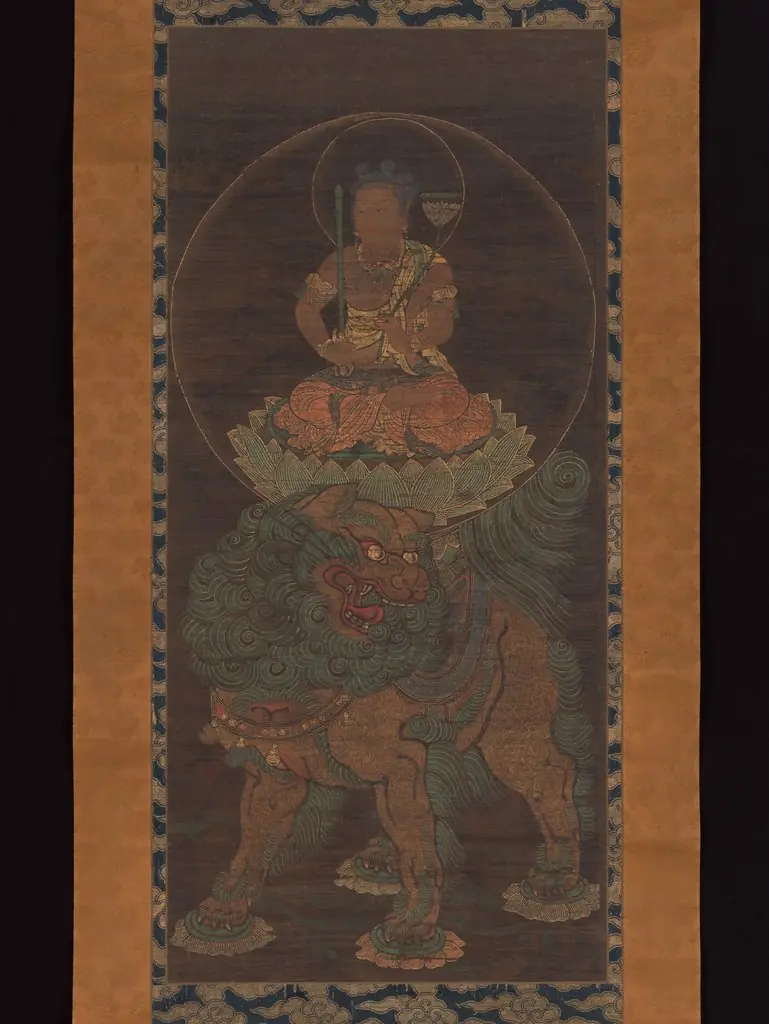 The Bodhisattva Monju (Manjushri) with Five Topknots
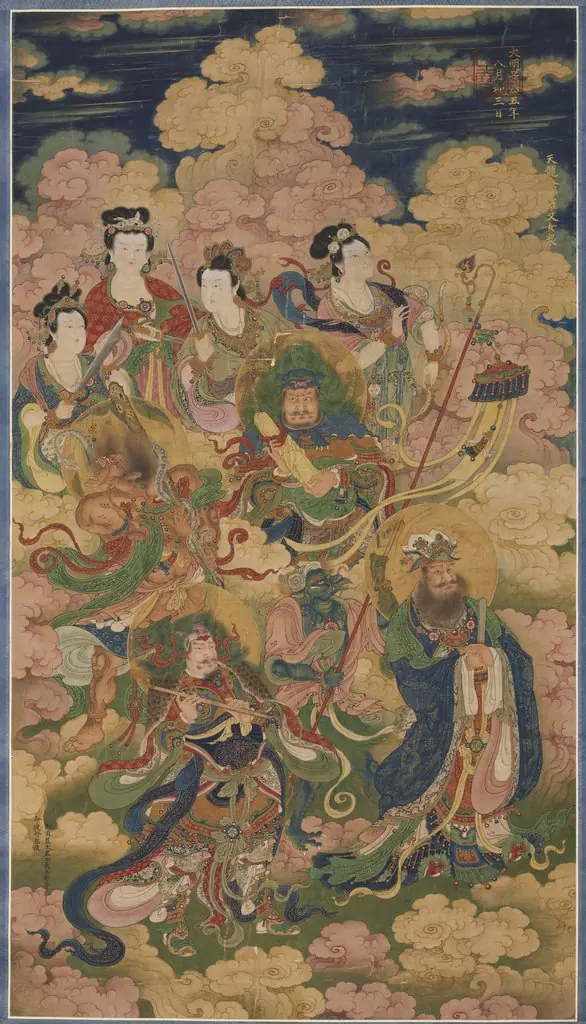 The Eight Hosts of Deva, Naga, and Yakshi
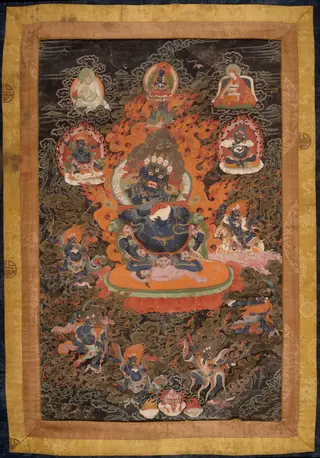 Mahakala and Companions
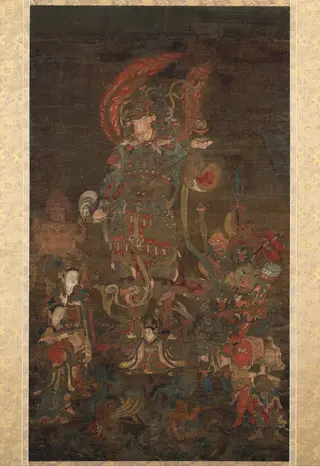 Bishamonten, the Guardian of the North, with his Retinue
 Puxian, the Bodhisattva of Benevolence
 Shakyamuni with two attendants
 Buddha Shakyamuni and the Eighteen Arhats
 Untitled