Artwork
The Bodhisattva Monju (Manjushri) with Five Topknots
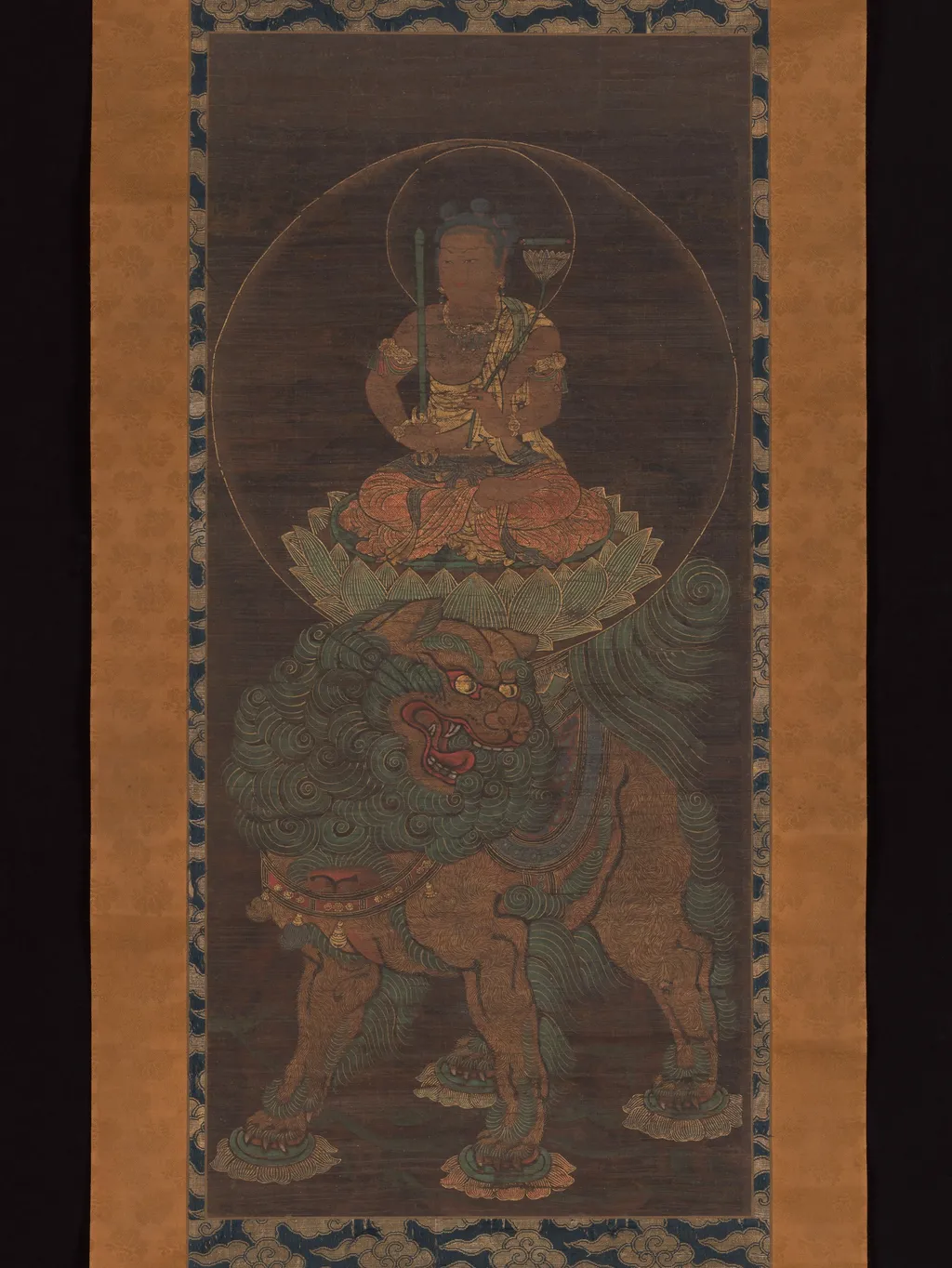
The Bodhisattva Monju (Manjushri) with Five Topknots is an unspecified painting by the Song dynasty landscape artist Unknown. It dates from 1346 and is held in the collection of the Metropolitan Museum of Art. The work portrays a seated figure on a lotus blossom, which itself rests upon the back of a fantastical beast.
About this work
Overview
The work portrays a seated figure on a lotus blossom, which itself rests upon the back of a fantastical beast. The central character wears a crown, holds a staff in the right hand, and rests the left hand calmly in the lap, all enveloped by a luminous halo. The composition balances serenity with the creature’s fierce visage, rendered in vivid hues and strong outlines.
Subject & Meaning
The figure represents the bodhisattva Monju, known in Sanskrit as Mañjuśrī, the embodiment of wisdom in Buddhist tradition. The lotus signifies purity, while the staff, often associated with the sword of knowledge, underscores the bodhisattva’s role in cutting through ignorance. The five topknots may allude to the five wisdoms or the five aggregates of existence.
Technique & Style
Executed with bold line work and saturated pigments, the painting employs a flat, decorative surface typical of East Asian religious art. Intricate patterns adorn the garment, and the halo is rendered with concentric bands that enhance the figure’s radiance. The contrast between the smooth, calm figure and the snarling beast is achieved through sharp, angular brushstrokes.
History & Provenance
The piece belongs to a tradition of Buddhist devotional paintings that circulated in East Asia during the medieval period. While the precise origin is uncertain, stylistic elements suggest it was produced in a workshop that catered to monastic patrons, likely in a region where Mahayana Buddhism flourished.
Context
In Buddhist iconography, Monju is frequently depicted holding a sword or a sutra, symbols of intellectual insight. The inclusion of a mythic creature beneath the lotus reflects a common motif where divine beings are shown transcending earthly or demonic forces, emphasizing spiritual triumph.
Legacy
Images of Monju with similar attributes have persisted in temple murals, scrolls, and later printed media, influencing visual representations of wisdom across centuries. The painting’s vivid palette and clear symbolism continue to inform contemporary understandings of Buddhist artistic conventions.
Artist & collection









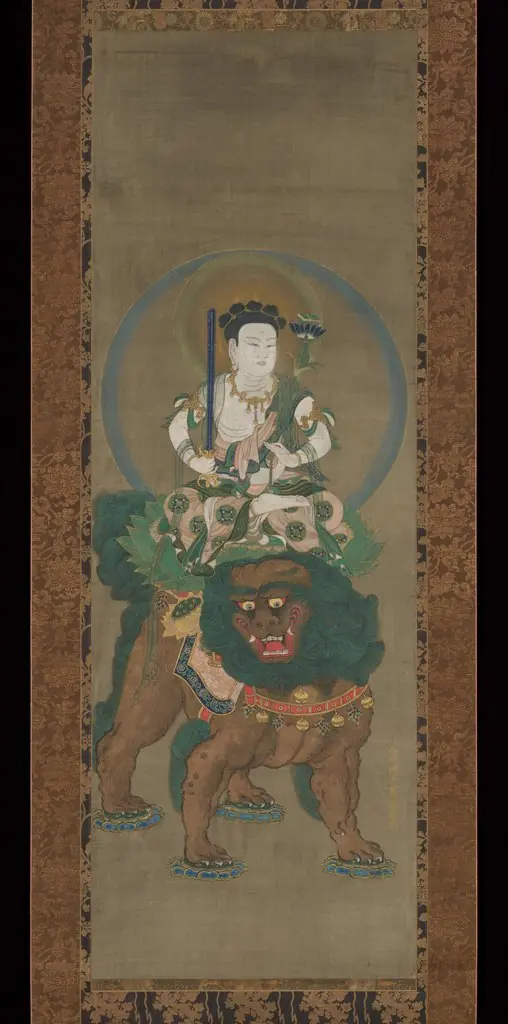
- The Bodhisattva Five-Topknot Monju (Manjushri) (Gokei Monju Bosatsu zō)
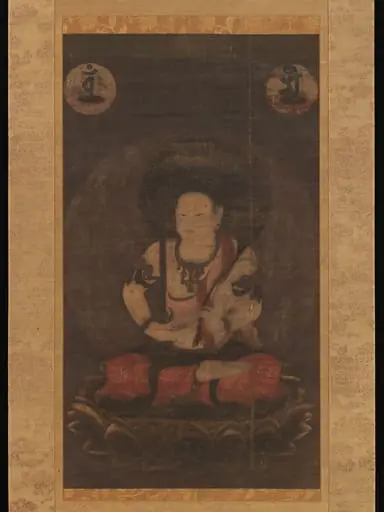 五髻文殊菩薩像|The Bodhisattva Monju (Manjushri) with Five Topknots
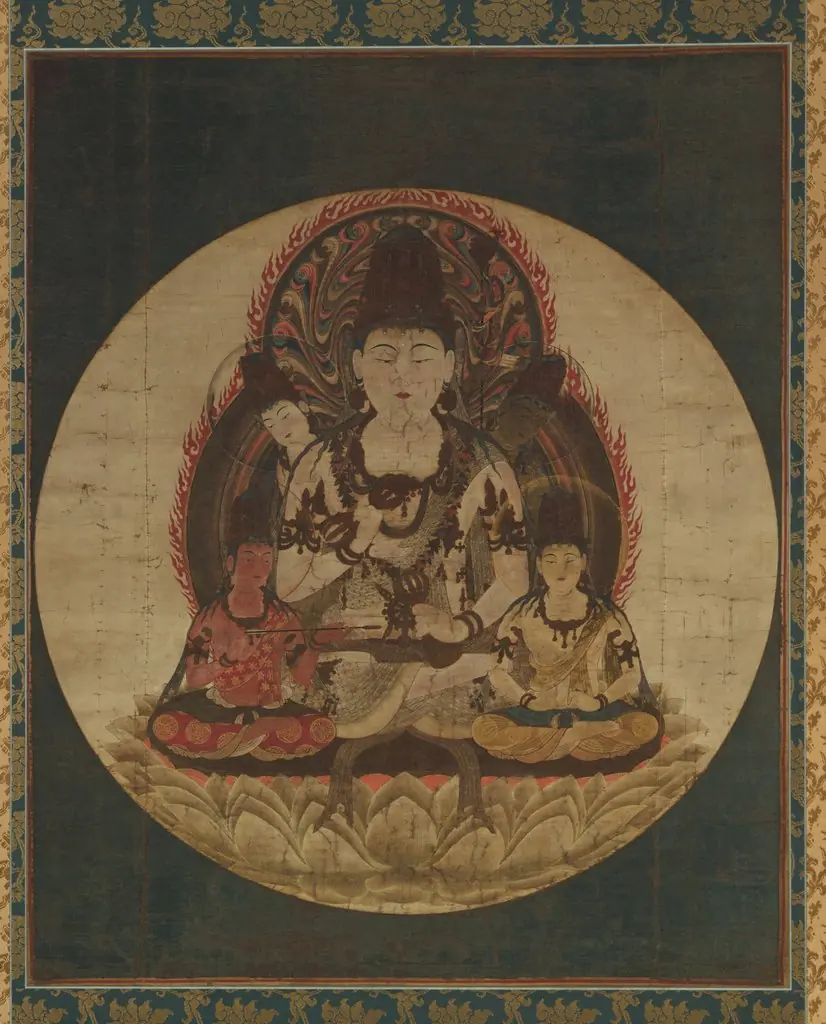 The Secret Five Bodhisattvas (Gohimitsu Bosatsu)
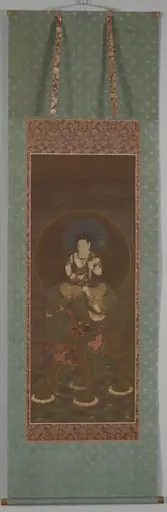 Monju with Five Hair Knots
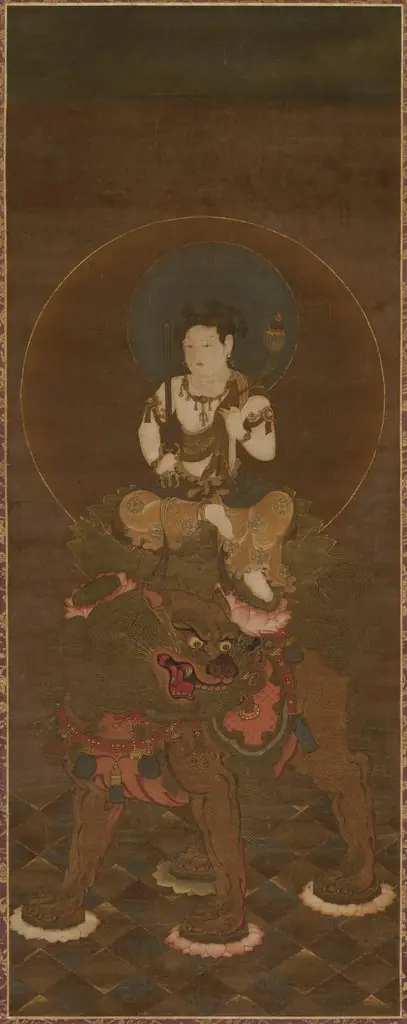 Monju with Five Hair Knots
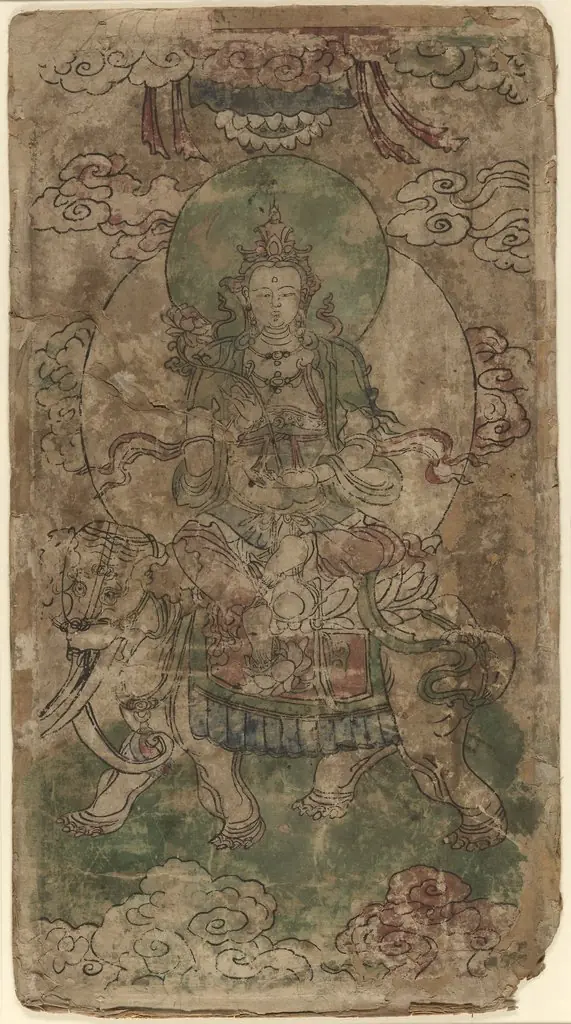 Puxian, the Bodhisattva of Benevolence
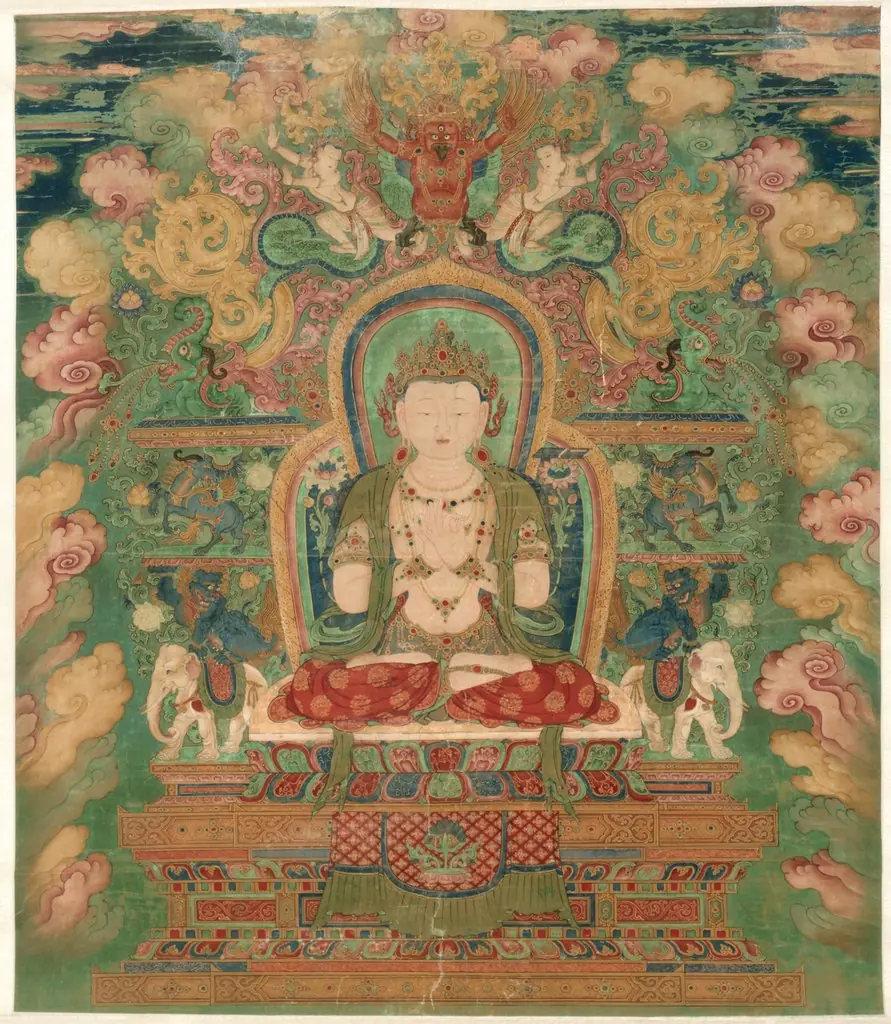 Manjushri
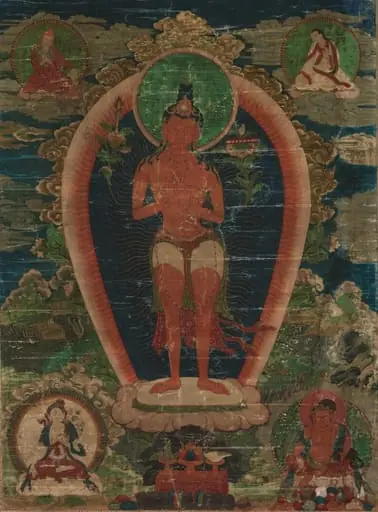 Bodhisattva Padmapani
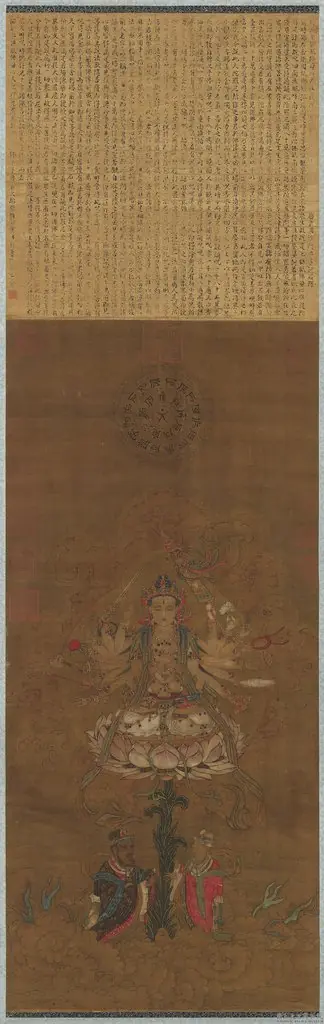 Cundi Bodhisattva
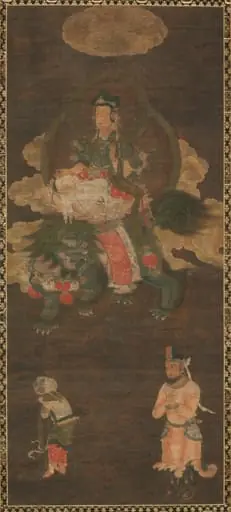 Shakyamuni Triad: Buddha Attended by Manjushri and Samantabhadra (Bodhisattva with Lion)