Artwork
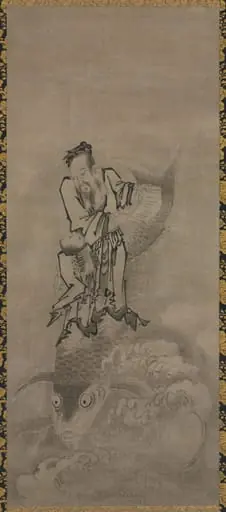
Immortal Riding on a Carp
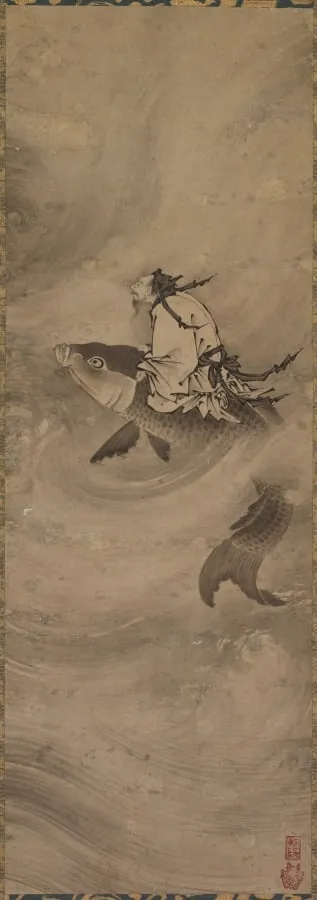
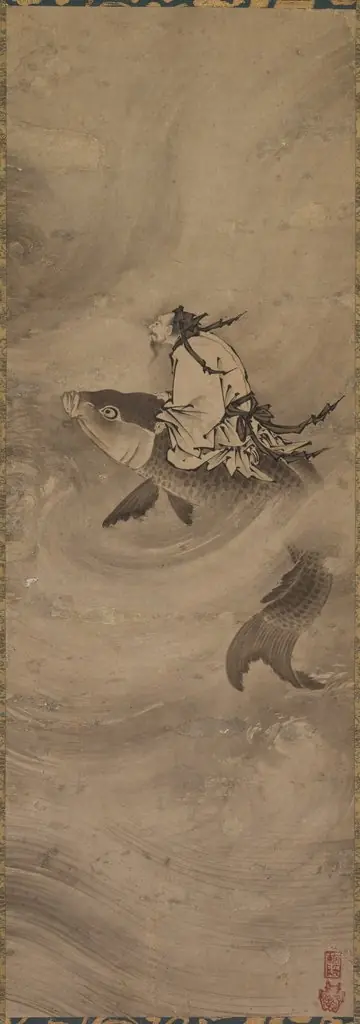
Immortal Riding on a Carp is an unspecified painting by the Renaissance artist Unknown. It dates from 1600 and is held in the collection of the Cleveland Museum of Art. The work depicts a solitary figure astride a massive carp, poised as the creature thrusts upward through turbulent water.
- Accession no.
- 1992.387
- Credit line
- Bequest of Maud Eells Corning
About this work
Overview
The work depicts a solitary figure astride a massive carp, poised as the creature thrusts upward through turbulent water. Swirling waves surround the pair, while the rider is clothed in a flowing robe topped by a tall, formal hat. The composition captures a moment of dynamic motion, emphasizing the tension between human presence and the powerful aquatic animal.
Subject & Meaning
The image suggests a mythic or allegorical encounter, where the rider’s elevated position on the carp may symbolize mastery over natural forces or a journey across a watery realm. The towering hat and formal attire hint at a scholarly or official identity, perhaps alluding to themes of immortality, travel, or the transcendence of ordinary life through extraordinary means.
Technique & Style
Executed in dark ink on a light ground, the painting relies on stark contrasts to define form. The artist renders the carp’s scales and the surrounding ripples with fine, layered strokes that give a sense of three‑dimensionality. The use of chiaroscuro heightens the drama, allowing the figures to emerge sharply from the luminous background while the surrounding water recedes into shadow.
History & Provenance
The piece originates from a tradition of East Asian ink painting, where solitary figures interacting with mythic creatures are a recurring motif. While specific details of its creation and ownership are not recorded, the work aligns with the aesthetic conventions of the late Ming to early Qing periods, when ink brushwork and symbolic narratives were prevalent among literati artists.
Context
In the broader visual culture of its time, depictions of humans riding fish or dragons served as visual metaphors for scholarly ambition and spiritual ascent. The painting’s emphasis on ink contrast and fluid motion reflects the period’s fascination with capturing the essence of nature through minimal yet expressive brushwork, a hallmark of scholarly painting.
Artist & collection