Artwork
Laila and Majnun
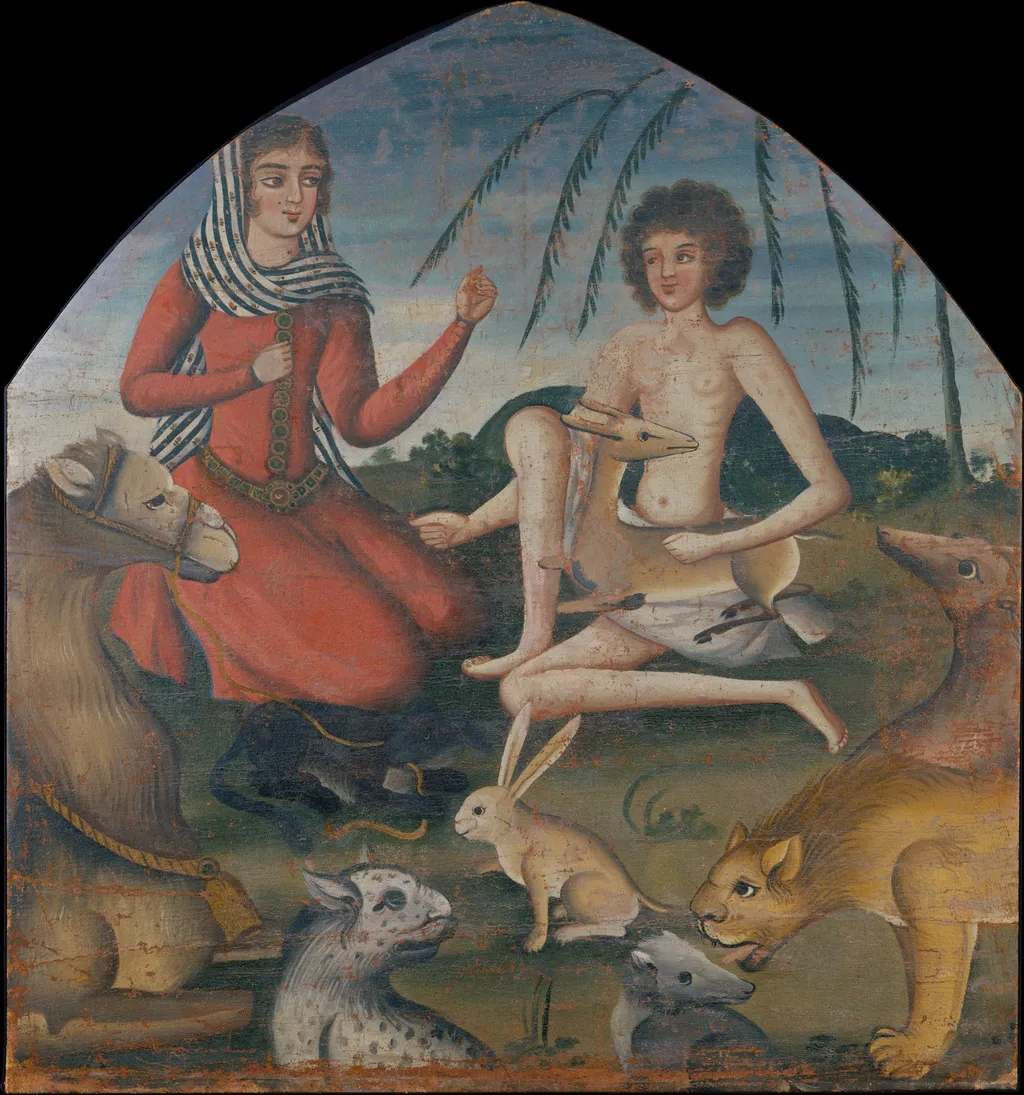
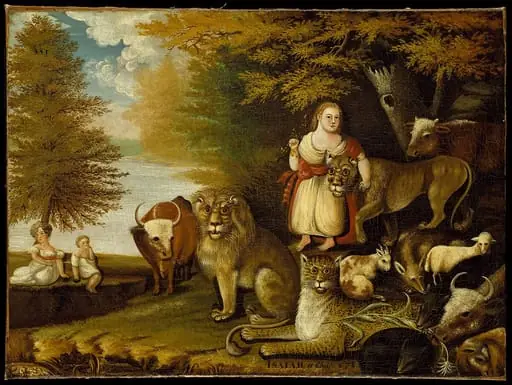
Laila and Majnun is an oil painting. It dates from 1750 and is held in the collection of the Metropolitan Museum of Art. The canvas depicts a tranquil hillside where a man and a woman sit amid a modest gathering of animals.
About this work
Subject & Meaning
The painting portrays the legendary lovers Laila and Majnun in an intimate moment, drawing on the tragic romance from Arabic and Persian literary tradition that symbolizes divine love and spiritual yearning. The work is rendered in oil on canvas, created in Iran around 1750, reflecting the transregional transmission of miniature painting aesthetics into full-scale portraiture.
The composition emphasizes emotional connection through close physical proximity and expressive gestures, while the rich color palette and intricate detailing evoke the opulence of courtly storytelling. As part of the Metropolitan Museum of Art's collection, the piece exemplifies how narrative subjects from classical Persian poetry were adapted into standalone artworks during the 18th century.
Technique & Style
Laila and Majnun is executed in oil paint on canvas, a support and medium combination characteristic of eighteenth-century Iranian panel painting.
Laila and Majnun is executed in oil paint on canvas, a support and medium combination characteristic of eighteenth-century Iranian panel painting. The work is classified as a painting and is dated to 1750, produced in Iran. Its current home is the Metropolitan Museum of Art.
The sources document the basic technical attributes, oil-based pigments applied to a woven canvas support, but do not provide further detail on handling, surface condition, palette, brushwork, or stylistic features such as compositional structure, figural treatment, or decorative borders.
History & Provenance
Laila and Majnun is an oil painting on canvas dated 1750 and produced in Iran. The work is held in the collection of the Metropolitan Museum of Art, where it remains located. No details regarding a specific commissioner, prior ownership, or chain of custody prior to its acquisition by the Metropolitan Museum of Art are documented in the available sources.
The painting is attributed to an anonymous painter, and the sources do not provide information on the circumstances of its commission or the identity of the patron. Likewise, the provenance history preceding the Metropolitan Museum of Art's holdings is not recorded in the materials consulted.
Legacy
The painting Laila and Majnun has shaped regional artistic traditions through its narrative intensity and stylistic synthesis of Persian miniature conventions with European oil techniques. Its presence in the Metropolitan Museum of Art’s collection has ensured continued scholarly attention to its compositional strategies and cultural context. Contemporary interpretations often reference the work when examining cross-cultural transmission of 18th-century visual storytelling in Southwest Asian art circles.
The painting’s legacy is anchored in its role as a visual exemplar of the Laila and Majnun love story, a theme that recurs across Middle Eastern artistic canons. Its stylistic dialogue between manuscript illumination and oil painting has influenced later hybrid works in the region.
The work’s attribution to an anonymous hand adds to its mystique, contributing to ongoing debates about authorship in 18th-century Persian-influenced art. Its material composition of oil paint on canvas reflects a transitional moment in technique adoption.
Overview
The canvas depicts a tranquil hillside where a man and a woman sit amid a modest gathering of animals. The woman, positioned on the left, is dressed in a vivid red garment edged with gold and wears a striped head covering. The man, on the right, is unclothed above the waist, cradling a small object, while a rabbit, a dog, and a flock of sheep linger nearby. The scene unfolds beneath a clear blue sky punctuated by distant palms and gentle hills.
Context
The composition reflects a tradition of romanticized rural scenes common in 19th‑century European painting, where idyllic nature serves as a backdrop for human emotion. The use of a hilltop setting, palm silhouettes, and a modest animal entourage aligns the piece with Orientalist influences that were popular among artists depicting exoticized landscapes.
Artist & collection

- Orpheus panel from the Diwan-i Am, Delhi Fort
 The Peaceable Kingdom
 Adam Naming the Animals
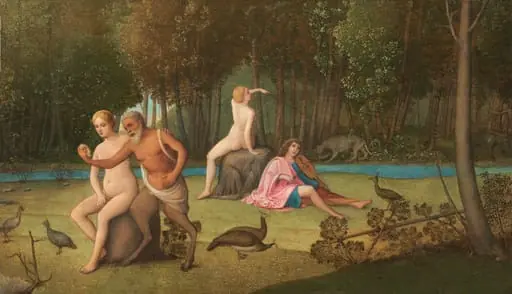 Orpheus
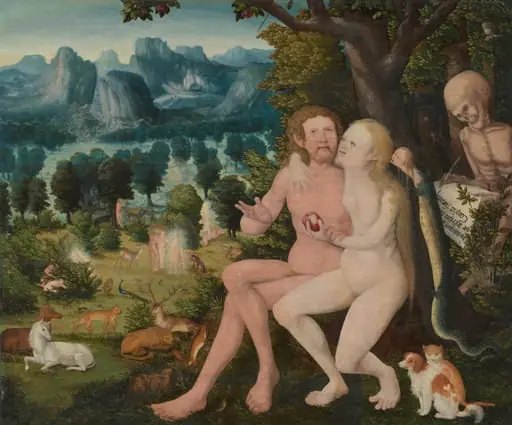 The Fall of Man with Scenes of the Creation
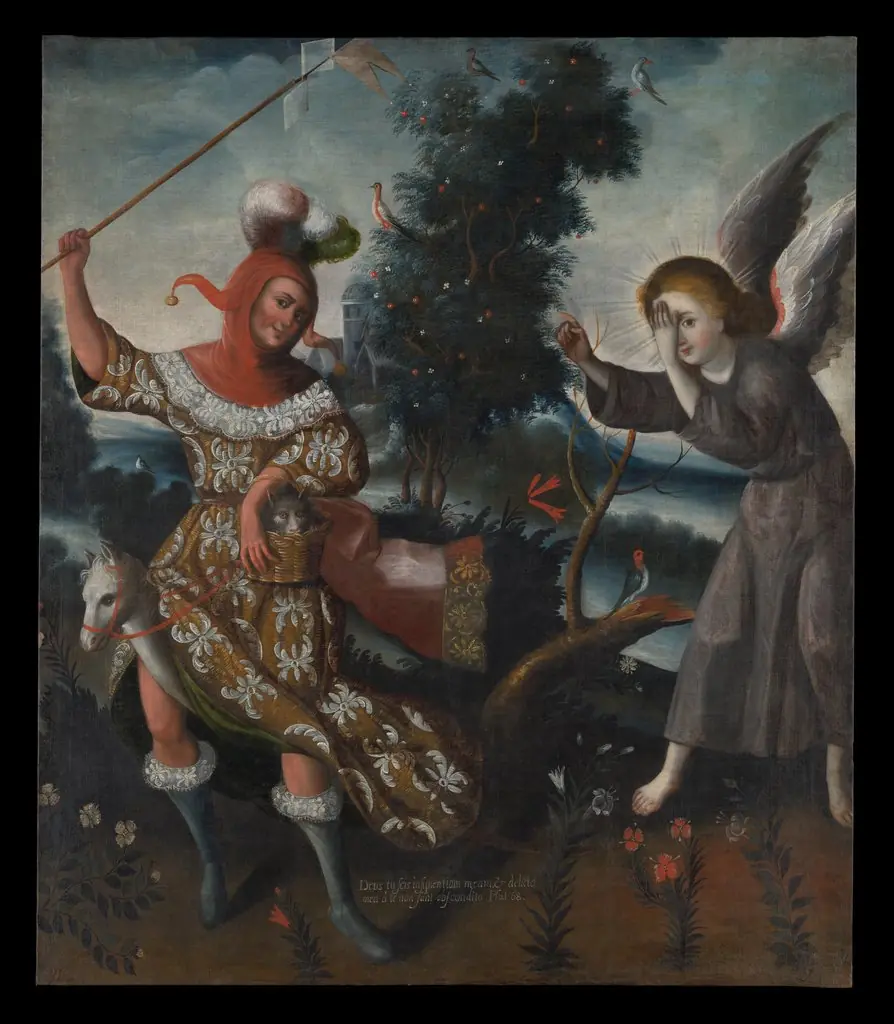 Emblem of Folly
 The Fall of Man with Scenes of the Creation
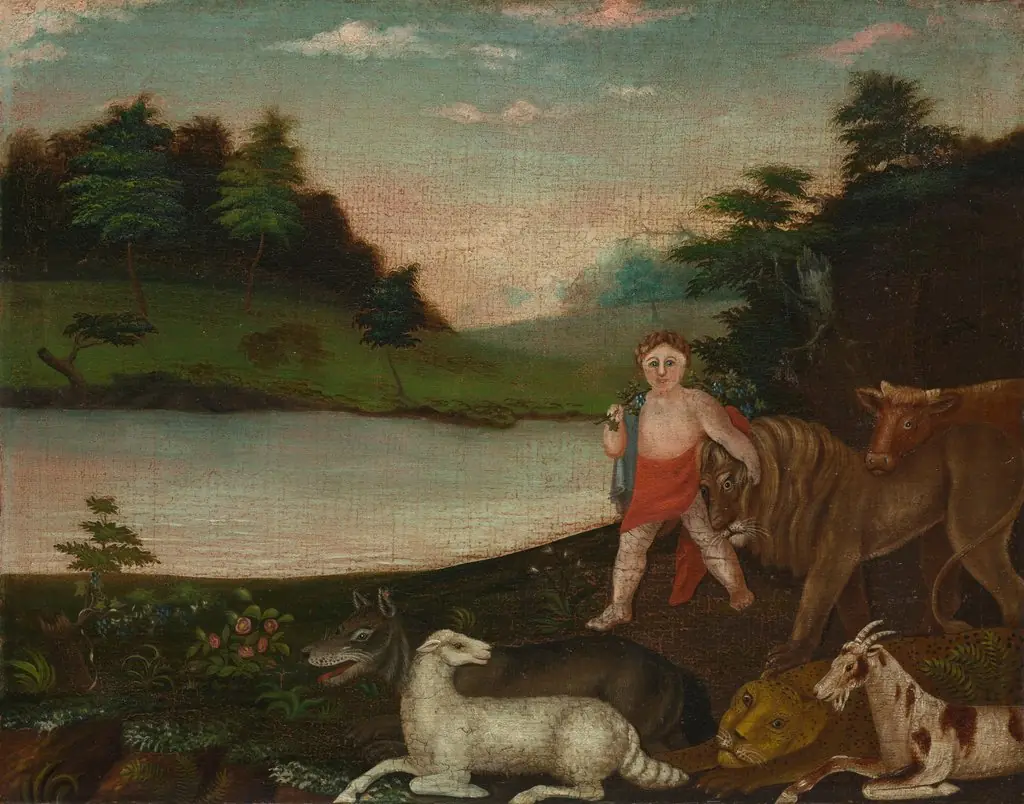 The Peaceable Kingdom
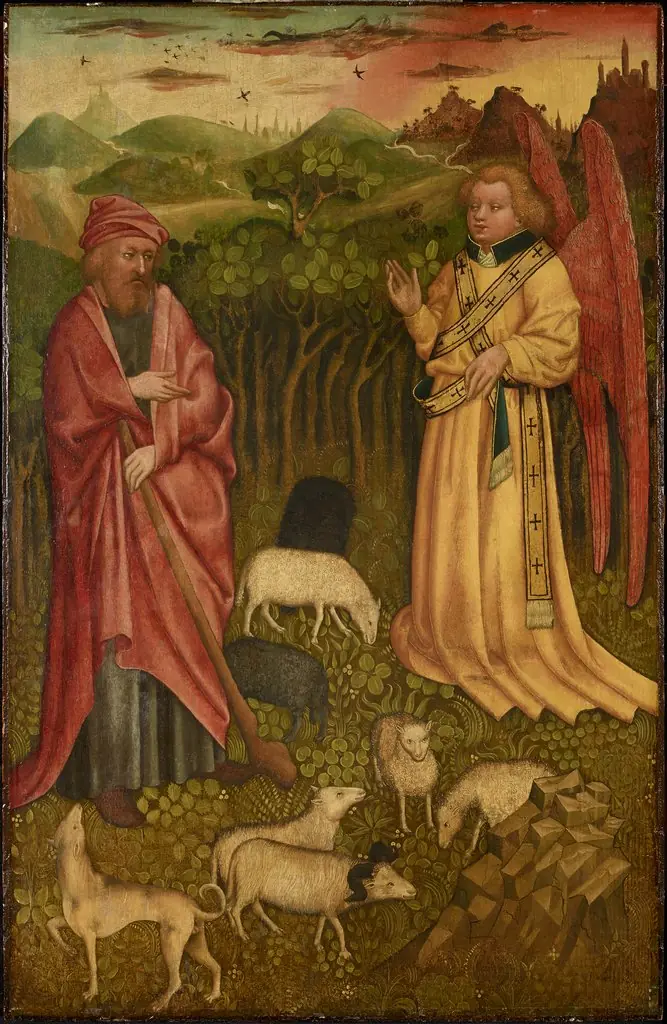 Botschaft des Engels an Joachim
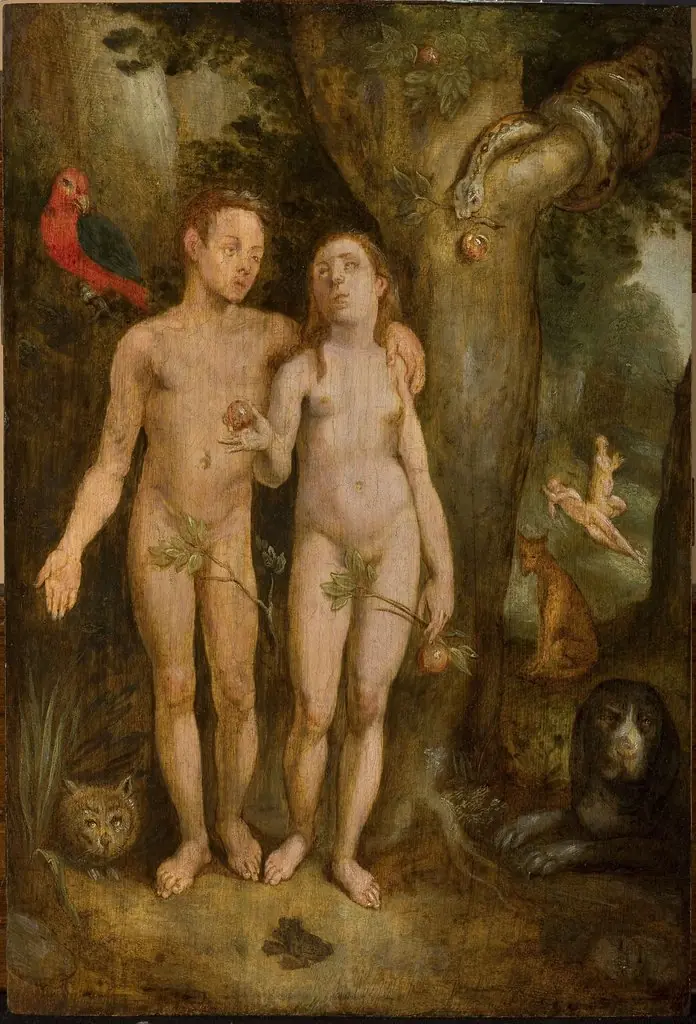 Adam and Eve (Genesis 3:1-7)
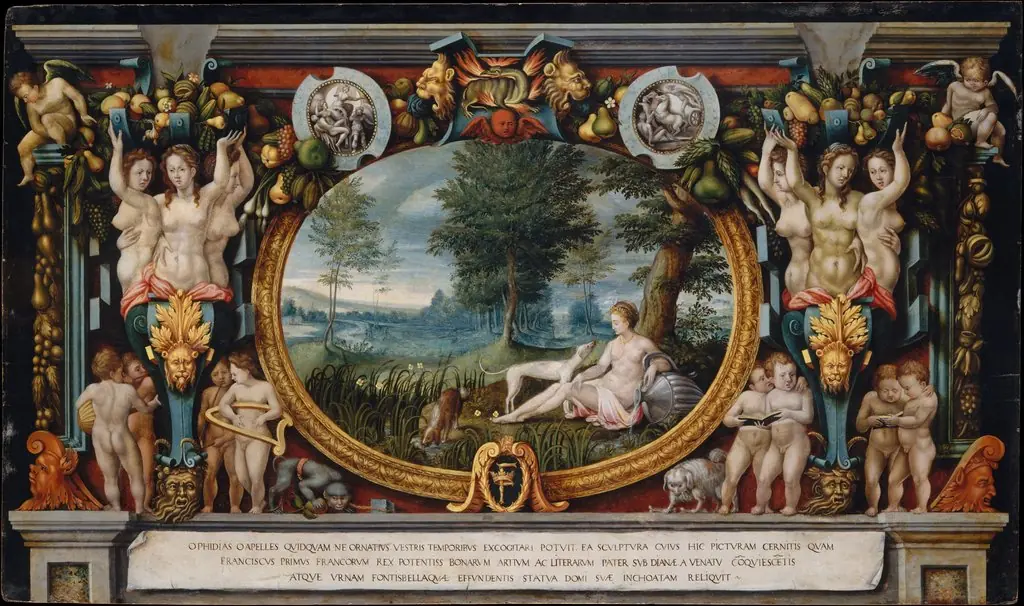 The Nymph of Fontainebleau
 Peaceable Kingdom