Artwork
Man between Virtue and Vice
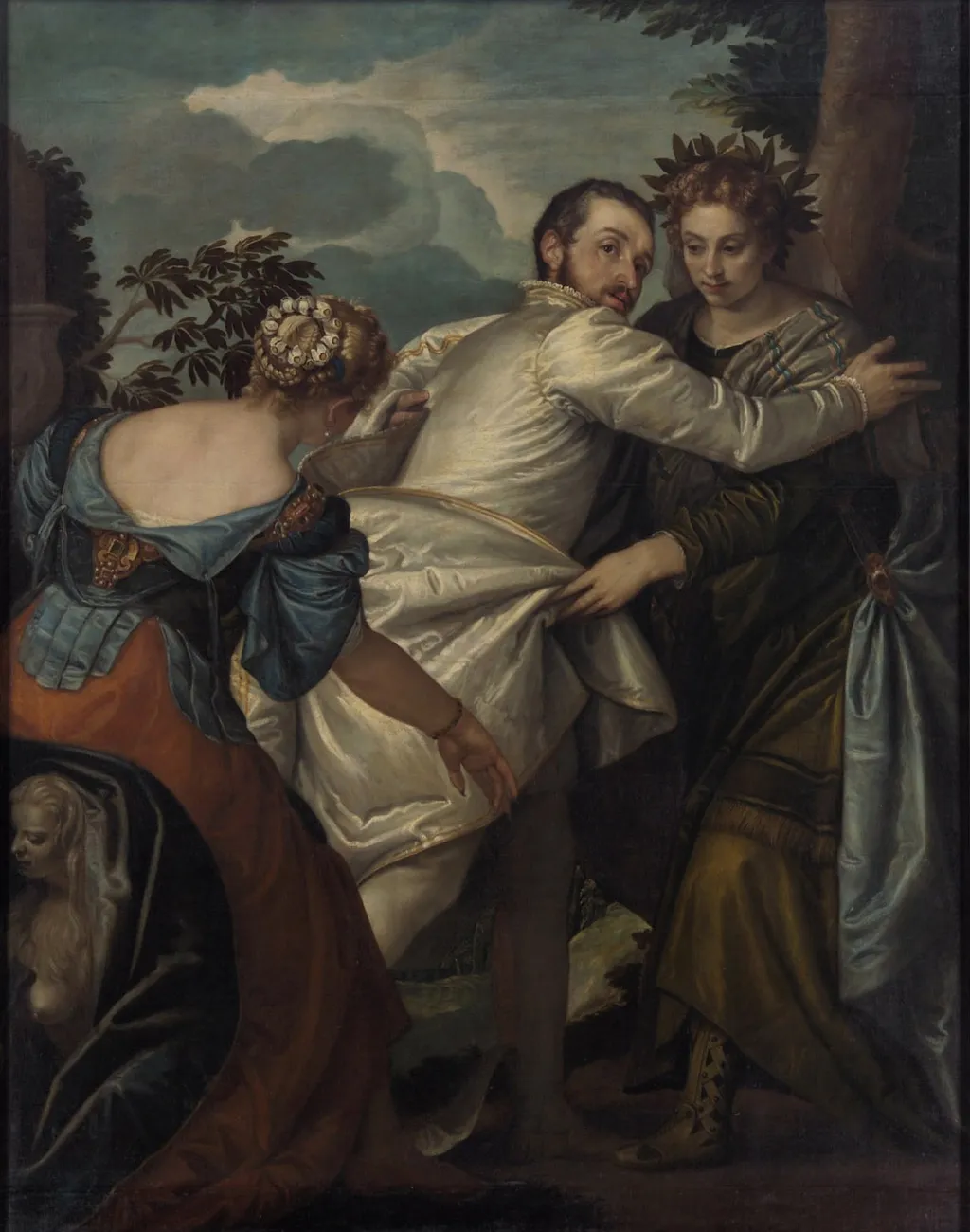
Man between Virtue and Vice is an oil painting by the Early Baroque Italian artist Unknown. It dates from 1600 and is held in the collection of the Kunsthistorisches Museum.
About this work
Subject & Meaning
The female figures serve as personifications of opposing moral forces, guiding the viewer to contemplate the consequences of each potential decision.
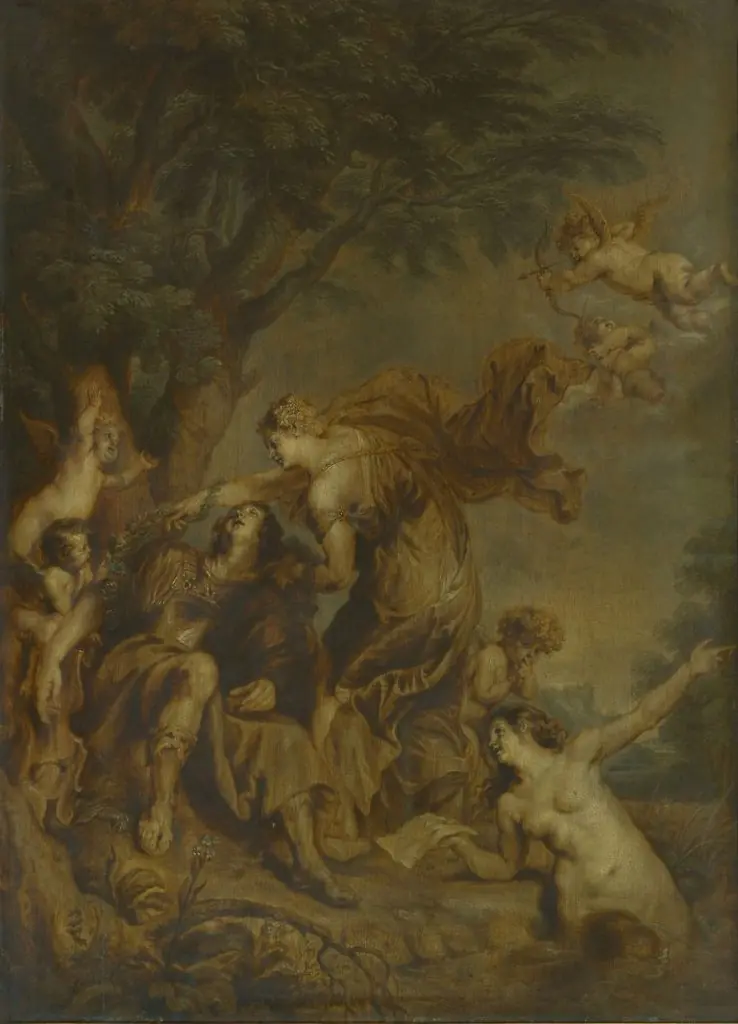
The work is an allegorical painting from 1600 depicting a man positioned between two women, representing the moral choice between Virtue and Vice. As an allegory, the composition illustrates the universal human struggle to select the righteous path over temptation. The title explicitly defines the narrative, where the central male figure embodies the individual facing this ethical dichotomy.
The female figures serve as personifications of opposing moral forces, guiding the viewer to contemplate the consequences of each potential decision.
Technique & Style
The work is executed in oil paint on a support consistent with the painting classification of the period. Created around 1600, the piece functions as an allegorical composition depicting a man and a woman. Stylistically, it is identified as a painting after the Venetian master Paolo Caliari, known as Veronese.
The handling reflects the traditions of the allegorical genre, focusing on the narrative interaction between the figures representing Virtue and Vice.
History & Provenance
The allegorical oil painting Man between Virtue and Vice was produced around 1600, as indicated by its inception date of 1600‑01‑01. It is described as a work after Paolo Caliari (Veronese), suggesting it derives from his compositional model. The painting entered the collection of Archduke Leopold Wilhelm of Austria, who owned it in the early seventeenth century, and subsequently became part of the holdings of the Kunsthistorisches Museum in Vienna, where it remains today.
Overview
This oil painting depicts a man clad in a shiny silver robe positioned between two women, set against a somber backdrop of a dark forest and cloudy sky. The composition conveys a sense of quiet drama through the subjects' poses and expressions.
Context
The use of chiaroscuro and the moral allegory theme place the painting within the broader context of Baroque or early modern European art, where such techniques and subjects were common for conveying moral lessons or emotional depth.
Legacy
While the painting's specific impact on the art historical canon is not detailed here, its employment of chiaroscuro reflects a wider influence of this technique in Western art, encouraging viewers to explore similar works that leverage light and shadow for narrative effect.
Artist & collection