Artwork
Maria mit dem Kind
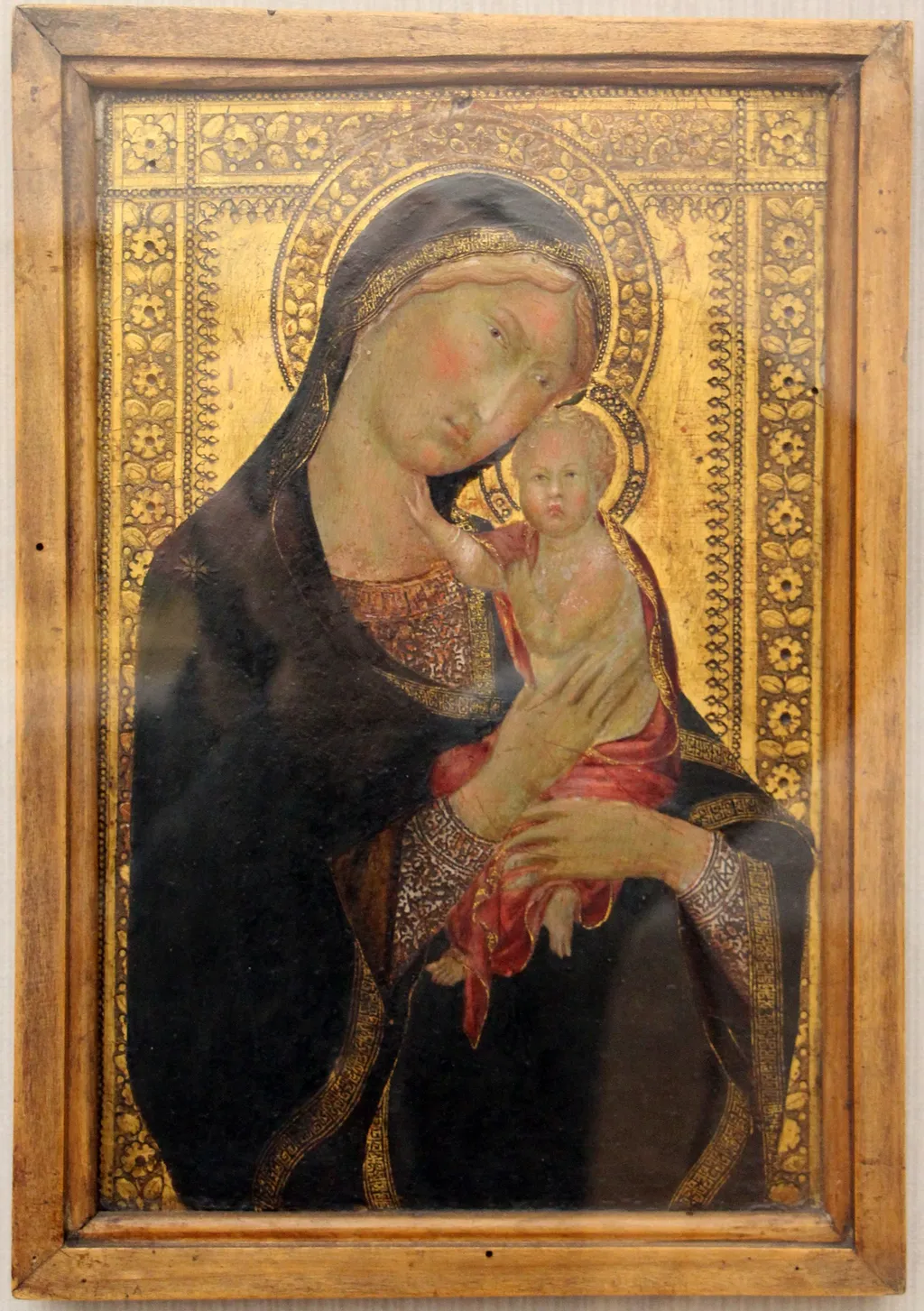
Maria mit dem Kind is a paint painting by the Byzantine icon painting artist Unknown. It dates from 1355 and is held in the collection of the Gemäldegalerie Berlin.
About this work
Overview
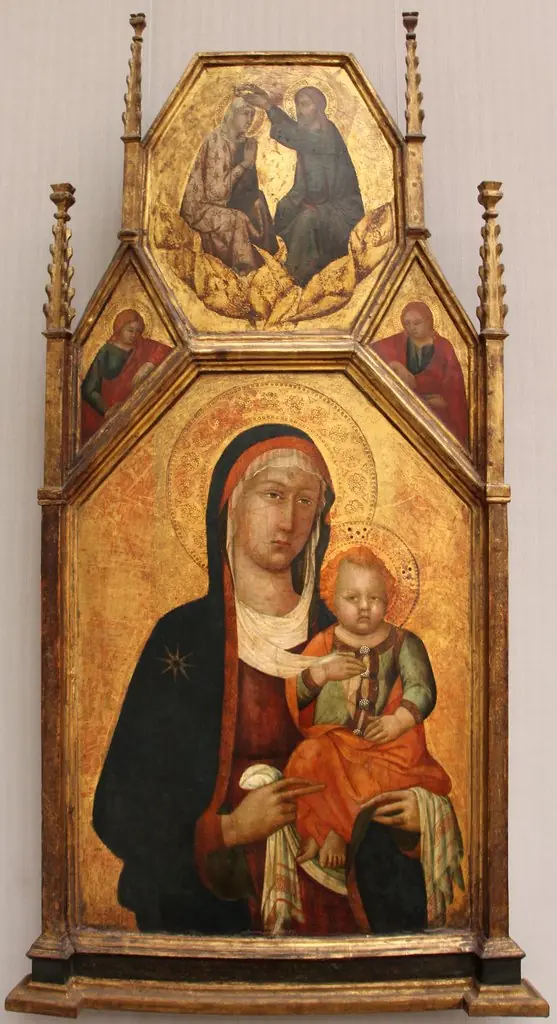
Executed in paint on a poplar panel, it depicts the Virgin Mary holding the Christ Child in a vertical format typical of fourteenth-century religious art.
Maria mit dem Kind is a devotional panel painting dated to 1355, attributed to an unknown artist and held in the Gemäldegalerie Berlin. Executed in paint on a poplar panel, it depicts the Virgin Mary holding the Christ Child in a vertical format typical of fourteenth-century religious art. The work represents a significant example of mid-fourteenth-century panel painting, distinguished by its extensive use of gold leaf and tooled decorative patterns. Its placement in the Gemäldegalerie, one of Europe's major collections of Old Master paintings, ensures its continued visibility in scholarly and public contexts, though it has received less concentrated critical attention than later Renaissance treatments of the same subject in the same museum.
Subject & Meaning
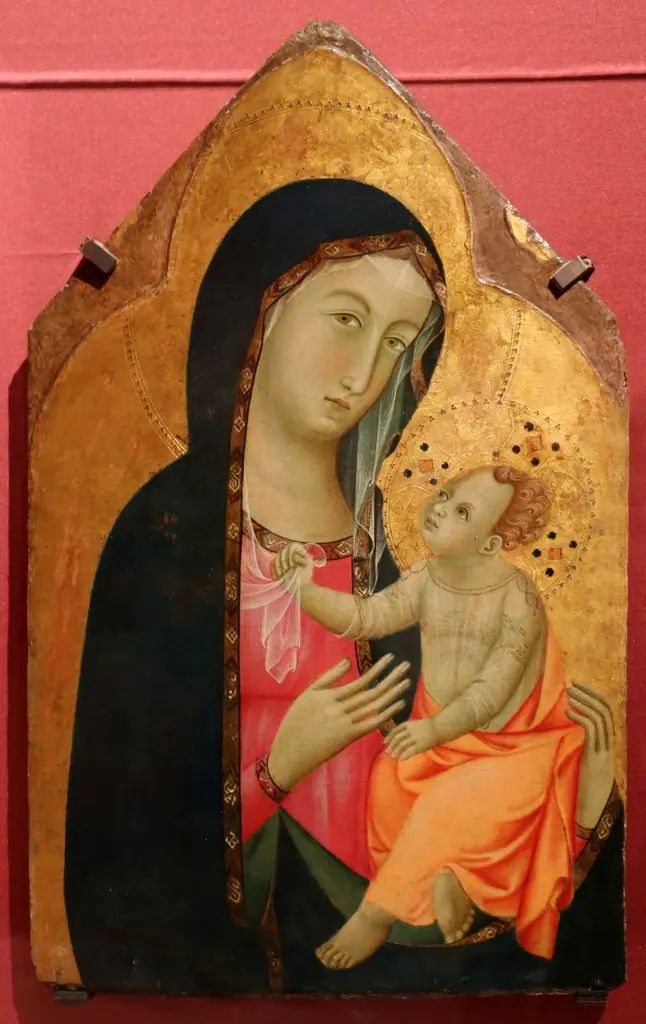
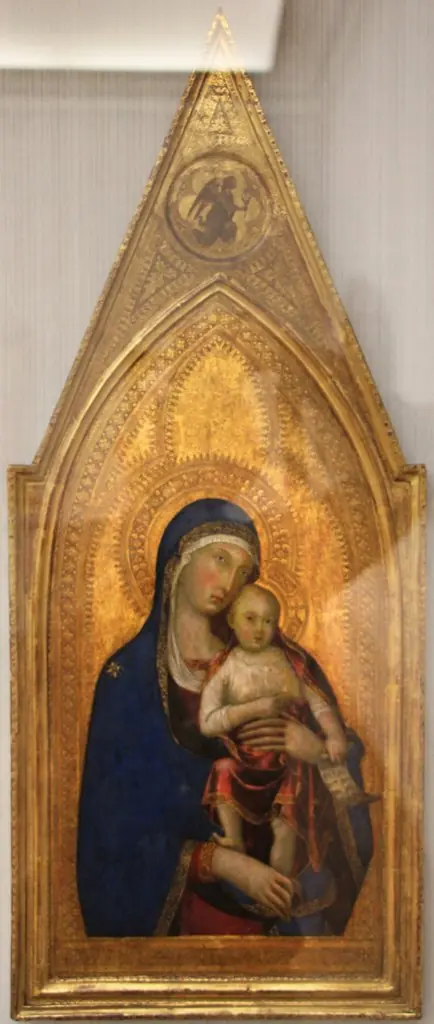
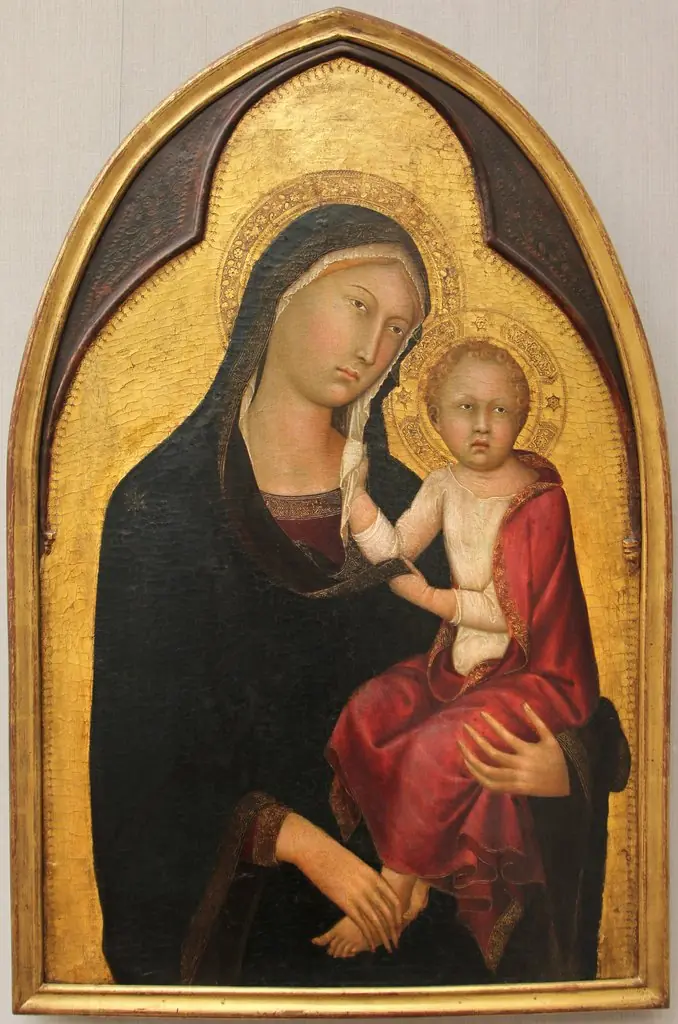
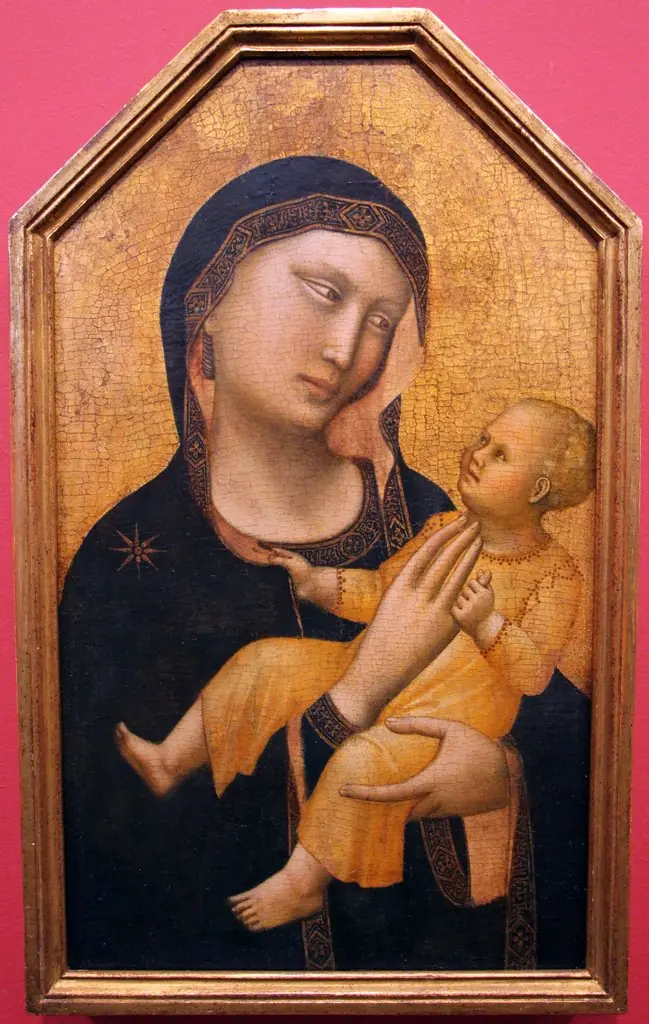
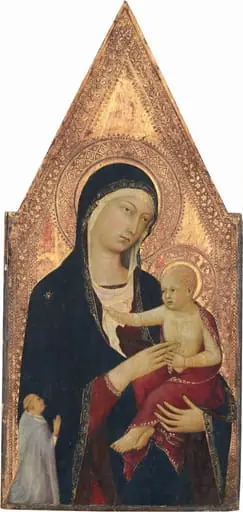
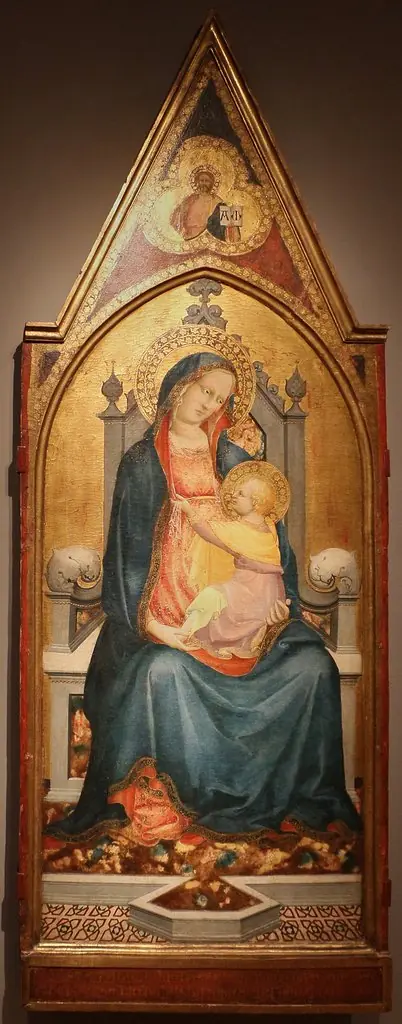
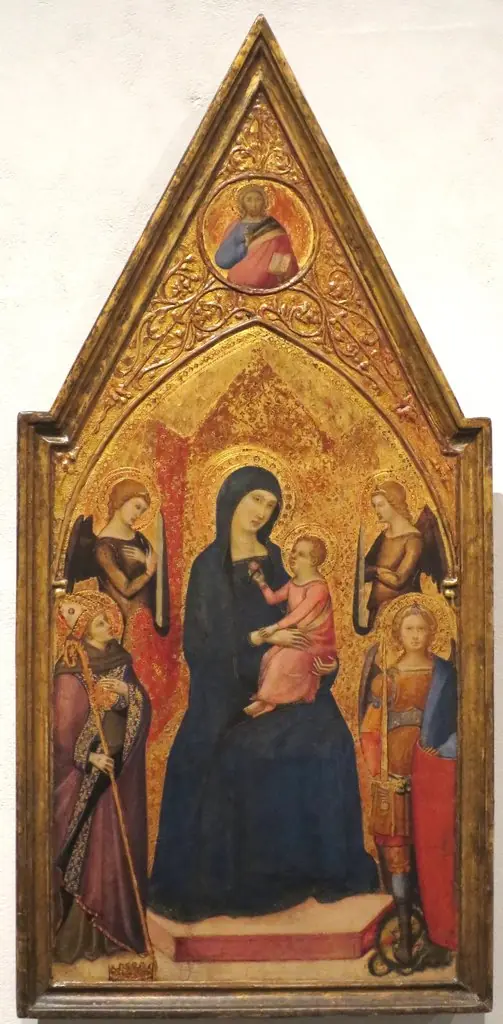
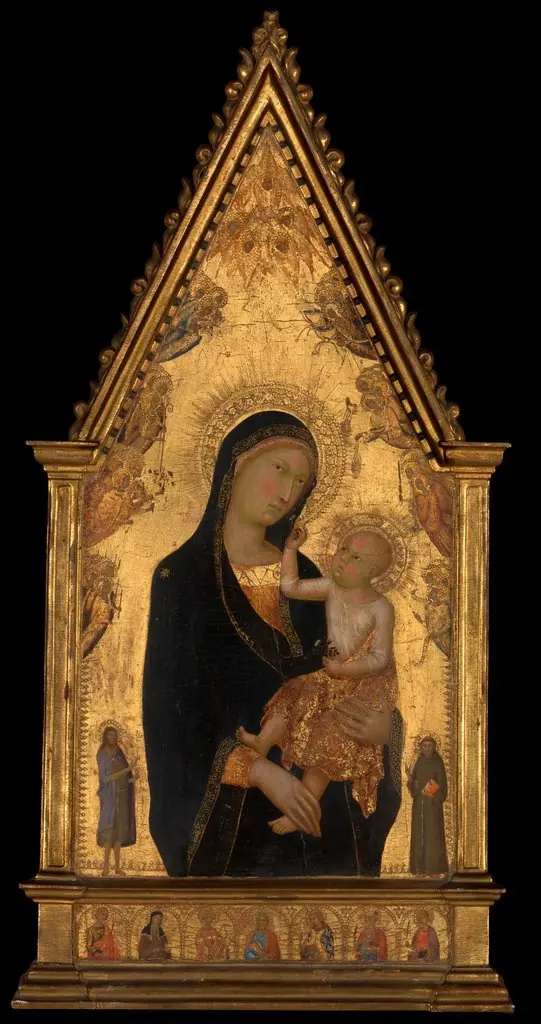
The painting depicts the Virgin Mary and the Christ Child, the central figures of Marian devotion in medieval Christianity. Mary appears in a dark blue mantle with gold trim, worn over a red and gold brocade dress, while the nude infant is held against her chest. Both figures bear gold halos with punched decorative patterns, signaling their sacred status. The composition emphasizes intimate maternal connection: Mary tilts her head toward the child, supporting his body with her left hand, while the infant raises his right hand toward her face in a gesture that suggests both affection and nascent blessing. The entirely gold background, covered with repeating floral and geometric motifs in tooled patterns, creates a heavenly, non-naturalistic space that separates the holy figures from earthly existence. This iconographic treatment aligns with established medieval conventions for Madonna and Child imagery, where gold backgrounds served to indicate divine radiance and the figures' placement in a timeless, sacred realm rather than a specific historical setting.
Technique & Style
The work is executed in paint on a poplar panel, a support typical of fourteenth-century European panel painting. The technique centers on the application of gold leaf for the ornamental background, with tooled patterns creating repeating floral and geometric motifs across the surface. The flesh tones are rendered with pale coloring and pink cheeks, with soft and gradual modeling that gives the figures a gentle, rounded presence. The deep blue of Mary's mantle and the red of her brocade dress contrast sharply with the dominant gold, creating a rich but restrained color palette characteristic of the period. Fine craquelure is visible throughout the surface, with areas of wear and darkening particularly in the blue mantle. The composition is centered and symmetrical, with the figures occupying most of the pictorial space in a manner that emphasizes their importance and devotional function. The handling of the drapery and the delicate rendering of the faces suggest a skilled practitioner working within established conventions of International Gothic style, though the anonymity of the artist precludes more specific attribution.
History & Provenance
The painting is dated to 1355, placing it firmly in the mid-fourteenth century. Its provenance before modern times is not documented in the available sources. The work is currently held by the Gemäldegalerie Berlin, where it is catalogued under the inventory number GG 1511. The museum's collection, part of the Staatliche Museen zu Berlin, encompasses major works of European painting from the thirteenth to the eighteenth century. No specific exhibition history is recorded for this panel in the provided sources, though its presence in the Gemäldegalerie ensures regular public display alongside other devotional images of the Madonna and Child from various periods.
Context
The painting belongs to a period of significant development in European panel painting, when devotional images of the Madonna and Child constituted one of the most important genres for private and institutional patronage. The Gemäldegalerie Berlin holds multiple works with the same subject and similar titles, including the celebrated Maria mit dem Kind by Andrea del Verrocchio, dated circa 1470, and another panel attributed to Verrocchio's circle or Pietro Perugino with inventory number 108. These later Renaissance works, with their developed naturalism, landscape backgrounds, and complex spatial construction, stand in marked contrast to the more hieratic, gold-ground style of the 1355 panel. The museum also holds a terracotta Virgin and Child by a follower of Donatello, dated circa 1430-50, illustrating the persistence of this subject across media and stylistic periods. The anonymous fourteenth-century painter worked at a time when Italian art was transitioning from the Italo-Byzantine tradition toward greater naturalism, though this panel retains the gold background and formal composition associated with earlier practice. The work's placement in the Gemäldegalerie allows for direct comparison with these later interpretations, highlighting the evolution of Marian imagery across two centuries of European art.
Legacy
As an anonymous work from 1355, Maria mit dem Kind has not generated the extensive scholarly literature devoted to named masters of the Renaissance. Its significance lies rather in its representative value: it embodies the visual conventions of fourteenth-century devotional painting and provides a benchmark for understanding the development of the Madonna and Child type. The painting's presence in the Gemäldegalerie Berlin ensures its role in ongoing narratives of European art history, where it serves as a point of comparison for both earlier and later treatments of this inexhaustible subject. The work's material characteristics, its poplar panel support and paint medium, contribute to understanding workshop practices and material culture of the period. Its condition, with fine craquelure and some darkening, documents the aging processes of fourteenth-century panel paintings and informs conservation approaches to similar works. While individual attribution has proved impossible, the panel remains a tangible connection to the devotional art that saturated the visual culture of medieval Europe.
Artist & collection