Artwork
Martyrdom of Saint Andrew
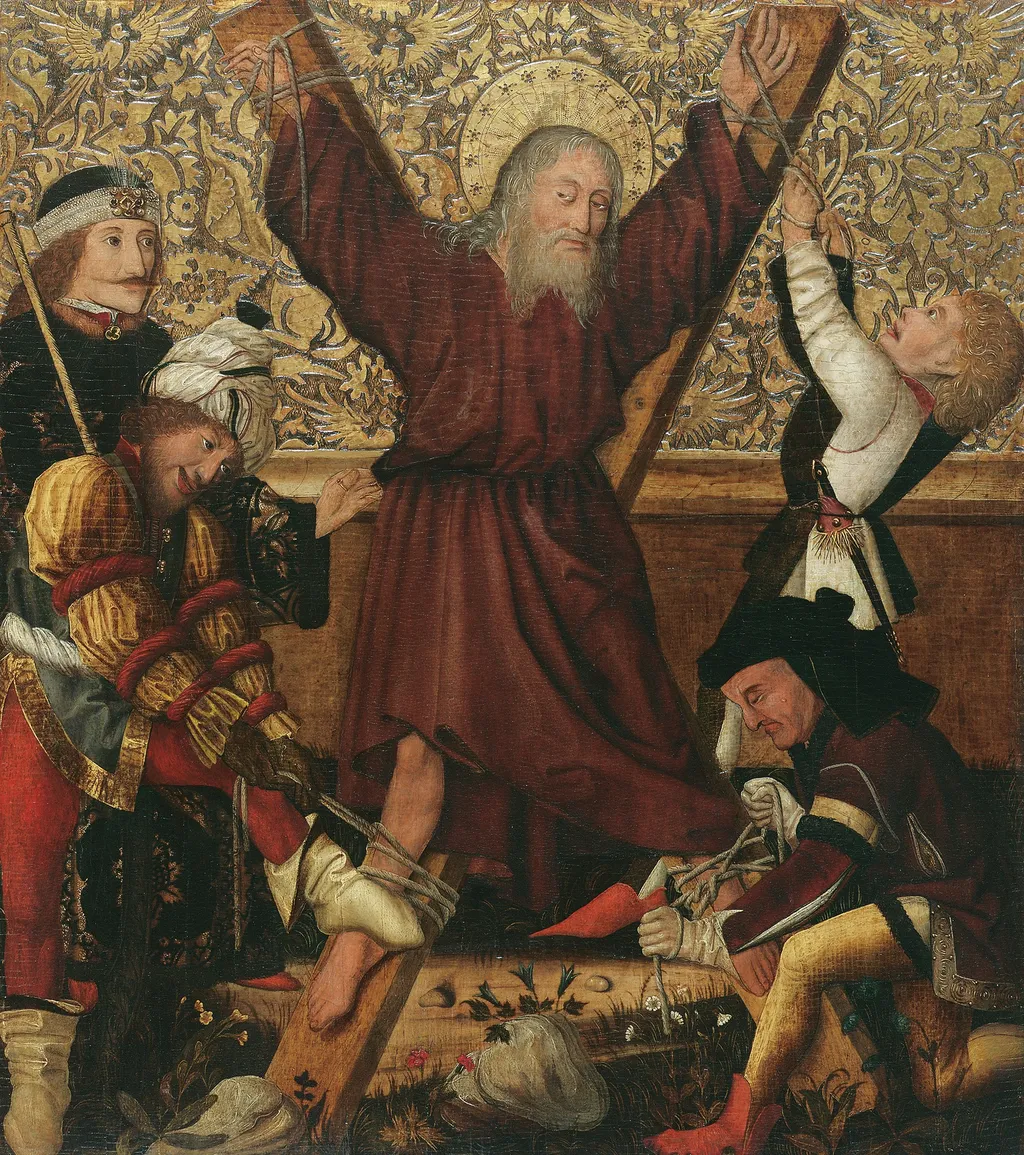
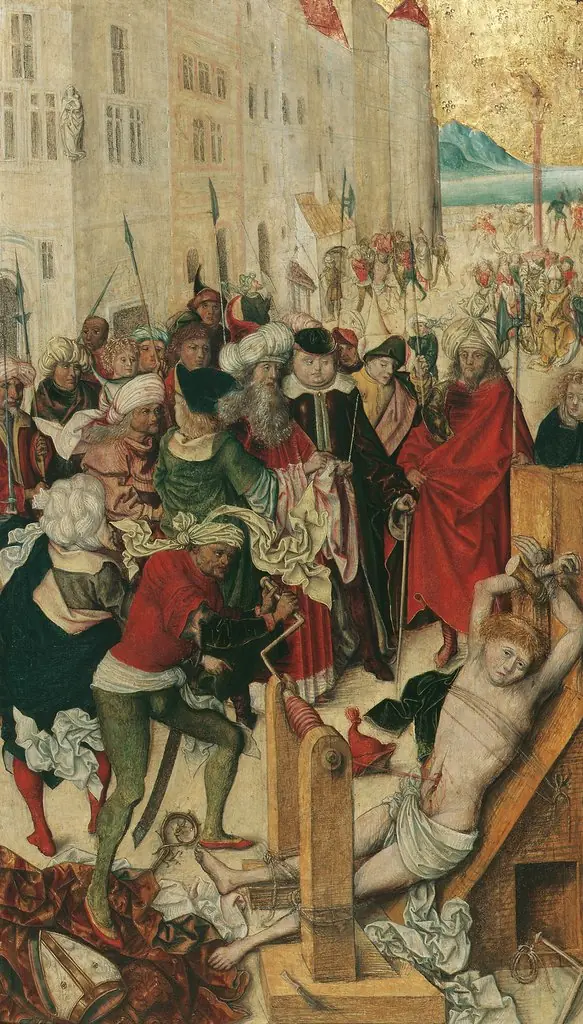
Martyrdom of Saint Andrew is an oil painting by the Early Renaissance artist Unknown. It dates from 1470 and is held in the collection of the Kunsthistorisches Museum.
About this work
Subject & Meaning
One figure in a jeweled turban carries a staff, another pulls a rope, a third raises his arms, and a fourth secures the bindings while wearing a sword.
The artwork portrays the apostle Andrew bound with thick ropes to a diagonal wooden cross, referencing his traditional X-shaped crucifixion. Andrew appears as a central bearded figure with a halo containing inscribed lettering, wearing a deep red robe, his feet bare and his hands tied to the cross arms. His calm expression with downcast eyes contrasts with the active strain and open mouths of the four surrounding figures, who wear elaborate contemporary dress rather than classical garments. One figure in a jeweled turban carries a staff, another pulls a rope, a third raises his arms, and a fourth secures the bindings while wearing a sword. Two skulls rest among grass, stones, and a small red flower at the base of the cross, grounding the scene in mortality and likely referencing Golgotha. The composition emphasizes the moment of execution, capturing the serenity of the saint amidst the violent exertion of his executioners.
History & Provenance
The painting is dated to 1470, though the specific circumstances of its commission and early ownership remain unrecorded. It is classified as a religious genre painting. The work is currently housed in the Belvedere, part of the Kunsthistorisches Museum in Vienna, where it is accessioned as part of the collection. The visible wear to the gold leaf and the age-appropriate craquelure reflect its long physical history, but the chain of ownership leading to its current location is not documented in the available sources.
Artist & collection