Artwork
Mosque of Asaf ud-Daula, Lucknow
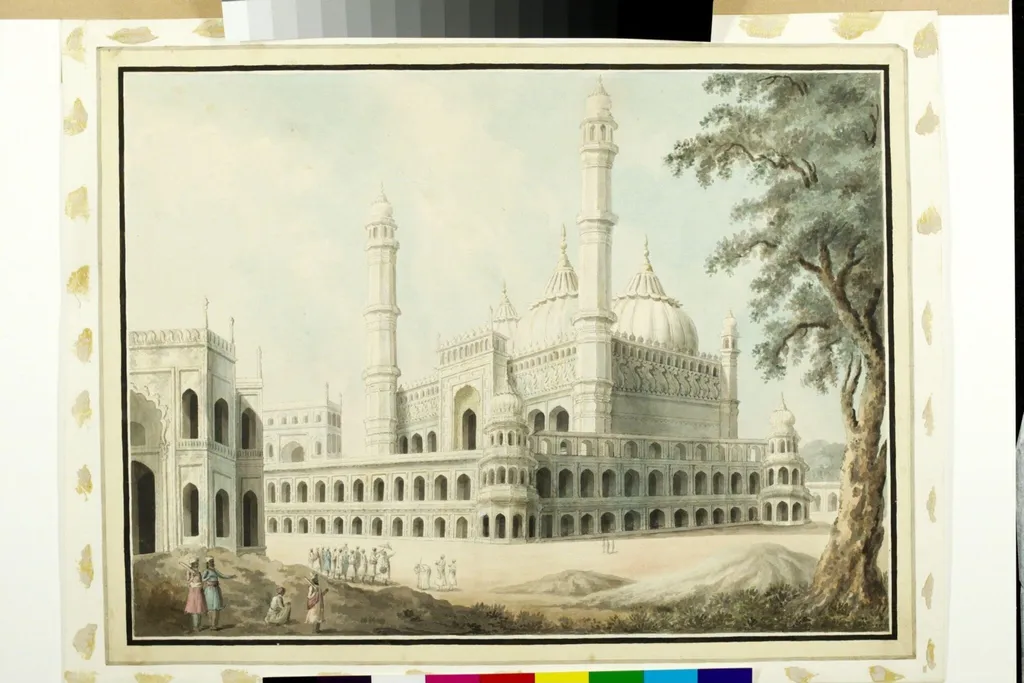
Mosque of Asaf ud-Daula, Lucknow is a paint painting by the Patna School of Painting artist Unknown. It dates from 1795 and is held in the collection of the Victoria and Albert Museum. This painting, created around 1795 by an unidentified artist from Murshidabad, depicts the mosque commissioned by Asaf ud-Daula in Lucknow.
About this work
Overview
Executed in watercolor or gouache, it reflects a regional style that blended Mughal architectural precision with Bengali pictorial traditions.
This painting, created around 1795 by an unidentified artist from Murshidabad, depicts the mosque commissioned by Asaf ud-Daula in Lucknow. Executed in watercolor or gouache, it reflects a regional style that blended Mughal architectural precision with Bengali pictorial traditions. The work was likely produced for elite patrons in Murshidabad and Calcutta, serving as both documentation and cultural affirmation of Nawabi patronage in North India.
Subject & Meaning
The painting presents the mosque as a monumental structure elevated on a gentle slope, emphasizing its prominence in the urban landscape. Figures scattered below suggest daily activity, grounding the architecture in lived experience. Rather than idealizing the building, the artist rendered it with observational accuracy, implying the work functioned as a visual record of a significant religious and political landmark under Awadh rule.
Technique & Style
The artist employed soft, muted tones, whites, pale greens, and warm earths, to convey the mosque’s stone surfaces and surrounding foliage. Delicate shading and fine linear detail highlight architectural elements such as arches, minarets, and carved ornamentation. The composition avoids dramatic perspective, favoring a flattened, elevated viewpoint that allows the building’s symmetry and layered roofs to be fully appreciated.
History & Provenance
The painting entered a private collection in London through acquisition from Mr. T. Toon, or possibly Mr. J. Joon, of 38 Leicester Square. Its journey from eastern India to Britain reflects the movement of South Asian artworks during the late 18th and early 19th centuries, often collected by British officials or traders. Its original purpose as a commissioned work remains unrecorded beyond its stylistic and geographic origins.
Context
Produced during the height of Awadh’s cultural flourishing, the painting aligns with a broader trend of architectural documentation in eastern Indian painting schools. Murshidabad artists, trained in Mughal traditions, increasingly turned to local Nawabi monuments as subjects. This work reflects a shift from mythological or courtly scenes to secular, topographical representation, responding to new tastes among colonial and indigenous elites.
Legacy
The painting contributes to a small but significant corpus of 18th-century Indian architectural views that predate European topographical surveys. Its survival in Western collections underscores the early interest in Indian architecture beyond exoticism. Similar works can be found in institutions like the Victoria and Albert Museum, where they inform ongoing studies of cross-cultural visual exchange in colonial India.
Artist & collection









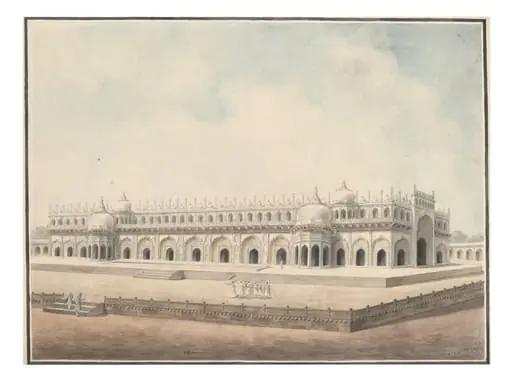
- The Imambara, Lucknow
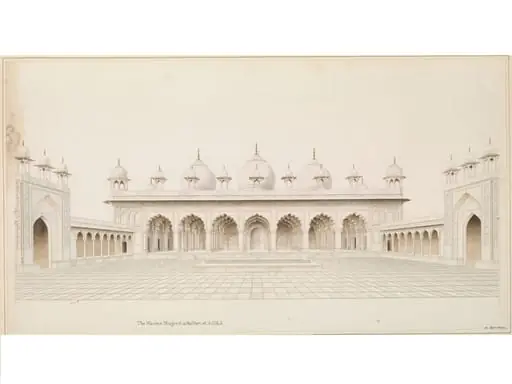 Elevation of the Moti Masjid (Pearl Mosque), Agra
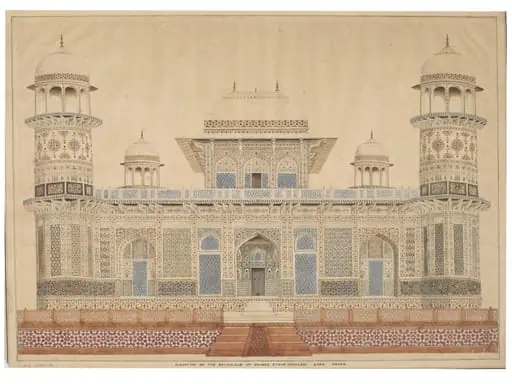 Mausoleum of Itimad ud-Daula.
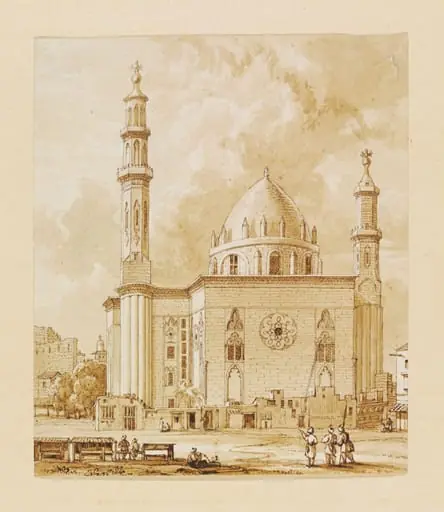 Mosque of Sultan Hassan at Cairo
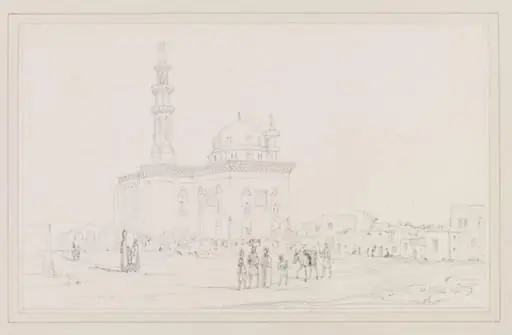 Exterior of the Mosque Sultan Hassan, Cairo
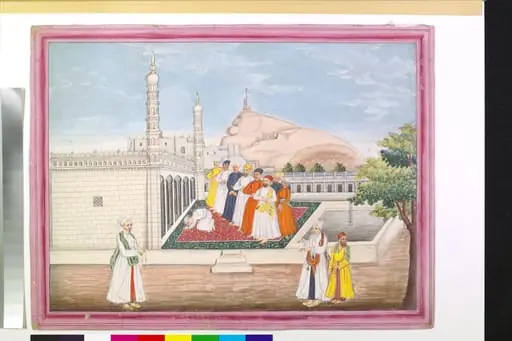 Prayers at the mosque
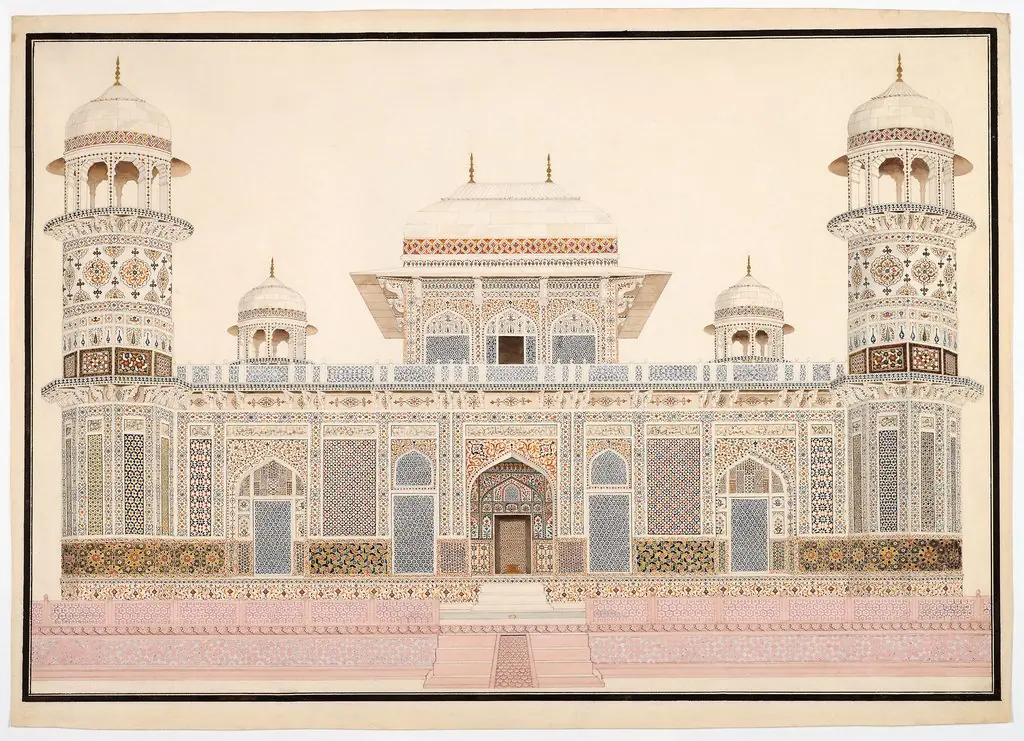 I'timad-ud-Daula's Tomb at Agra
 Ispahan - Cour intérieure de la grande Mosquée
 Interior of Sultan Achmet's Mosque. Stamboul'