Artwork
Neknam Khan
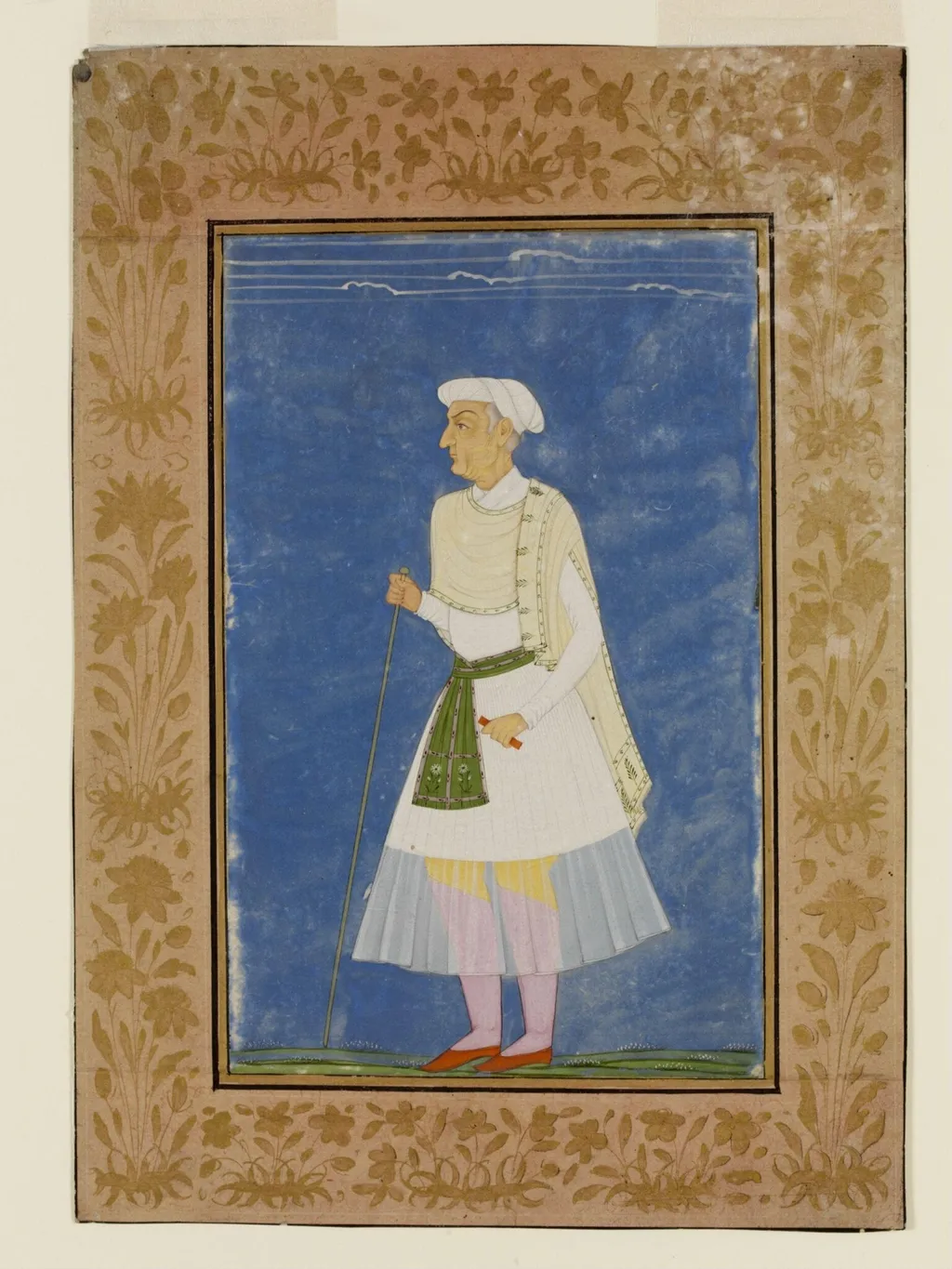
Neknam Khan is a paint painting by the Baroque artist Unknown. It dates from 1690 and is held in the collection of the Victoria and Albert Museum.
About this work
Overview
The composition reflects the synthesis of Persianate courtly traditions and local Deccan aesthetics prevalent in the region during the Qutb Shahi dynasty.
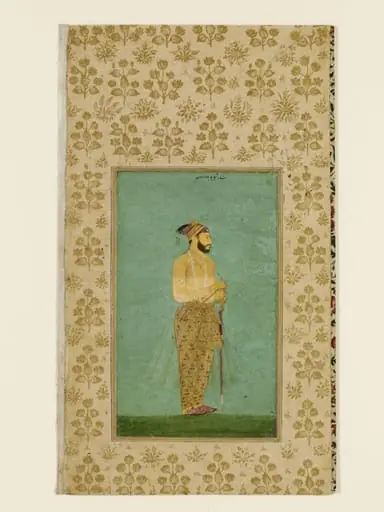
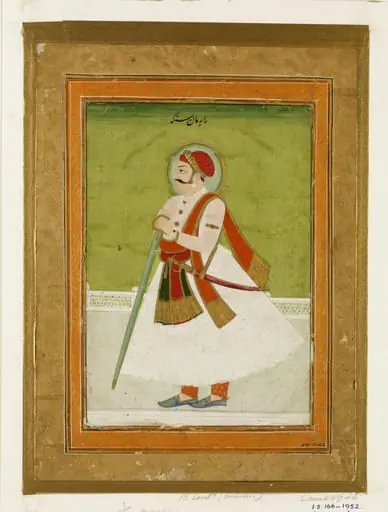
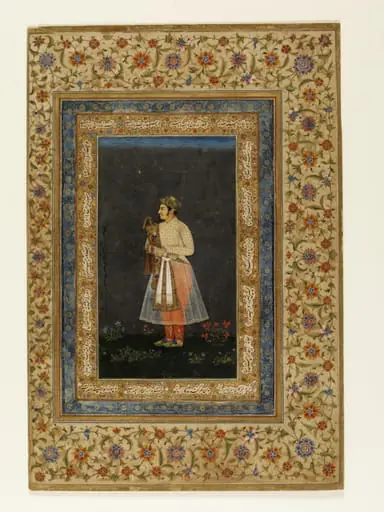
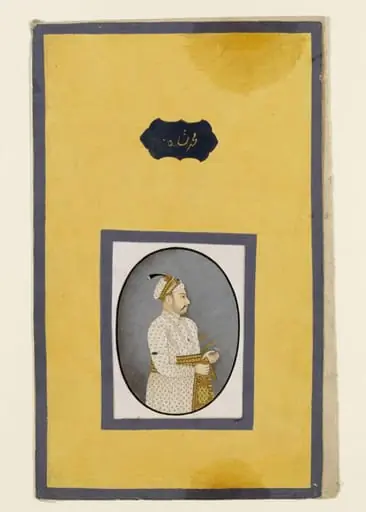
This portrait depicts Neknam Khan, the Iranian-born sipahsalar (commander-in-chief) of the Sultanate of Golconda, rendered in a style characteristic of late 17th-century Deccan painting. The subject stands against a solid blue background, dressed in a white turban and long white tunic, accented by a green sash at the waist. He holds a cane in his right hand and a small bag in his left, projecting an image of administrative authority and refined status.
Although the work is dated 1690, Neknam Khan's historical career began earlier; he served the Mughal emperor Jahangir before relocating to Golconda around 1634/35 to serve under Abdullah Qutb Shah and briefly Mir Jumla II. The painting likely commemorates his role as a patron of culture, notably supporting the theologian Ali ibn Tayfur Bistami, who dedicated a dictionary of archaic Persian terms to him. The composition reflects the synthesis of Persianate courtly traditions and local Deccan aesthetics prevalent in the region during the Qutb Shahi dynasty.
The attribution to an unknown artist is consistent with the period's practice of leaving court painters uncredited, focusing instead on the prestige of the sitter.
Subject & Meaning
Neknam Khan is shown in traditional court dress: a white turban, a long white tunic, and a green sash cinched at the waist. He holds a cane in his right hand and a small bag in his left, symbols of authority and personal belongings that reinforce his status within the Deccan court.
Technique & Style
Executed in opaque watercolour, the painting employs a rich palette and careful modeling of light and shadow. The use of chiaroscuro creates a three‑dimensional effect, while the overall composition reflects Baroque sensibilities through its vivid coloration and attention to texture.
History & Provenance
Created shortly after Neknam Khan’s death, the portrait likely served a commemorative function within the Qutb Shahi court. Its survival on paper suggests it was valued as a portable record of a high‑ranking official, though specific ownership records prior to modern collection are not documented.
Context
The portrait belongs to the artistic milieu of late 17th‑century Deccan, where Persianate court culture blended with emerging Baroque influences from Europe. Such works often combined local dress codes with stylistic elements that highlighted the prestige of the sitter.
Artist & collection