Artwork
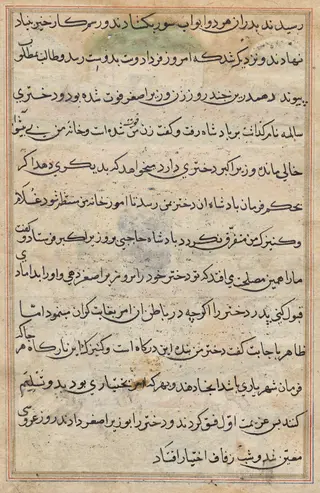
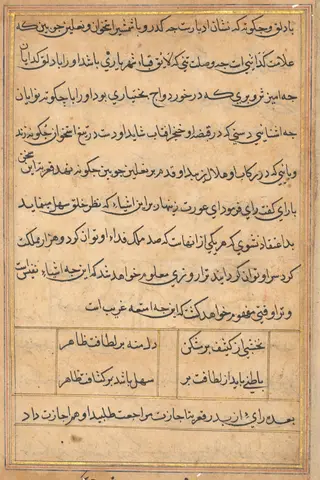
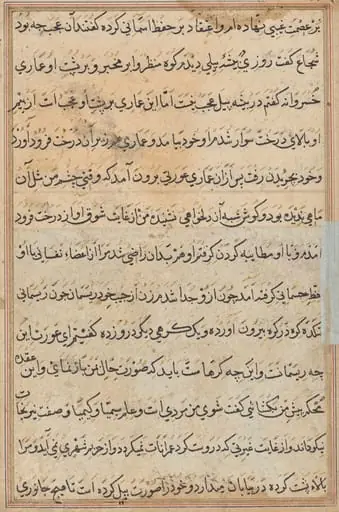
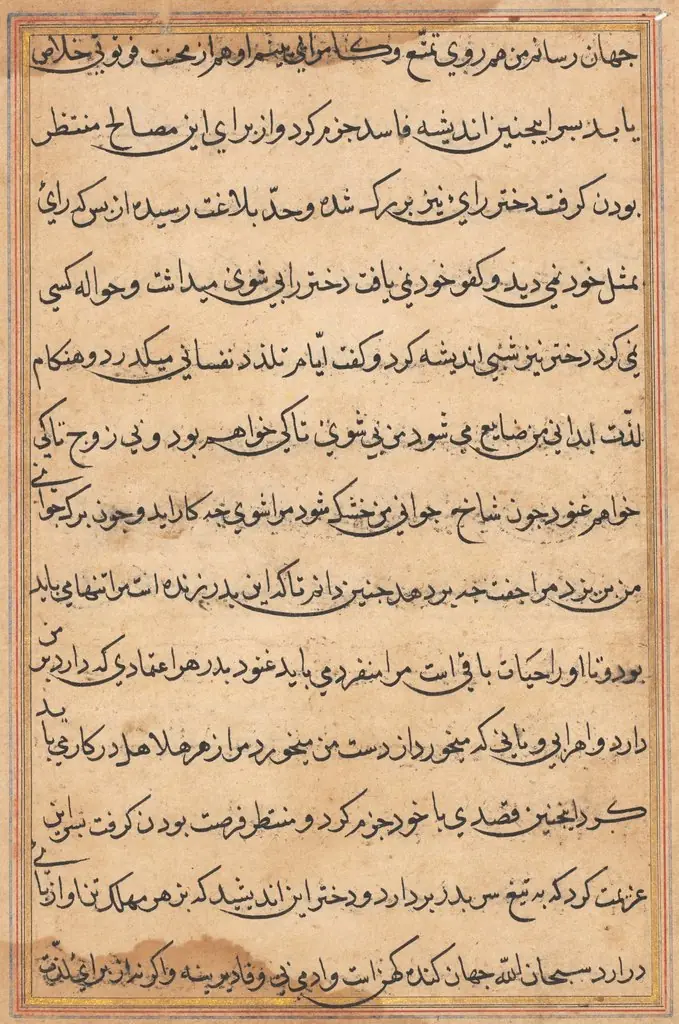
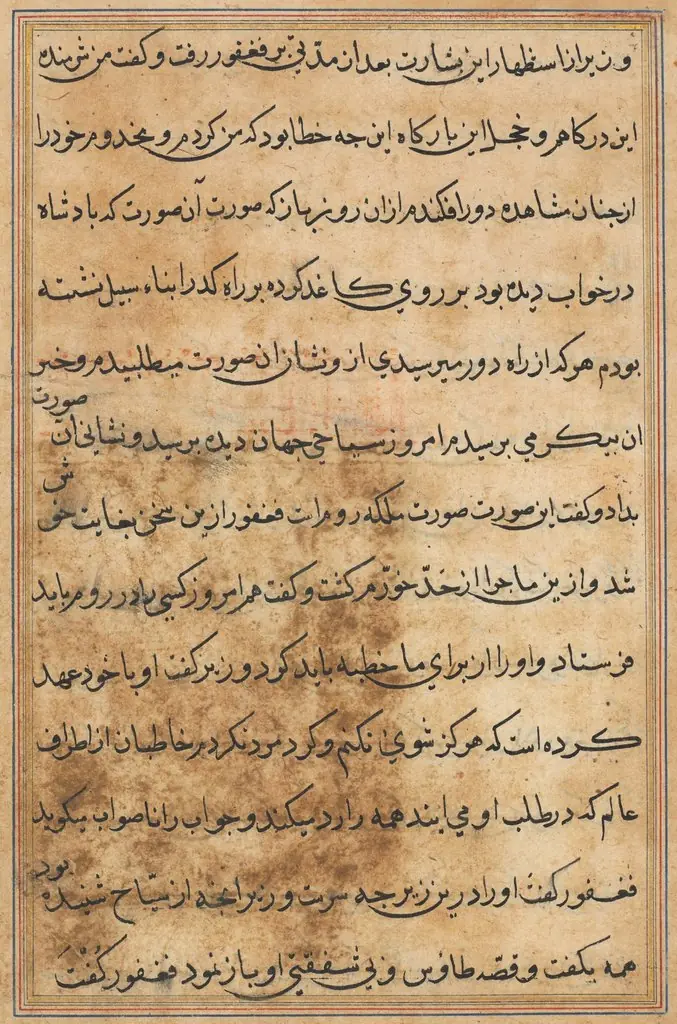
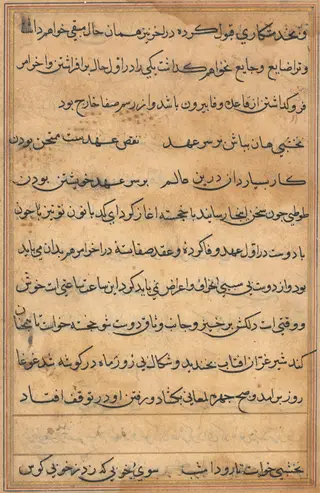
Page from Tales of a Parrot (Tuti-nama): text page
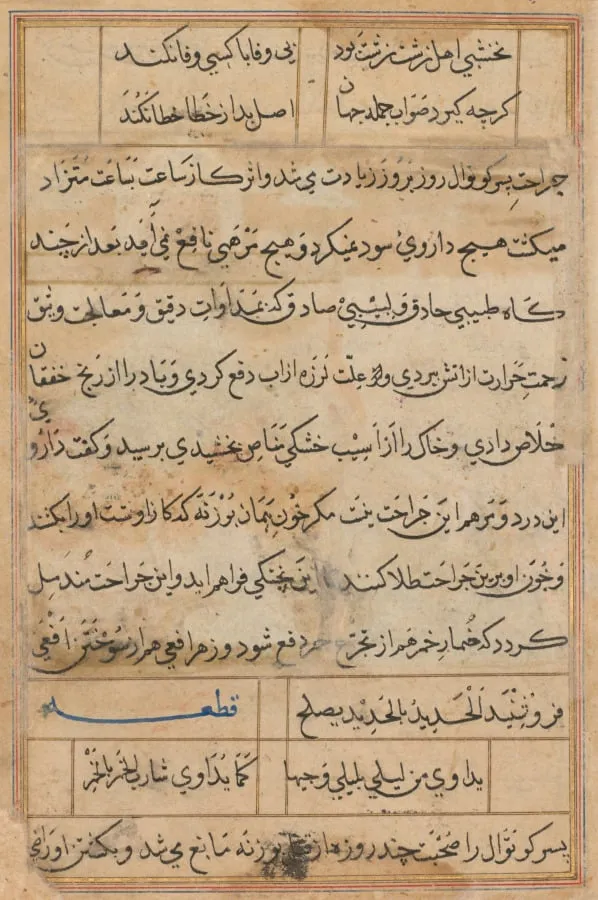
Page from Tales of a Parrot (Tuti-nama): text page is an unspecified painting by the Mughal Painting artist Unknown. It dates from 1560 and is held in the collection of the Cleveland Museum of Art.
- Accession no.
- 1962.279.33.a
- Credit line
- Gift of Mrs. A. Dean Perry
About this work
This isn’t just any book, it’s from a famous collection of parrot tales told to keep a woman from sneaking out at night.
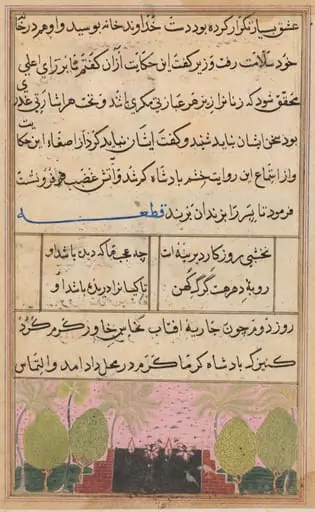
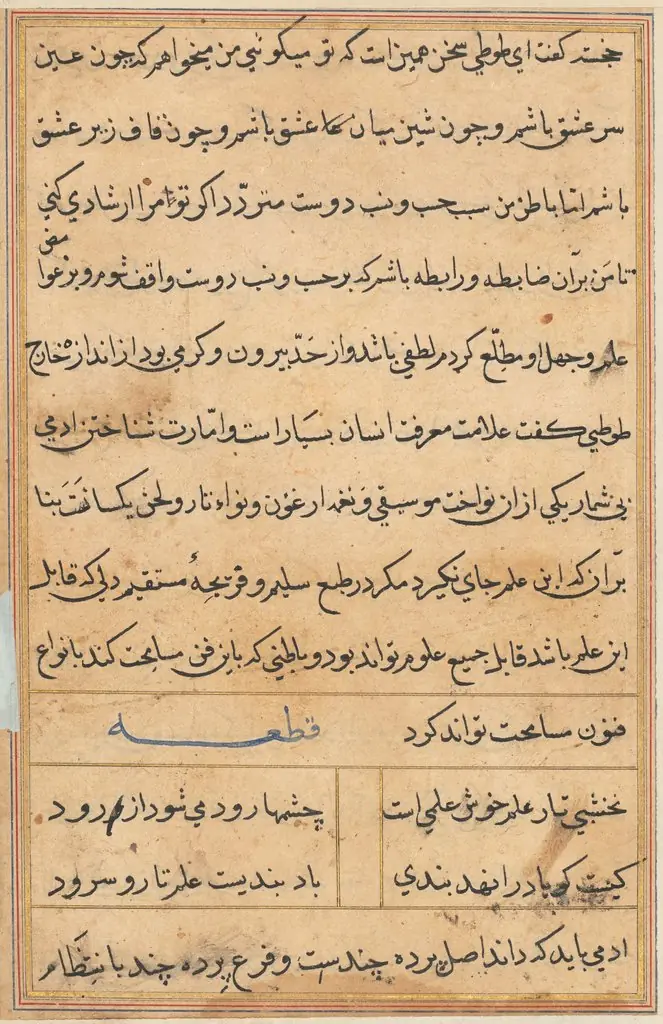
You see a page of Persian writing in black ink, with one word in bright blue at the top.
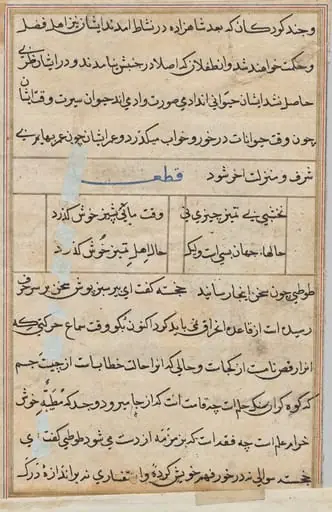
This isn’t just any book, it’s from a famous collection of parrot tales told to keep a woman from sneaking out at night. The blue word means “cut,” like a scene change in a movie, shifting from prose to poetry. The script is neat, read right to left, and was made for Emperor Akbar’s royal library.
To see more pages like this, look up the court of Akbar (reigned 1556–1605).
Overview
This page originates from a lavishly produced manuscript of the Tuti-nama, a collection of 52 moral tales framed by the story of a parrot named Tuti, who entertains his mistress Khujasta to prevent her from leaving the house at night. Composed in Persian, the text was copied for the Mughal court of Emperor Akbar, reflecting imperial patronage of literature and the arts during the late 16th century.
Subject & Meaning
The tales, told by the parrot to dissuade Khujasta from illicit nocturnal outings, blend fable and moral instruction. Each story, drawn from earlier Persian and Sanskrit sources, explores themes of loyalty, deception, and consequence. The blue word 'cut' signals a structural transition from prose narration to embedded poetry, guiding the reader through layered storytelling techniques common in Persian literary traditions.
Technique & Style
The text is rendered in clear naskh script, a standard Arabic-derived calligraphic form used for Persian manuscripts. Black ink dominates the page, with a single blue word marking a narrative shift. The precision of the handwriting and the restrained use of color reflect the high standards of royal scriptoria, where calligraphy was valued as much as illustration for its intellectual and aesthetic authority.
History & Provenance
The original Tuti-nama was composed in 1329–30 by a Central Asian Sufi scholar, adapting older Indian and Persian fables. This particular manuscript was produced in Akbar’s atelier around 1560, part of a larger project to translate and illustrate classical texts. The folio is one of 341 in the complete set, now dispersed across collections, with this page likely once bound among others in the imperial library.
Context
The Tuti-nama’s transmission from Sanskrit to Persian and its adoption by the Mughals illustrates a long-standing cultural exchange across South and Central Asia. Akbar’s court actively curated such texts to affirm a cosmopolitan identity, blending Islamic, Indian, and Persian traditions. The manuscript’s production was not merely literary but political, reinforcing imperial authority through cultural synthesis.
Legacy
This page exemplifies the Mughal emphasis on textual refinement and visual discipline in manuscript culture. Though illustrations often dominate scholarly attention, such text pages reveal the sophistication of calligraphic practice and the deliberate structuring of narrative. The Tuti-nama’s survival in multiple copies underscores its enduring role in shaping literary aesthetics across the Islamicate world.
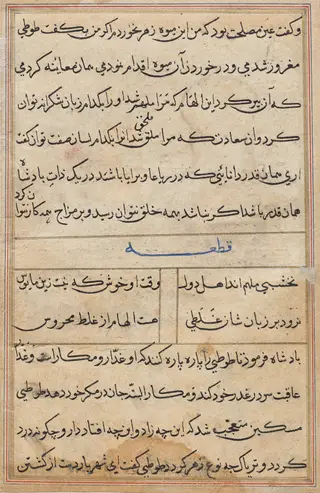
Artist & collection









- Page from Tales of a Parrot (Tuti-nama): text page
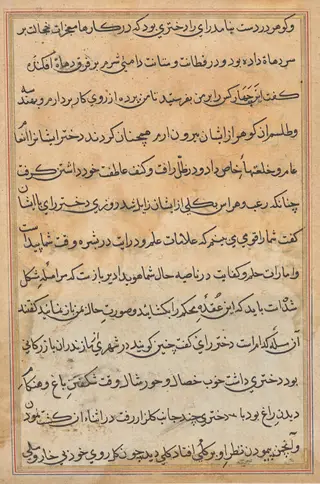 Page from Tales of a Parrot (Tuti-nama): text page
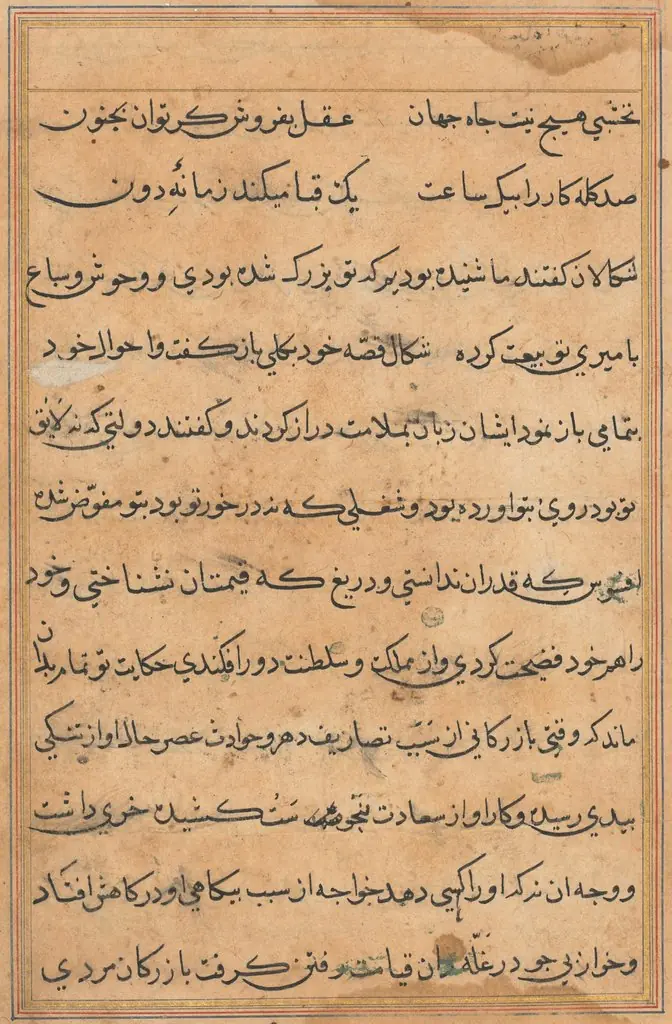 Page from Tales of a Parrot (Tuti-nama): text page
 Page from Tales of a Parrot (Tuti-nama): text page
 Page from Tales of a Parrot (Tuti-nama): text page
 Landscape with a lotus pool, from a Tuti-nama (Tales of a Parrot), Eighth Night
 The mendicant’s wife deceives him with a soldier, from a Tuti-nama (Tales of a Parrot): Fourth Night
 Page from Tales of a Parrot (Tuti-nama): text page
 Page from Tales of a Parrot (Tuti-nama): text page
 Page from Tales of a Parrot (Tuti-nama): text page
 Tuti-Nama (Tales of a Parrot): Tale XIII
 Page from Tales of a Parrot (Tuti-nama): text page