Artwork
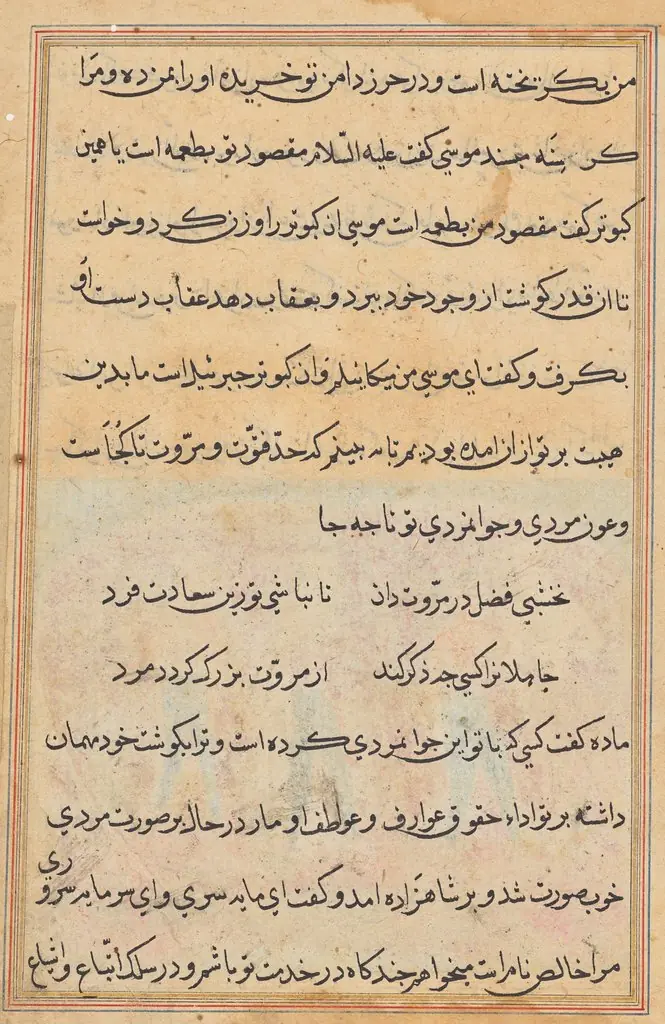
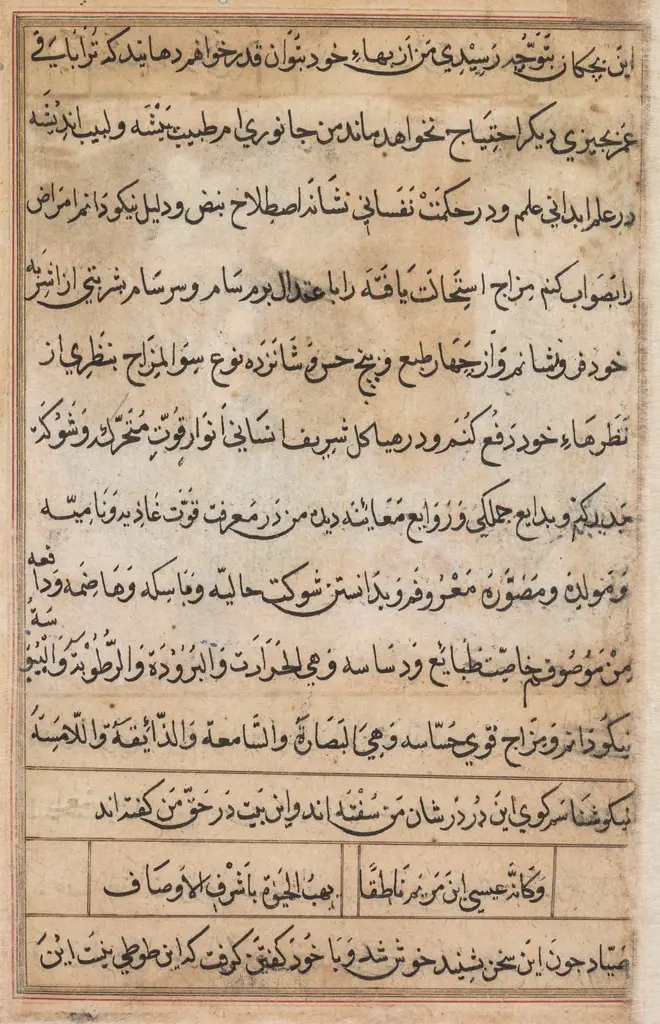
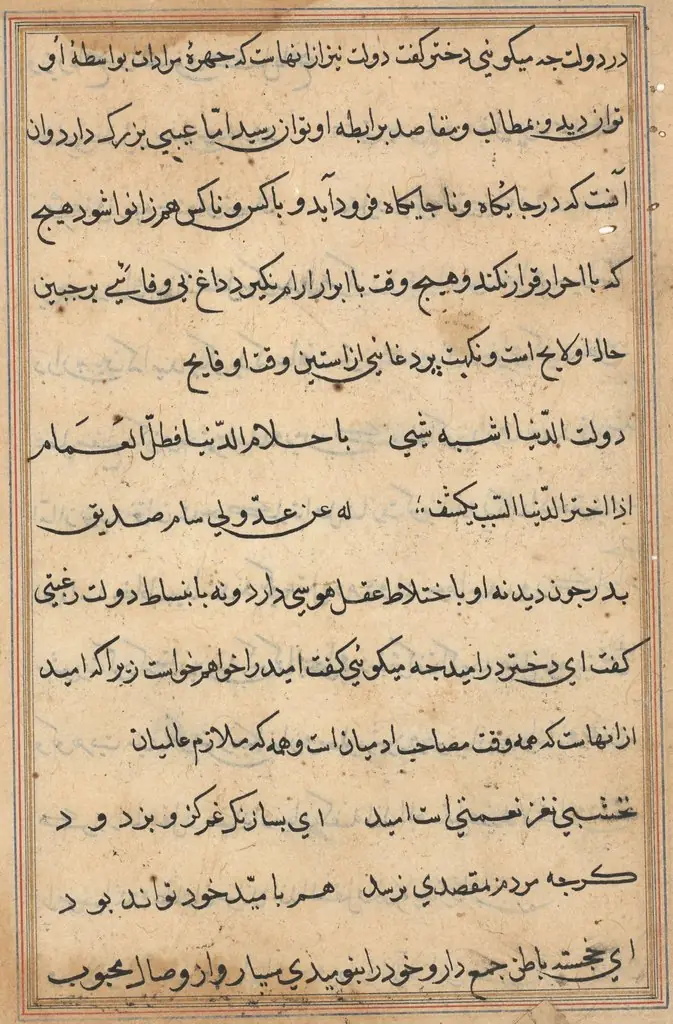
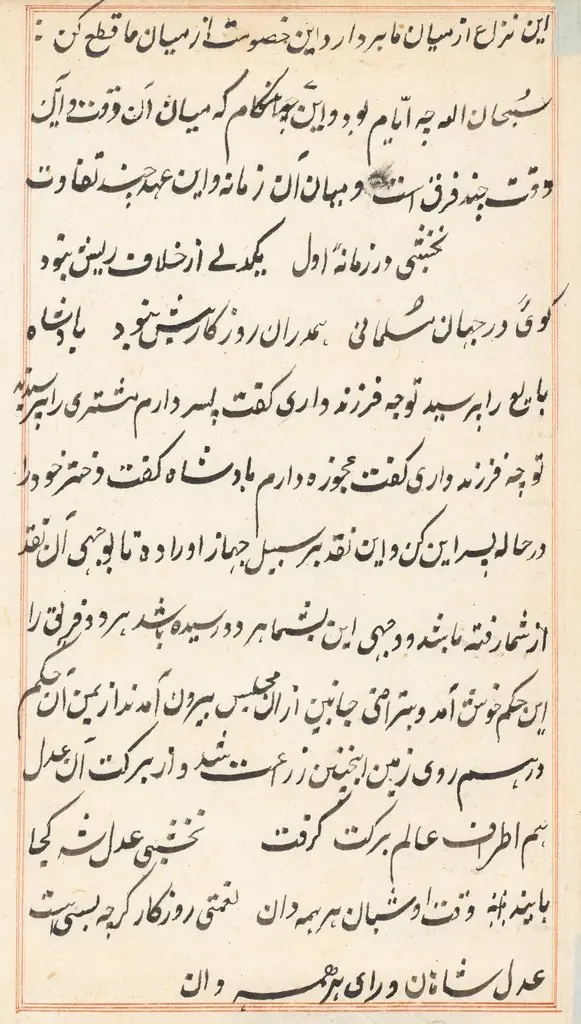
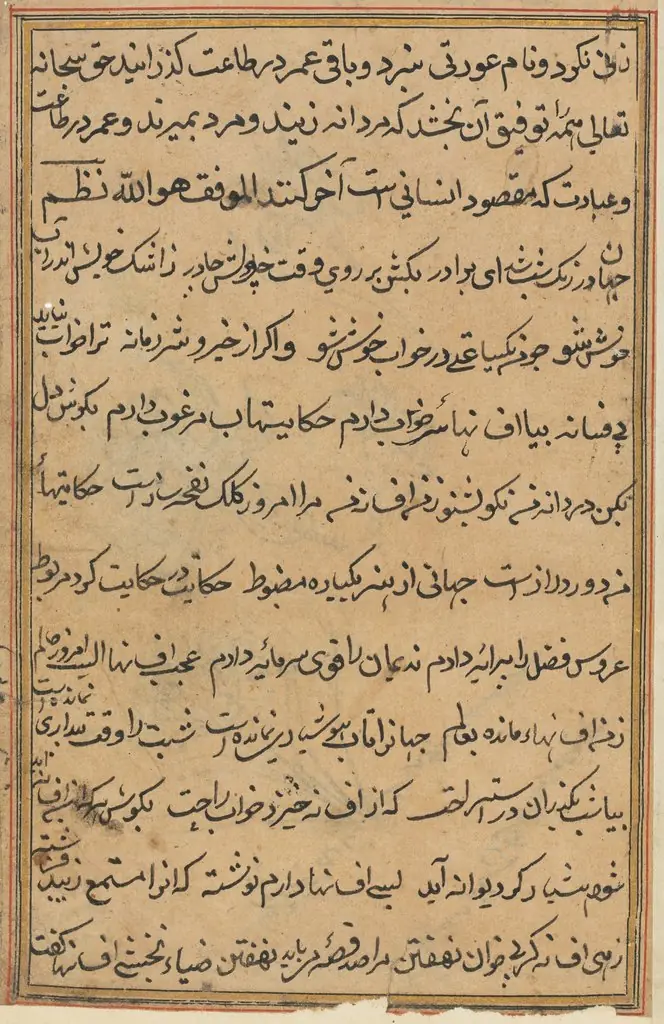
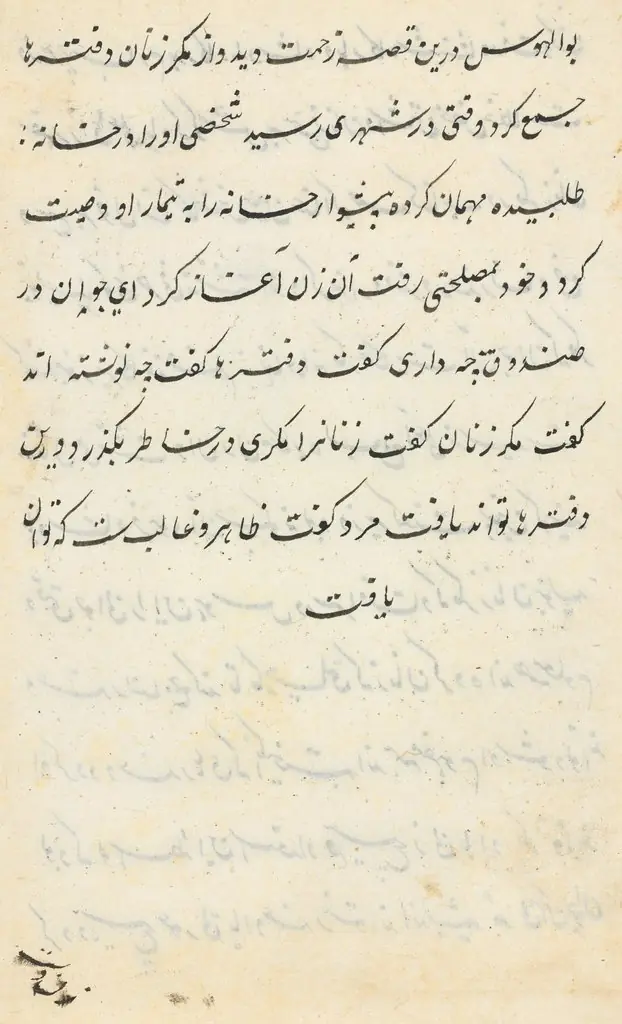
Page from Tales of a Parrot (Tuti-nama): text page
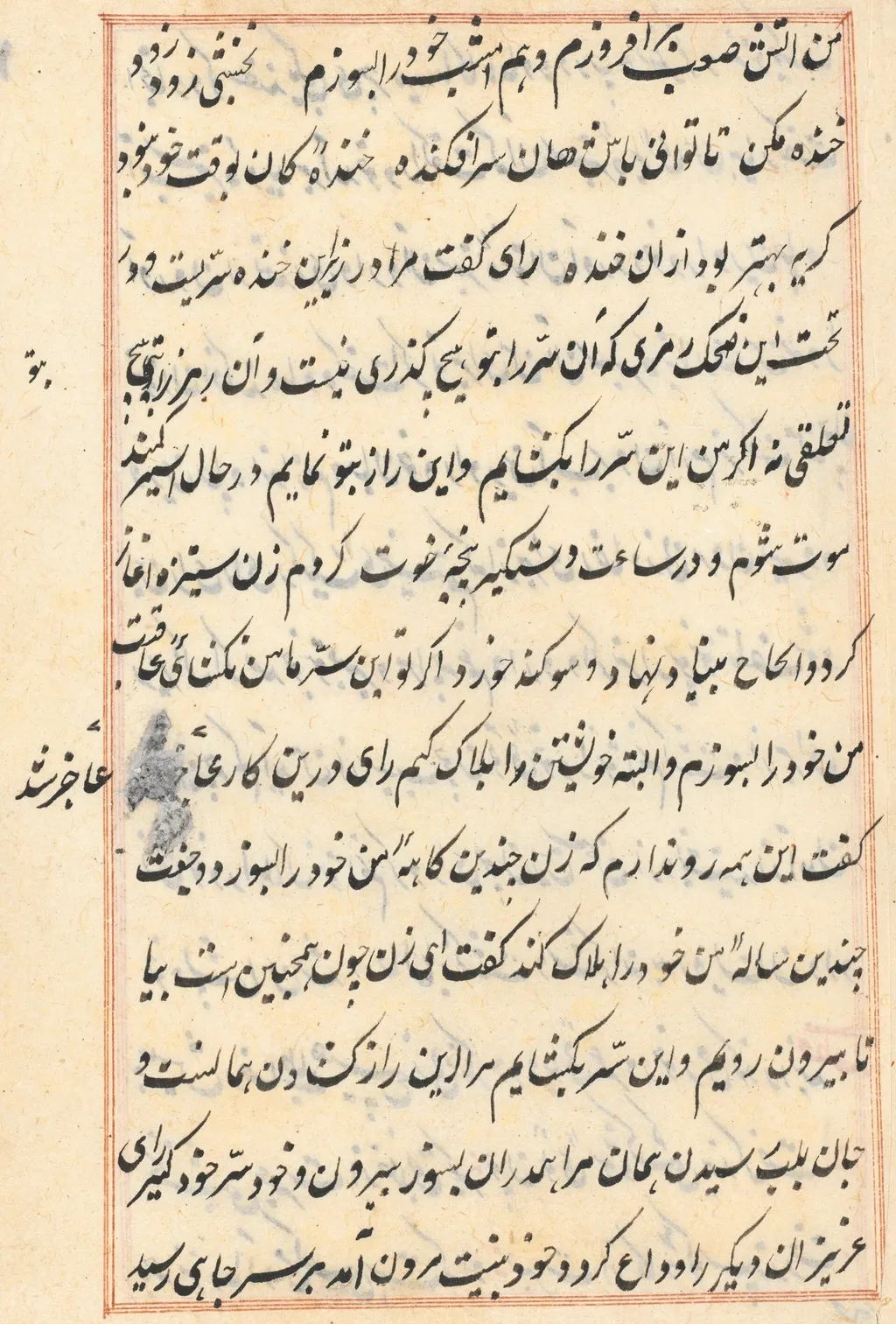
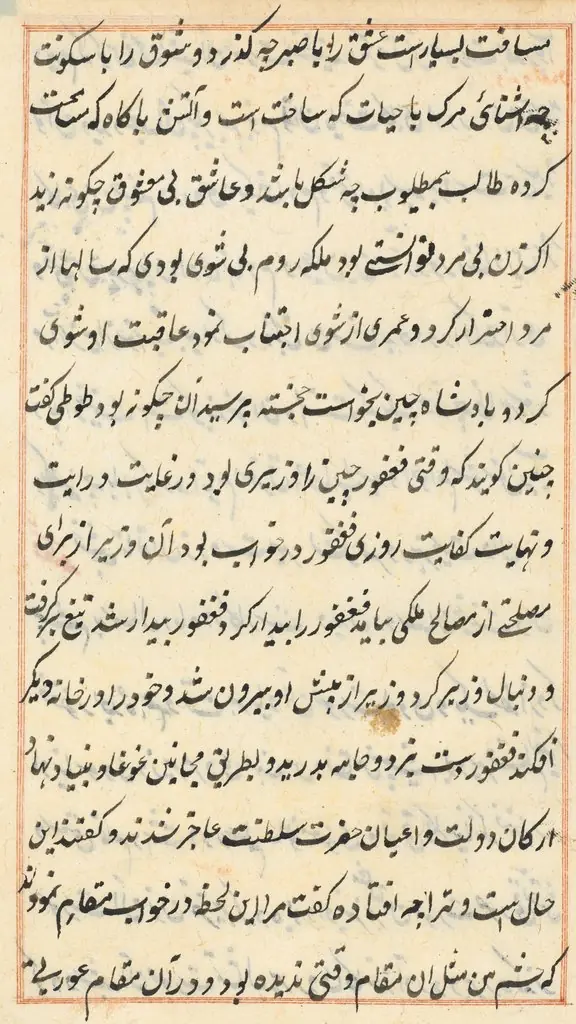
Page from Tales of a Parrot (Tuti-nama): text page is an unspecified painting. It dates from 1560 and is held in the collection of the Cleveland Museum of Art. The object is a painted page from the Persian manuscript known as the Tales of a Parrot (Tuti‑nama).
About this work
History & Provenance
It was created as a text page within the illustrated work known as the Tuti-nama, with the specific sheet catalogued under the identifier 1962.
The miniature originates from a Mughal manuscript produced in India, likely commissioned during the mid-16th century. It was created as a text page within the illustrated work known as the Tuti-nama, with the specific sheet catalogued under the identifier 1962.279.280.a and dated to the year 1560. The piece entered the collection of the Cleveland Museum of Art, where it remains part of their holdings today.
The painting is held in the collection of the Cleveland Museum of Art, where it is cataloged under accession number 1962.279.280.a. It was created in 1560 within the Mughal Empire and has not been documented in any major exhibition venues to date.
Context
The miniature belongs to the Mughal imperial workshop tradition, where court artists rendered Persianate narrative cycles such as the Tuti-nama in tightly composed, vibrantly colored scenes. Produced circa 1560, it exemplifies the synthesis of Persian literary subject matter with Indian compositional sensibilities that defined Mughal painting under Akbar's patronage. The work's inclusion in the Cleveland Museum of Art collection situates it within a broader corpus of Indo-Persian manuscript illumination that shaped South Asian visual culture and continues to inform scholarship on cross-cultural artistic exchange in the early modern Persianate world.
Legacy
The text page of the Tuti-nama, produced in the Mughal Empire around 1560, established a visual narrative model that later manuscript painters adapted across Persian and Indo‑Islamic traditions, shaping the way poetic tales were illustrated in subsequent works. Its presence in the Cleveland Museum of Art collection ensures continued scholarly reference to its compositional strategies and textual integration.
Overview
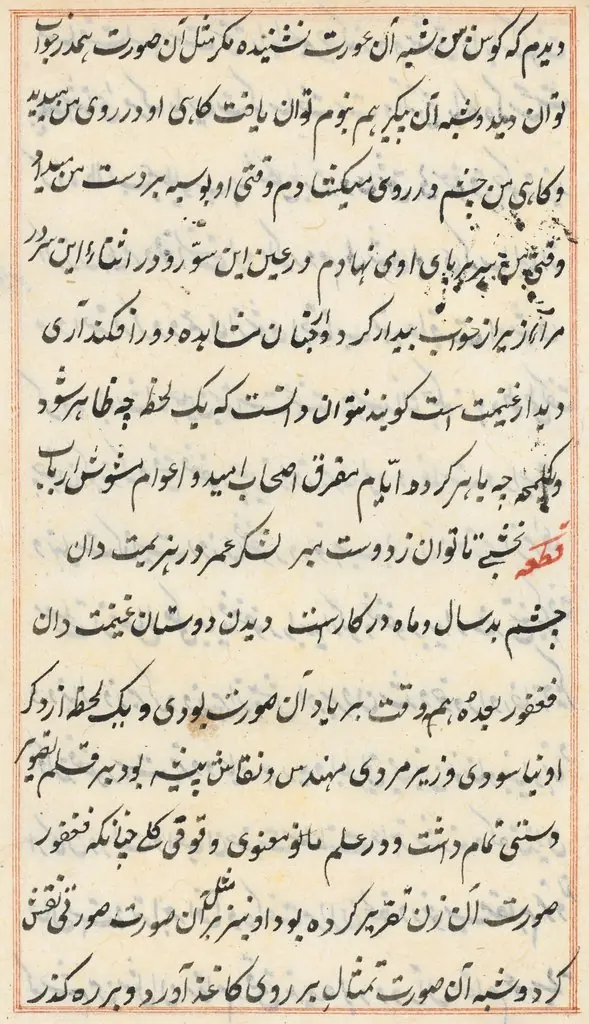
The object is a painted page from the Persian manuscript known as the Tales of a Parrot (Tuti‑nama). Executed on paper that has yellowed with age, the page displays a continuous block of text written in a flowing, highly decorative script. Black ink forms the main body of the writing, while selected words are highlighted in red, creating visual emphasis within the narrative.
Subject & Meaning
The text appears to be a poetic or narrative composition, typical of the Tuti‑nama tradition, which recounts moral and romantic tales through the voice of a parrot. The highlighted red passages likely mark key verses or thematic turns, guiding the reader’s attention to moments of particular significance within the story.
Technique & Style
The calligraphic hand is intricate, featuring numerous flourishes, loops, and ornamental extensions that characterize high‑court Persian script of the period. Ink application shows a fine, consistent line work in black, while the red accents are applied with a slightly broader brush, providing contrast without disrupting the overall harmony of the page.
Artist & collection

 Page from Tales of a Parrot (Tuti-nama): text page
 Page from Tales of a Parrot (Tuti-nama): text page
 Page from Tales of a Parrot (Tuti-nama): text page
 Page from Tales of a Parrot (Tuti-nama): text page
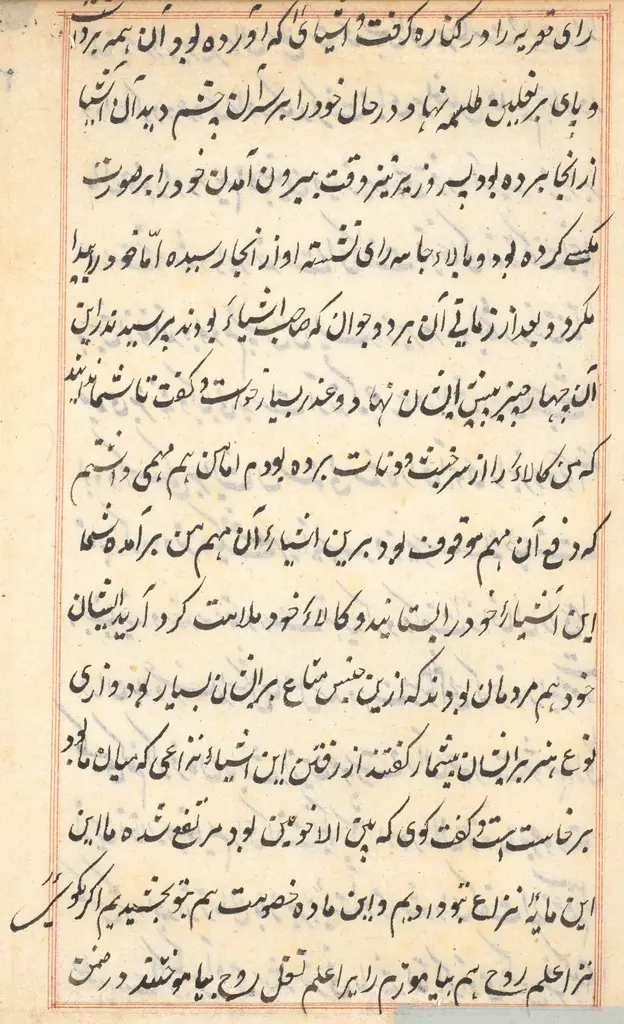 Page from Tales of a Parrot (Tuti-nama): text page
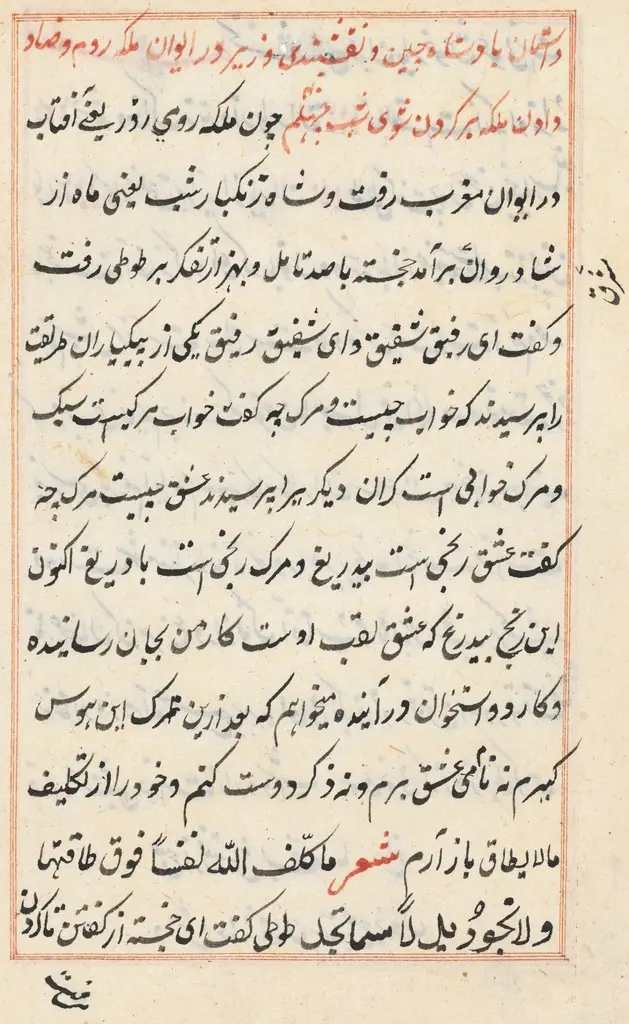 Page from Tales of a Parrot (Tuti-nama): text page
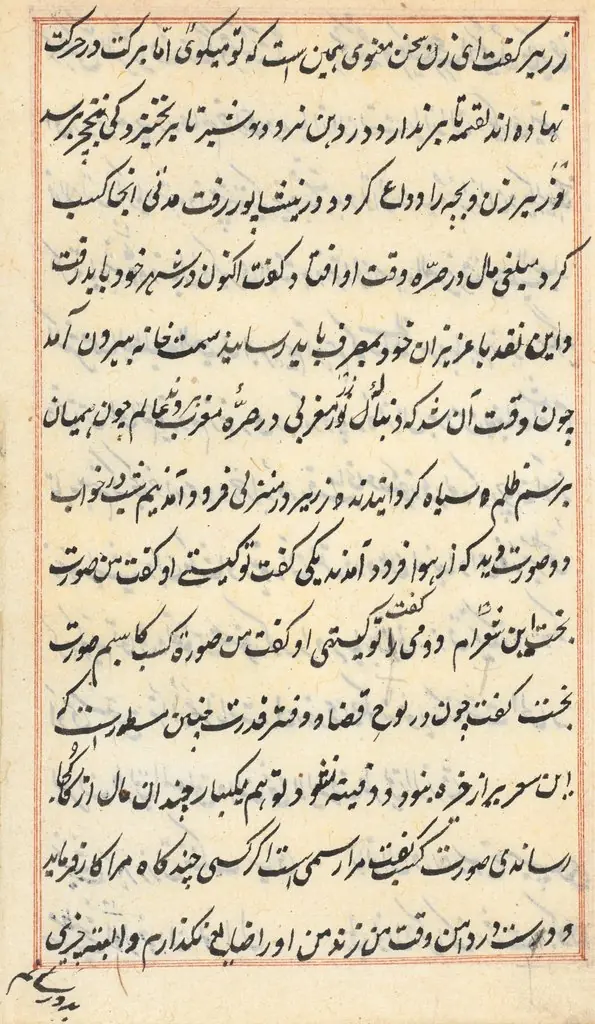 Page from Tales of a Parrot (Tuti-nama): text page
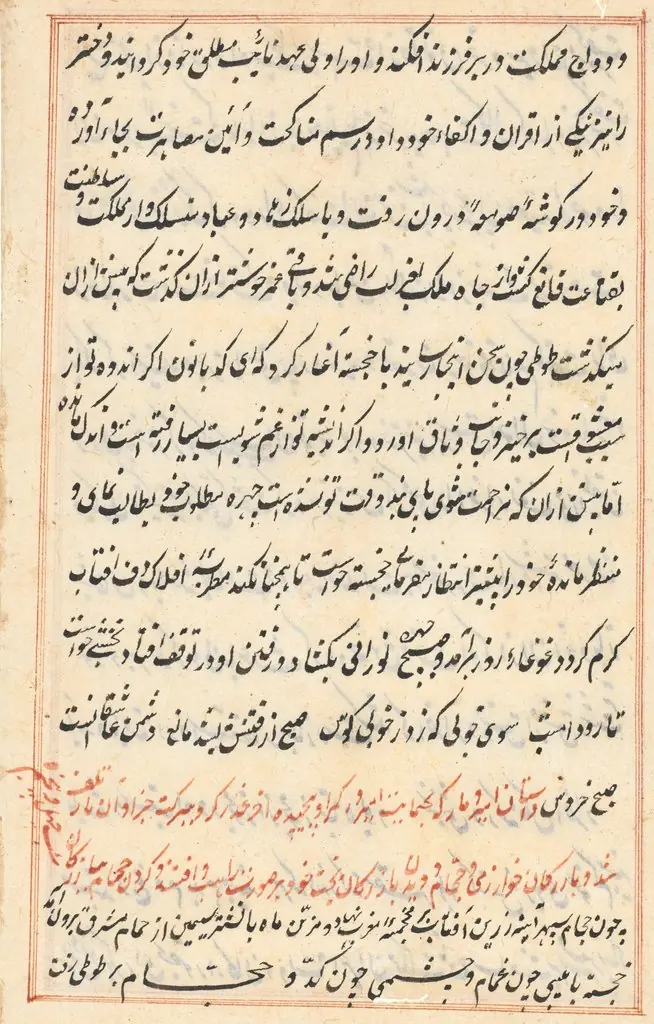 Page from Tales of a Parrot (Tuti-nama): text page
 Page from Tales of a Parrot (Tuti-nama): text page