Artwork
Pigs in a Barnyard
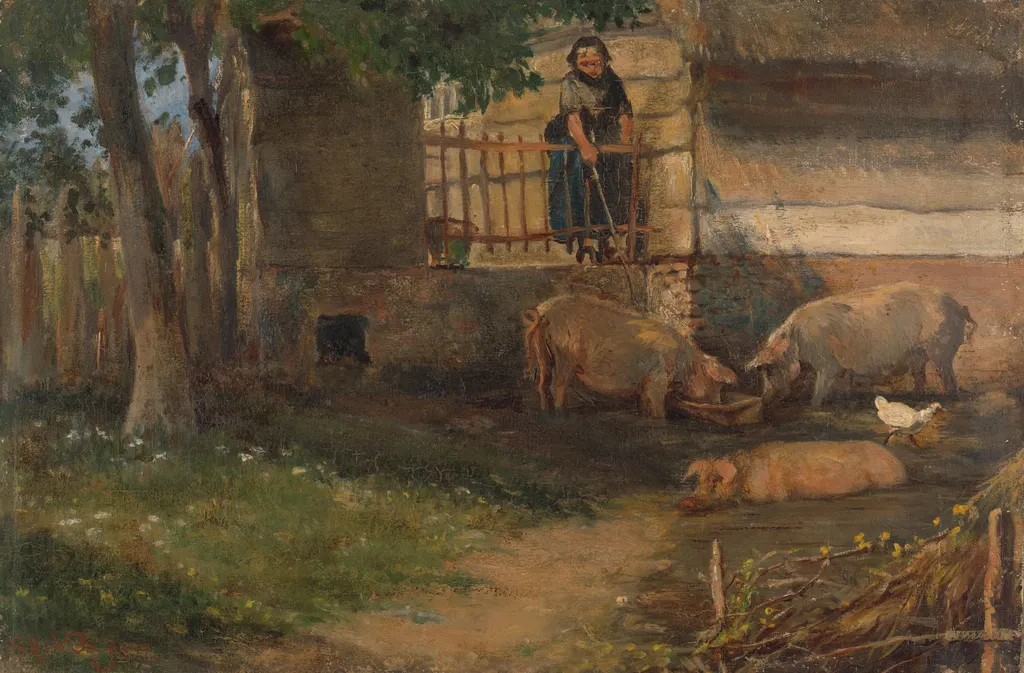
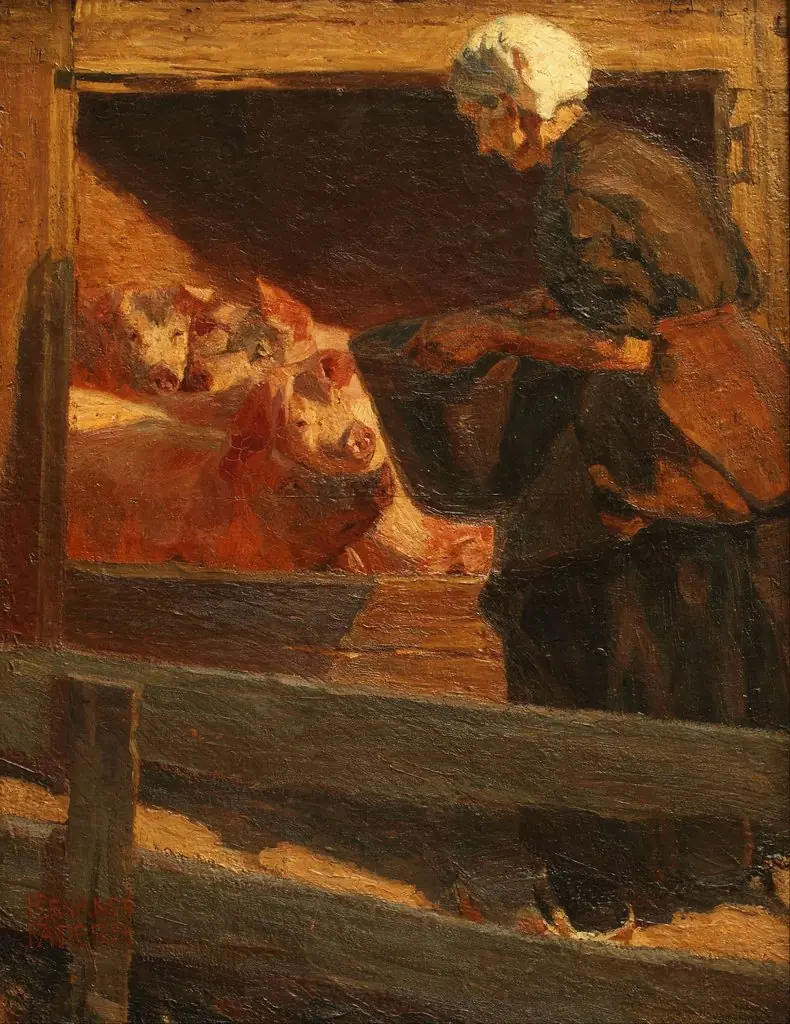
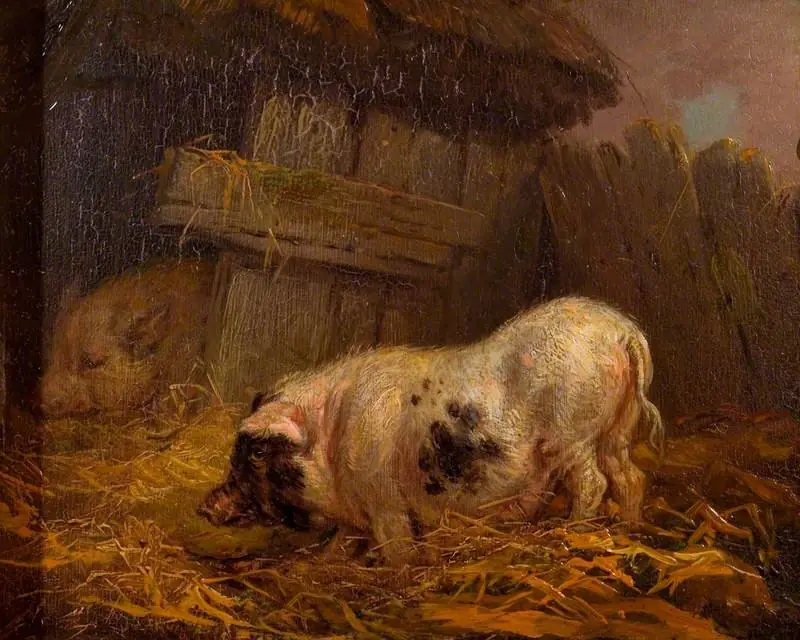
Pigs in a Barnyard is an unspecified painting by the Regionalist artist Unknown. It dates from 1876 and is held in the collection of the Rijksmuseum. This painting captures a quiet moment on a Dutch farm, focusing on three pigs rooting in mud beside a wooden fence.
About this work
Overview
This painting captures a quiet moment on a Dutch farm, focusing on three pigs rooting in mud beside a wooden fence.
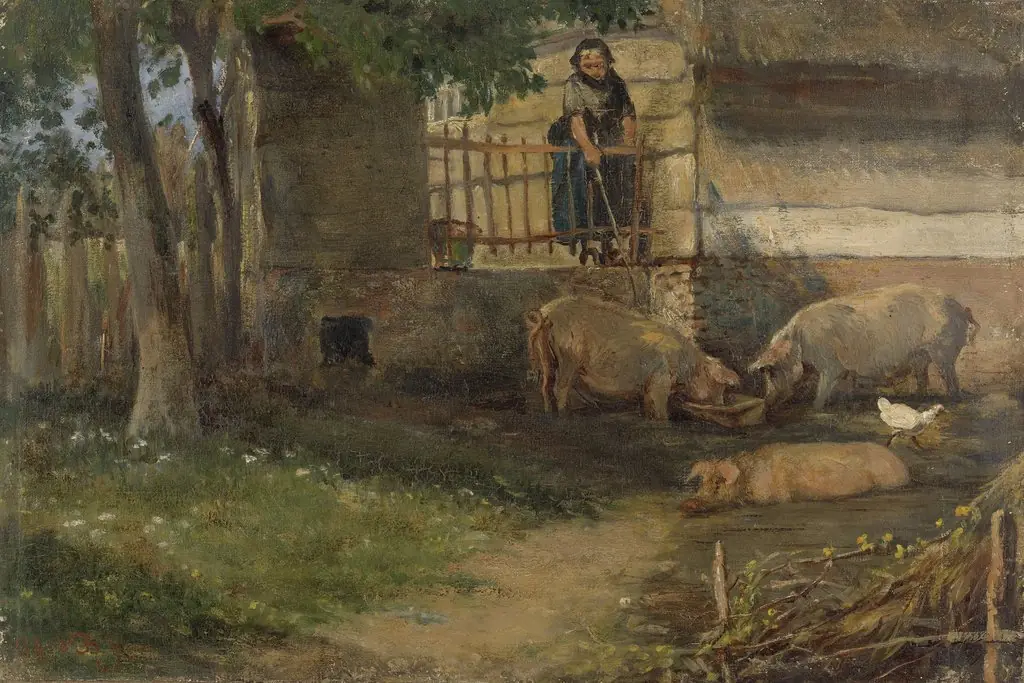
This painting captures a quiet moment on a Dutch farm, focusing on three pigs rooting in mud beside a wooden fence. A girl in a red skirt leans on the rail, holding a stick, her posture relaxed and unposed. Unlike traditional animal depictions that emphasize grandeur, the artist highlights the unglamorous reality of farm life, choosing ordinary creatures and a mundane scene over idealized subjects.
Subject & Meaning
The pigs, engaged in their natural behavior of wallowing, represent the unvarnished rhythms of rural existence. The girl, neither interacting nor directing, observes passively, her presence suggests childhood curiosity or boredom, not narrative action. The scene resists symbolism, instead offering a candid glimpse into daily farm life, where animals and children coexist without drama or moralizing.
Technique & Style
The artist employs a restrained palette and loose brushwork to convey texture, mud, wood, and fabric, with subtle realism. Light falls evenly, avoiding theatrical contrast, reinforcing the scene’s quietude. The composition is informal, with figures placed naturally within the space, reflecting a preference for observational accuracy over staged composition common in more formal genres.
History & Provenance
The painting originates from the Dutch Golden Age, a period rich in genre scenes depicting domestic and agricultural life. It likely belonged to a private collector in the Netherlands before entering the Rijksmuseum’s collection. Its survival and preservation reflect a growing appreciation for everyday subjects during the 17th century, when such works gained favor among middle-class patrons.
Context
In 17th-century Dutch art, scenes of rural labor and animal husbandry became popular as civic pride shifted toward celebrating ordinary life. This painting aligns with a broader trend of depicting farms, markets, and domestic routines, not as backdrops for myth or religion, but as worthy subjects in their own right, reflecting the values of a prosperous, secular society.
Legacy
The work contributes to a lasting tradition of Dutch genre painting that valued authenticity over spectacle. Its unembellished portrayal of farm life influenced later realist movements and continues to offer viewers a direct connection to the rhythms of pre-industrial rural existence. It remains a quiet testament to the dignity found in unremarkable moments.
Artist & collection