Artwork
Plaque with Censing Angels
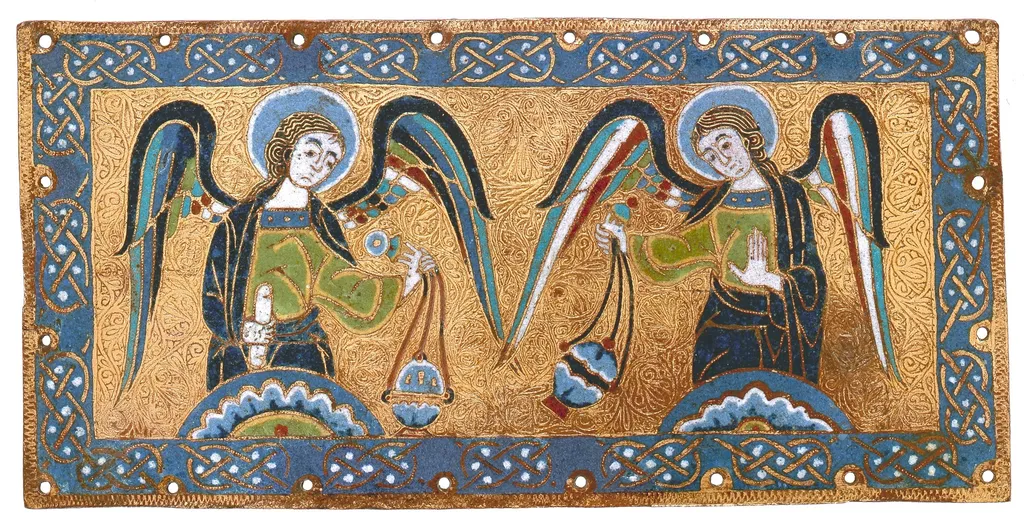
Plaque with Censing Angels is an unspecified painting. It dates from 1175 and is held in the collection of the Metropolitan Museum of Art.
About this work
Subject & Meaning
The work serves as a visual representation of heavenly worship, capturing a specific moment of ritual devotion through the medium of enamel.
Created around 1175, this champlevé enamel plaque depicts angels engaged in the act of censing. The primary iconography focuses on these celestial figures holding censers, instruments used for burning incense during religious rituals. Within the context of medieval Christian art, the depiction of angels with censers typically symbolizes the offering of prayers to God or the sanctification of a sacred space, reflecting liturgical practices of the period.
The work serves as a visual representation of heavenly worship, capturing a specific moment of ritual devotion through the medium of enamel. The subject matter is strictly defined by the presence of these angelic figures and their ceremonial tools, emphasizing themes of divine service and spiritual intercession.
Technique & Style
The Plaque with Censing Angels is a champlevé enamel work created circa 1175. This technique involves carving or engraving depressions into a metal support, which are then filled with vitreous enamel paste before firing. The resulting surface features figures of angels holding censers, highlighted by the contrast between the colored glass and the exposed metal outlines.
Classified as a painting in some records, the object is more specifically defined by its enamel medium and genre. The work remains part of the Metropolitan Museum of Art collection, where it is identified by its distinctive champlevé execution and religious iconography depicting angels engaged in censing rituals.
History & Provenance
The Plaque with Censing Angels is a champlevé enamel work dated to about 1175 by an unknown artist. Executed in the twelfth‑century enameling technique, it depicts angels swinging censers and is held in the collection of the Metropolitan Museum of Art in New York, among the museum’s holdings of champlevé enamels. The sources record no earlier owners or specific commission, so its documented provenance begins with its acquisition by the museum. No accession number or specific exhibition history is provided in the available records.
Context
Dated to about 1175 and catalogued in some records as a painting, the plaque exemplifies twelfth‑century champlevé enamel technique and portrays angels holding censers. It is part of the Metropolitan Museum of Art’s collection, where it is grouped among champlevé enamels. Its classification as a painting reflects an older curatorial taxonomy, situating the object within early medieval decorative arts and making it a reference point for studies of Romanesque religious imagery.
Overview
This painting, titled Plaque with Censing Angels, depicts two winged figures. Each angel, adorned with a halo, holds a censer, an implement used for burning incense. Their robes feature elaborate designs, contrasting with the warm, golden backdrop. The artwork exemplifies the detailed craftsmanship characteristic of its period, presenting a scene of celestial reverence.
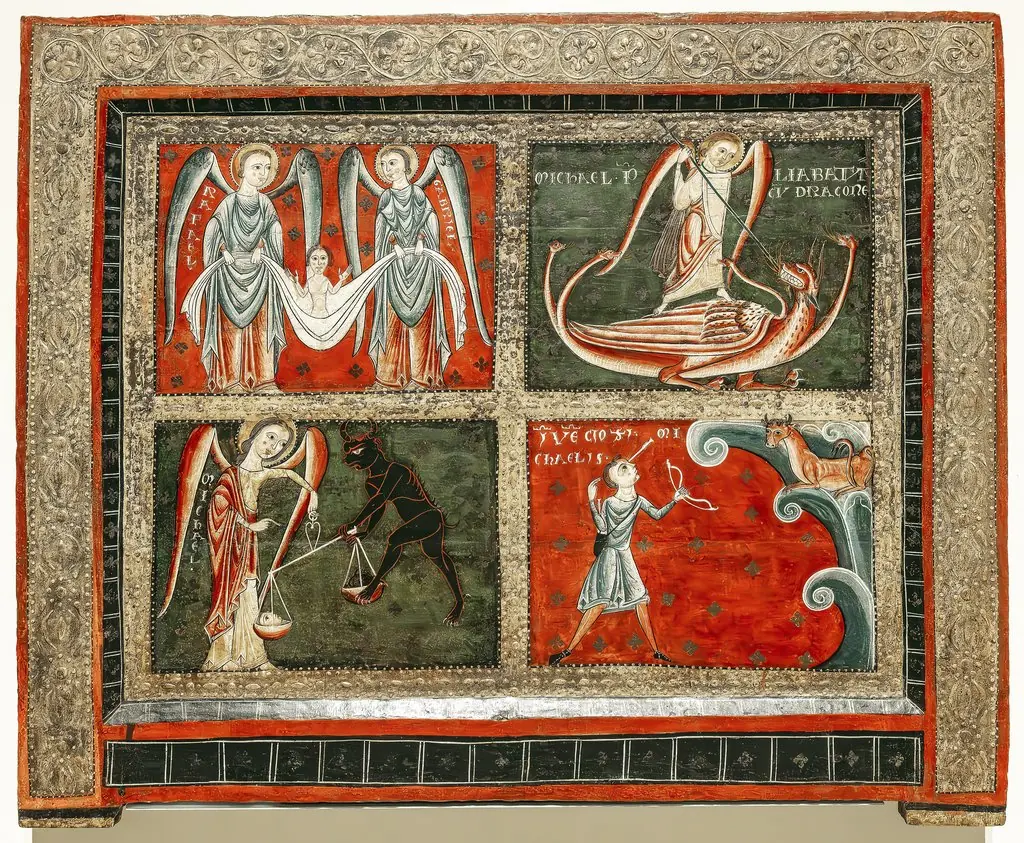
Artist & collection

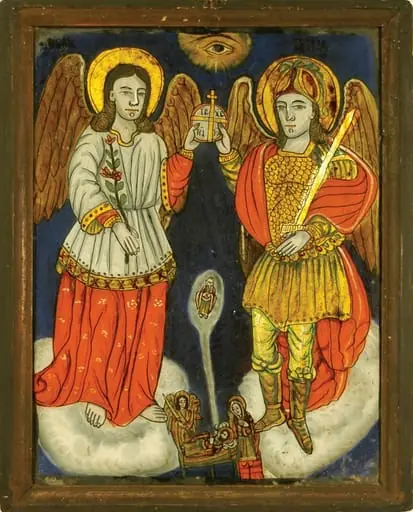 Arhanghelii Mihail și Gavriil
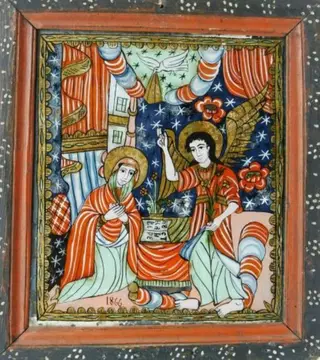 Buna Vestire
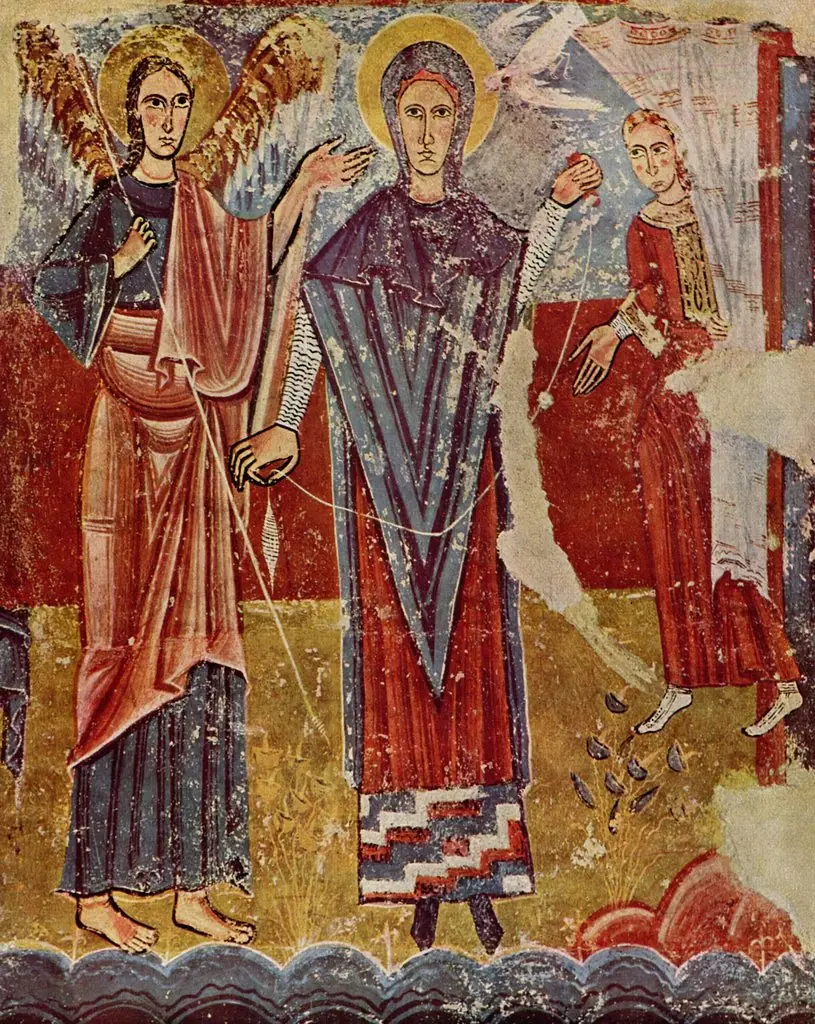 Annunciation, Birth and Crucifixion from Sorpe
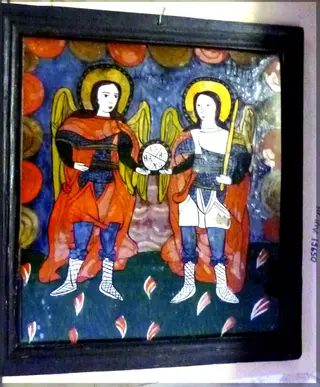 Arhanghelii Mihail și Gavriil
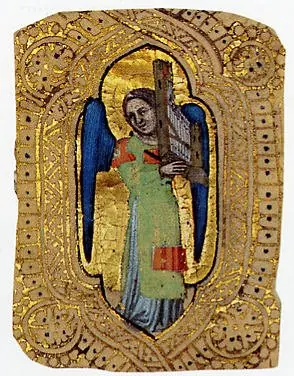 Angel with Portative Organ
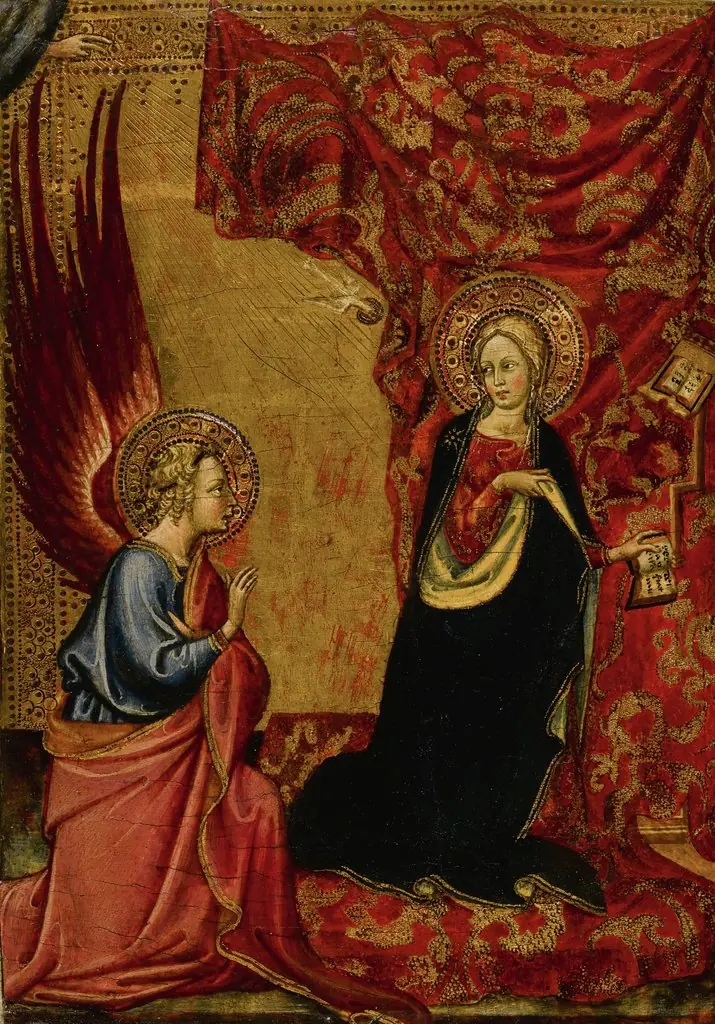 The Annunciation
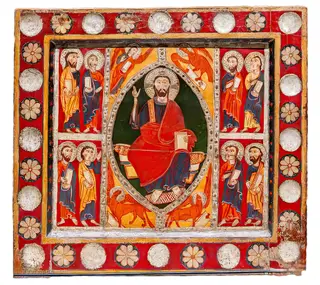 Altar from Sant Romà de Vila
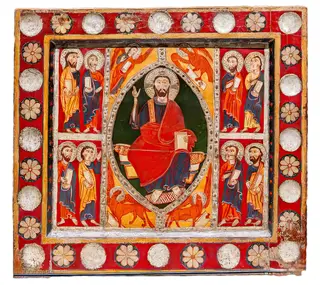 Altar frontal from Sant Romà de Vila
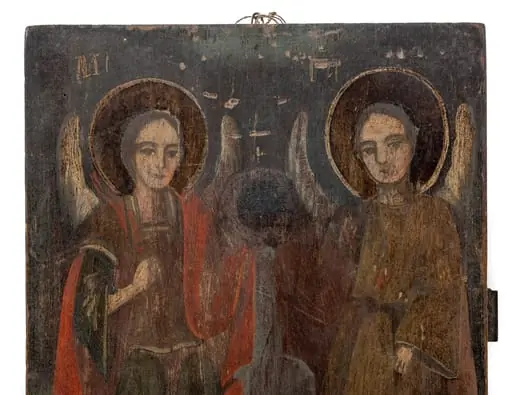 Sfânții Mihail și Gavriil
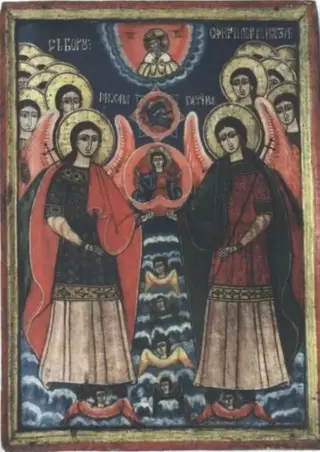 Soborul Sfinților voievozi
- Altar frontal of the Archangels
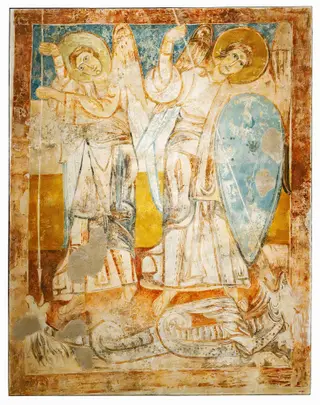 Àngels lluitant contra el drac