Artwork
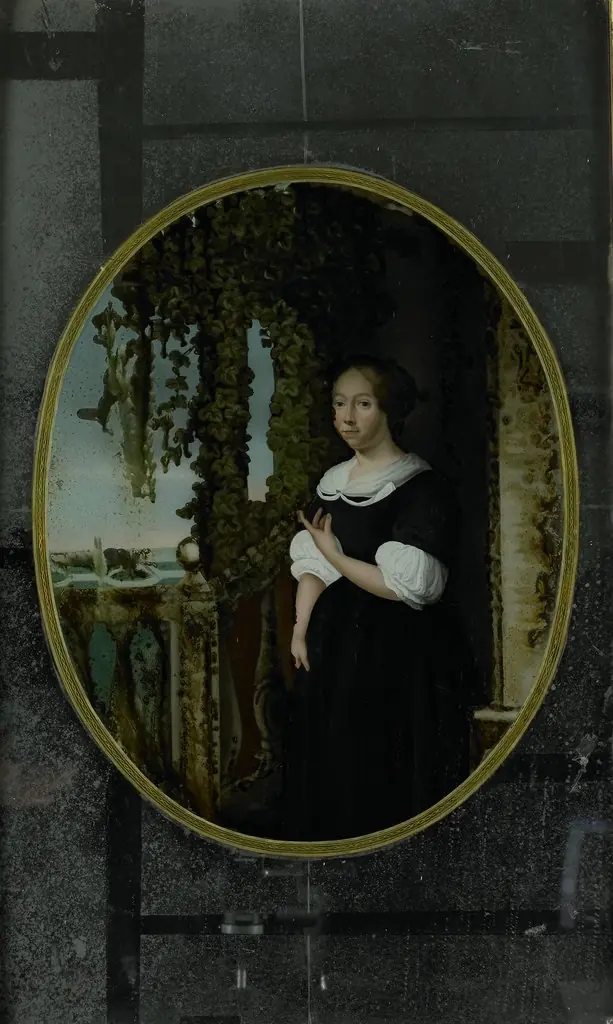
Portrait of a Man in 17th-century Clothing
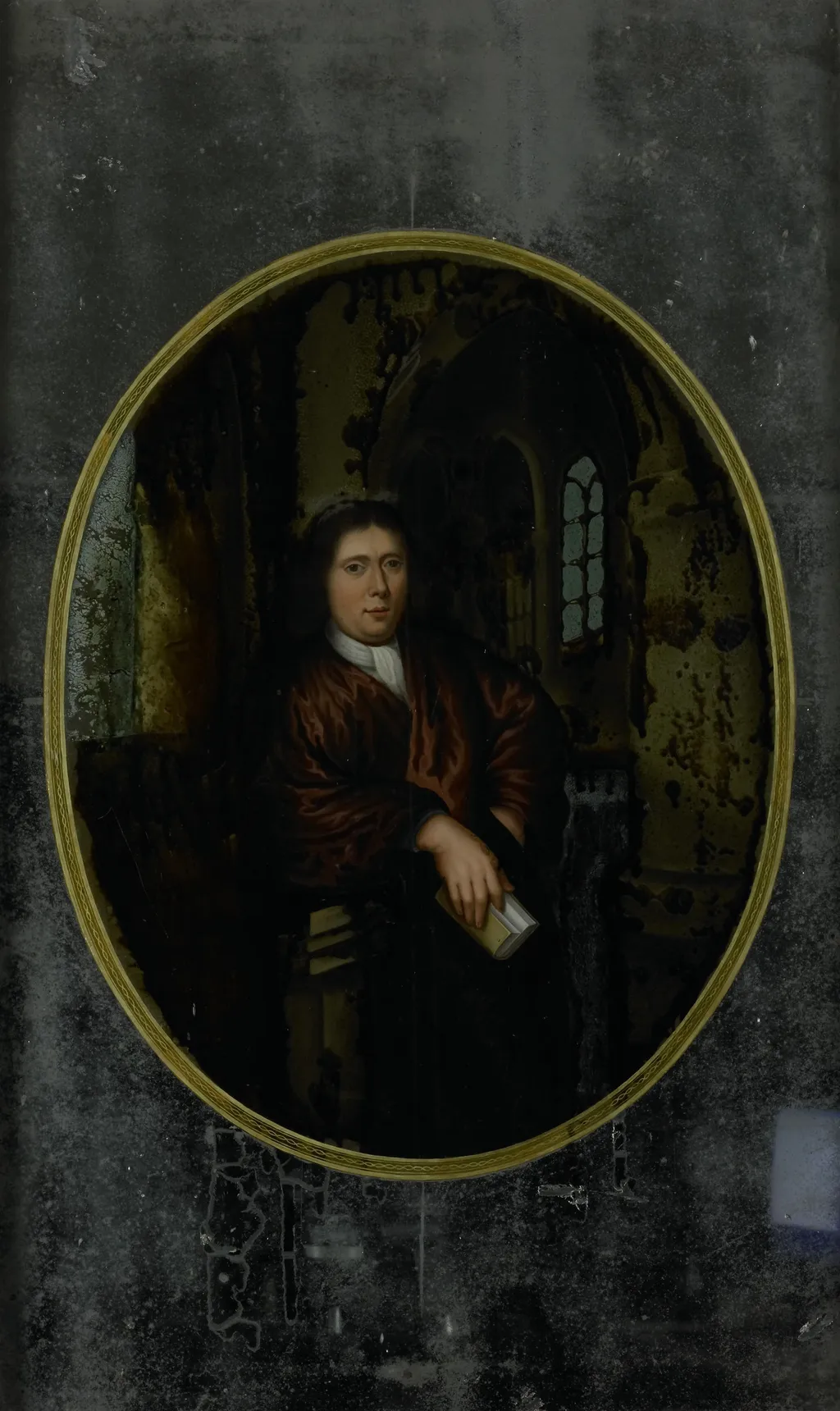
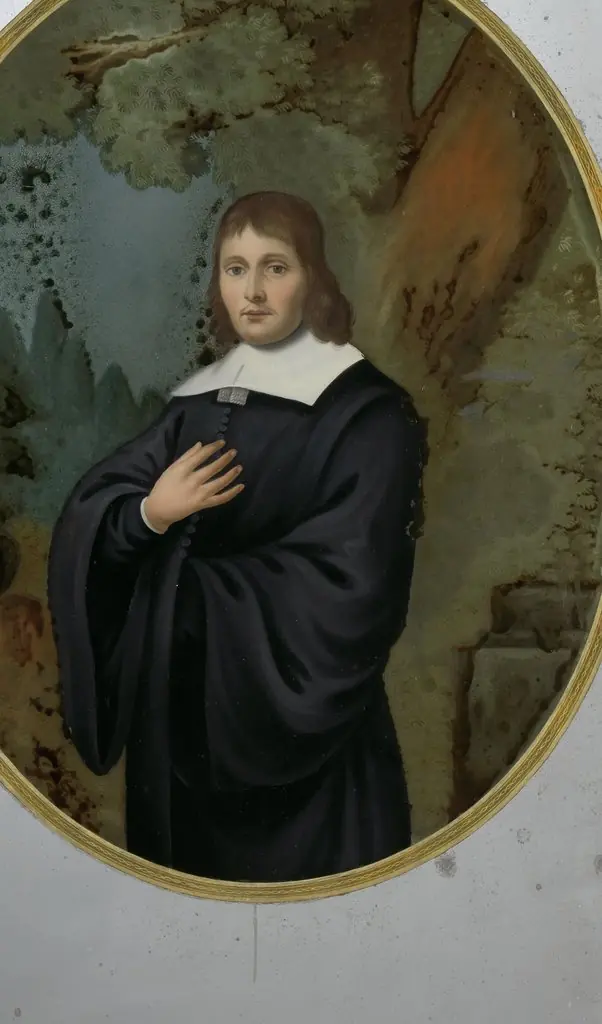
Portrait of a Man in 17th-century Clothing is an unspecified painting. It dates from 1750 and is held in the collection of the Rijksmuseum. The work is a portrait of a man dressed in attire typical of the 17th century, rendered in the medium of verre églomisé.
About this work
Subject & Meaning
The glass medium and 1750 date place it within the later tradition of Dutch portraiture that adapted earlier stylistic elements for contemporary patrons.
The painting shows an unidentified man dressed in attire typical of the 17th century, rendered in glass painting technique. It functions as a portrait that likely served as a commemorative image within elite social circles of the Dutch Republic, reflecting contemporary concerns with status and lineage. The work's iconography is limited to conventional portrait conventions without overt symbolic attributes, suggesting its meaning is tied to the sitter's identity rather than allegorical narrative.
The glass medium and 1750 date place it within the later tradition of Dutch portraiture that adapted earlier stylistic elements for contemporary patrons.
Technique & Style
The work is executed on glass using the verre églomisé technique, a method involving painting onto the reverse side of glass to achieve a reflective effect. The painting's surface exhibits fine brushwork and delicate tonal modeling characteristic of 18th-century portraiture, with careful rendering of fabric textures in the sitter's attire. Its formal composition emphasizes quiet dignity through restrained coloration and precise attention to the sitter's facial features and clothing details.
History & Provenance
The work was produced in 1750 in the Northern Low Countries, executed in the verre églomisé technique rather than as a conventional easel painting. Its subject is an anonymous man, and no specific artist, patron, or commissioning party is recorded in the available documentation.
The painting is held in the collection of the Rijksmuseum, where it is currently located. No earlier owners, intermediate custodians, or acquisition details are documented in the available sources, leaving the chain of ownership prior to its museum holdings untraced.
The work is held in the collection of the Rijksmuseum. Its inventory number is not specified in the sources. The painting has been exhibited at the Rijksmuseum, though specific exhibition dates or shows are not documented in the provided sources.
Context
The painting was created in the Northern Low Countries in 1750 using verre églomisé technique, depicting an unidentified man in 17th-century attire. It is housed in the Rijksmuseum collection and classified as a portrait. Scholarly attention focuses on its material innovation within 18th-century Dutch portraiture, particularly the use of glass backing to achieve reflective depth in painted surfaces.
The work's attribution to the anonymous tradition reflects broader patterns of unsigned portraiture in Dutch Golden Age derivatives, though its precise stylistic lineage remains understudied in current literature. Its presence in a major national collection underscores ongoing interest in material experimentation beyond oil on canvas during this period.
Legacy
The painting's legacy stems from its distinctive technique of verre églomisé, which influenced later portraitists seeking luminous surface effects. Its attribution to the Northern Low Countries contributed to renewed scholarly interest in 18th-century Dutch glass painting traditions. The work remains part of the Rijksmuseum's collection, ensuring continued public access and academic study of its stylistic innovations.
Overview
The work is a portrait of a man dressed in attire typical of the 17th century, rendered in the medium of verre églomisé. He is shown in a dark interior setting, his gaze directed forward, his expression composed with a faint smile. The composition emphasizes a sense of quiet dignity and introspection.
Artist & collection

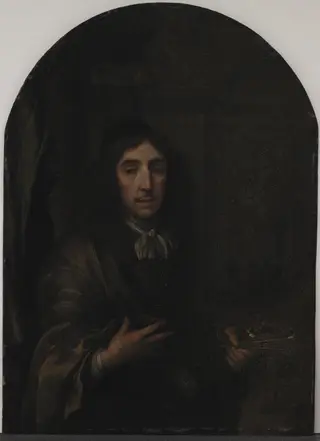 Portrait of a Painter
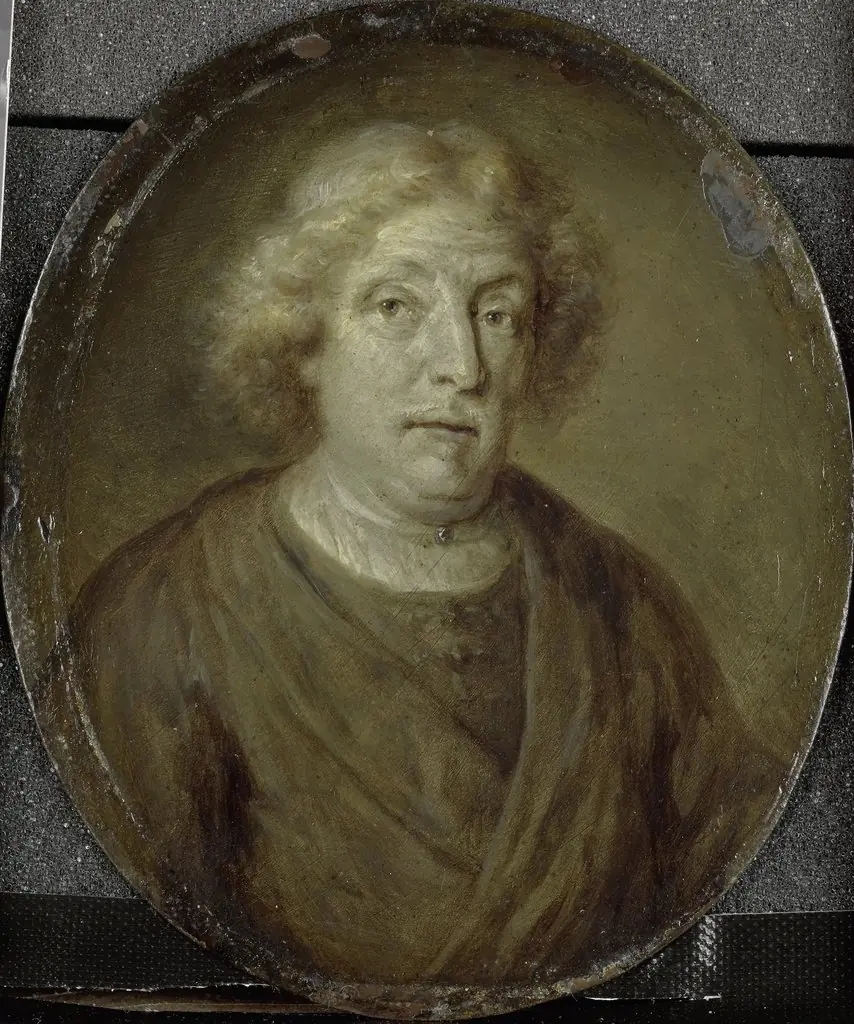 Portrait of Jacob Lescailje, Bookdealer and Poet in Amsterdam
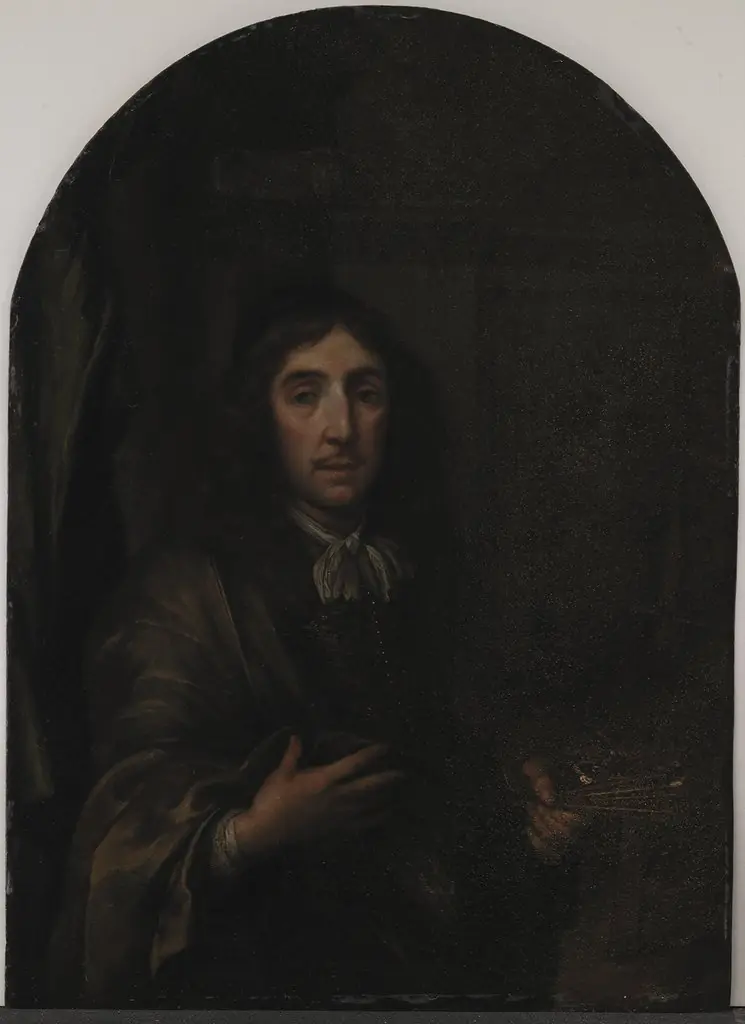 Portrait of a Painter
 Portrait of Pieter Salina
 Portret van een man in zeventiende-eeuwse kleding
 Portrait of Pieter Salina
 Martin Luther (1483–1546), Aged 63
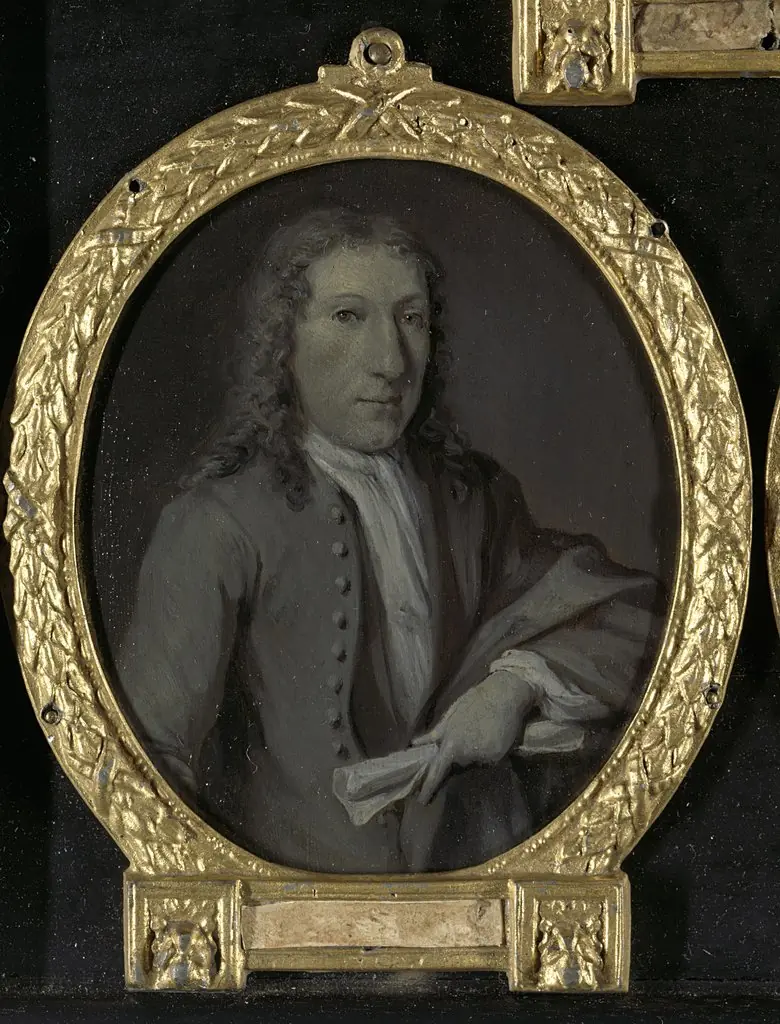 Portrait of Gijsbert Tijssens, Playwright in Amsterdam
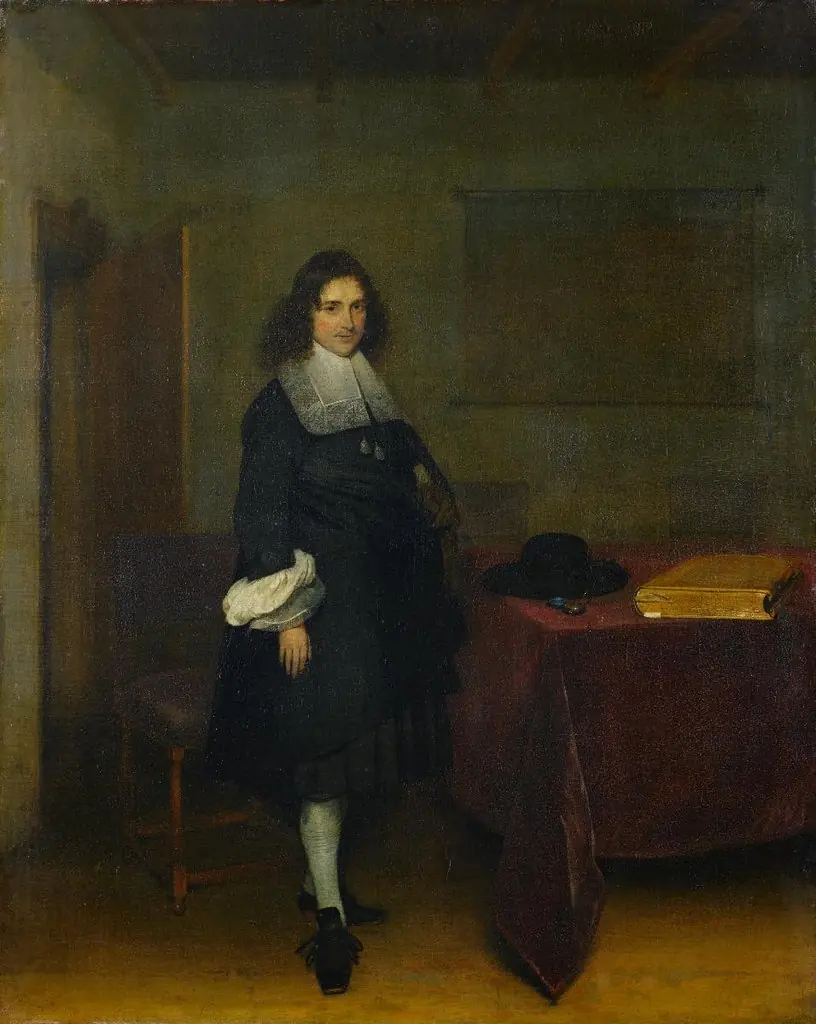 Bildnis eines jungen Herrn im Interieur
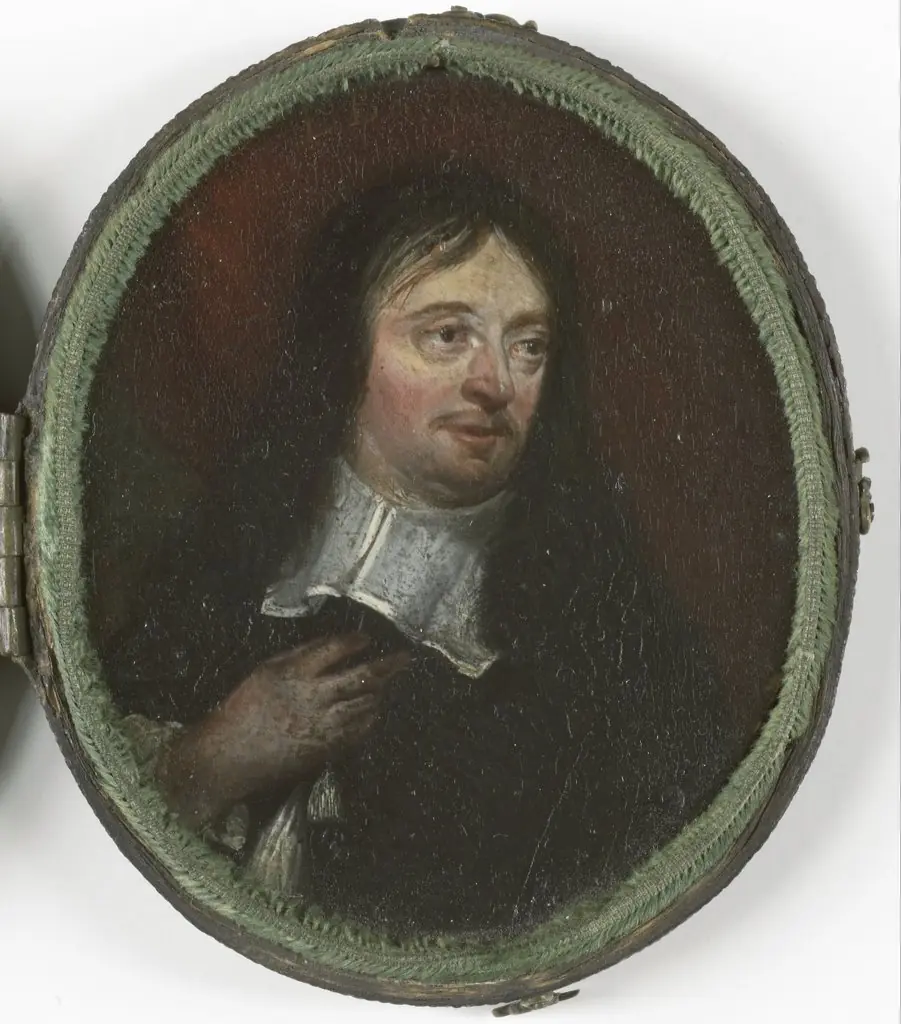 Portret van een man
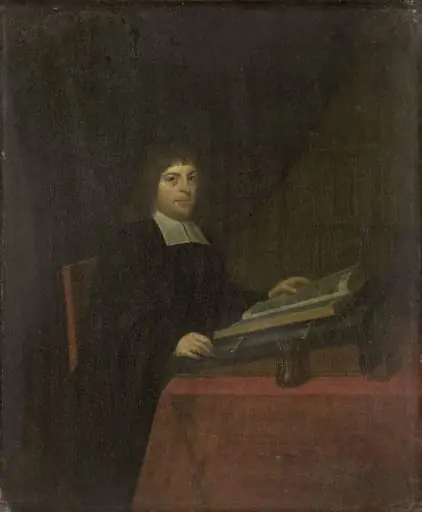 Portrait of a Minister
- Portrait of a Woman in 17th-century Clothing