Artwork
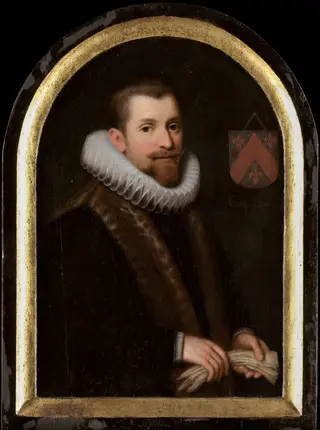
Portrait of a painter (self-portrait?)
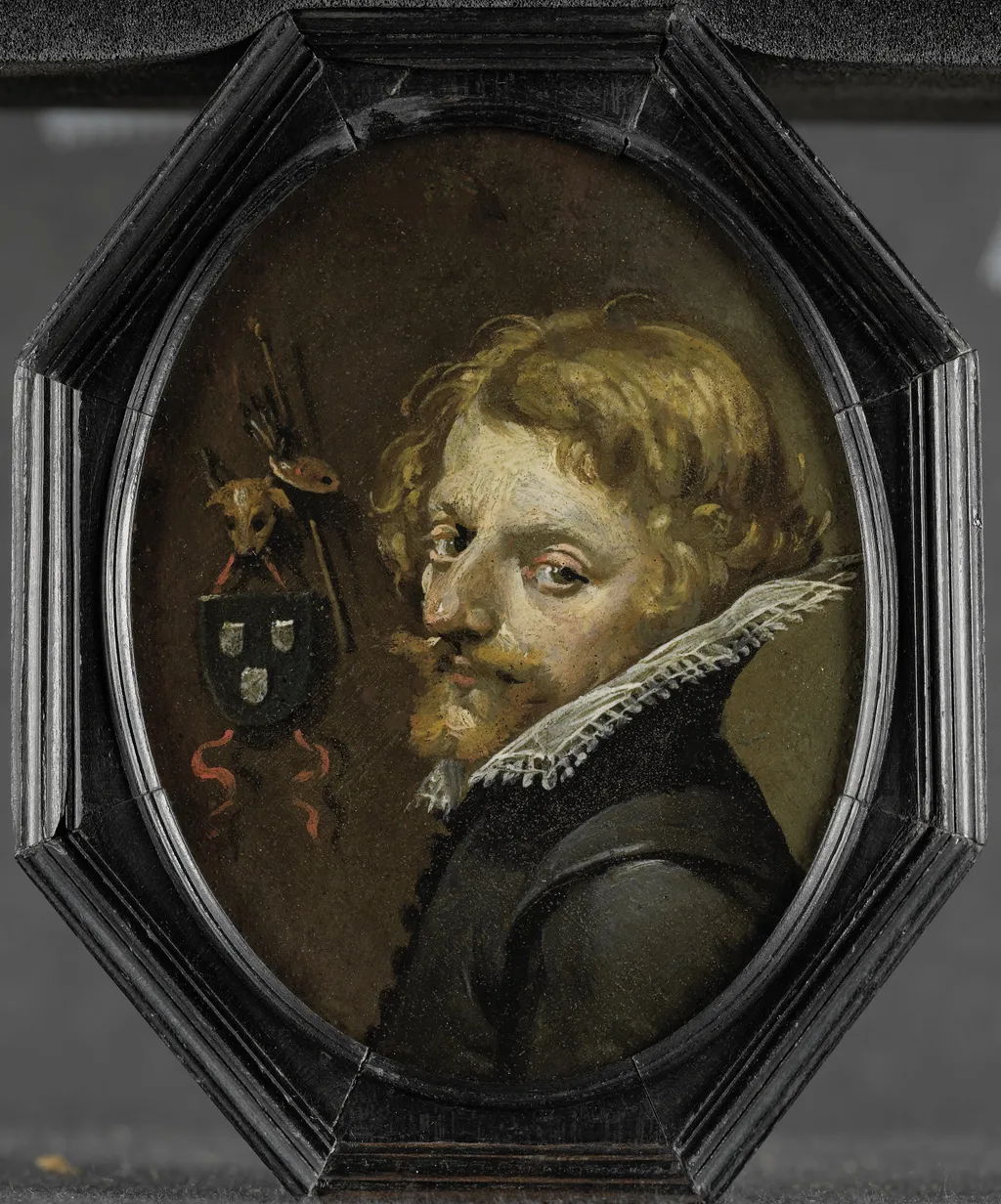
Portrait of a painter (self-portrait?) is an oil painting. It dates from 1615 and is held in the collection of the Rijksmuseum. Created in 1615, this copper painting presents a half‑length portrait of a man turned slightly toward his left shoulder.
About this work
In the background, there are various objects, including a palette with paintbrushes, a sword, and a shield with a coat of arms.
This painting is a portrait of a man, possibly a self-portrait, created in 1615. The subject is depicted from the shoulders up, wearing a dark jacket with a white ruffled collar. He has short, curly hair and is looking over his left shoulder.
In the background, there are various objects, including a palette with paintbrushes, a sword, and a shield with a coat of arms. The overall atmosphere of the painting is one of introspection and creativity. The use of chiaroscuro, a technique that uses strong contrasts between light and dark to create a sense of volume and depth, adds to the dramatic effect of the painting.
Technique & Style
The work was executed on a copper support using oil paint, characteristic of early 17th-century Dutch practice. Measuring approximately 6.1 × 5.1 cm, the small scale emphasizes intimate brushwork and fine detail. The handling shows a smooth, almost enamel-like finish achieved through careful layering, while the formal composition presents a three-quarter view of a man in a dark coat, rendered with restrained modeling and a muted palette.
Stylistically, the piece combines the precision of portraiture with the decorative flatness typical of copper support paintings, highlighting the artist’s interest in self-representation and material experimentation.
History & Provenance
The work was created in 1615 in the Northern Low Countries on a copper support, recorded as an anonymous self-portrait by an unidentified male sitter. After its making it entered the collection of Jacob Eduard van Heemskerck van Beest, remained in that family holding until the mid‑20th century, and was subsequently acquired by the Rijksmuseum where it is presently held.
Legacy
The work's legacy stems from its attribution as a rare early self-representation by a painter active in the Dutch Golden Age, influencing scholarly discussions on self-portraiture and workshop practices. Its presence in the Rijksmuseum collection and attribution to the Northern Low Countries have cemented its status as a key example of 17th-century portraiture on copper support.
Overview
Created in 1615, this copper painting presents a half‑length portrait of a man turned slightly toward his left shoulder. He wears a dark jacket trimmed with a white, ruffled collar, and his short, curly hair frames a thoughtful gaze. The composition includes a modest array of objects behind him, suggesting both personal and professional identity.
Subject & Meaning
The sitter appears to be an artist, as indicated by the palette and brushes placed among his belongings. A sword and a shield bearing a coat of arms accompany these tools, hinting at a dual role or status, perhaps linking artistic practice with noble or martial affiliation. The pose and introspective expression convey contemplation of his craft.
Artist & collection

- Self-Portrait
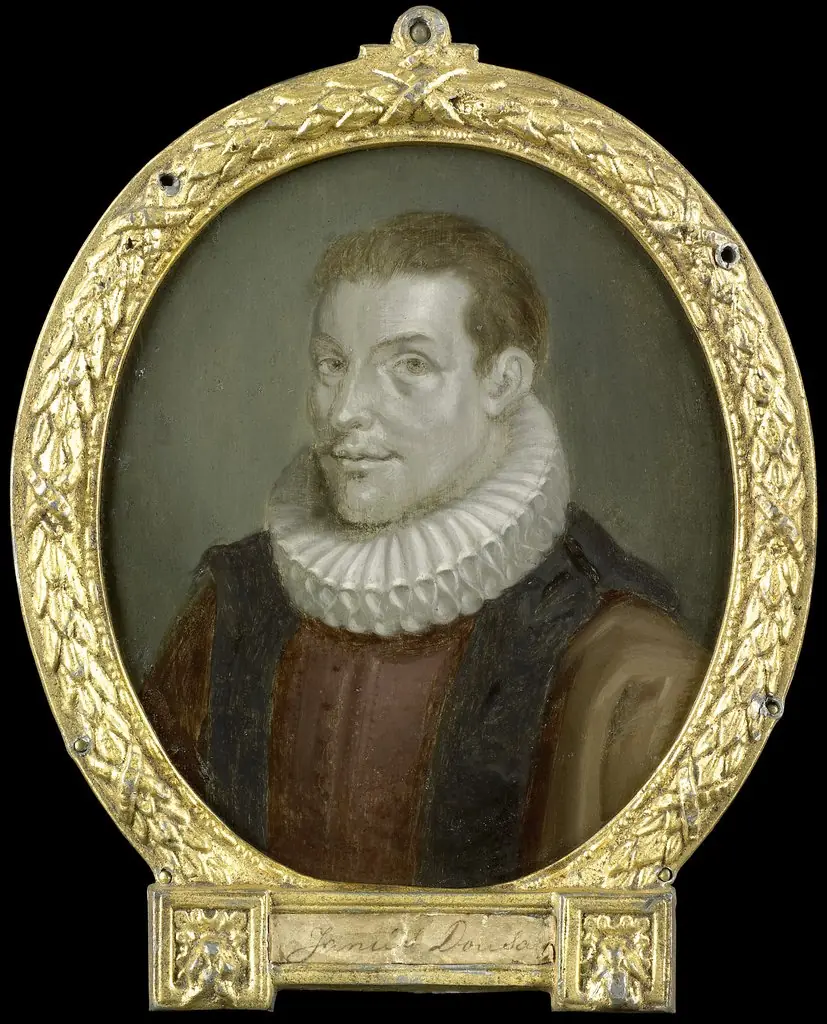 Portrait of Johan van der Does the Younger, Librarian in Leiden
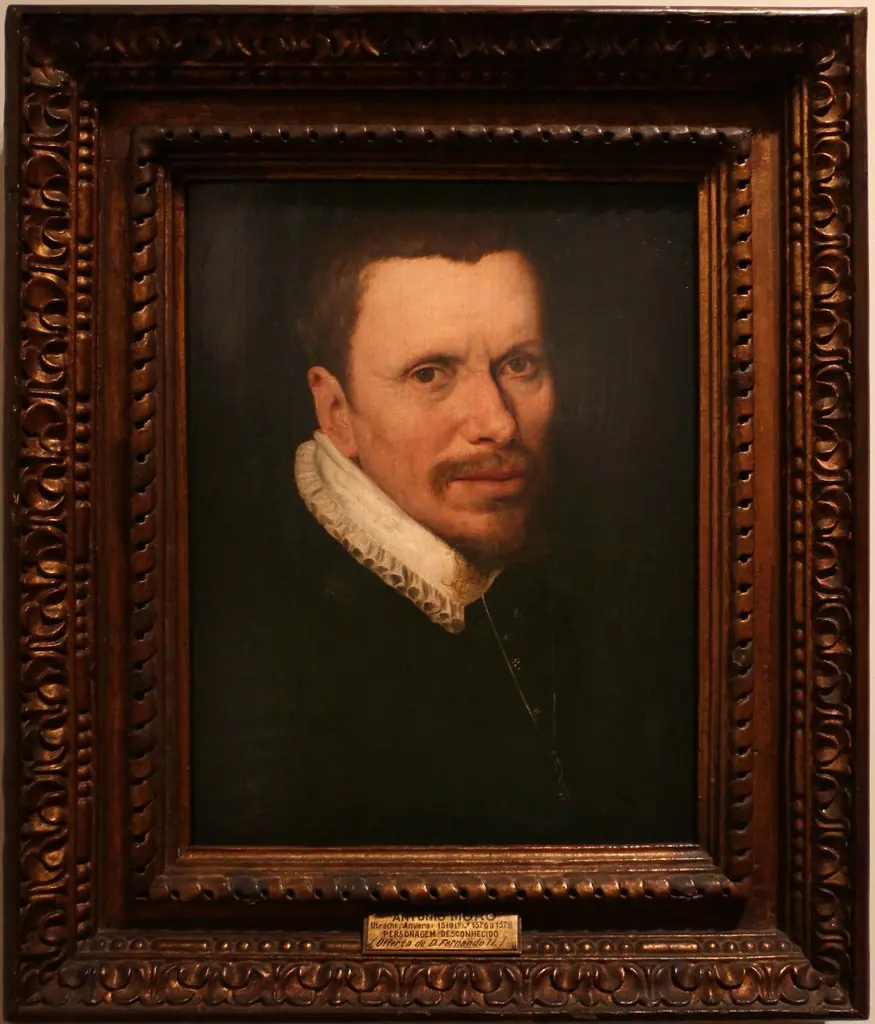 Male Portrait
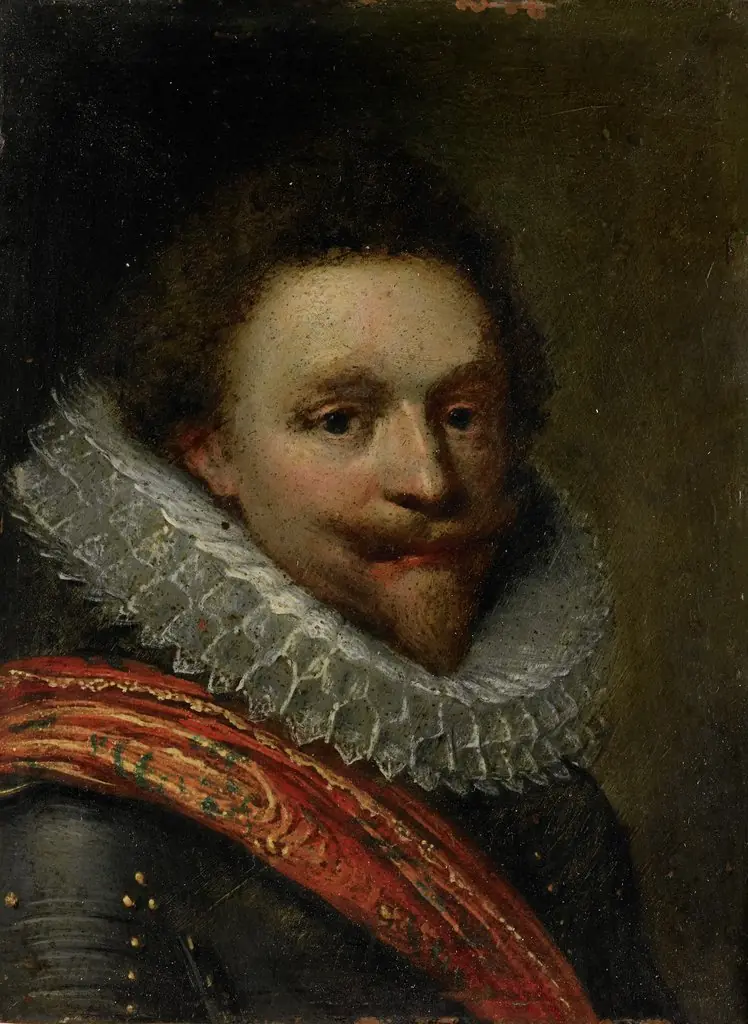 Portrait of Frederik Hendrik (1584-1647), Prince of Orange
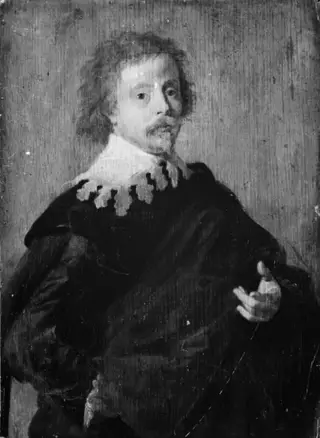 Portrait of Cornelis van Poelenburgh
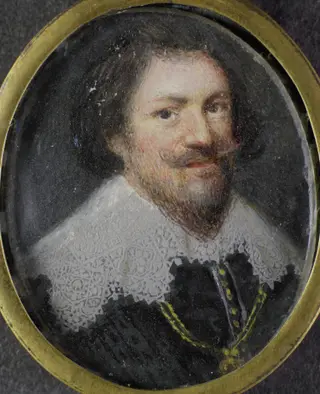 Portrait of a man
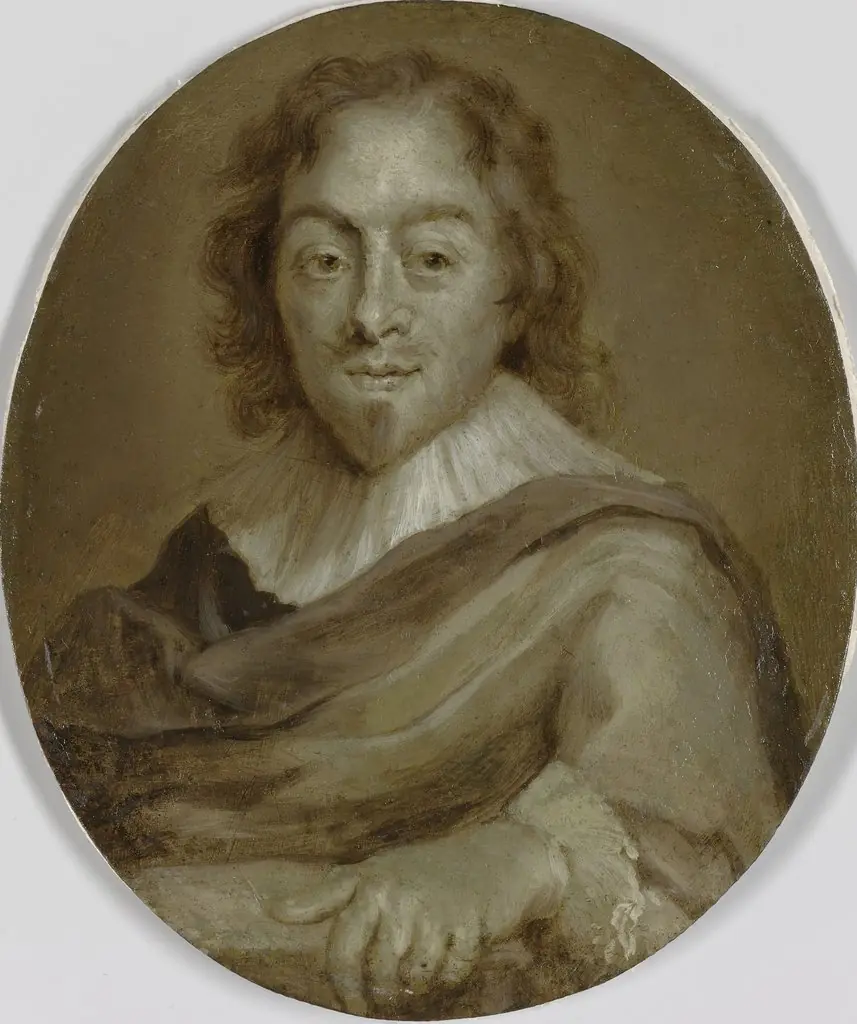 Portrait of Constantijn Huygens, Poet, Secretary to Prince Frederick Henry and Prince William II and First Councilor and Exchequer to William III
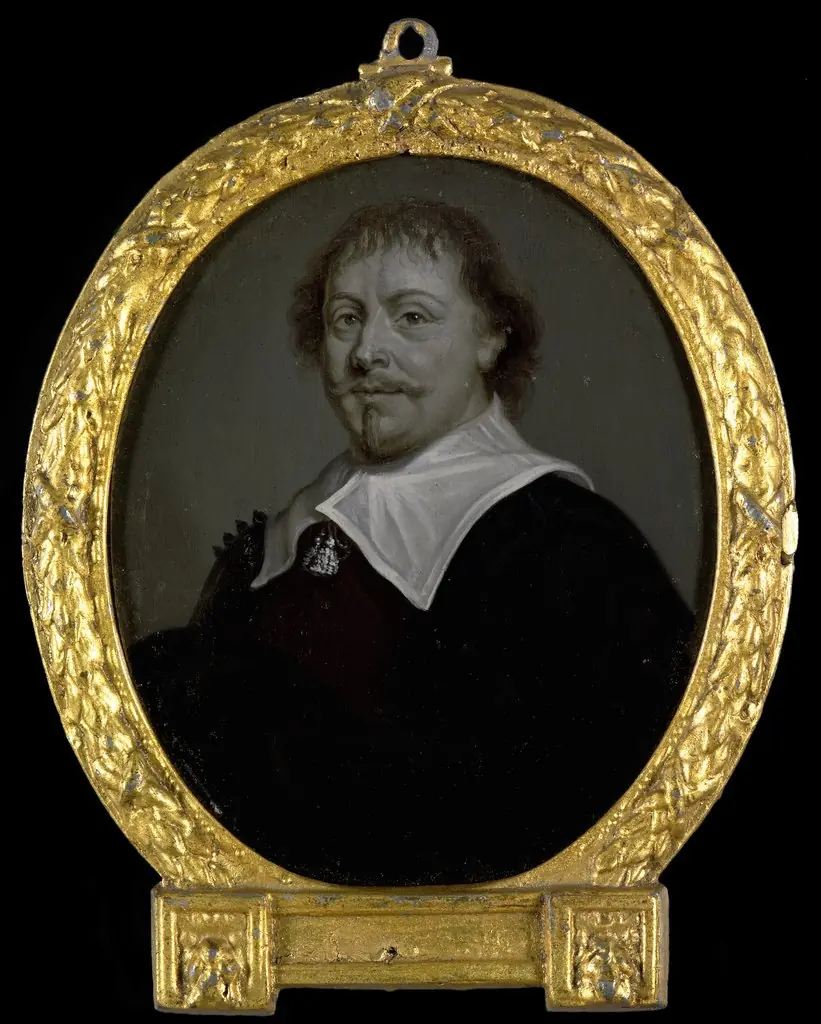 Portrait of Franciscus Planté, Clergyman at Zevenbergen and in Brazil
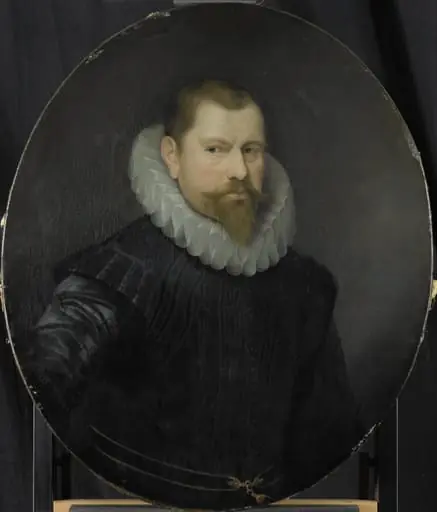 Portrait of Cornelis Matelieff the Younger, Director of the Rotterdam Chamber of the Dutch East India Company, elected 1602
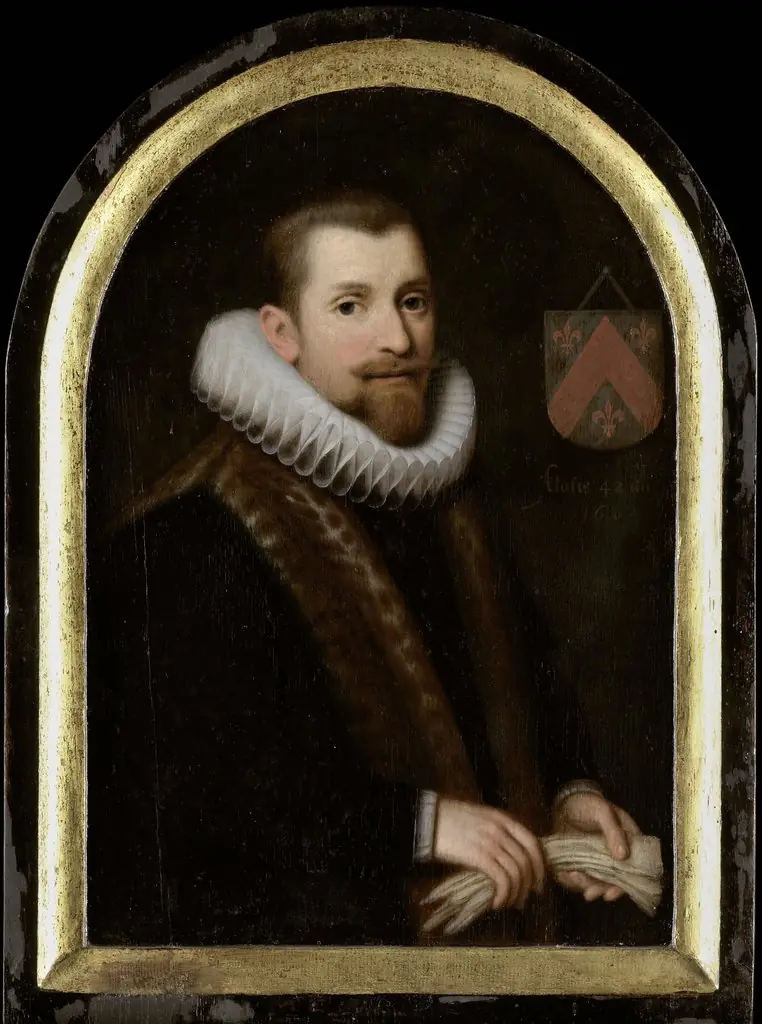 Portrait of Floris Gerritsz Overrijn van Schoterbosch (c. 1562-1618)
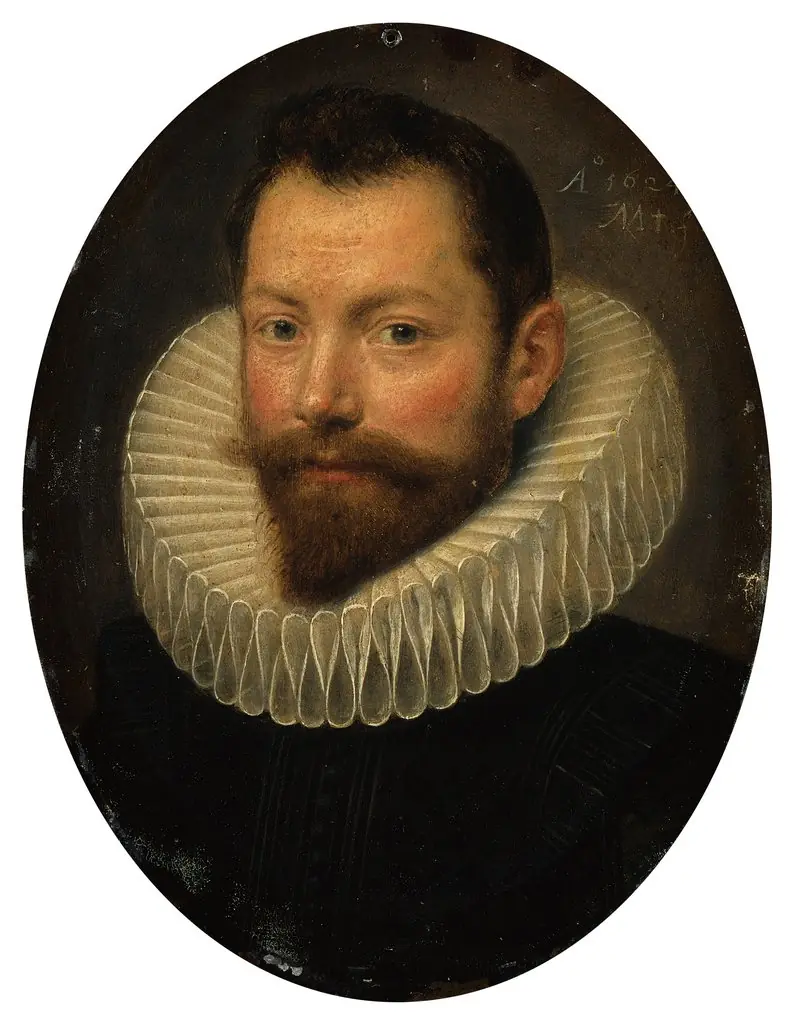 Portrait of young man
 Portrait of Floris Gerritsz van Schoterbosch (c. 1562-1618)