Artwork
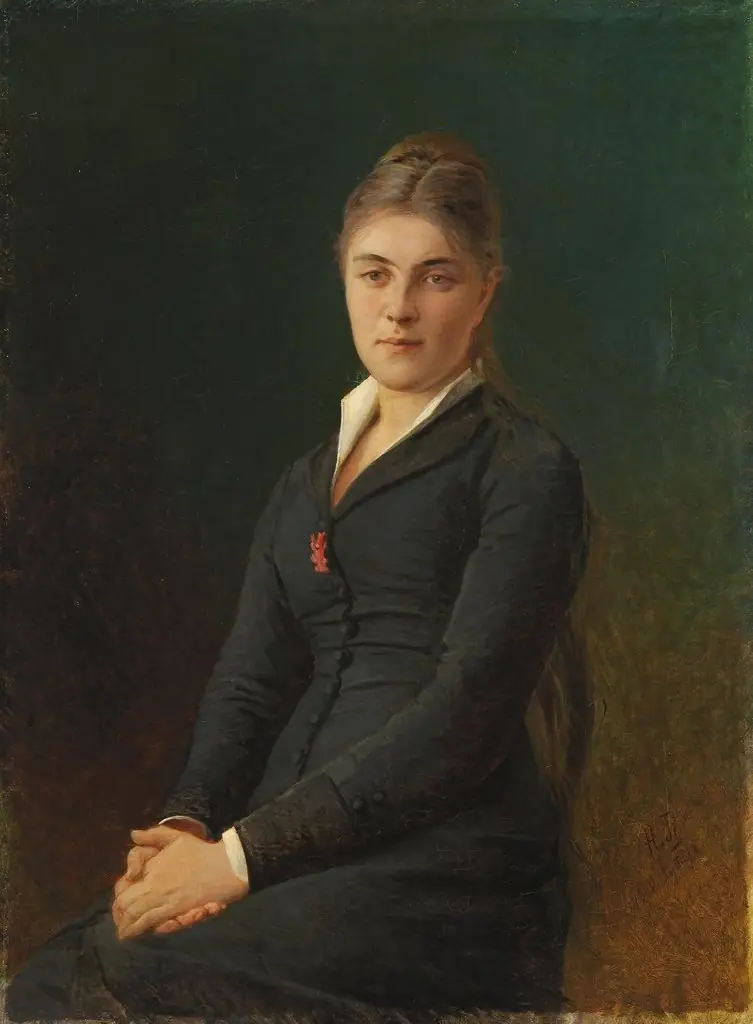
Portrait of A.S. Korf
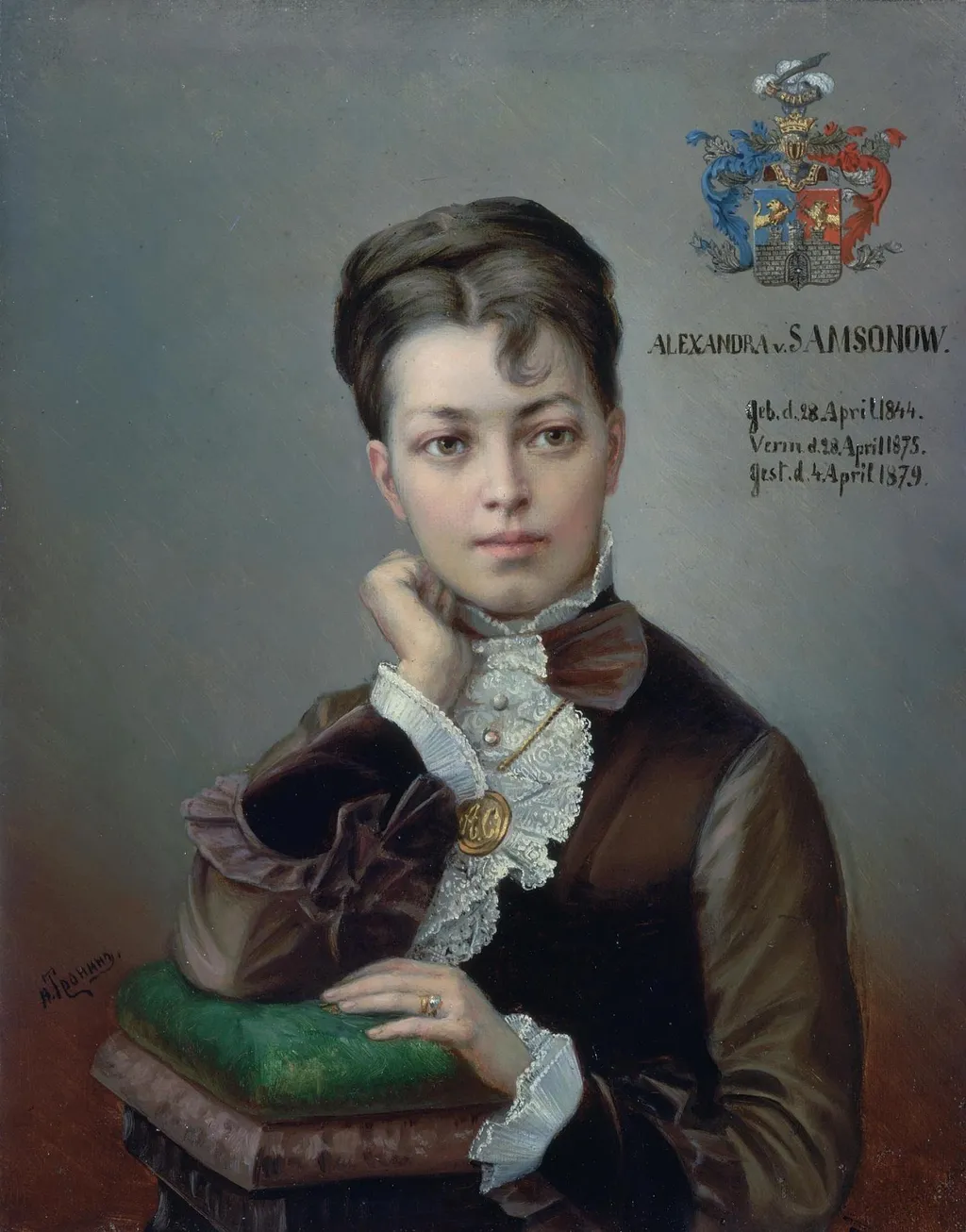
Portrait of A.S. Korf is an oil painting by the Realist artist Unknown. It dates from 1850 and is held in the collection of the Hermitage Museum. This oil painting portrays a woman identified as A.
About this work
Overview
Dressed in a dark gown accented by a white lace collar and a prominent neck bow, she is seated beside a green cushion, one hand resting lightly upon it.
This oil painting portrays a woman identified as A.S. Korf, rendered with quiet precision. Dressed in a dark gown accented by a white lace collar and a prominent neck bow, she is seated beside a green cushion, one hand resting lightly upon it. A ring is visible on her finger.
The background is a muted gray, drawing focus to her figure. The work exemplifies 19th-century portraiture through its restrained composition and emphasis on textile detail.
Subject & Meaning
The subject, A.S. Korf, is depicted with composure and dignity, suggesting social standing and personal refinement. Her attire, formal yet unadorned beyond the lace and bow, conveys modest elegance rather than ostentation. The absence of symbolic objects or elaborate settings implies an intention to capture character through presence alone, reflecting a shift toward intimate, individualized portraiture in the period.
Technique & Style
Oil paint is employed with careful attention to texture, particularly in the rendering of lace, fabric folds, and the sheen of the dress. The brushwork is controlled, avoiding dramatic contrasts in favor of subtle tonal gradations. The gray background isolates the figure, enhancing the focus on her clothing and posture. Lighting is even and diffuse, minimizing shadows to preserve clarity of form and detail.
History & Provenance
The painting resides in the State Hermitage Museum in Saint Petersburg, part of its extensive 19th-century Russian and European collection. While the artist’s identity is not specified in the provided details, the work likely entered the museum’s holdings through state acquisition or private donation during the imperial era. Its preservation reflects its status as a documented example of domestic portraiture from the period.
Context
Created during a time when portraiture increasingly emphasized personal identity over aristocratic symbolism, this work aligns with trends among Russian and Western European artists who favored restrained, psychologically grounded depictions. The simplicity of the setting and the focus on textile detail mirror broader cultural values of propriety and understated refinement in middle- and upper-class life.
Legacy
Though not widely exhibited outside institutional collections, the portrait contributes to the understanding of private portraiture in 19th-century Russia. Its preservation in the Hermitage underscores its role as a representative example of how everyday elegance was captured through careful observation and technical discipline, offering insight into the visual culture of its time.
Artist & collection









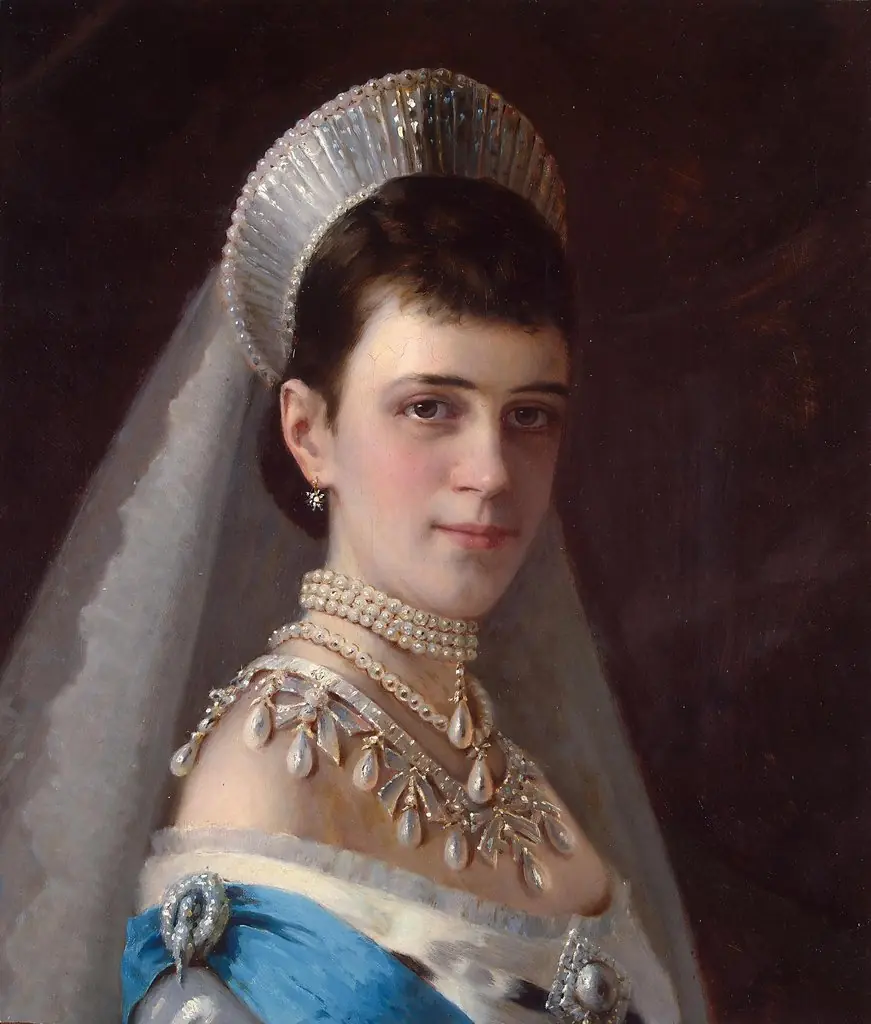 Portrait of Empress Maria Feodorovna
 Prințesa Maria Ludovika Wilhelmine von Bayern (în registrul inventar: Portret de femeie)
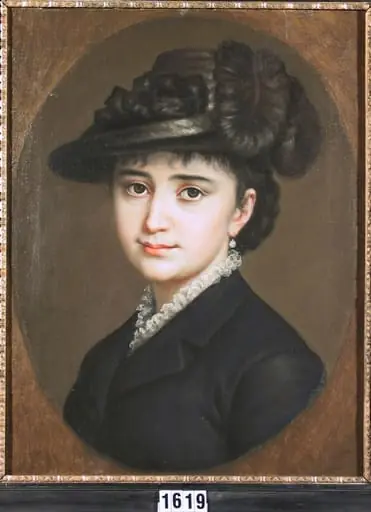 Eliza Petrovici
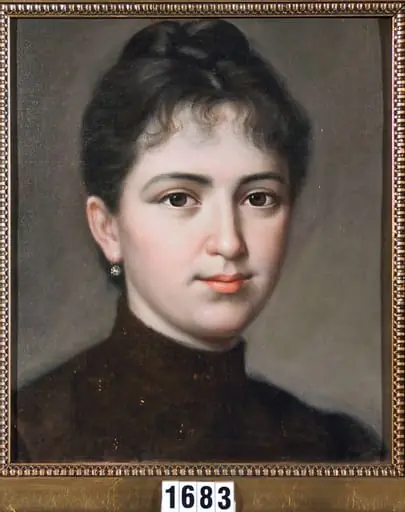 Portret de femeie tânără
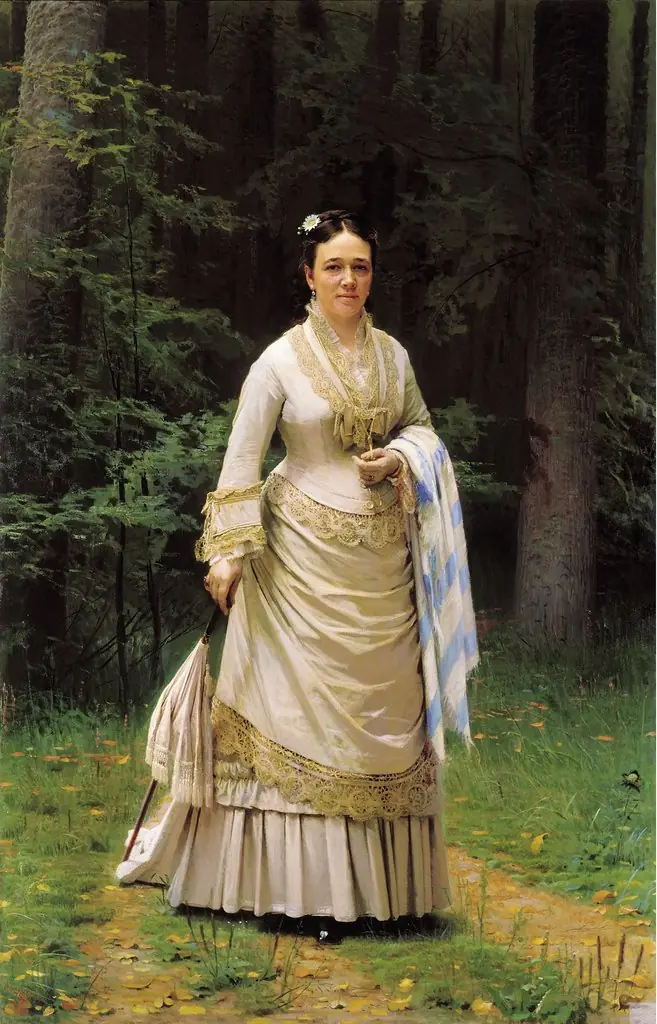 Portrait of Vera Nikolayevna Tretyakova
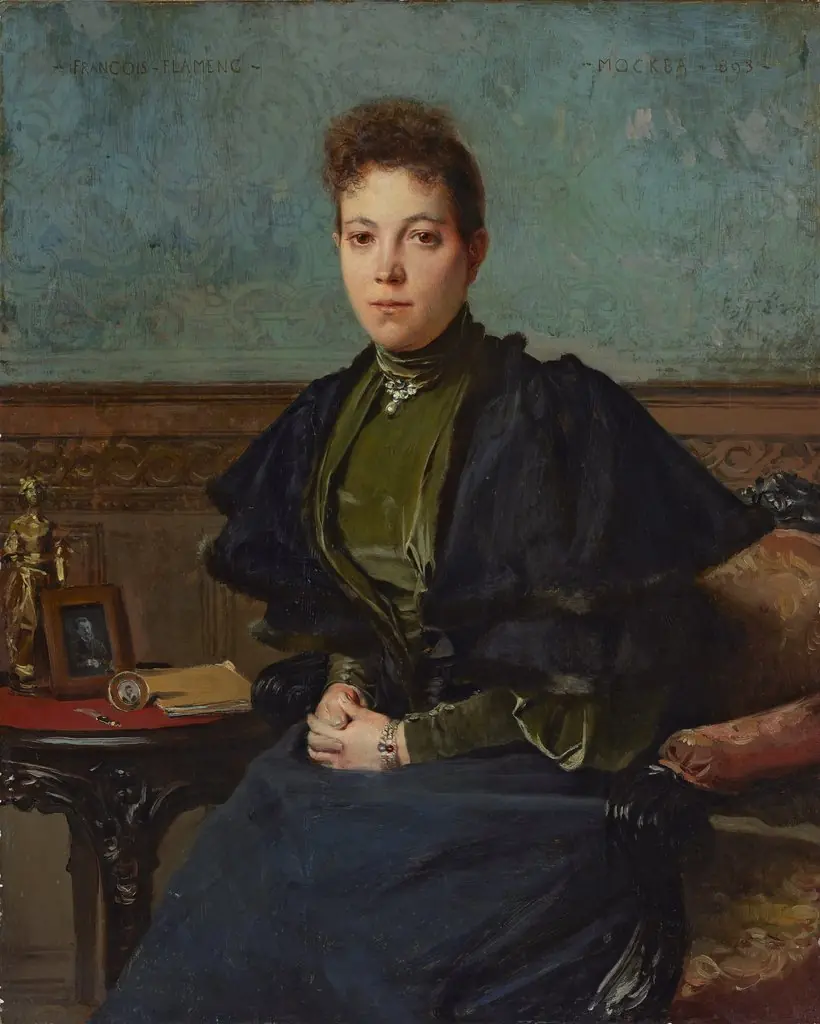 Portrait of Vera Kharitonenko
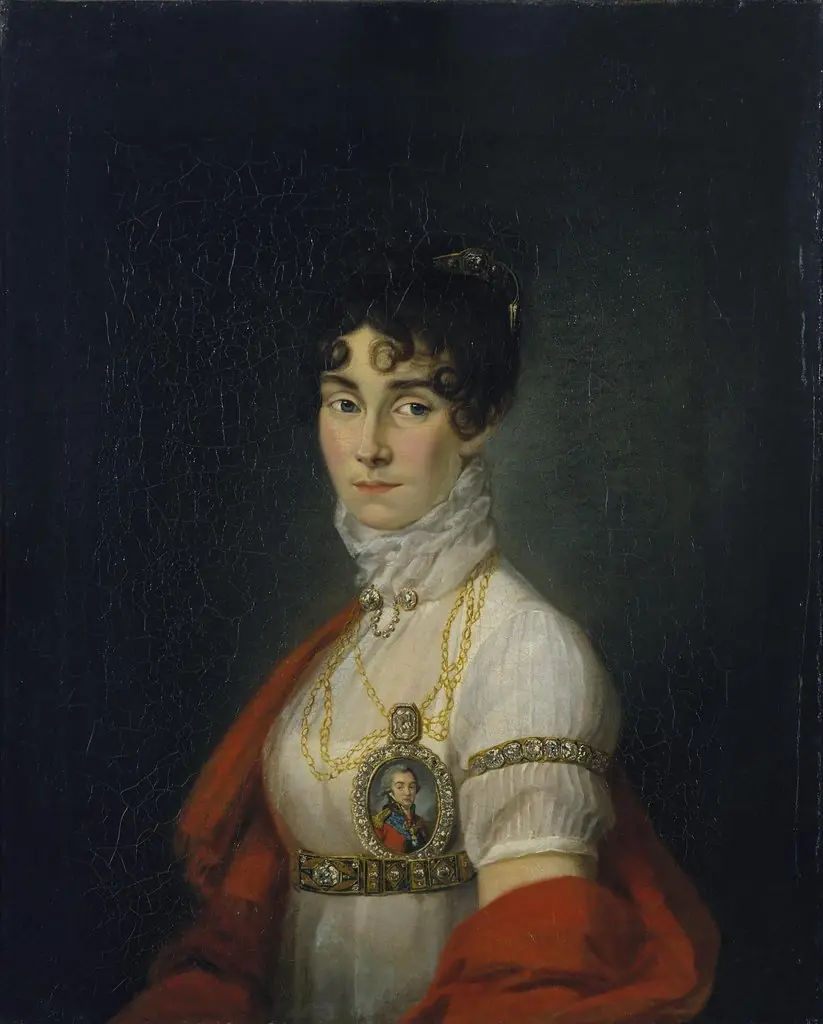 Portrait of Praskovia Kovalyova-Zhemchugova, Countess Sheremeteva (1768-1803)
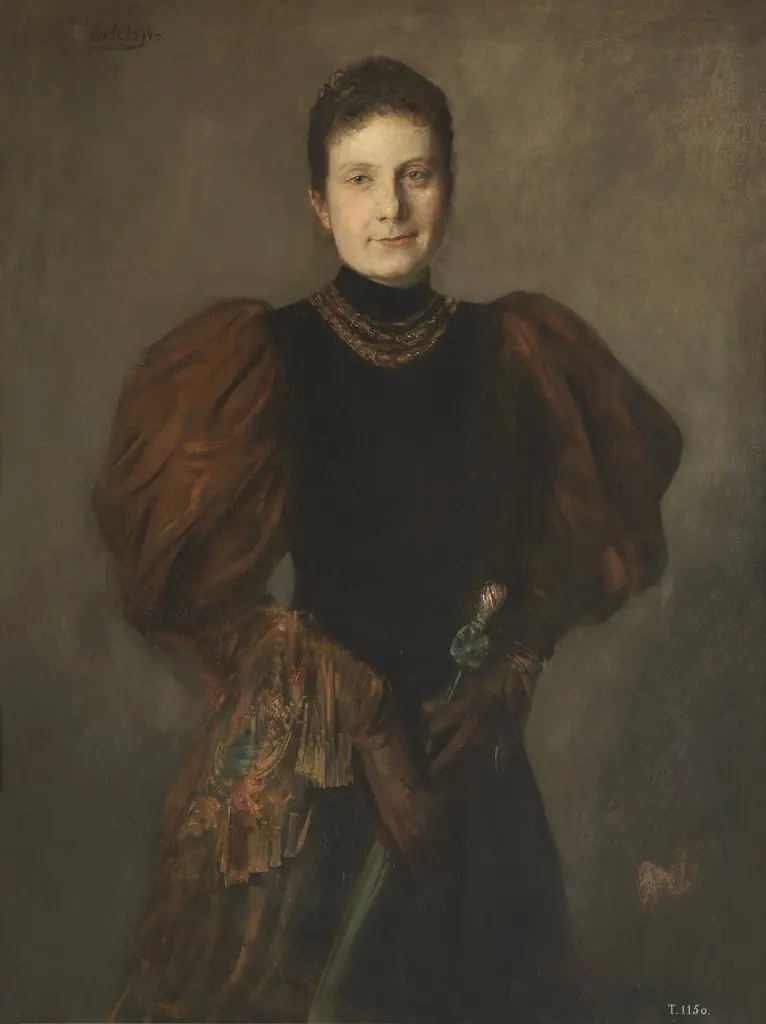 Infanta María de la Paz de Borbón, daughter of Isabella II
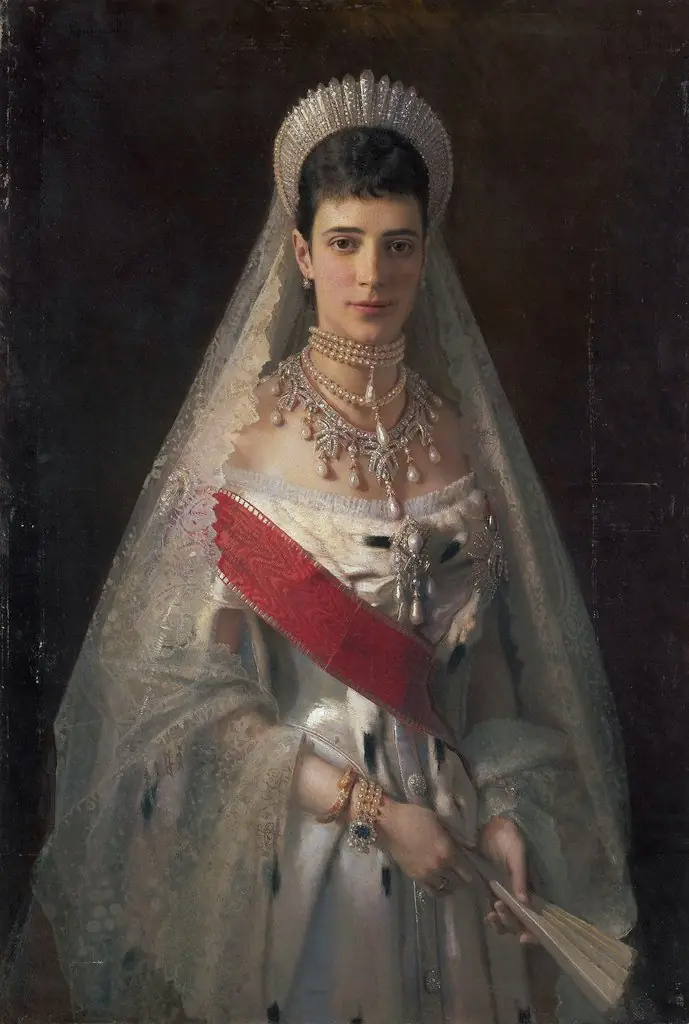 Portrait of Empress Maria Feodorovna
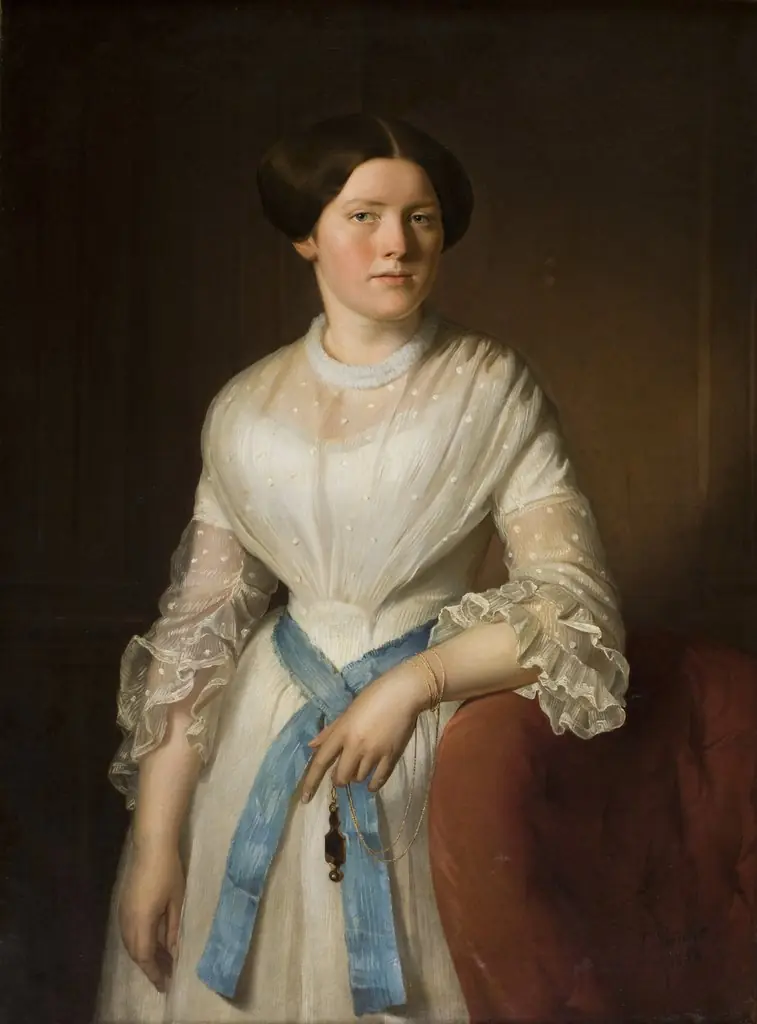 Portrait of Miss Pisarzowska
 Portrait of Yekaterina Ge, the Artist's Daughter-in-Law
- Portrait of A.I. Kolychiova