Artwork
Portrait of an Official
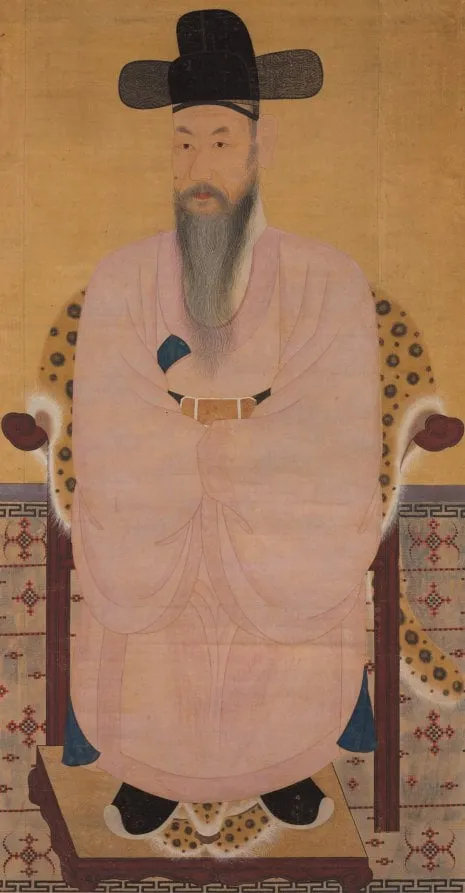
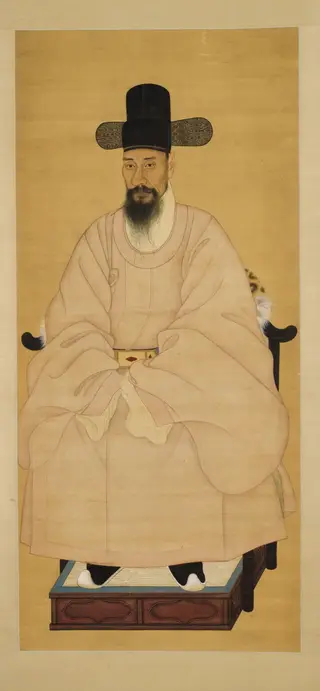
Portrait of an Official is an unspecified painting by the Joseon dynasty painting artist Unknown. It dates from 1804 and is held in the collection of the Cleveland Museum of Art. This full-length portrait, painted in the Joseon period of Korea, depicts a male court official seated in a three‑quarter view.
- Accession no.
- 1999.45
- Credit line
- Mr. and Mrs. William H. Marlatt Fund
About this work
The three-quarter view lets you study his face without meeting his eyes, like a quiet conversation.
A man in a pale pink robe sits sideways in a chair, his face turned just enough to show one ear. His black hat and long beard frame a calm expression.
In Korea’s Joseon dynasty, portraits like this weren’t just about looks. Artists believed a good likeness could carry the person’s spirit. The three-quarter view lets you study his face without meeting his eyes, like a quiet conversation.
To see more portraits from this time, look up Joseon dynasty (1392–1910).
Overview
This full-length portrait, painted in the Joseon period of Korea, depicts a male court official seated in a three‑quarter view. He wears a pale pink bureaucratic robe and a black hat, his long beard framing a composed expression. The composition places him on a chair covered with leopard skin, a material associated with royal favor.
Subject & Meaning
In the Joseon tradition, a portrait was intended to convey the sitter’s spirit as well as his appearance. The three‑quarter angle allows viewers to observe facial features and demeanor without direct eye contact, suggesting a contemplative encounter with the subject’s inner character.
Technique & Style
The painting follows the courtly aesthetic of the 18th‑century Joseon elite, employing a restrained palette and precise brushwork to render the delicate pink of the official’s robe. The use of leopard‑skin drapery and the careful rendering of the hat and beard exemplify the period’s attention to rank and decorum.
History & Provenance
The original inscription identifying the sitter has been lost, likely removed during trimming. However, the pale pink color of the uniform indicates the figure served in the royal administration after the early 1700s, when court attire shifted from dark green to pink. The work has been preserved as a family heirloom, traditionally placed above a spirit house for ancestral rites.
Context
Portraits of this type were integral to Joseon ancestor worship, serving both as visual records and as focal points for ritual veneration. The inclusion of leopard skin, a symbol of royal patronage, underscores the official’s high status within the bureaucratic hierarchy of the time.
Artist & collection