Artwork
Portrait of Elżbieta Radziwiłł née Chodkiewicz (after 1766–1803)
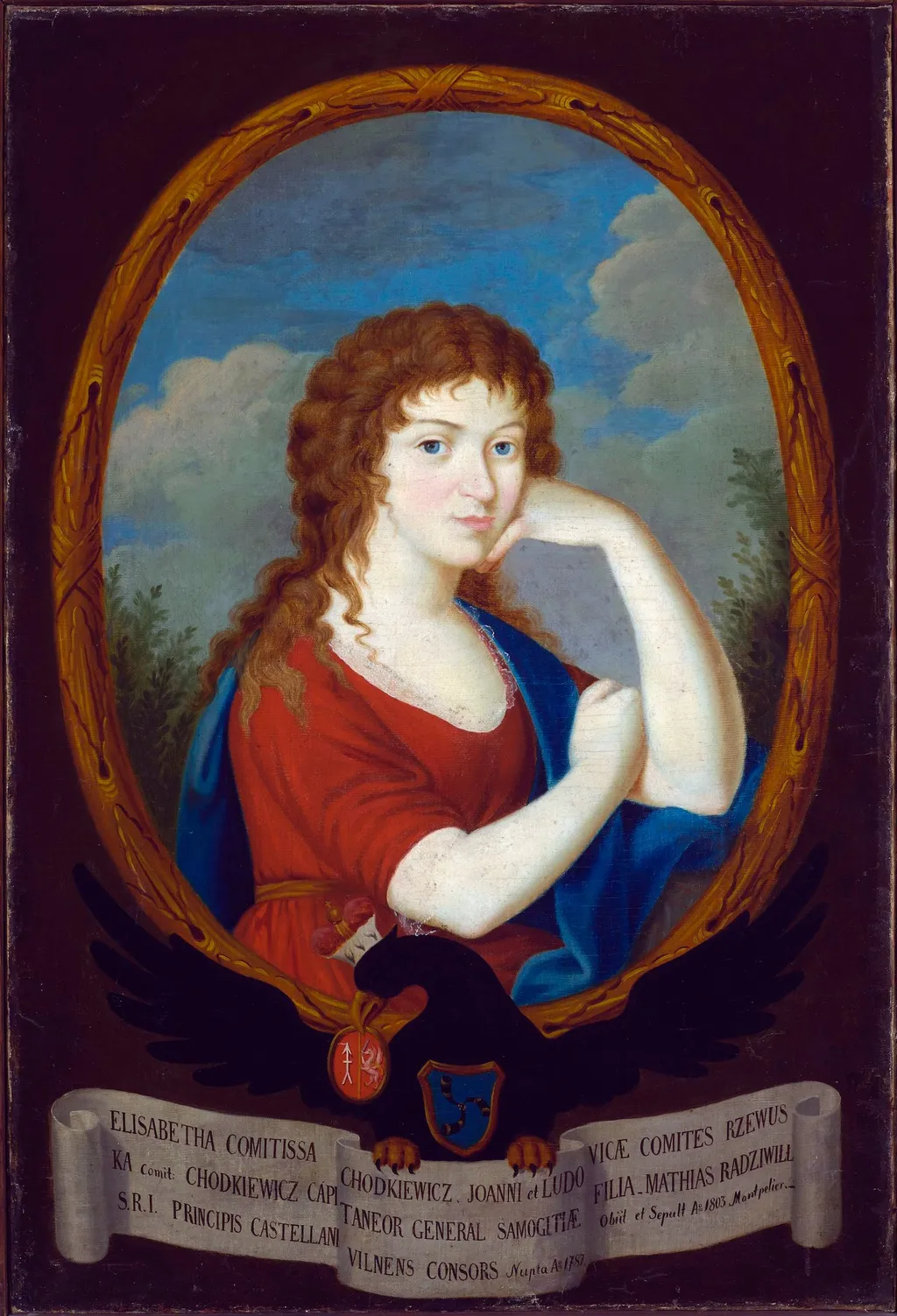
Portrait of Elżbieta Radziwiłł née Chodkiewicz (after 1766–1803) is an oil painting by the Impressionist artist Unknown. It dates from 1900 and is held in the collection of the National Museum in Warsaw.
About this work
Overview
The painting is held in the collection of the National Museum in Warsaw, where it is cataloged with the artwork ID 447167 and the accession number MP 4787 MNW.
Portrait of Elżbieta Radziwiłł née Chodkiewicz (after 1766-1803) is an oil on canvas painting by an unknown Polish painter, created in the early nineteenth century. The half-length portrait measures 109 cm in height and 74 cm in width and is part of a series of portraits set within a laurel wreath. It depicts Elżbieta Chodkiewicz, a member of the prominent Polish noble family, and serves as a historical record of aristocratic lineage and heraldry. The painting is held in the collection of the National Museum in Warsaw, where it is cataloged with the artwork ID 447167 and the accession number MP 4787 MNW.
Subject & Meaning
The artwork portrays Elżbieta Chodkiewicz, a noblewoman born into the House of Chodkiewicz who married into the Radziwiłł family. She is shown as a half-length figure facing slightly left, resting her head on her left hand while her right arm crosses her body. Her auburn hair, blue eyes, and pale skin with pink cheeks are set against a background of blue sky, soft white clouds, and green foliage. Below the central oval, a black eagle with spread wings displays two heraldic shields on its chest, representing the Radziwiłł and Kościesza coats of arms. A white scroll beneath the eagle bears a black Latin inscription, reinforcing the subject's aristocratic identity and lineage.
Technique & Style
Executed in oil on canvas, the painting features a smooth surface with fine craquelure. The composition centers on a half-length figure enclosed within an oval gilt frame, which is set against a dark rectangular outer border. The palette relies on deep reds, blues, and golds, contrasting with the dark brown surround. The sitter wears a red dress with a low neckline and a blue draped garment over her shoulders, secured with a gold belt. Light falls evenly on the figure from the left, illuminating her face and arms against the darker background tones. The integration of the figure with the sky background and the oval framing device aligns with the conventions of the early nineteenth-century portrait series featuring laurel wreaths.
History & Provenance
While the exact commission and early ownership history remain obscure, the painting is documented as originating from Niebowiż in Belarus. The dates in the title, post 1766 to 1803, refer to the lifespan of the sitter, while the physical work itself was executed in the early nineteenth century. The painting eventually entered the collection of the National Museum in Warsaw, where it remains today. It was digitized by the museum, with high-resolution photographic records created by Krzysztof Wilczyński in December 2015.
Context
The painting is attributed to an anonymous Polish painter, reflecting a common circumstance for aristocratic portraits from the Polish-Lithuanian Commonwealth, where the identity of the artisan was often less documented than the status of the sitter. The work belongs to a broader tradition of early nineteenth-century Polish portraiture that emphasized noble lineage, utilizing heraldic elements and inscriptions to assert family heritage. Its inclusion in a series of portraits in a laurel wreath places it within a specific decorative and genealogical framework favored by the elite of the era.
Artist & collection









 Porträt der Elizaveta Markovna Olenina
 Portrait of Nina Łuszczewska née Żółtowska
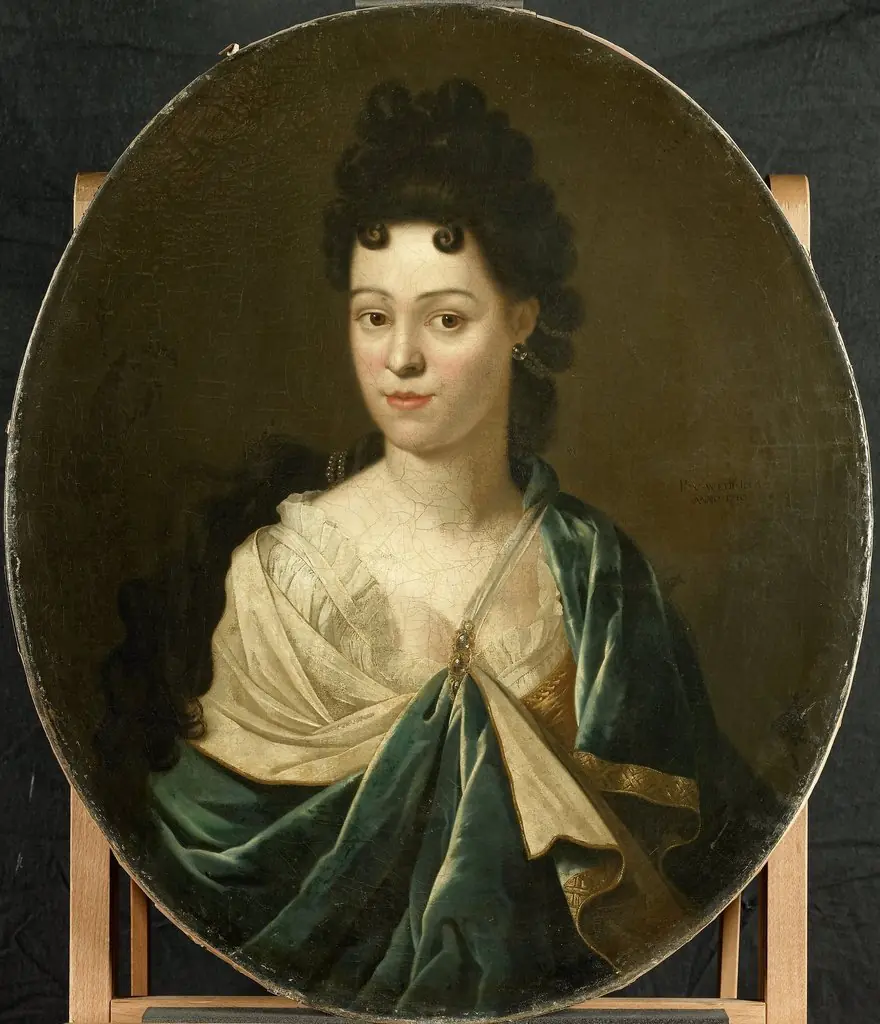 Portrait of Mrs. Brust-Batailhy
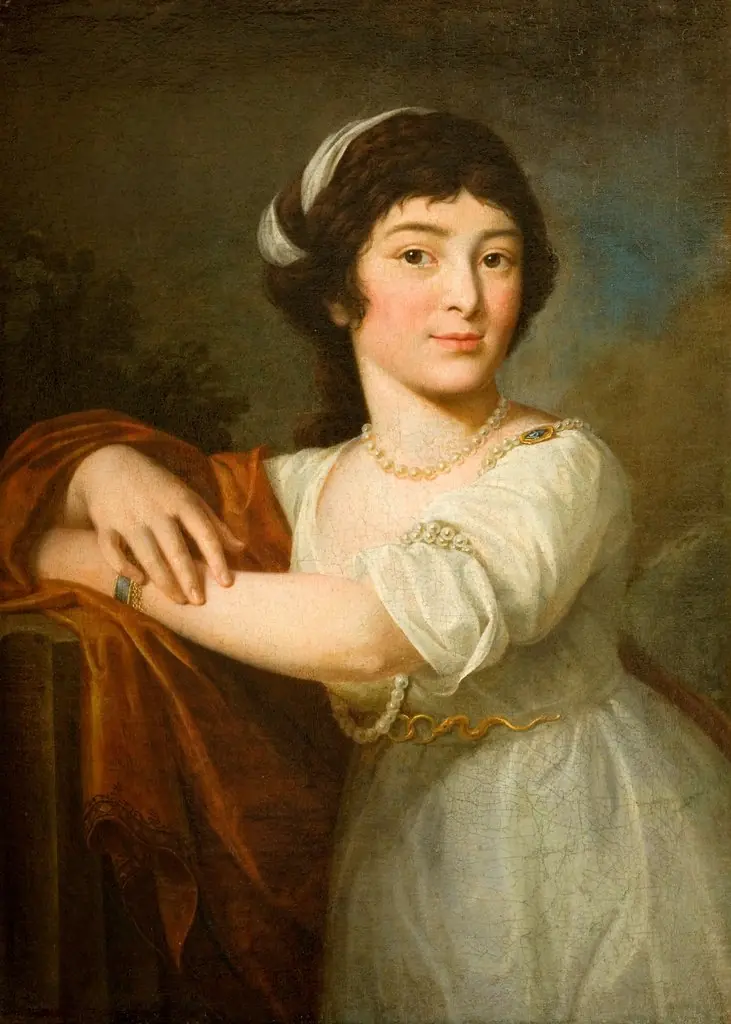 Portrait of Joanna Dzierzbicka
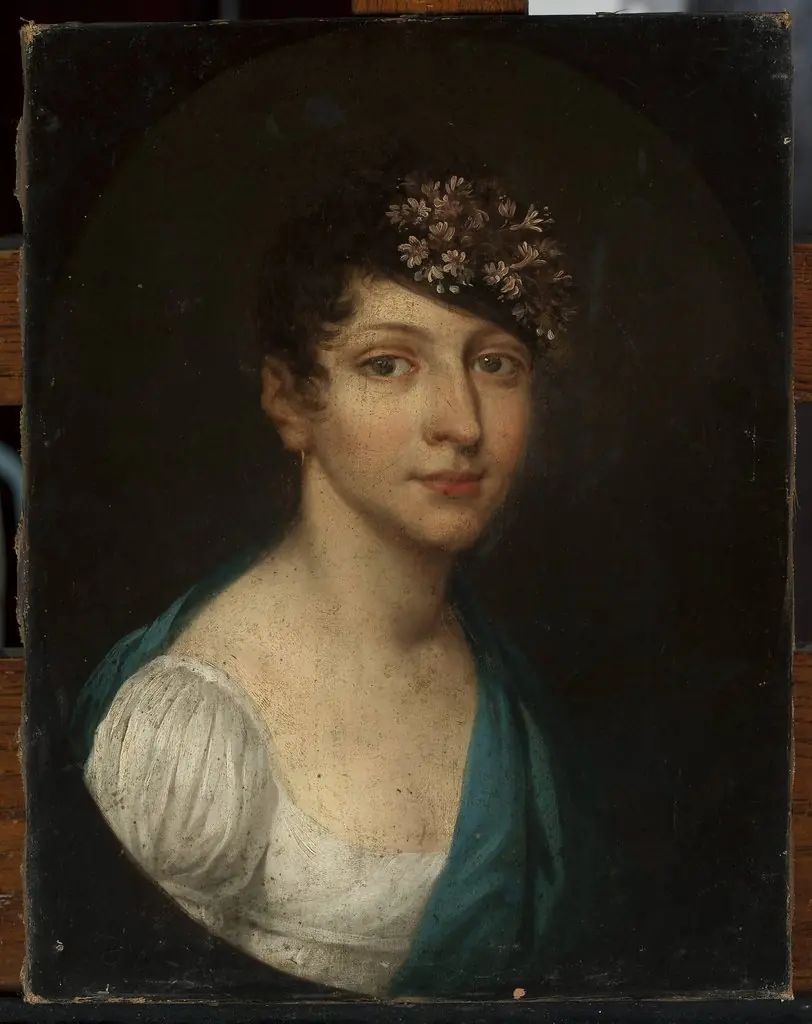 Portrait of Maria Żebrowska née Cieślik
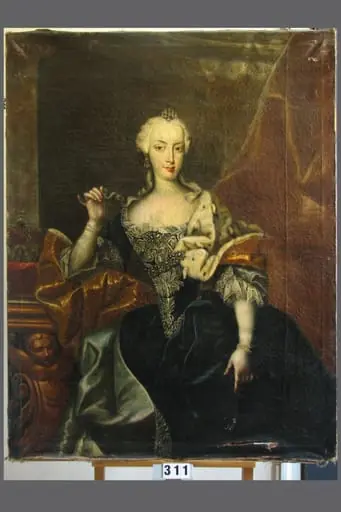 Maria Theresia, arhiducesă de Austria ; în registrul inventar: Prințesă în haină albastră
 Portrait of Maria Mancini Colonna (1639-1715)
 Portrait of lady in pale green dress