Artwork
Portrait of Gerrit Ottsz Hinlopen (1603/04-1646)
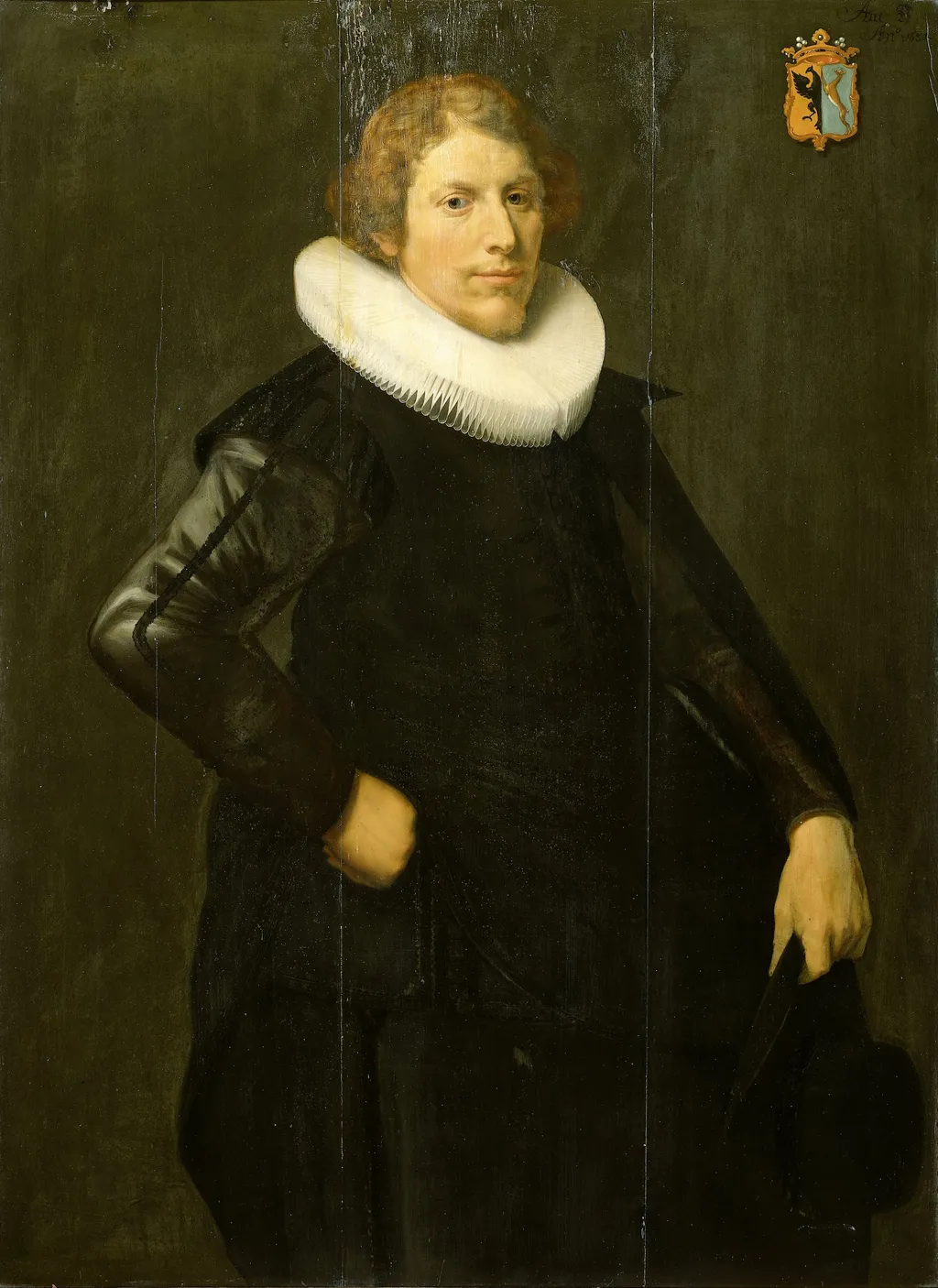
Portrait of Gerrit Ottsz Hinlopen (1603/04-1646) is an oil painting by the Dutch Golden Age artist Unknown. It dates from 1631 and is held in the collection of the Rijksmuseum.
About this work
Subject & Meaning
The portrait shows Gerrit Ottsz Hinlopen, a prominent 17th‑century Amsterdam merchant, captured in formal attire that reflects his status and civic identity.
The portrait shows Gerrit Ottsz Hinlopen, a prominent 17th‑century Amsterdam merchant, captured in formal attire that reflects his status and civic identity. The composition emphasizes a straightforward likeness without overt allegorical symbols, underscoring the subject’s role as a respected burgher rather than a mythic or moral exemplar. This representation aligns with the portrait genre’s purpose of documenting elite individuals within the Dutch Golden Age context.
Technique & Style
The work is an oil painting on wooden panel measuring 123 cm by 90 cm, created in 1631. It depicts Gerrit Ottsz Hinlopen and was originally owned by Dirk Margarethus Alewijn before entering the collection of the Rijksmuseum, where it remains.
The portrait demonstrates formal characteristics typical of Dutch Golden Age portraiture, with precise rendering of facial features and clothing, and a restrained palette that emphasizes the sitter's status.
The painting's condition is stable, with the original panel support preserved and minimal intervention required to address surface craquelure observed during conservation assessments.
History & Provenance
The painting is held by the Rijksmuseum in Amsterdam.
Its inventory record is SK-C-583.
It was included in the exhibition Rembrandt und die Folgen: Niederländische Malerei des Goldenen Zeitalters at the Albertina, Vienna, from 17 October 2014 to 18 January 2015.
Overview
This portrait depicts Gerrit Ottsz Hinlopen, a Dutch figure of apparent wealth or importance, dressed in a dark, elaborate attire set against a plain dark background, accentuated by a high white collar and voluminous sleeves that taper to the wrists.
Context
The style and composition reflect the Dutch Golden Age's penchant for somber, realistic portraiture, often highlighting the sitter's social standing through attire and subtle symbolic elements like the crest.
Artist & collection









 Portrait of Pieter de la Court
 Portrait of a Man
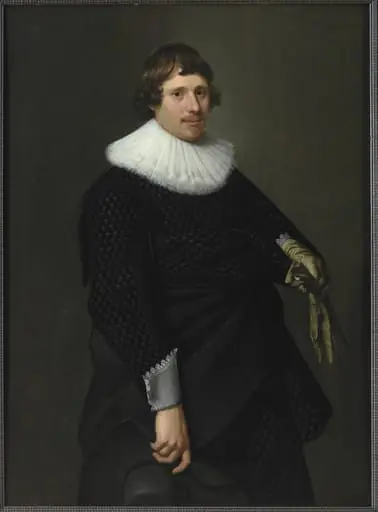 Portrait of a Man
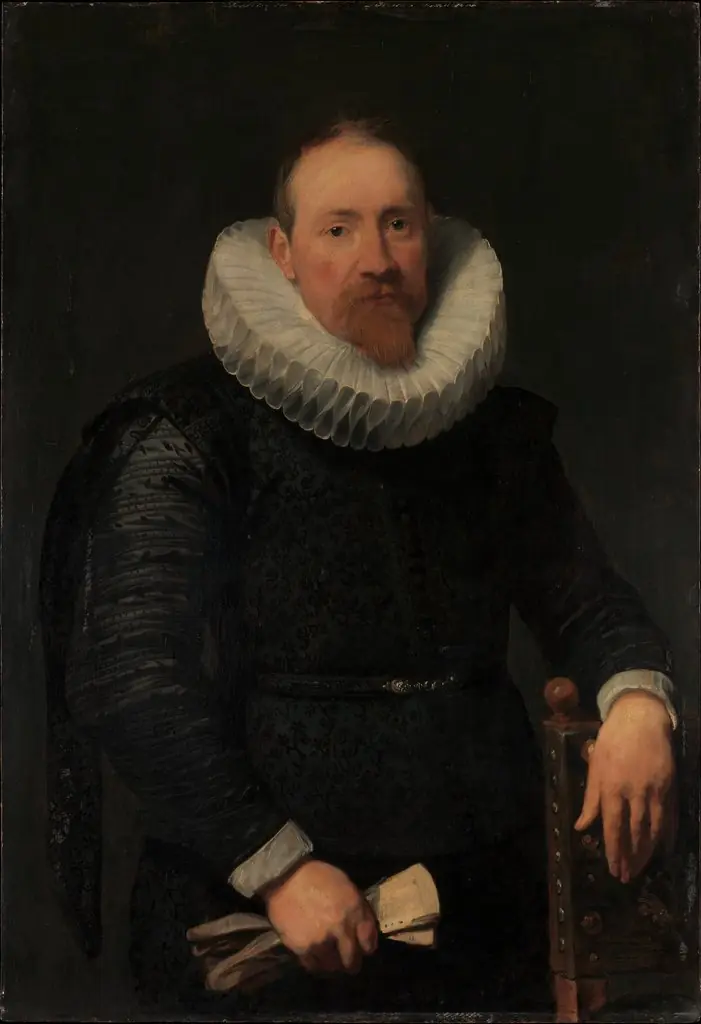 Portrait of a Man
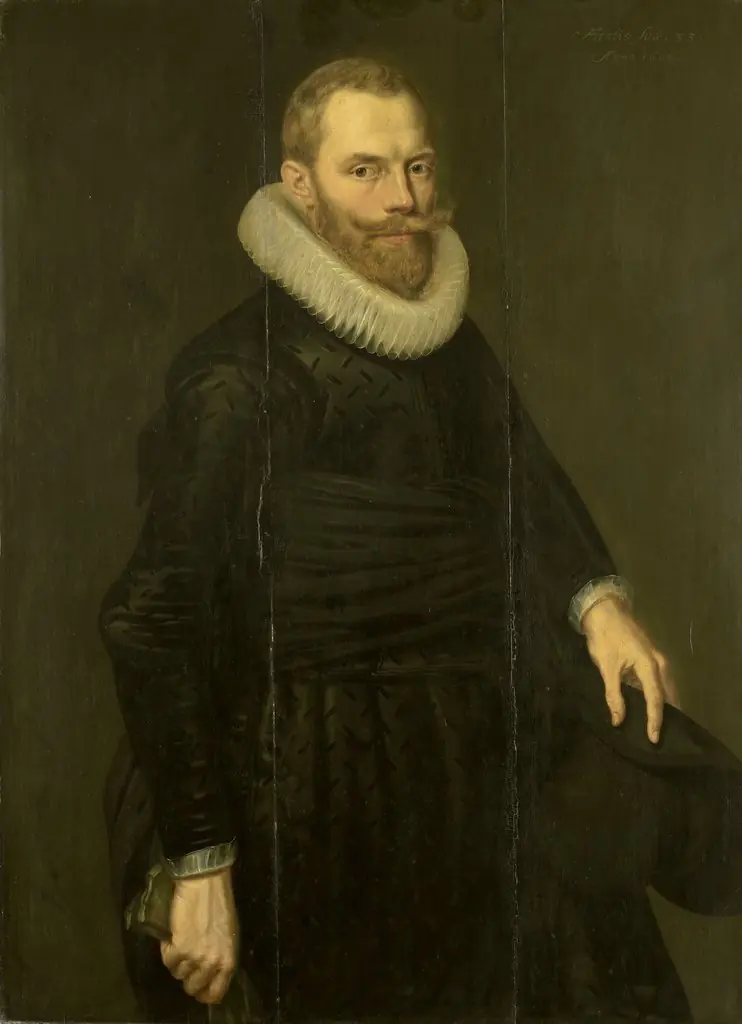 Portrait of Dirck Hasselaer (1581-1645)
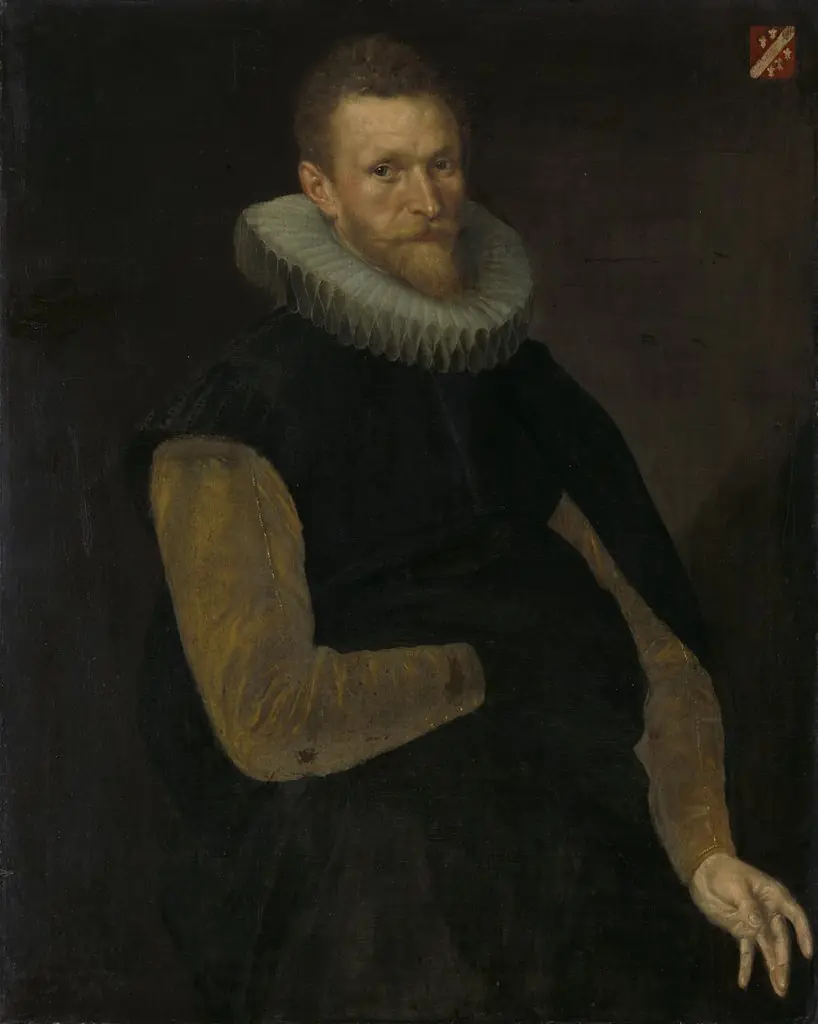 Portrait of Jacob Cornelisz Banjaert, called van Neck (1564-1638). Admiral & mayor of Amsterdam
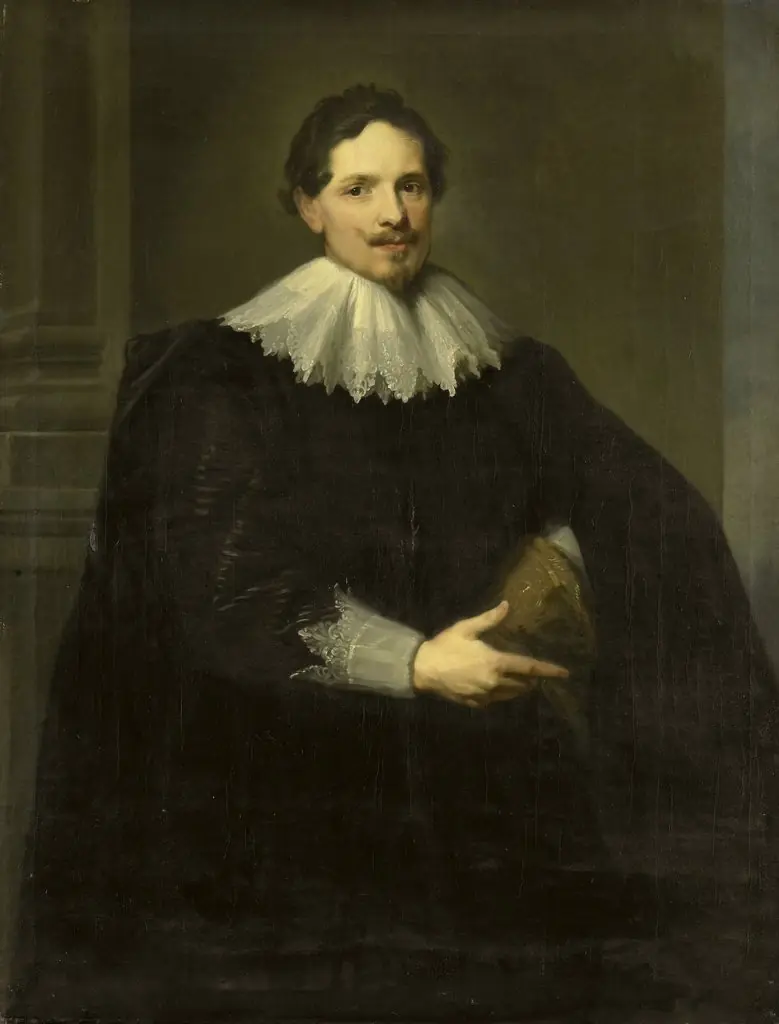 Sebastiaan Leerse, Antwerp Merchant
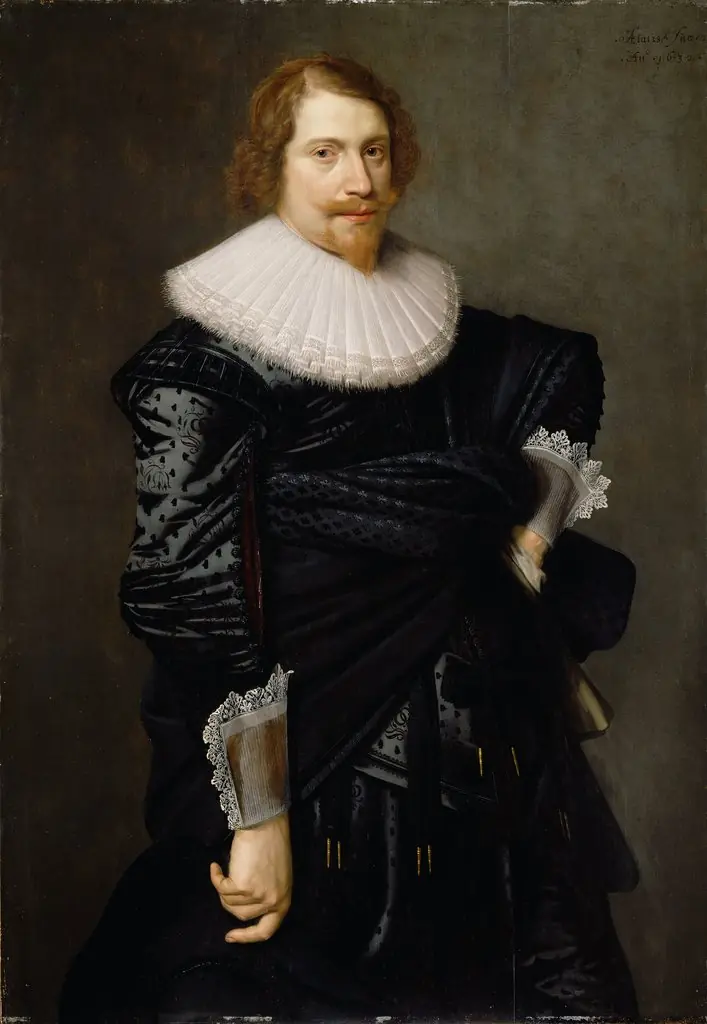 Portrait of a Man
 Untitled
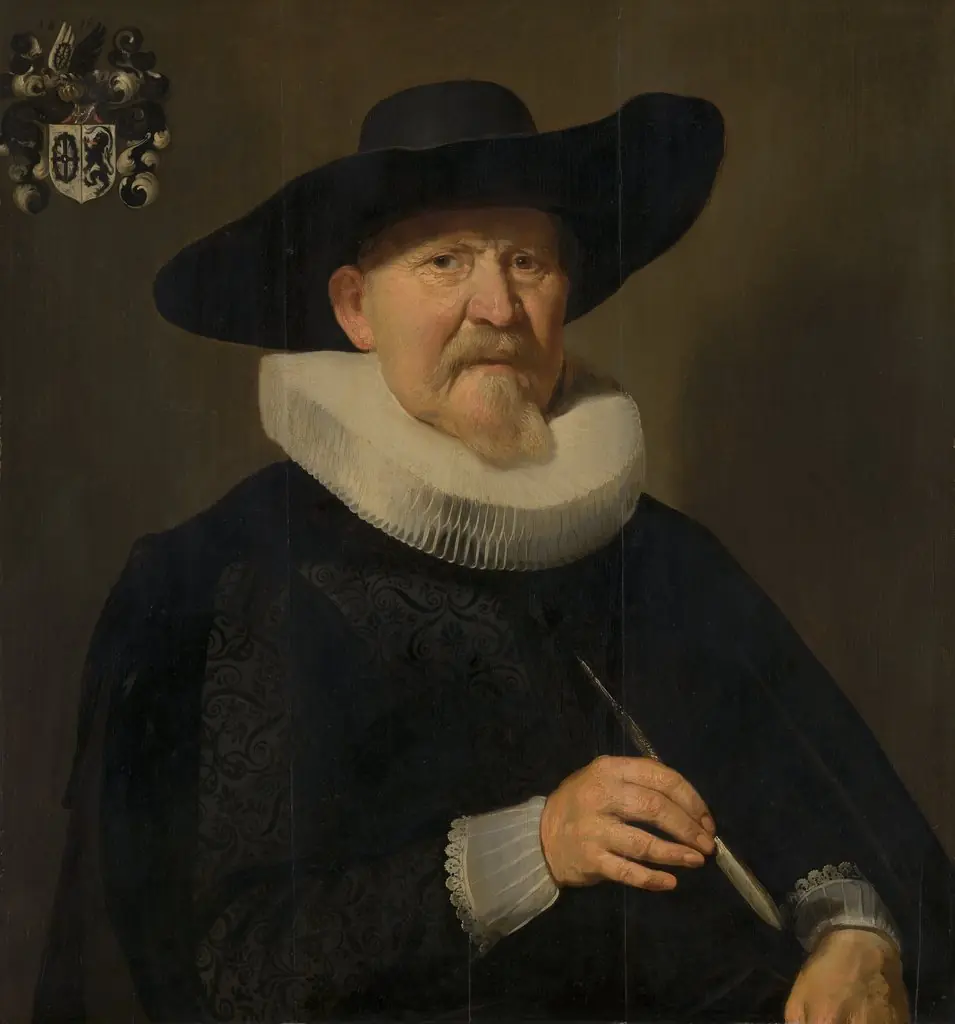 Portrait of a Man, probably Hans van Hogendorp