Artwork
Portrait of Karl F. Toll (1777-1842)
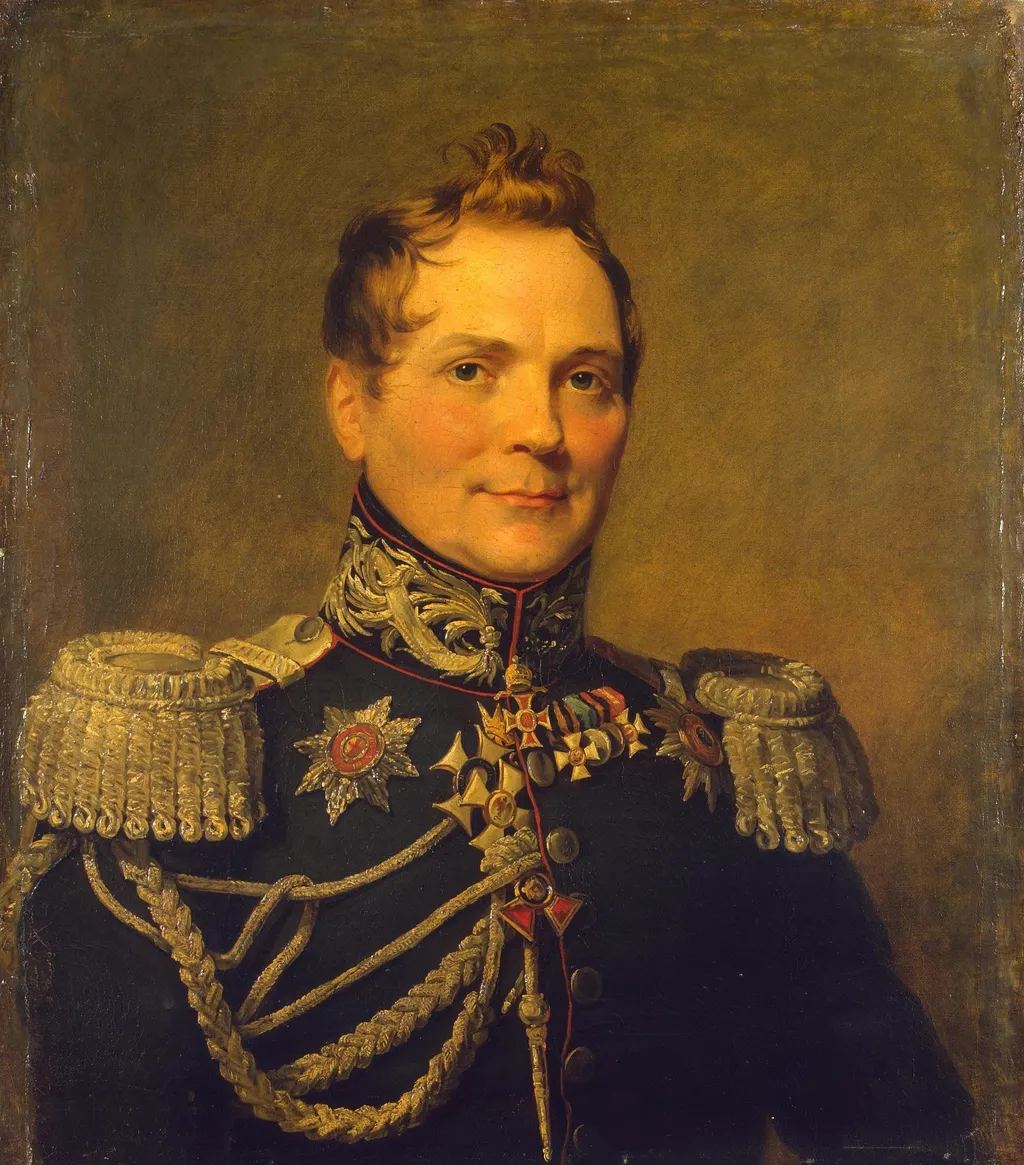
Portrait of Karl F. Toll (1777-1842) is an oil painting by the French Romanticist artist Unknown. It dates from 1822 and is held in the collection of the Hermitage Museum. The Portrait of Karl F.
About this work
Overview
The portrait is a product of the large scale imperial commission to document the senior military figures who led Russian forces during the Napoleonic Wars.
Portrait of Karl F. Toll (1777-1842) is an oil on canvas painting created circa 1822 by the workshop of George Dawe. Measuring 70 by 62.5 cm, the artwork depicts the Baltic German aristocrat and Imperial Russian General Karl Wilhelm von Toll. The painting is part of the extensive Military Gallery of the Winter Palace in the State Hermitage Museum, St. Petersburg, where it remains today under Hermitage work ID 39248. The portrait is a product of the large scale imperial commission to document the senior military figures who led Russian forces during the Napoleonic Wars.
Subject & Meaning
The subject is Karl Wilhelm von Toll, a distinguished Imperial Russian general of infantry who served in numerous campaigns against Napoleonic forces. He is shown as a bust-length figure facing slightly left, engaging the viewer with direct eye contact. His dark blue or black military uniform features a high collar with red piping, heavy fringed gold epaulettes, and ornate silver scrolling foliate embroidery. The iconography emphasizes his high rank and battlefield honors through the prominent display of gold braided cords crossing his torso, alongside star-shaped badges, cross-shaped medals, and a black, white, and red striped ribbon. These elements visually codify his status and service to the Russian Empire.
Technique & Style
Executed in oil on canvas, the painting demonstrates the division of labor typical of Dawe's busy workshop. The face is rendered with smooth, blended brushwork to achieve a lifelike, naturalistic portrayal, while the metallic and decorative elements of the uniform receive more textured, precise handling to capture the reflective qualities of the gold accoutrements and silver embroidery. Light falls evenly from the left, illuminating the general's face and the gleaming decorations against a plain, warm brown background that fades into shadow. The overall palette is somber yet rich, dominated by deep blues, warm golds, and earthy browns. The paint surface has developed fine craquelure throughout.
History & Provenance
The portrait was commissioned as part of Tsar Alexander I's project to memorialize the heroes of the Napoleonic Wars in the Military Gallery of the Winter Palace. Dating estimates place its inception around 1822, with completion no later than 1825. While the internal museum classification lists the artist as unknown, institutional and archival records attribute the work to George Dawe and his workshop. The painting has remained in the Winter Palace collection and is currently held by the State Hermitage Museum in St. Petersburg.
Context
This portrait belongs to the broader context of the Military Gallery, a monumental commission overseen by George Dawe and his assistants to paint the generals who commanded Russian troops during the campaigns of 1812 to 1815. Karl von Toll's inclusion reflects his significant military contributions, including his role as Quartermaster General of the First Army during the evacuation of Moscow in 1812 and his service at Austerlitz, Leipzig, and Paris. The reliance on workshop assistance was standard for Dawe, who produced hundreds of such portraits to fulfill the imperial commission, prioritizing accurate recording of rank and regalia over highly individualized artistic expression.
Artist & collection









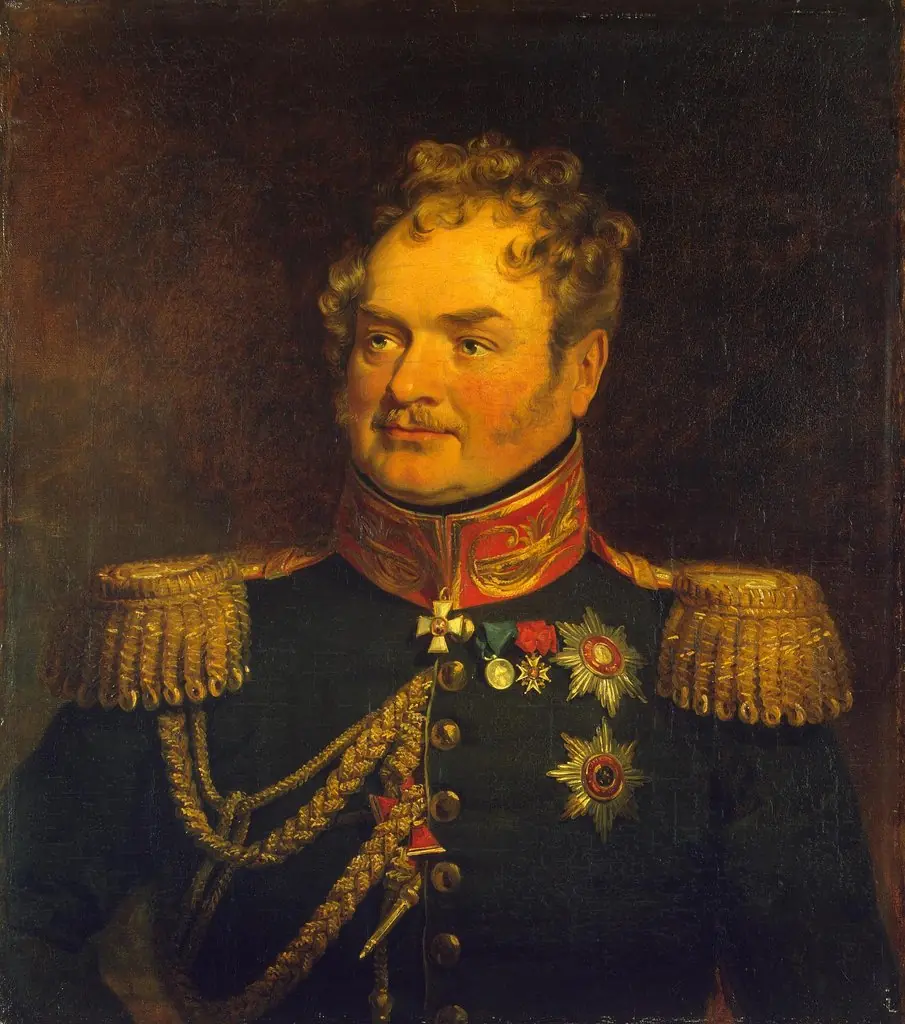
- Portrait of Karl O. (Charles de) Lambert (1772-1843)
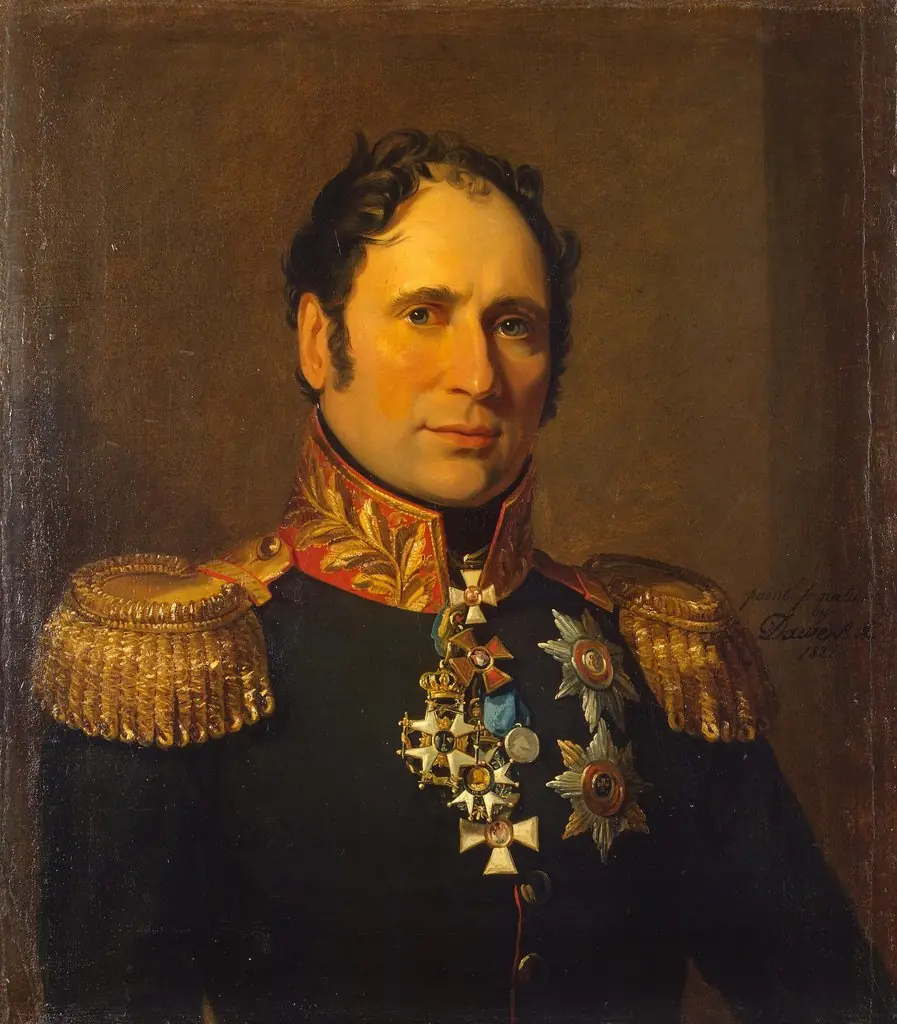 Portrait of Karl I. Oppermann (1765/66-1831)
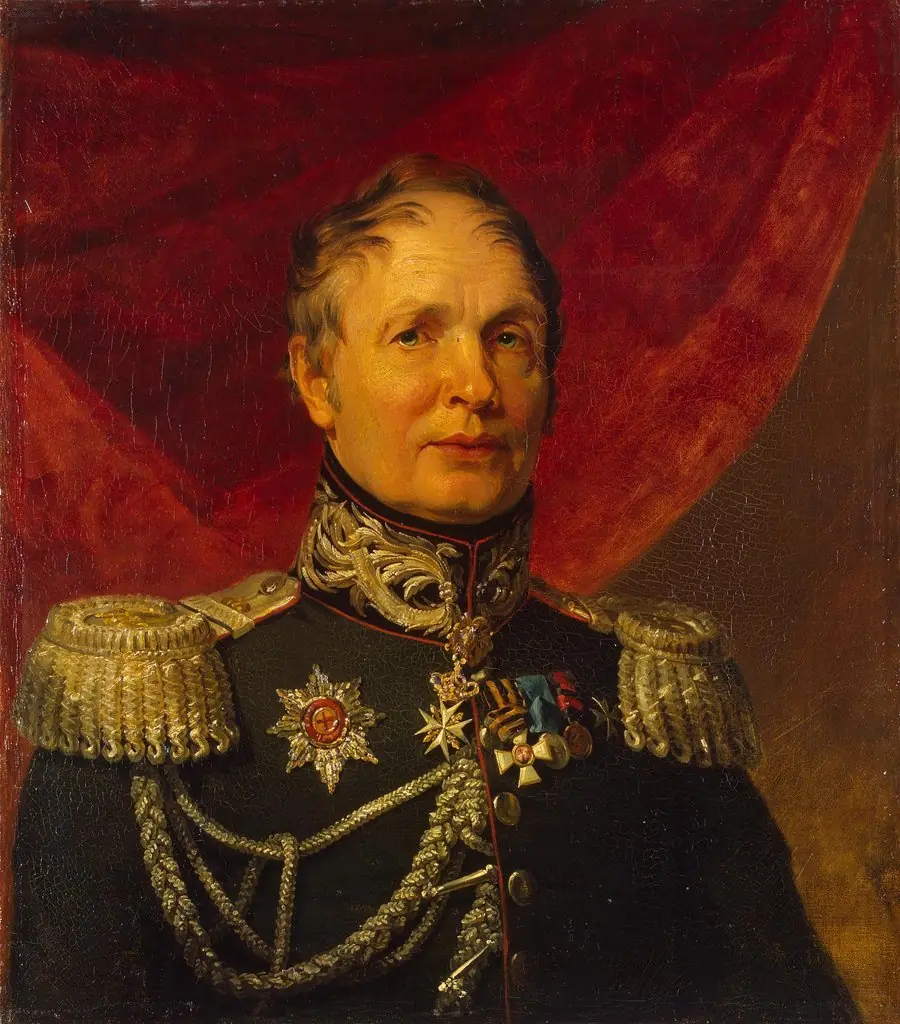 Portrait of Mikhail S. Vistitsky (1768-1832)
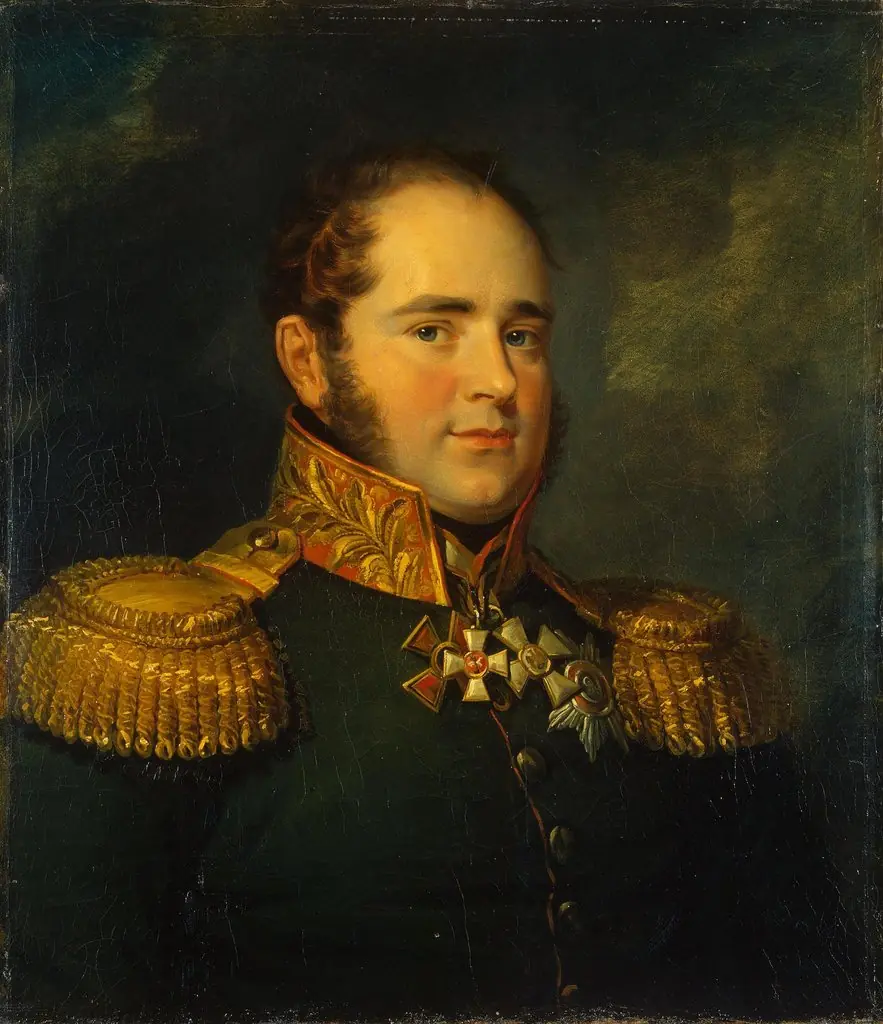 Portrait of Karl F. Baggowut (1761-1812)
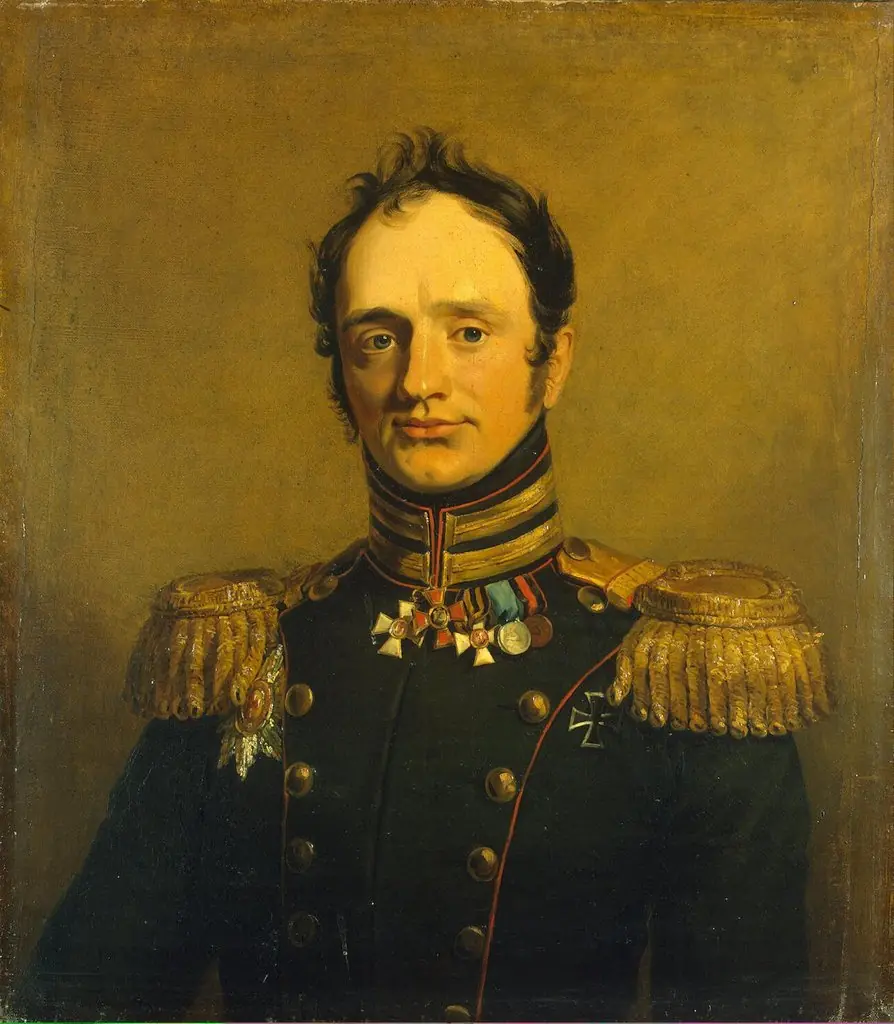 Portrait of Boris Kh. Richter (1782-1832)
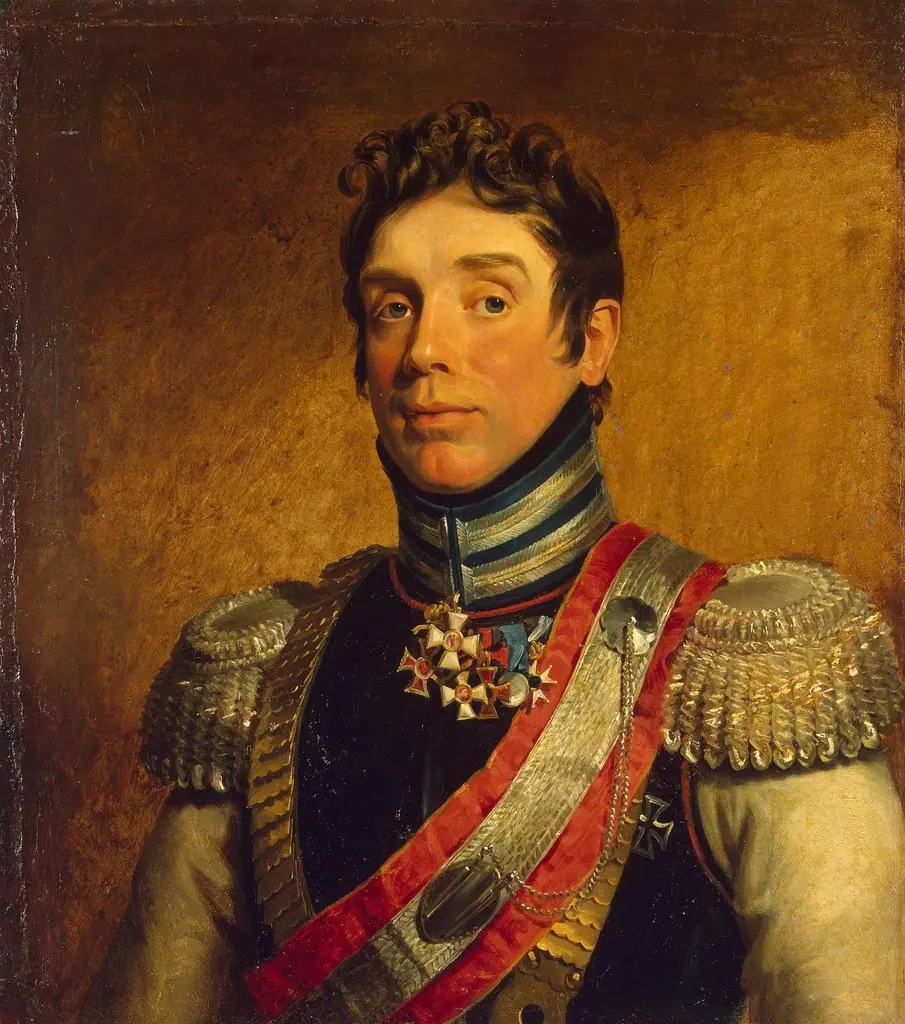 Portrait of Karl V. Budberg (1774-1829)
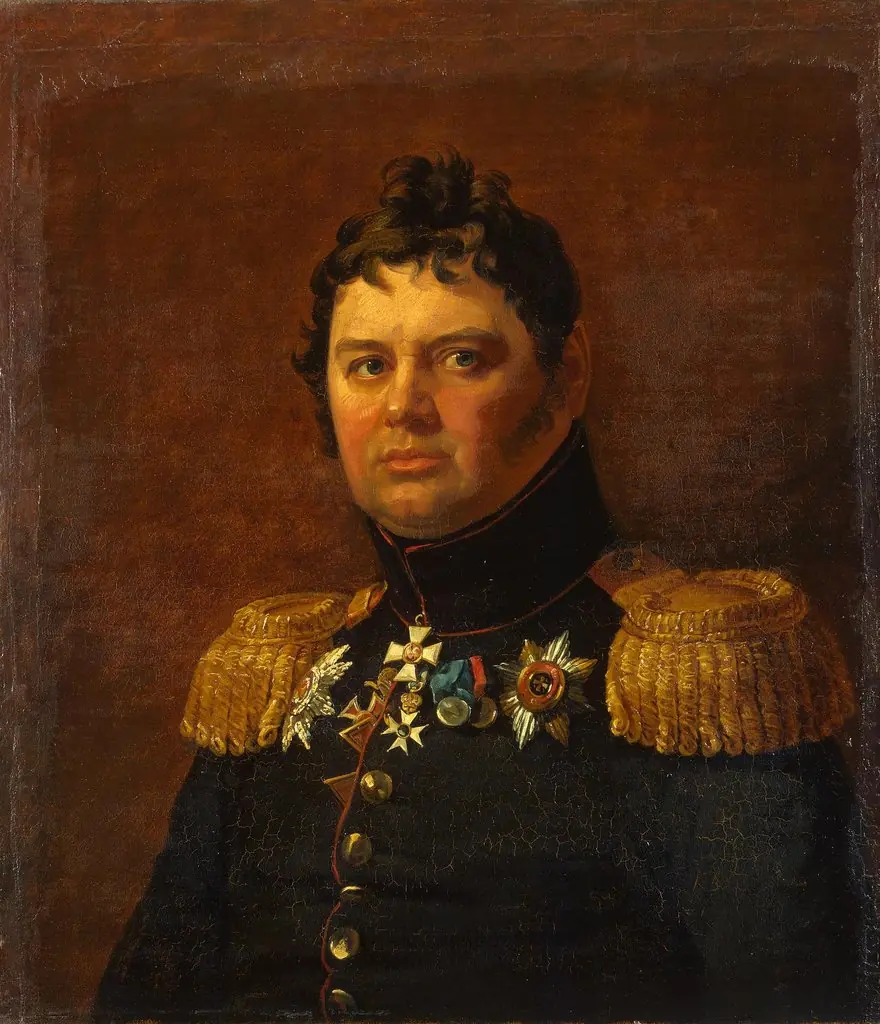 Portrait of Karl F. Loevenstern (1770/71-1840)
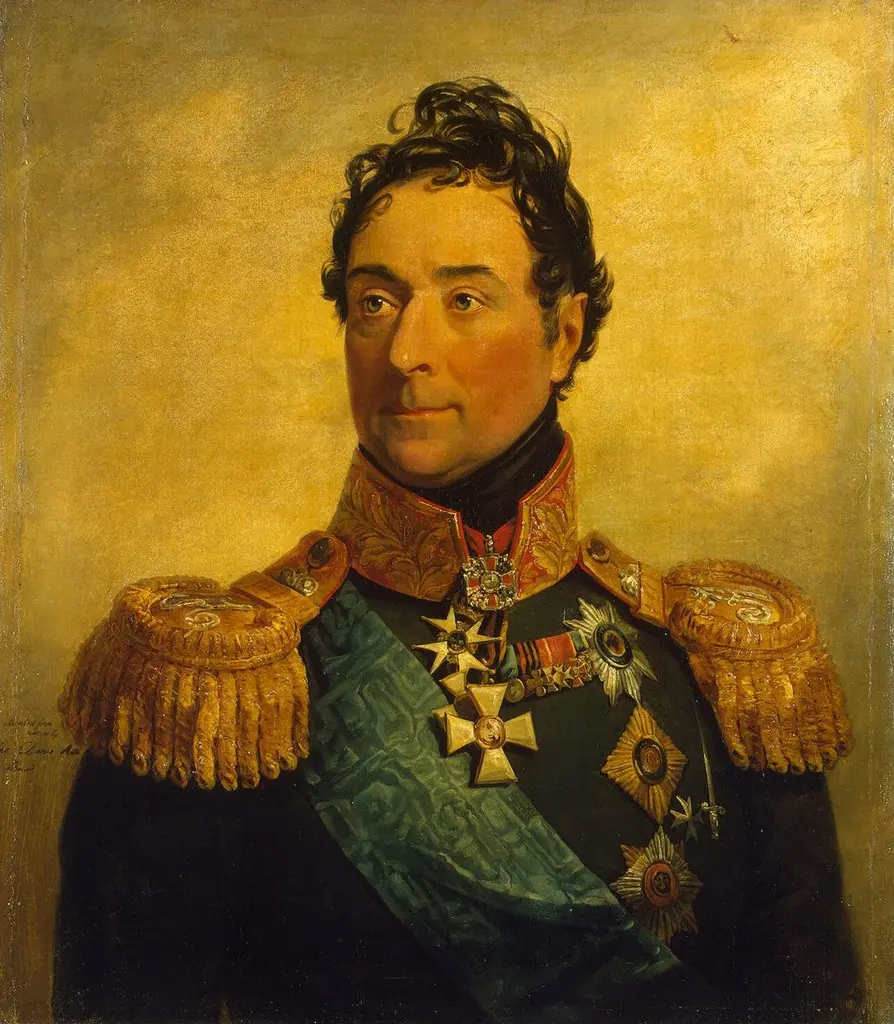 Portrait of Alexander F. Langeron (1763-1831)
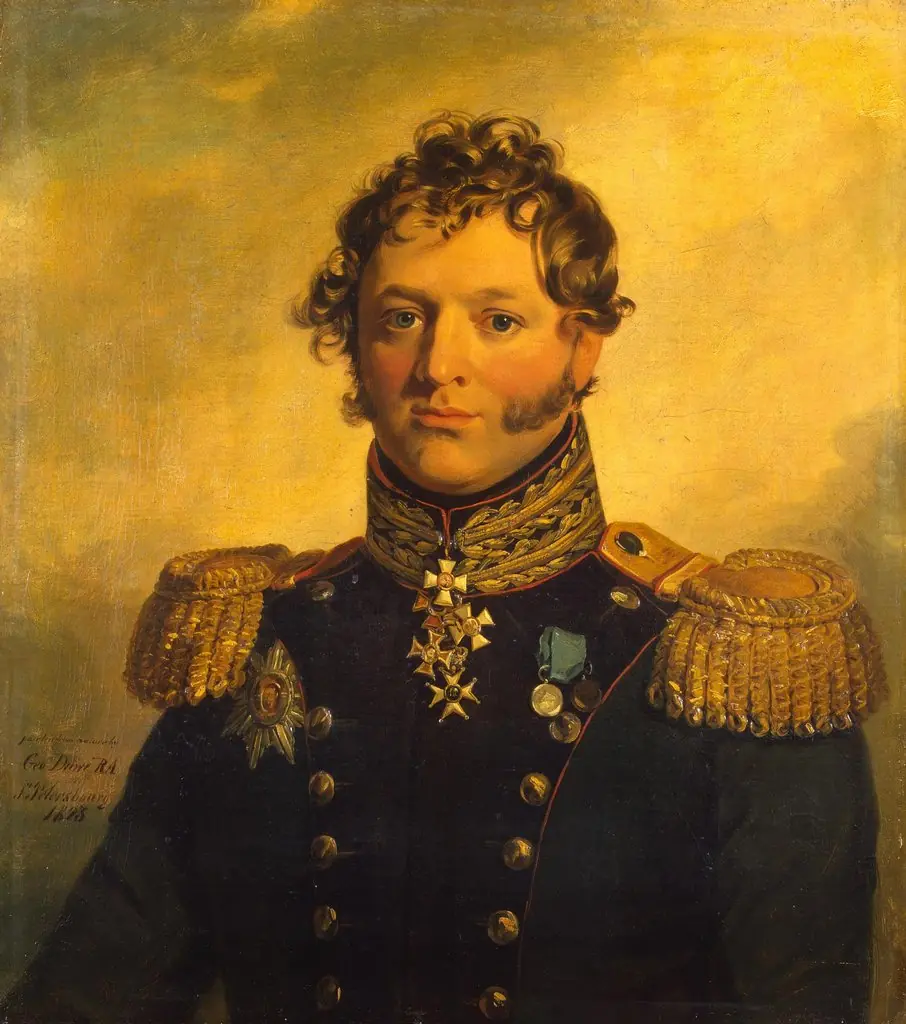 Portrait of Pyotr A. Kosen (1776-1853)