Artwork
Portrait of Piotr Tyszkiewicz (?–1631?), voivode and starosta of Minsk
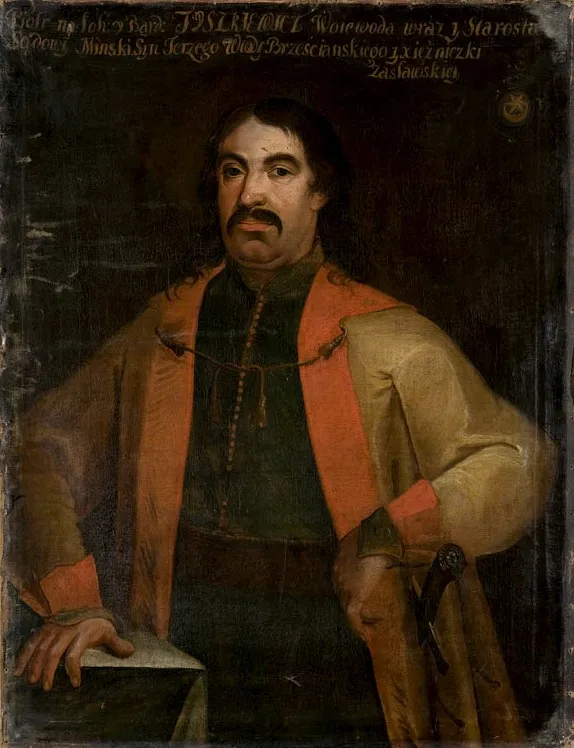
Portrait of Piotr Tyszkiewicz (?–1631?), voivode and starosta of Minsk is an oil painting by the Neoclassicist artist Unknown. It dates from 1797 and is held in the collection of the National Museum in Warsaw. The work is a canvas portrait traditionally identified as Piotr Tyszkiewicz, a 17th‑century voivode and starosta of Minsk.
About this work
Overview
), voivode and starosta of Minsk, is an oil on canvas painting dated 1793 by an unknown artist.
Portrait of Piotr Tyszkiewicz (?-1631?), voivode and starosta of Minsk, is an oil on canvas painting dated 1793 by an unknown artist. The work measures 100 cm in height and 76.5 cm in width. It is held in the collection of the National Museum in Warsaw. The painting is a historical depiction of a prominent nobleman of the Polish-Lithuanian Commonwealth, created over a century and a half after his death, reflecting a later period's interest in memorializing the Commonwealth's aristocratic lineage.
Subject & Meaning
The painting depicts Piotr Tyszkiewicz, a nobleman who served as the voivode and starosta of Minsk and who died around 1631. The composition emphasizes his high social standing and aristocratic identity within the Polish-Lithuanian Commonwealth. He is shown in a three-quarter length pose, facing slightly left, with his right hand resting on a draped table and his left hand on his hip near a sword hilt. He wears a traditional żupan, a light tan outer garment with full sleeves and orange cuffs, beneath a dark green coat fastened with a row of buttons. An orange sash and a dark cord with tassels cross his chest, signifying his noble status. A small circular emblem in the upper right corner represents the Leliwa coat of arms, directly associating the sitter with his heraldic lineage. Gold text against the dark upper edge identifies the subject.
Technique & Style
Executed in oil on canvas, the portrait demonstrates a relatively smooth brushwork that pays particular attention to the textures of fabric and flesh. Light falls from the left, illuminating the face and hands of the sitter against a dark, nearly uniform background. This chiaroscuro effect heightens the three-dimensionality of the figure and the sheen of his garments. The painting's surface exhibits age cracks and abrasion, particularly along the left edge, indicating its historical age and material wear over time.
History & Provenance
The portrait was created in 1793, long after the death of its subject around 1631, indicating it is a posthumous commemorative work. Prior to its current institutional home, the painting was preserved in the collection of the Society for the Care of the Monuments of the Past in Warsaw, an organization active between 1906 and 1944. The work subsequently entered the holdings of the National Museum in Warsaw, where it resides today.
Artist & collection









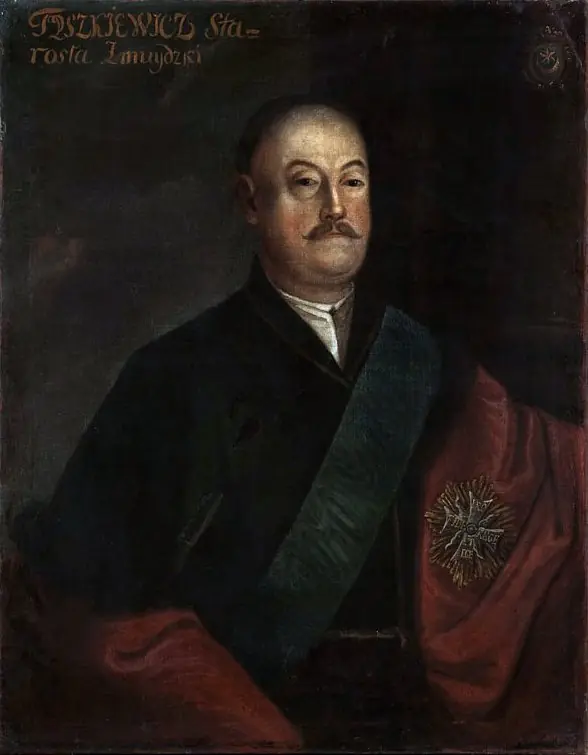
- Portrait of Józef Skumin Tyszkiewicz (ca. 1694–1754), starosta in Samogitia
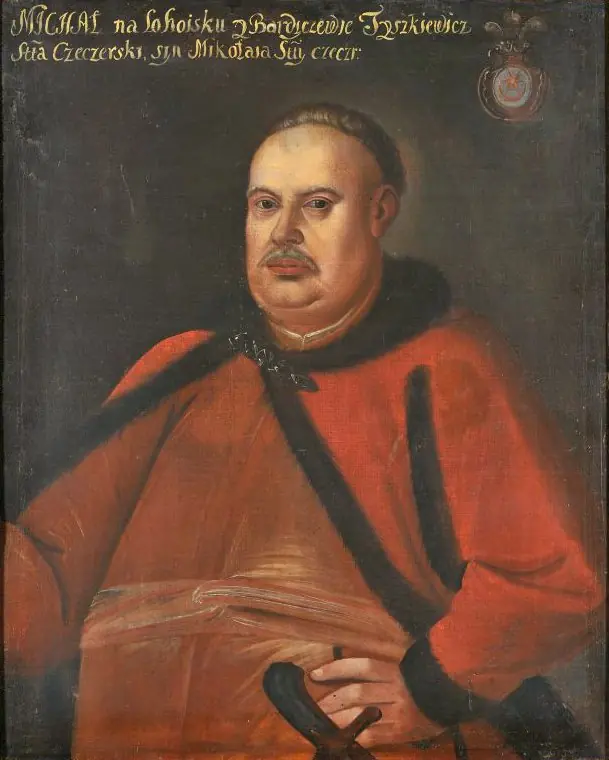 Portrait of Michał Tyszkiewicz, Leliwa coat of arms (?–before 1703), starosta of Chachersk
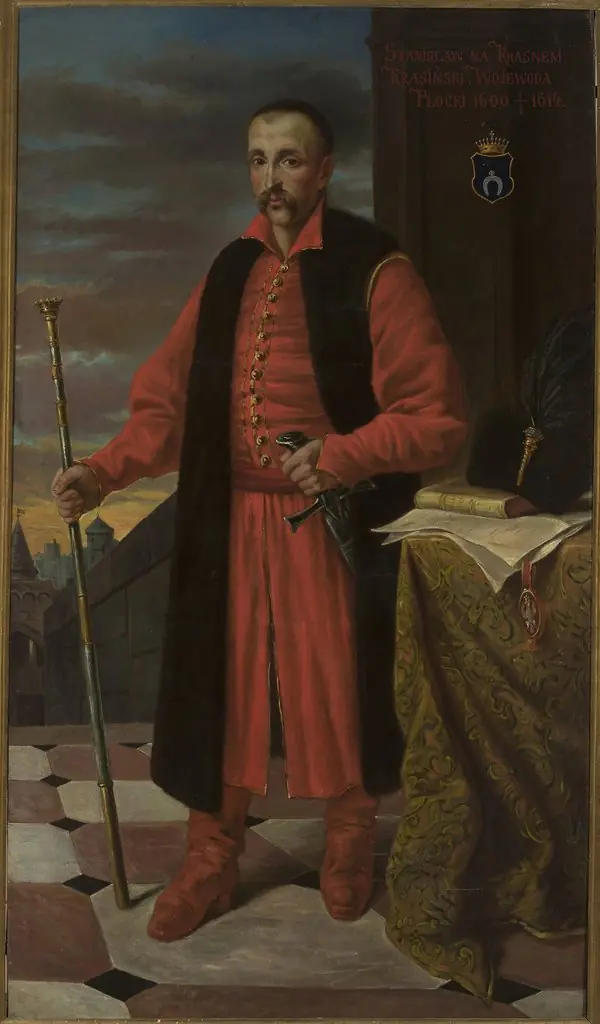 Portrait of Stanisław Krasiński (1558–1617), voivode of Płock
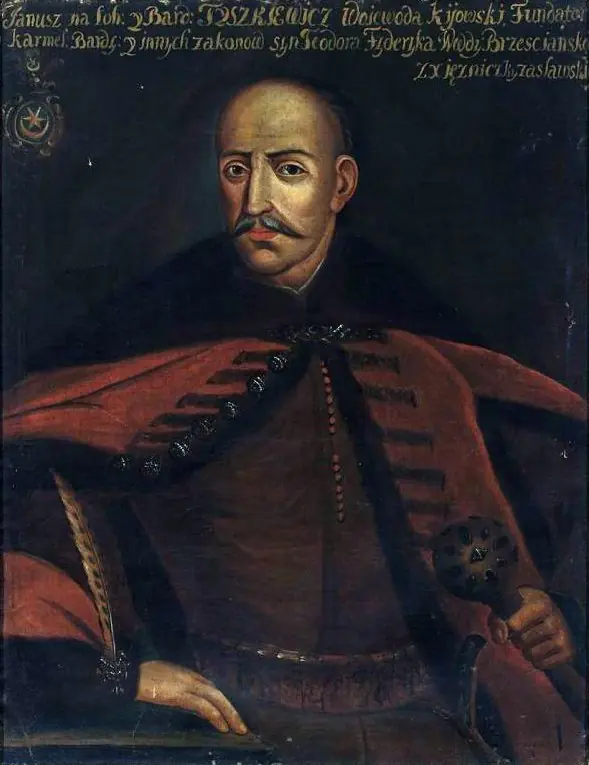 Portrait of Janusz Tyszkiewicz (1570–1649), Leliwa coat of arms, voivode of Kiev
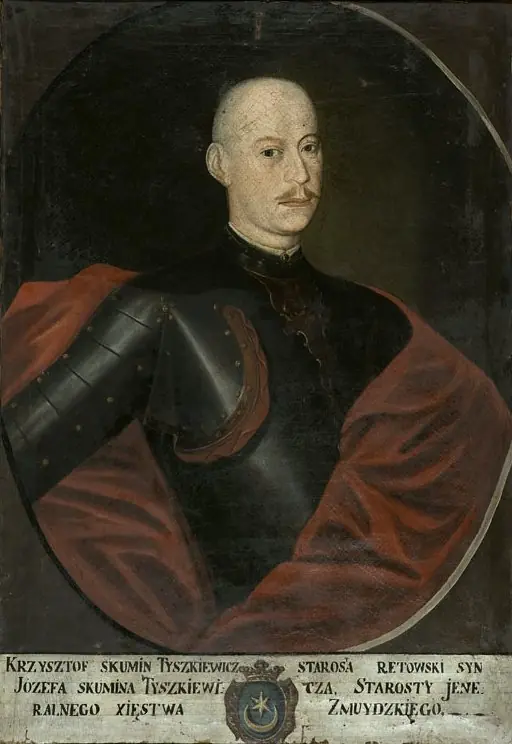 Portrait of Krzysztof Skumin Tyszkiewicz (1729–1762), starosta of Rietavas
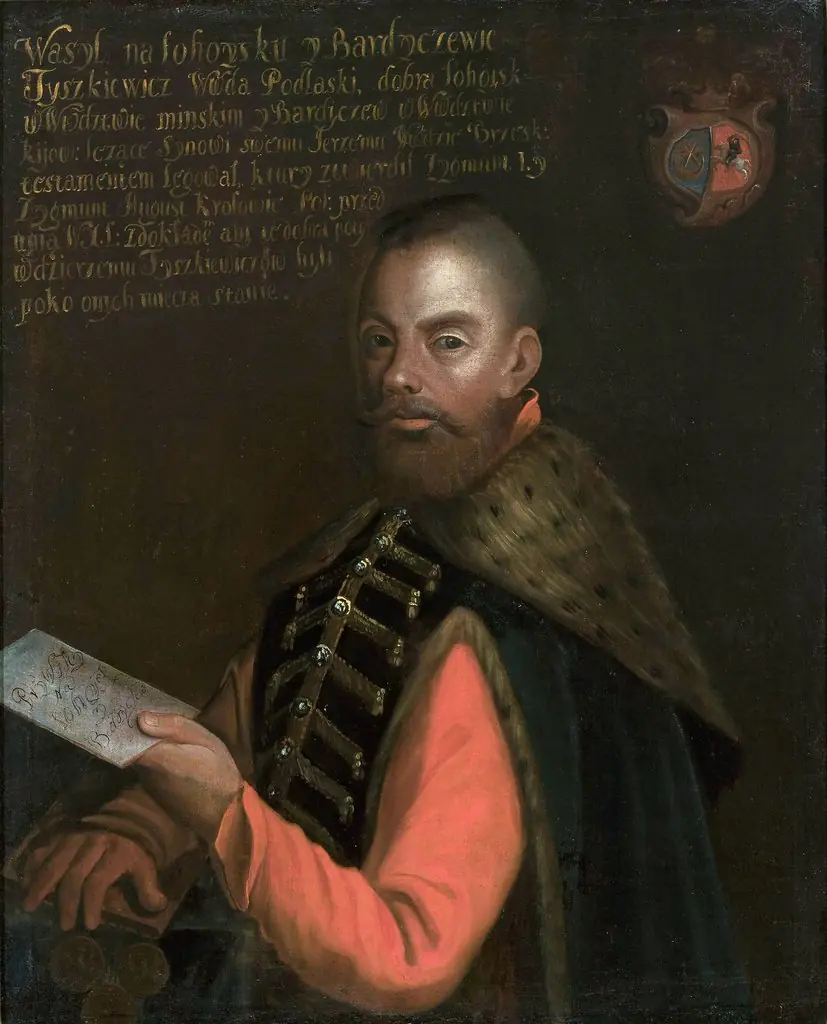 Portrait of Wasyl Tyszkiewicz, Leliwa coat of arms (?–1571), voivode of Podlasie