Artwork
Portrait of Sardar Singh (Son of Savant Singh, 1730–68)
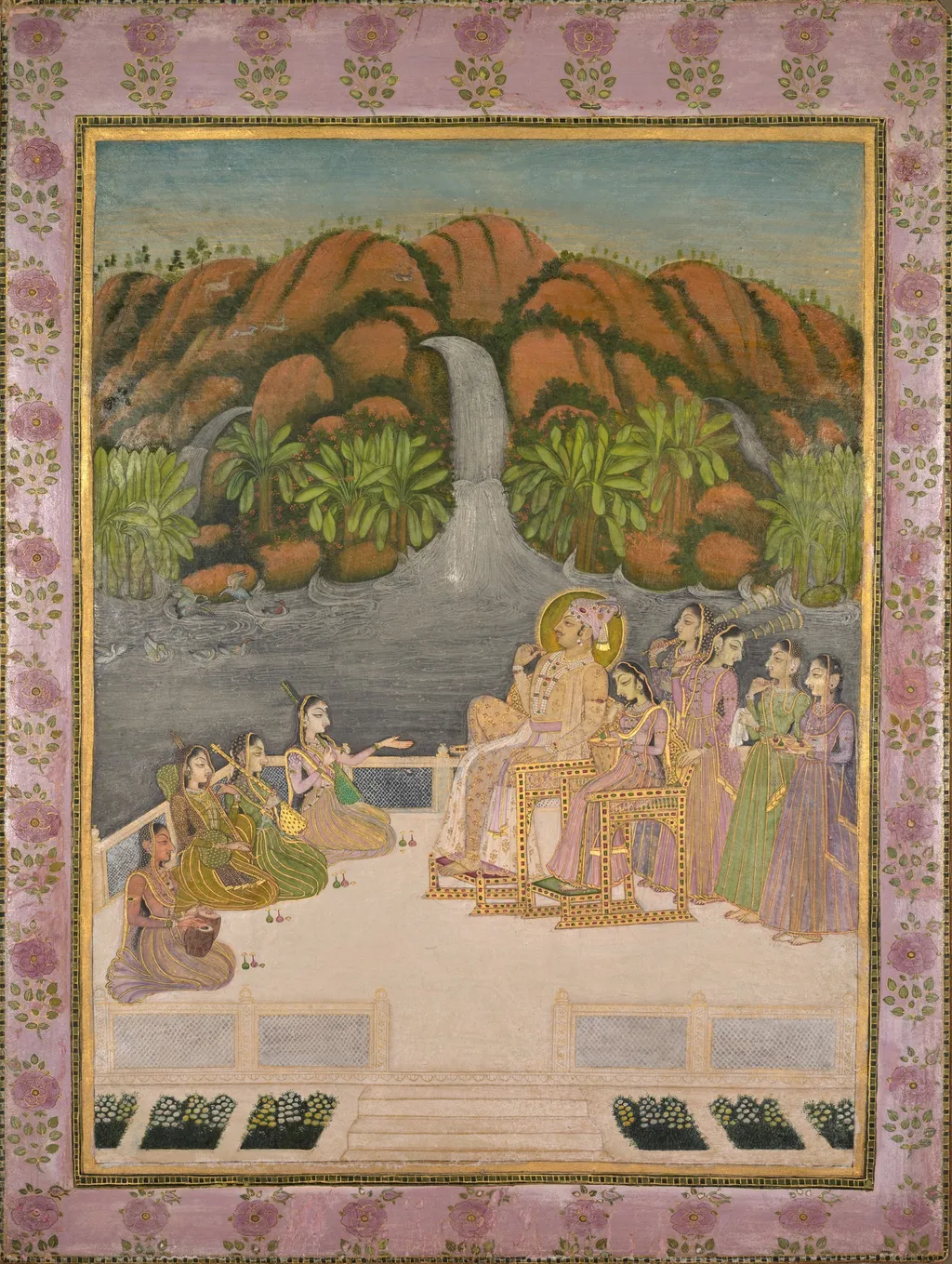
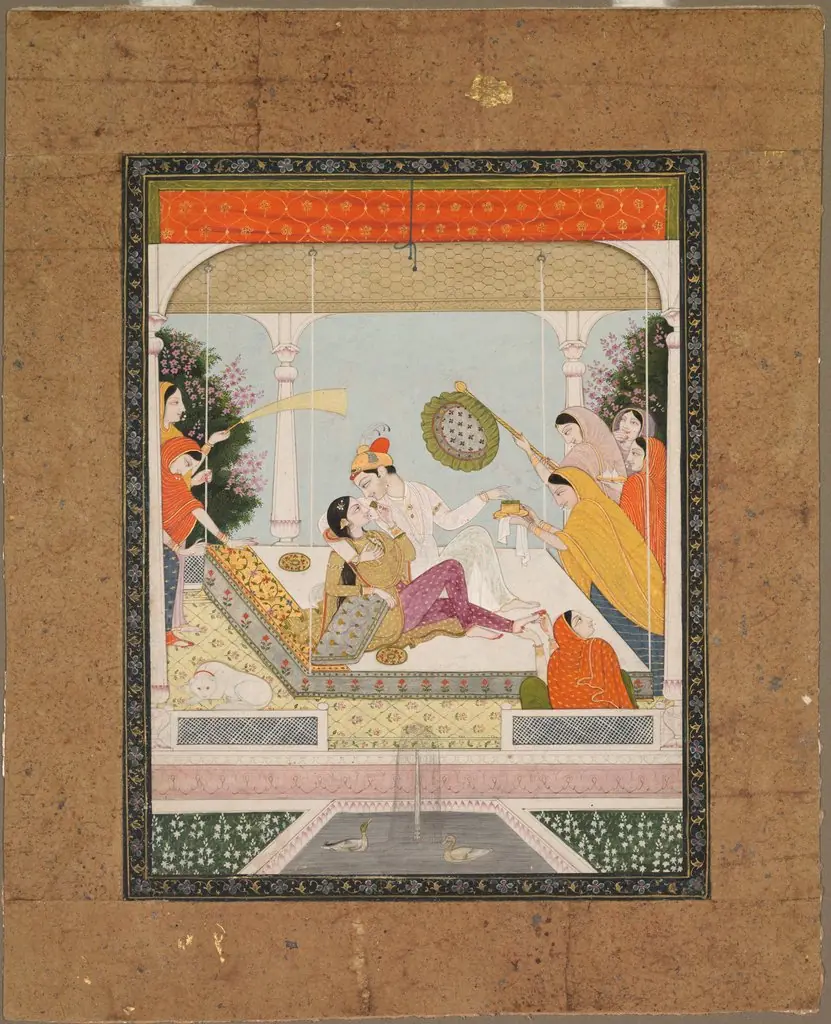
Portrait of Sardar Singh (Son of Savant Singh, 1730–68) is an unspecified painting. It dates from 1760 and is held in the collection of the Cleveland Museum of Art. This painting presents a formal portrait of Sardar Singh, identified as the son of Savant Singh, who reigned between 1730 and 1768.
About this work
Technique & Style
The composition follows conventional portrait conventions of the period, presenting the sitter in a dignified pose with muted tonal modeling.
The painting is a two‑dimensional work classified as a portrait. It was produced in 1760 and represents Sardar Singh, son of Savant Singh, who lived from 1730 to 1868. The composition follows conventional portrait conventions of the period, presenting the sitter in a dignified pose with muted tonal modeling.
The work is executed on a flat support typical of oil paintings, though specific material details are not recorded. It is part of the Cleveland Museum of Art collection and is displayed in Cleveland, Ohio. No further information about its physical condition or handling history is provided in the available documentation.
History & Provenance
The Portrait of Sardar Singh, depicting the son of Savant Singh, was created in 1760. The work is attributed to an unknown artist and is classified as a portrait painting. It was acquired by the Cleveland Museum of Art, where it is currently held under the accession number 2001.122.
The specific commission details and the original ownership chain prior to the museum's acquisition are not documented in the available records.
Overview
This painting presents a formal portrait of Sardar Singh, identified as the son of Savant Singh, who reigned between 1730 and 1768. The artwork captures the sitter in a regal setting, surrounded by attendants, conveying an atmosphere of courtly life. Executed with a rich array of colors and fine details, the piece exemplifies the artistic conventions prevalent during the period in which it was created, highlighting the subject's status and environment.
Subject & Meaning
Sardar Singh occupies the central position, seated upon a throne, distinguished by a turban and a long robe, and holding a sword in his right hand. He is accompanied by several women, dressed in colorful garments, some playing musical instruments while others are positioned around him. The scene is set outdoors, with a backdrop featuring trees, hills, and a body of water in the distance, suggesting a leisurely or ceremonial gathering within a natural landscape.
Artist & collection

 Untitled
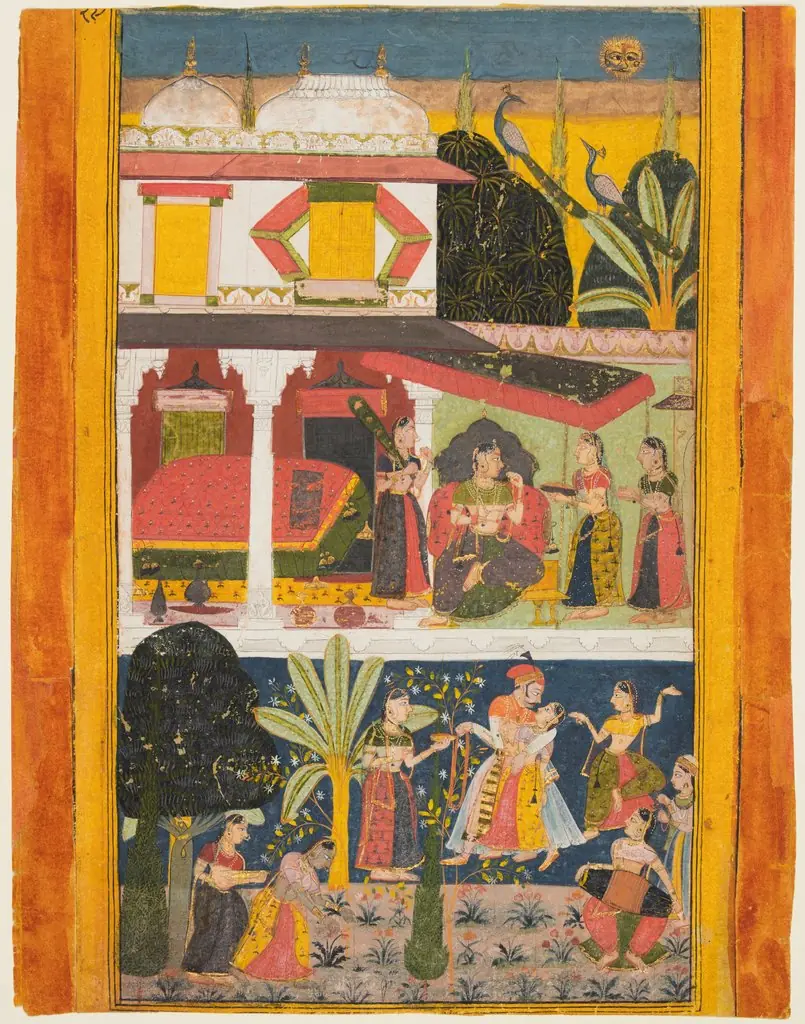 A Heroine and Her Paramour: Malavi Ragini, from a Ragamala
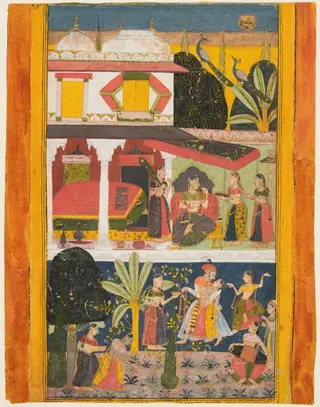 A Heroine and Her Paramour: Malavi Ragini, from a Ragamala
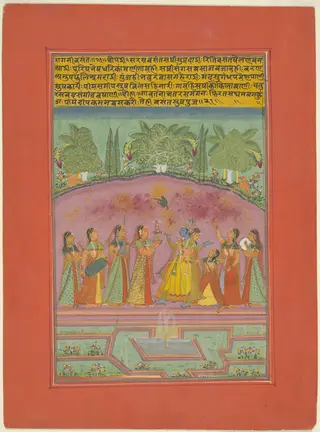 Ragini Vasanta, Page from a Jaipur Ragamala Set
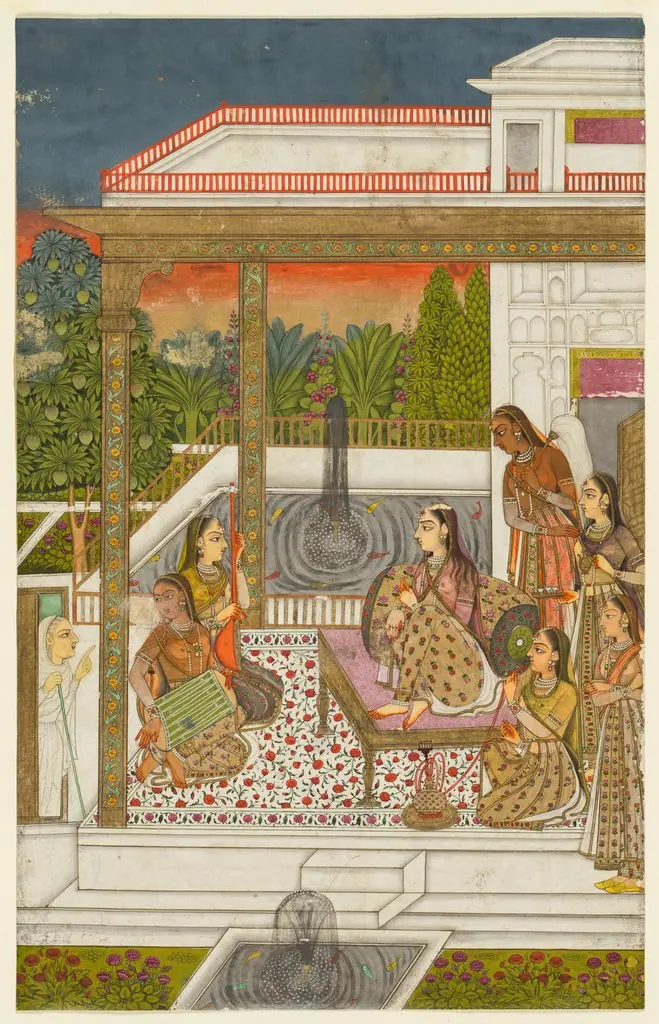 A princess with attendants on a terrace
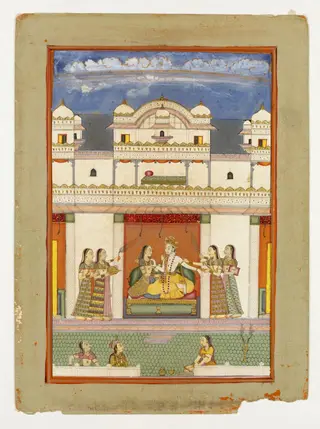 Bhairava raga
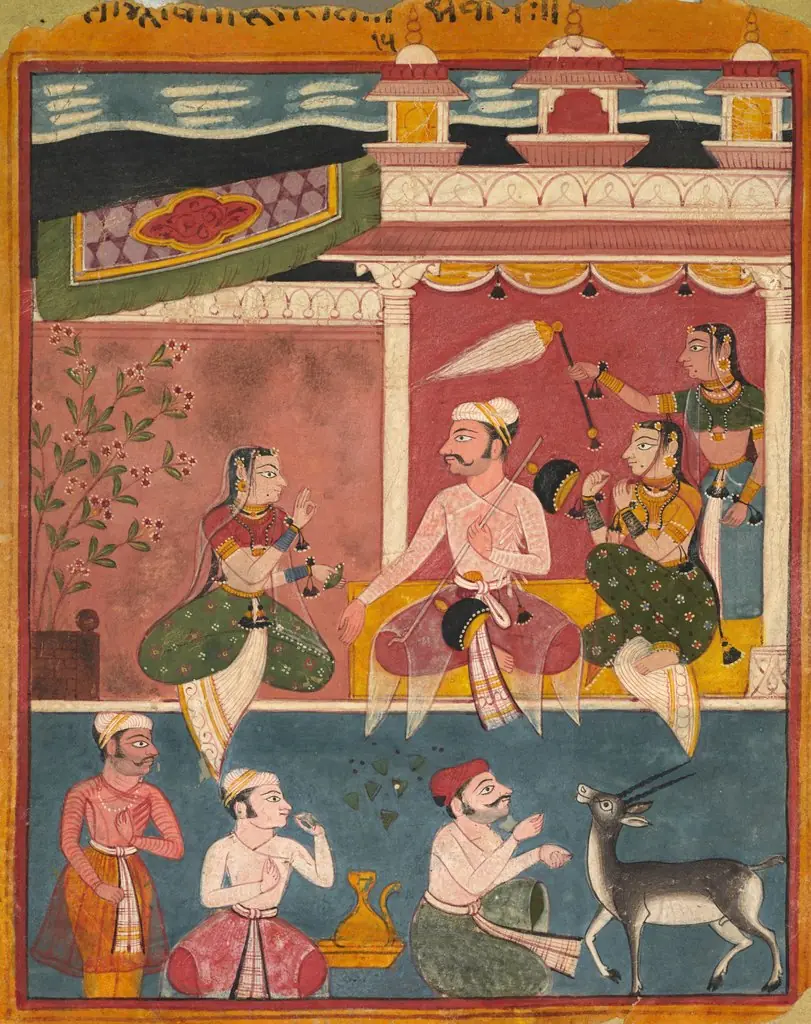 Malkaus Raga, from Ragamala
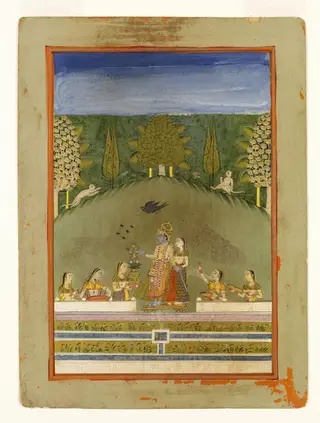 Vasant Ragini
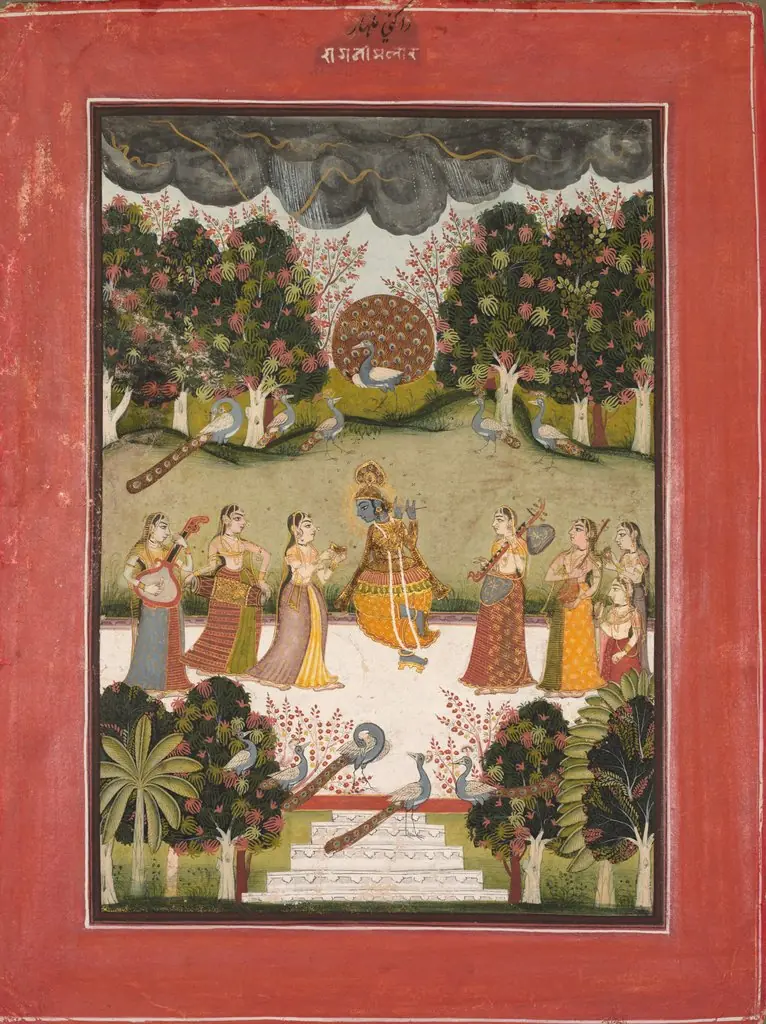 Malar Ragini: Krishna Playing the Flute to Seven Gopis Holding Musical Instruments, from the Ragamala Series
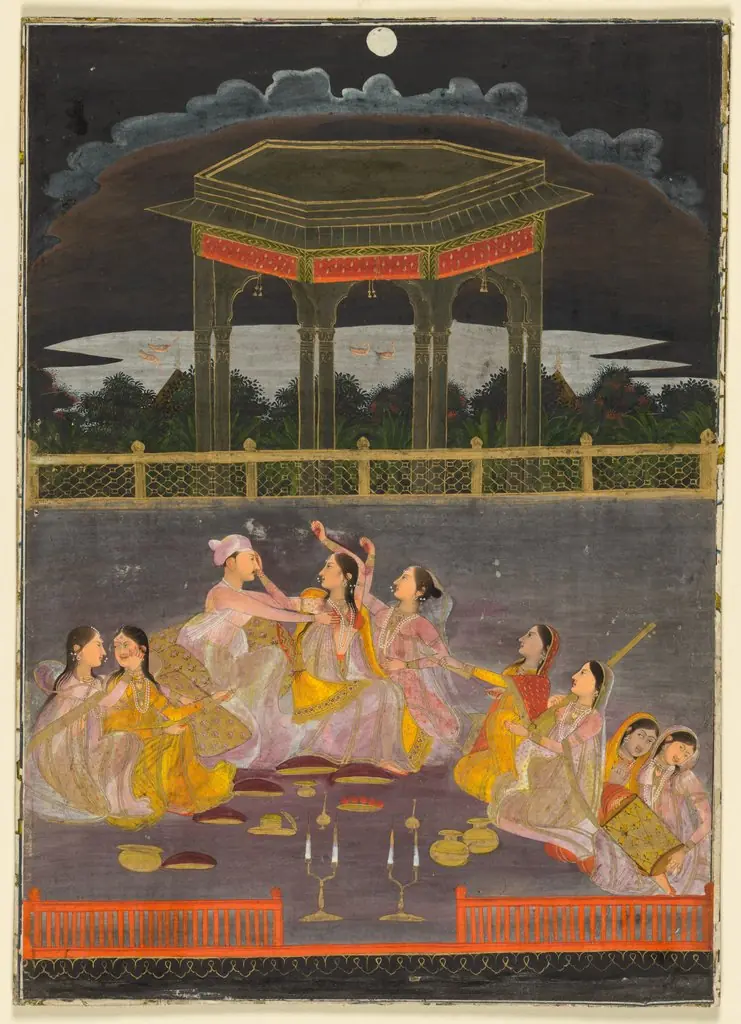 A prince celebrating Holi with palace women on a terrace at night (recto); calligraphy of a quatrain (verso)
 Raja with his Beloved
- Portrait of Sardar Singh (Son of Savant Singh, 1730–68)