Artwork
Portrait of Sardar Singh (Son of Savant Singh, 1730–68)
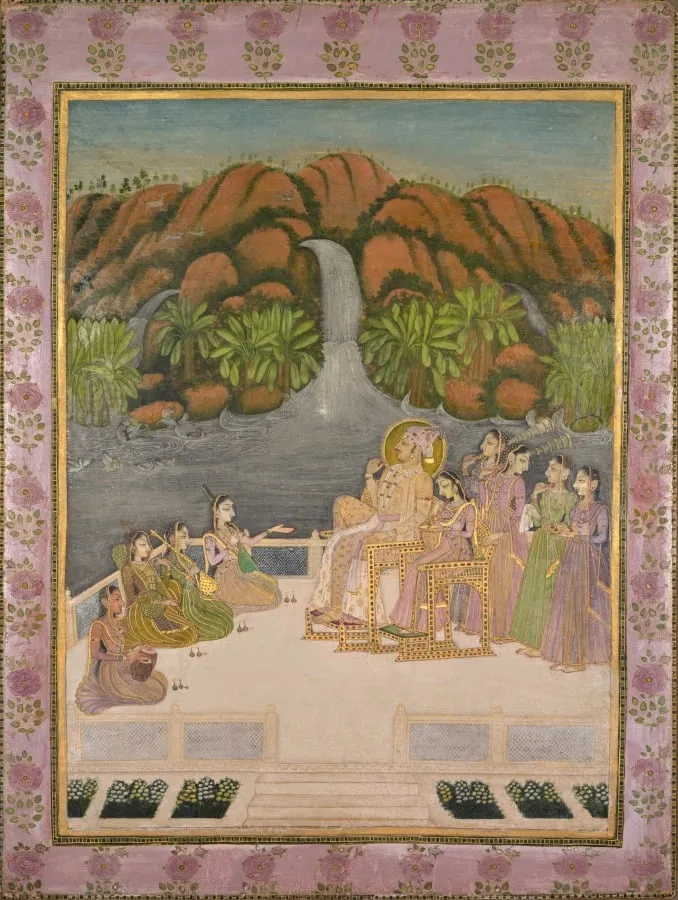
Portrait of Sardar Singh (Son of Savant Singh, 1730–68) is an unspecified painting by the Patna School of Painting artist Unknown. It dates from 1760 and is held in the collection of the Cleveland Museum of Art.
- Accession no.
- 2001.122
About this work
Overview
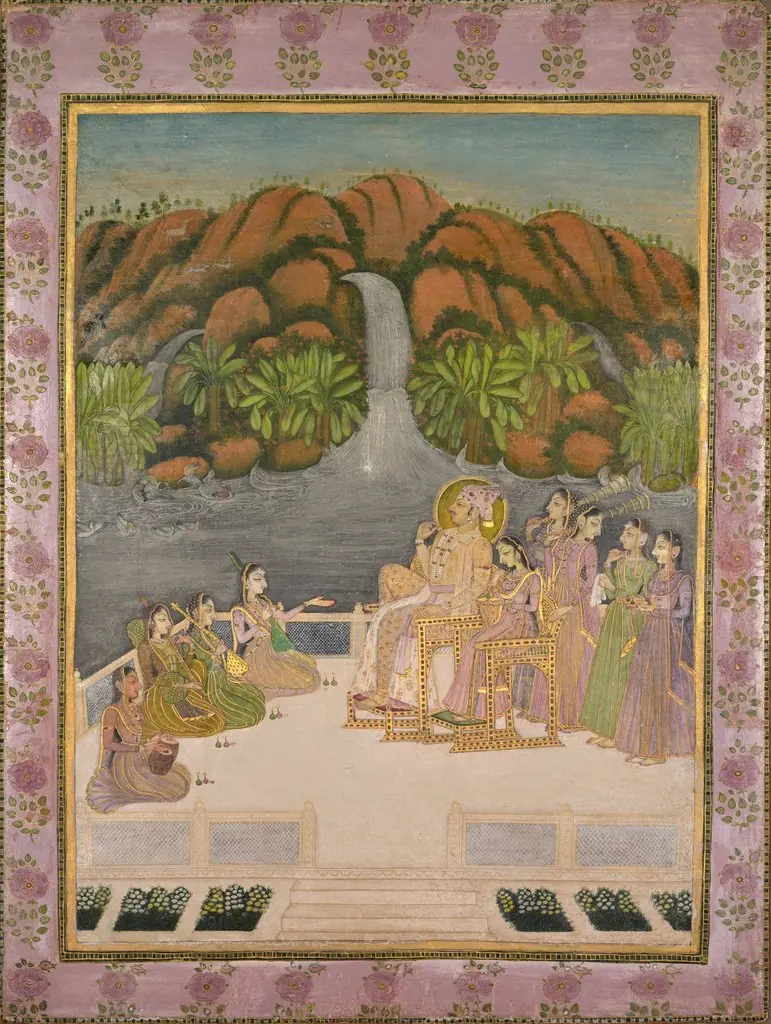
The painting portrays the ruler of Kishangarh and his queen seated on jeweled thrones on a white marble terrace that overlooks a cultivated garden and a lake. Attendants fan the couple while musicians perform, and a tray holds miniature bottles of liquor. The composition places the sovereign and his consort within an idealized, lush environment that emphasizes courtly elegance and leisure.
Subject & Meaning
The work presents the king and queen as central figures of a paradisiacal court, surrounded by servants ready to attend to their needs. Their relaxed posture and the presence of music and drink suggest a cultivated refinement and divine favor. The subtle halo around the king’s face and his comparatively restrained features convey a sense of humanity and authority within the idyllic setting.
Technique & Style
Executed in the distinctive Kishangarh school, the painting employs a bright, fresh palette and meticulous detailing of textiles, jewelry, and foliage.
Executed in the distinctive Kishangarh school, the painting employs a bright, fresh palette and meticulous detailing of textiles, jewelry, and foliage. The most striking stylistic element is the elongated almond-shaped eyes of the female figures, a hallmark of the court’s aesthetic. The figures are rendered with delicate contours, while the use of light and shadow enhances the sense of depth on the marble terrace and garden.
History & Provenance
Created between 1730 and 1768, the portrait reflects the artistic patronage of the Kishangarh princely state in Rajasthan. It was likely commissioned by the ruler himself to project his wealth, power, and refined taste. The painting has remained associated with the Kishangarh court, serving as a visual record of the period’s cultural values and the royal family’s self‑presentation.
Artist & collection









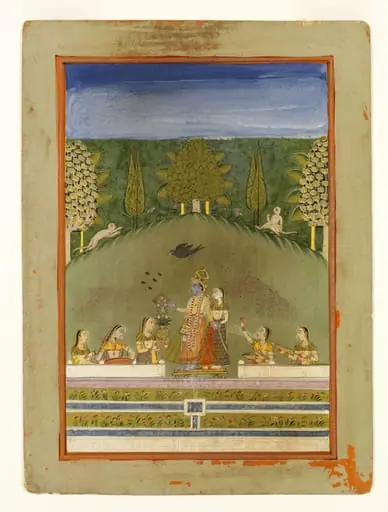 Vasant Ragini
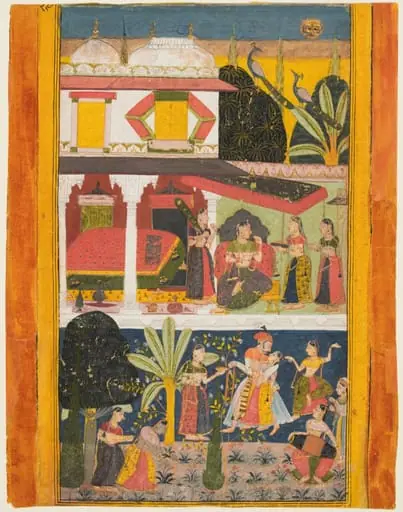 A Heroine and Her Paramour: Malavi Ragini, from a Ragamala
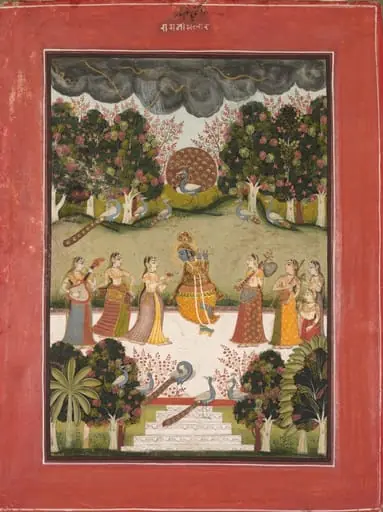 Malar Ragini: Krishna Playing the Flute to Seven Gopis Holding Musical Instruments, from the Ragamala Series
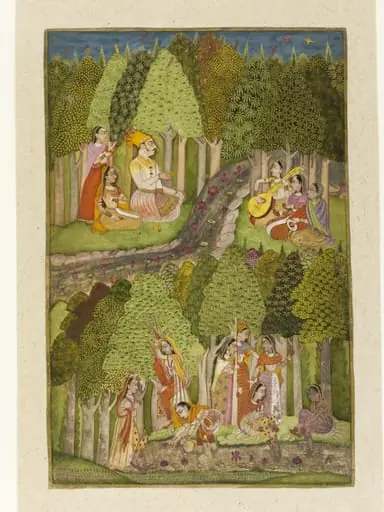 Maharaja Raj Singh
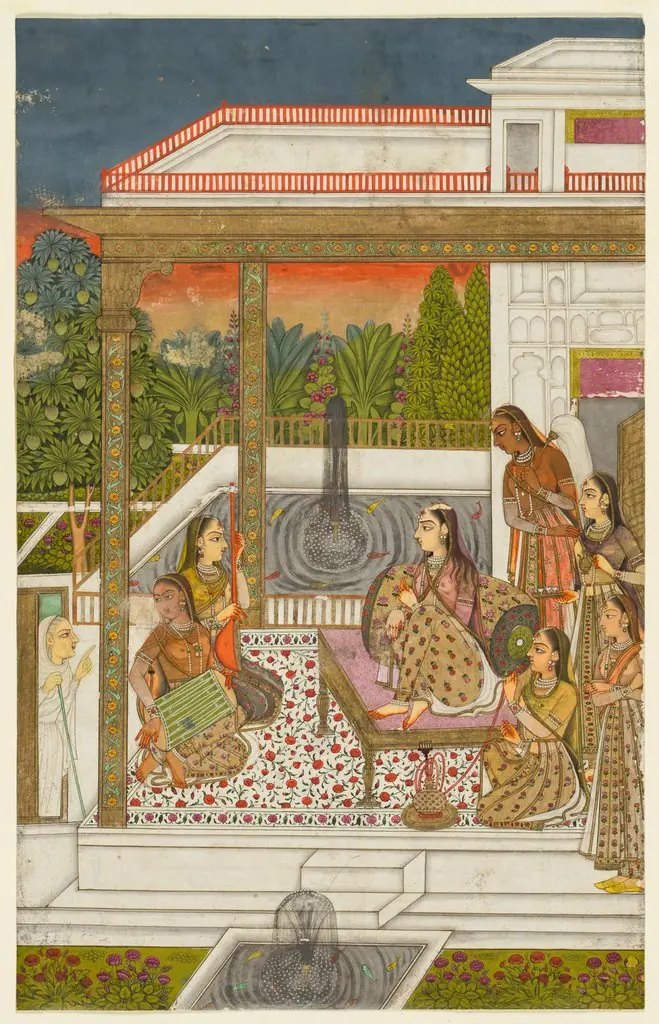 A princess with attendants on a terrace
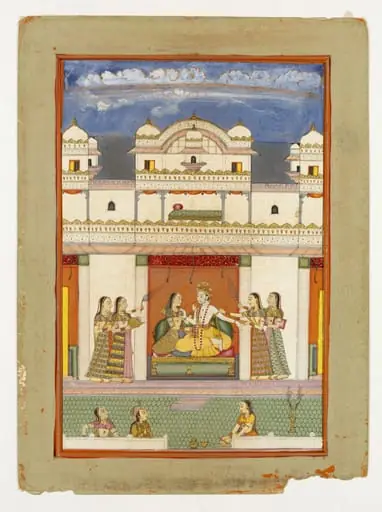 Bhairava raga
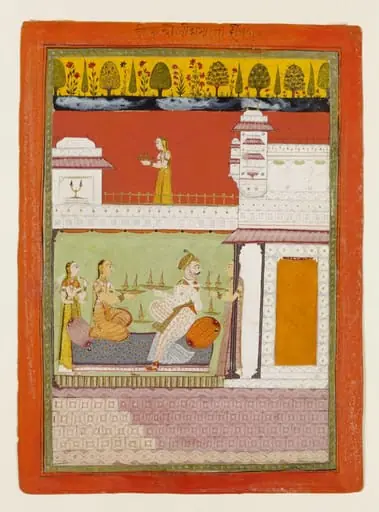 Dipak ragini
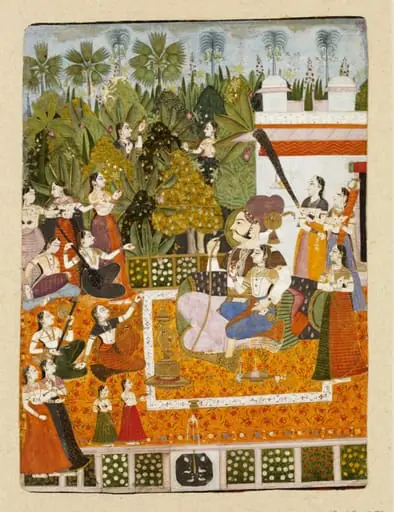 Ratan Singh
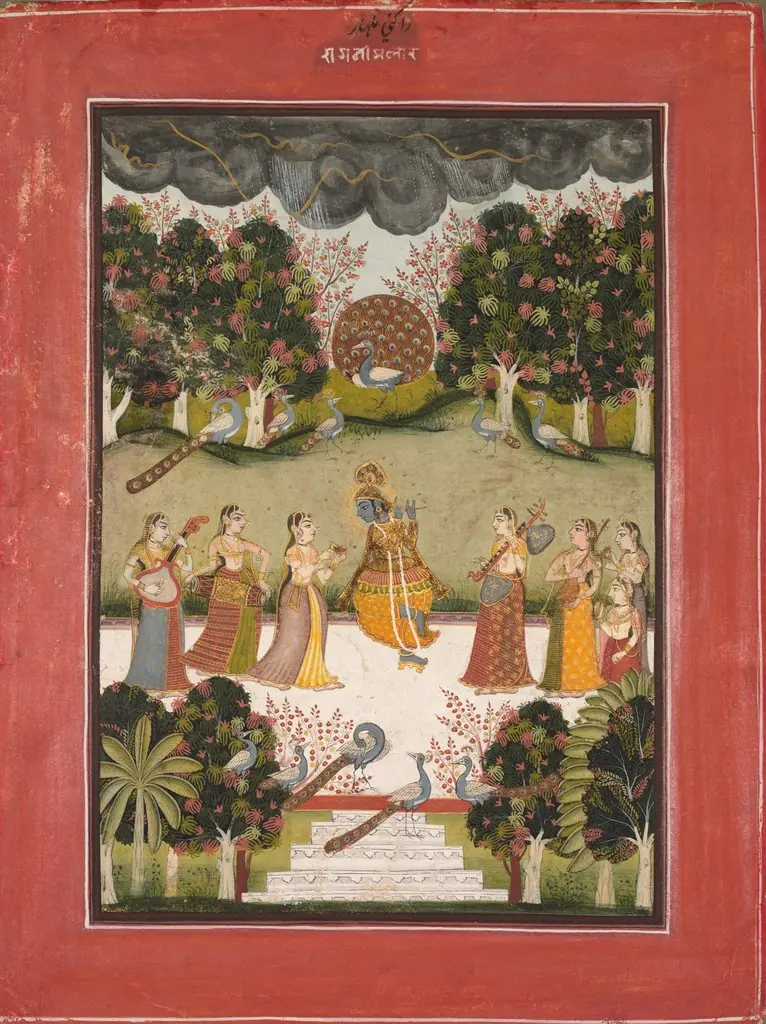 Malar Ragini: Krishna Playing the Flute to Seven Gopis Holding Musical Instruments, from the Ragamala Series
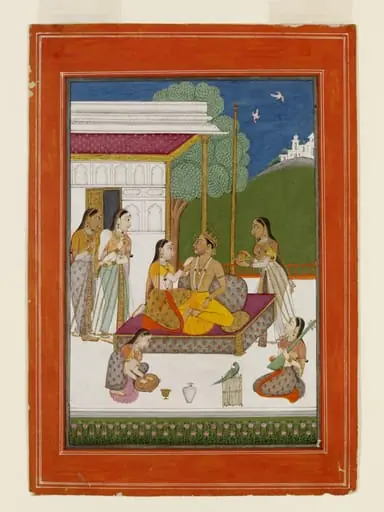 Bhairava Raga