Artwork
Portrait of William Laud, Archbishop of Canterbury
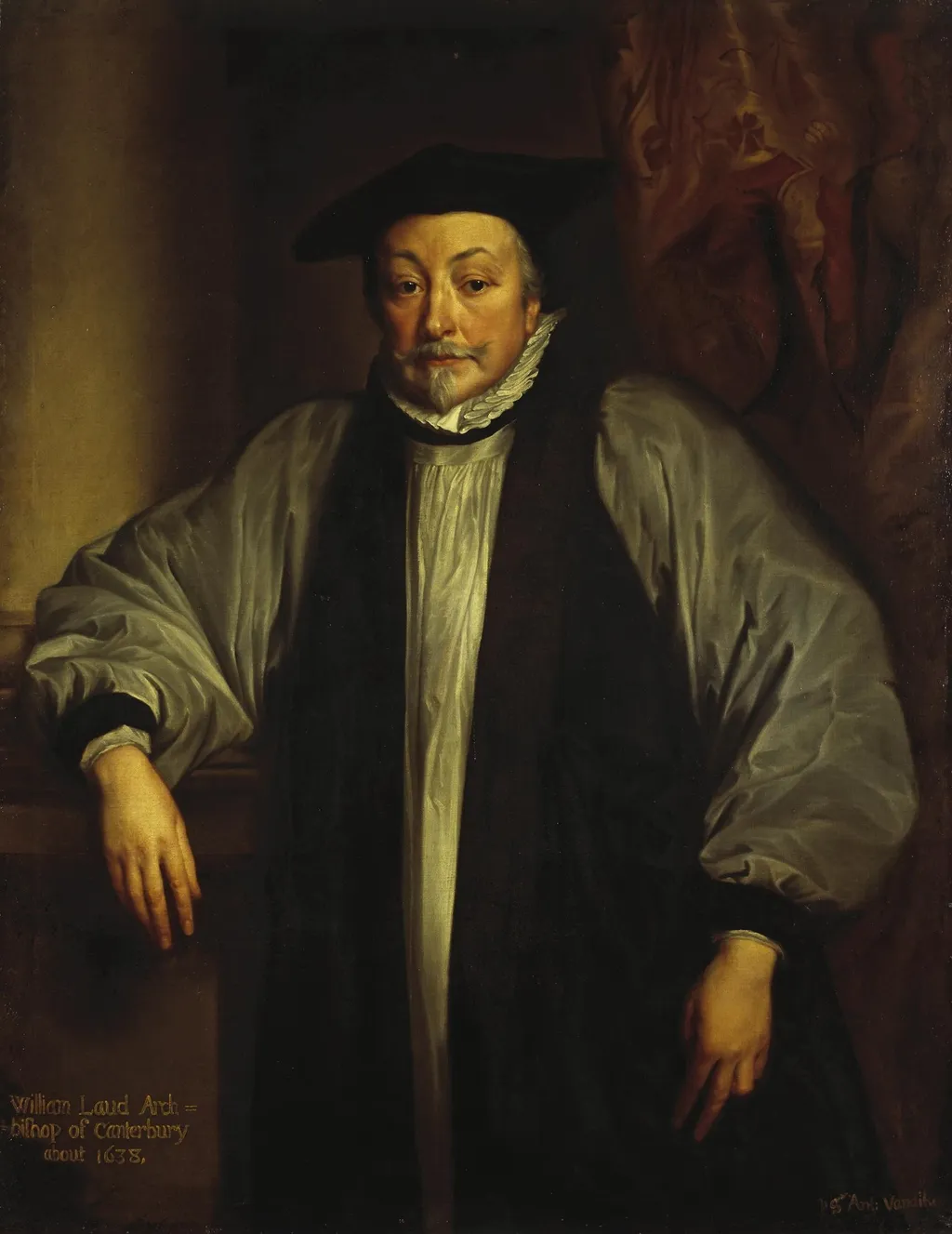
Portrait of William Laud, Archbishop of Canterbury is an oil painting by the Flemish Baroque painting artist Unknown. It dates from 1638 and is held in the collection of the Hermitage Museum. The oil painting depicts William Laud, who served as Archbishop of Canterbury in the early seventeenth century.
About this work
Overview
The painting exemplifies the formal, dignified portraiture through which Van Dyck and his circle represented the pillars of Charles I's regime.
The Portrait of William Laud, Archbishop of Canterbury is an oil painting on canvas executed in 1638, measuring 122 by 93.3 centimeters, depicting the most senior clergyman of the Church of England during the reign of Charles I. Attributed to the workshop of Anthony van Dyck, the leading portraitist at the Caroline court, the painting is now held in the collection of the Hermitage Museum in Saint Petersburg. The work belongs to a cluster of closely related portraits of Laud that Van Dyck and his studio produced, reflecting both the archbishop's prominence in the religious and political affairs of 1630s England and the demand for images of this controversial figure. While some sources identify the artist as Anthony van Dyck himself, the attribution remains debated, with the internal corpus listing the artist as unknown and other sources specifying workshop or studio production. The painting exemplifies the formal, dignified portraiture through which Van Dyck and his circle represented the pillars of Charles I's regime.
Subject & Meaning
The sitter, William Laud (1573-1645), served as Archbishop of Canterbury from 1633 until his impeachment and imprisonment in 1641. The portrait presents him in full ecclesiastical regalia: a black Canterbury cap with flat top and side flaps, a white ruffled collar, a long white clerical band, and voluminous black vestments with wide gray sleeves over a black undergarment. His right hand rests upon a stone ledge at the left, while his left hangs at his side. The background is dark and undefined, with a reddish-brown patterned drapery visible at upper right. This composition carries significant iconographic weight. The bulky ecclesiastical uniform, particularly the white surplice with its billowing sleeves, was itself a contested symbol in post-Reformation England. Puritans viewed the surplice as a relic of Roman Catholic idolatry, while Laud staunchly defended such material aspects of worship as dignified and necessary for holy beauty. The red and gold curtain in the upper right may allude to altar cloths, another element of ceremonial practice that Laud championed against Puritan opposition. The pose, with elbow resting upon a pillar, derives from Titian and was employed by Van Dyck to suggest integrity and power. The facial expression, with heavy-lidded eyes and raised, arched brows, conveys quiet authority and a certain hauteur, compensating for Laud's small physical stature through compositional dignity. The overall effect is one of solemn majesty rather than warmth, appropriate to a prelate who declared that the external worship of God should be kept in uniformity, decency, and some beauty of holiness.
Technique & Style
The painting is executed in oil on canvas with a palette dominated by blacks, grays, and whites, punctuated by warm brown tones and densely shadowed areas. Light falls strongly from the left, illuminating the face, hands, collar, and the sheen of the gray sleeves, a characteristic Baroque device that creates dramatic contrast and focuses attention upon the sitter's physiognomy and the textural qualities of the fabrics. The surface is smoothly painted with careful modeling of flesh and fabric, showing subtle transitions in the black garments and crisp detail in the collar. This refined handling, particularly evident in the treatment of the hands, has been singled out for praise in related versions of the composition. The technique reflects the influence of the Flemish school in its realism and attention to detail, combined with the elegance and sobriety typical of Van Dyck's English period. The three-quarter-length format, at 122 by 93.3 centimeters, was standard for court portraiture of this rank, allowing sufficient scale to convey both the sitter's presence and the elaborate costume. Inscriptions appear in the lower left corner and a signature in the lower right, though the precise content of these inscriptions is not specified in the available sources. The condition and surface state of the Hermitage version are not detailed in the sources, though a cleaning of the Fitzwilliam Museum version in 1981 revealed its supreme quality and established its primacy among the related portraits.
History & Provenance
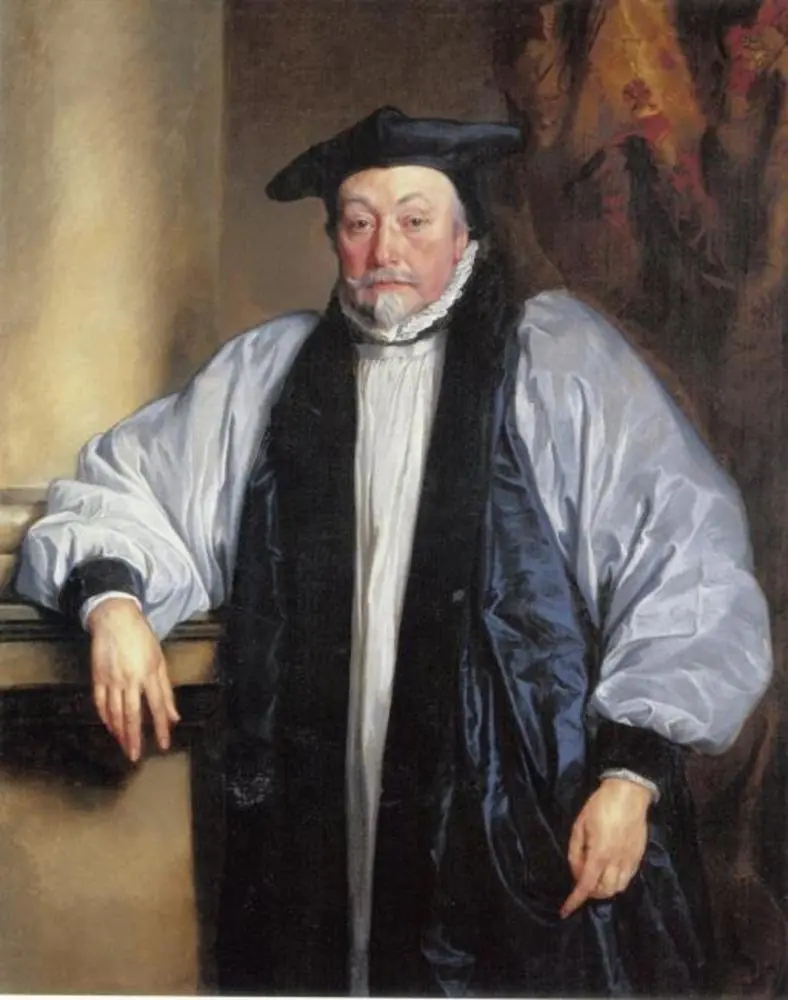
The portrait was created in 1638 in Flanders, according to the Wikidata record, though the broader cluster of related portraits is associated with Van Dyck's English period from 1632 onward. The commission history of the Hermitage version specifically is not documented in the sources, though one source suggests that Laud commissioned a portrait from Van Dyck as part of a series of portraits of prominent personalities from the court of Charles I. The provenance of the Hermitage painting before its acquisition by that museum is not specified in the available sources. The painting is now located in the Hermitage Museum, having entered the collection by means not detailed in the sources. Its accession history and any exhibition record remain undocumented in the provided materials. The broader group of related portraits, however, has a more traceable history. The version now at the Fitzwilliam Museum, Cambridge, was given by Laud to St John's College, Oxford, his alma mater, and was later acquired through the Ricketts and Shannon Collection, bequeathed by Charles Shannon in 1937. Another version in the National Portrait Gallery, London (NPG 171), was purchased in 1864 and measures 1232 by 940 millimeters. This NPG version is specified as after Van Dyck, based on a work of 1636, and retains what may be its original mid-seventeenth-century auricular frame with stylized lion masks. The National Galleries of Scotland hold two further related works: a chalk drawing on paper transferred from the National Gallery of Scotland in 1950 (PG 2106, 28.80 by 20.70 cm), and a line engraving on paper bequeathed by William Finlay Watson in 1886 (EP II 122.6, 16.21 by 10.16 cm), both specified as after Van Dyck by unknown artists.
Context
Anthony van Dyck, knighted by Charles I in 1632 and appointed principal painter in ordinary to their majesties, spent nine busy years in Protestant England producing portraits of the court elite. As a Roman Catholic, he found particular welcome among Catholic sympathizers such as Laud, whose high Anglo-Catholicism aligned with Van Dyck's own religious orientation. The portrait belongs to a period when Laud stood at the apex of his power and influence, having been appointed archbishop in 1633 and serving additionally as Lord Treasurer from 1635 to 1636. The production of multiple versions and copies by Van Dyck's studio was standard practice for portraits of such prominent sitters, with involvement of the master artist varying from case to case. For the Laud portraits, scholars consider that Van Dyck likely painted the hands and face, leaving the remainder for studio assistants to finish. The existence of more than forty copies of this composition attests to its popularity and the demand for images of this powerful prelate. Critical reception has focused on the psychological penetration and formal dignity of the best versions. Edmund Waller's 1630s tribute to Van Dyck, praising his ability to capture not merely beauty but the act and power of a face, has been applied specifically to the Laud portrait. The painting's place in art history lies in its exemplification of Van Dyck's court portraiture at its most restrained and authoritative, demonstrating how the artist could convey power through posture and expression rather than through the emblems and extravagance employed in other commissions.
Legacy
The portrait of Laud acquired potent afterlife resonance as its subject's historical fortunes reversed dramatically. In his diary for 27 October 1640, Laud recorded an unsettling incident: his portrait had fallen from the wall, the string broken, the picture lying face-down on the floor. He noted that he was almost every day threatened with ruin in Parliament, and prayed this was no omen. Less than two months later, he was arrested for treason and imprisoned in the Tower of London. He was beheaded in 1645 after the outbreak of civil war. This anecdote transformed the portrait into a kind of memento mori of political fortune, lending it macabre biographical interest. The image's later influence extended through numerous copies and adaptations that sustained Laud's visual memory across centuries. A particularly significant later adaptation is the portrait at Trewithen House, Cornwall, which reworks the Van Dyck prototype into a trompe l'oeil architectural roundel with Latin inscriptions and heraldic decoration, suggesting commemorative or even funerary purpose. This version, with its more aged and apprehensive sitter, demonstrates how Laud's image could be repurposed for different political and devotional contexts, particularly by High Church and Tory families who maintained sympathy with his religious principles. The proliferation of engraved copies, including those by William Faithorne published by Sir Robert Peake in the early 1640s, disseminated the image widely and established it as the canonical likeness of the archbishop. The portrait thus stands as a document not only of Caroline court art but of the contested religious and political legacies of the English Civil War period, its original function as celebration of power transformed by history into something more complex and ambivalent.
Artist & collection









 Jonathan Swift
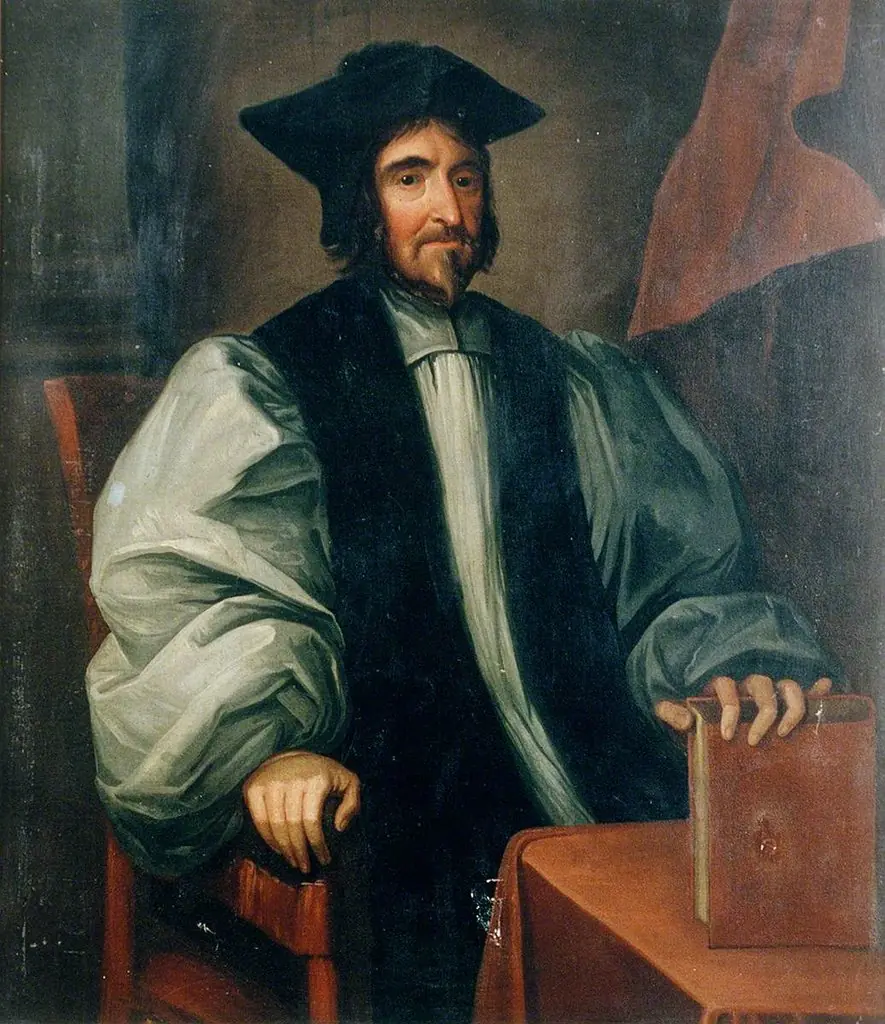 Robert Morgan (1608-1673), Bishop of Bangor
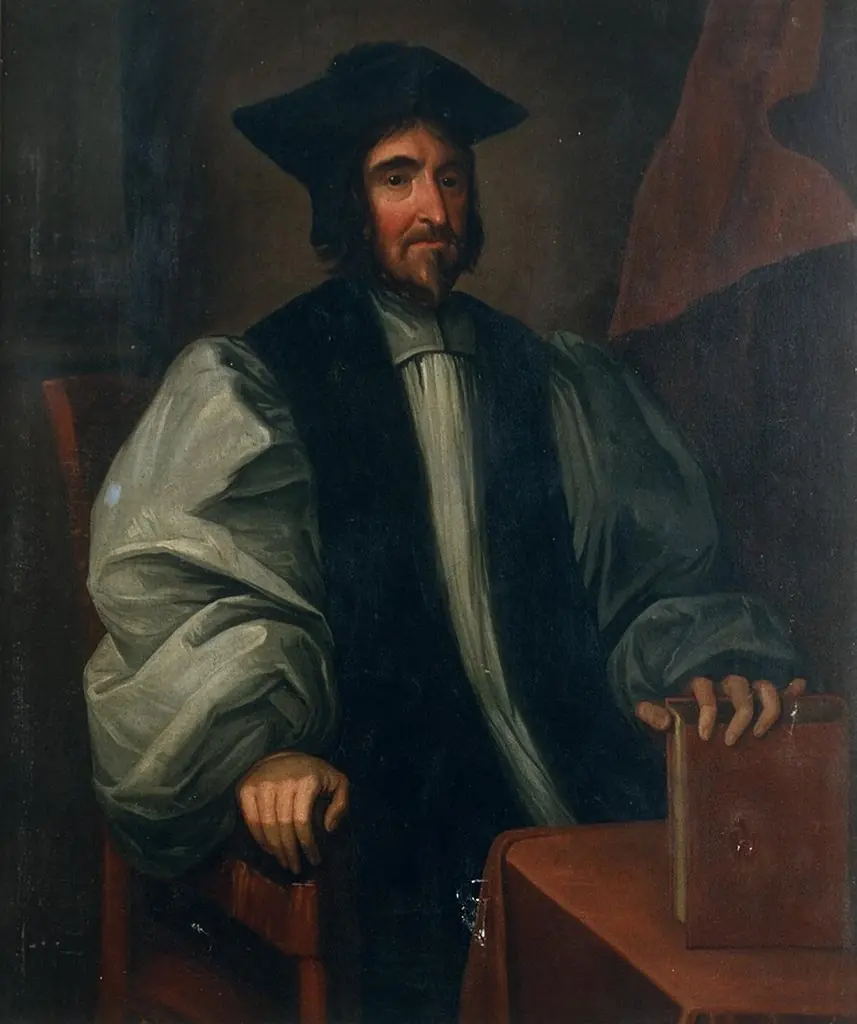 Robert Morgan, Bishop of Bangor (1608-73)
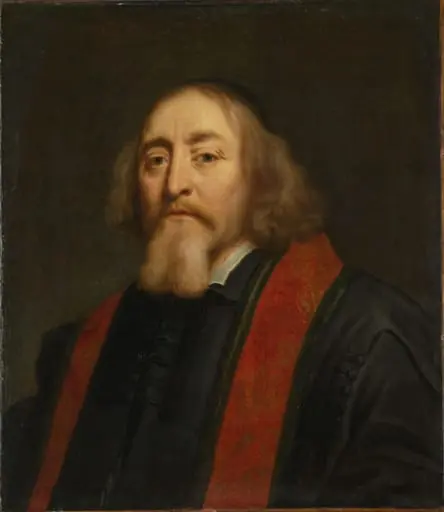 Portrait of Jan Amos Comenius
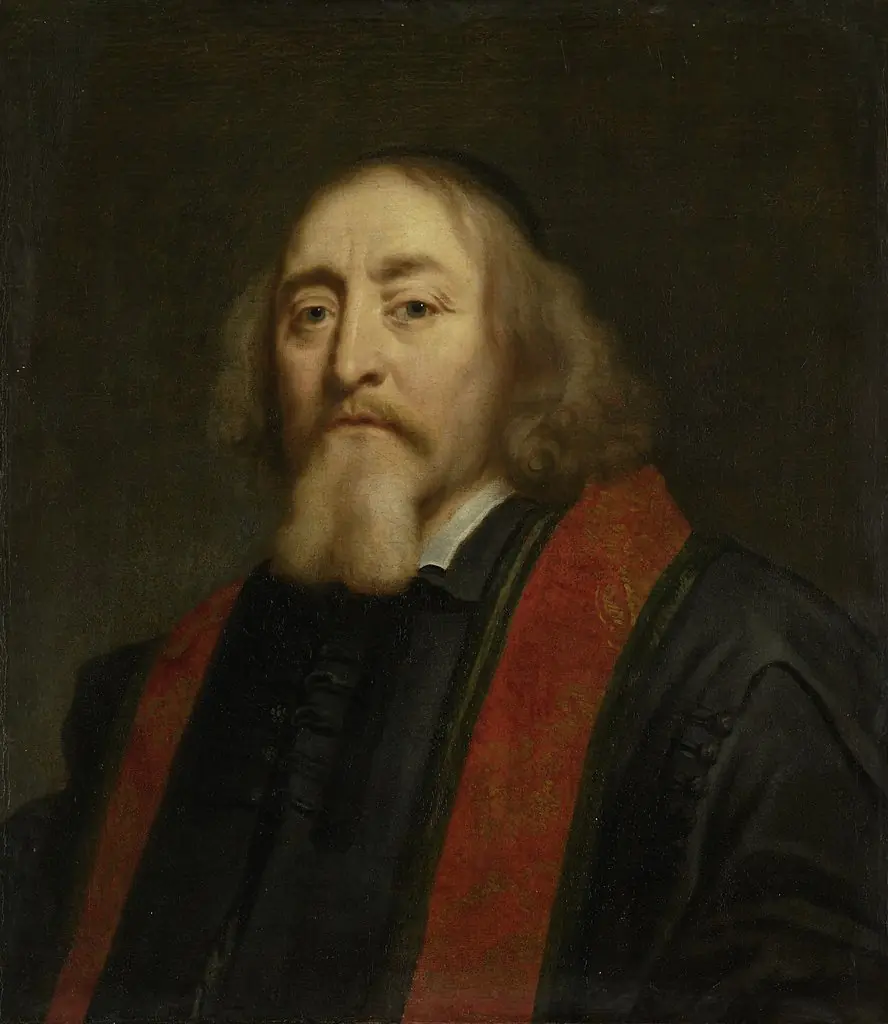 Jan Amos Comenius (Komensky) (1592-1670). Czech humanist and pedagogue. Exiled as a leader of the Moravian or Bohemian Brethren and settled in Amsterdam in 1656
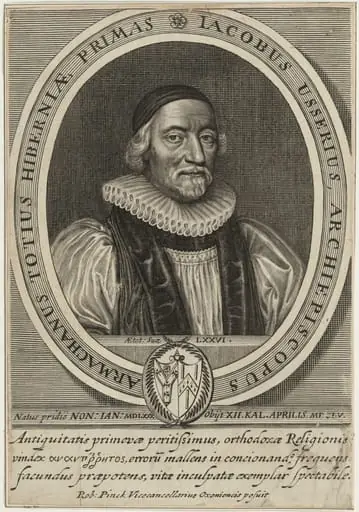 James Ussher, D.D.
 Lancelot Andrewes