Artwork
Raja Dilip Singh of Guler on a dais
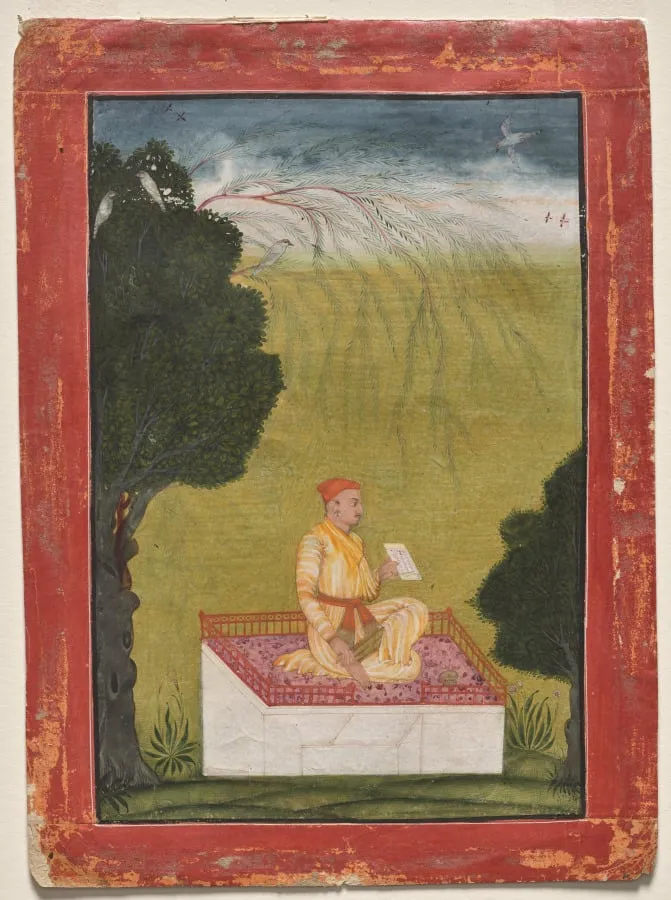
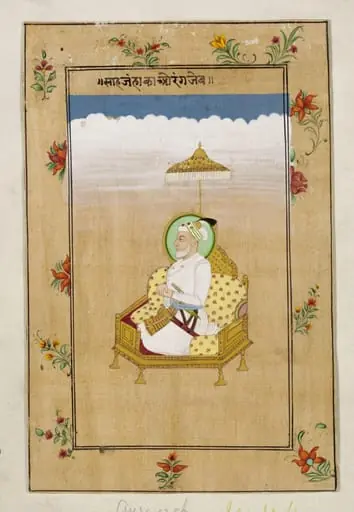
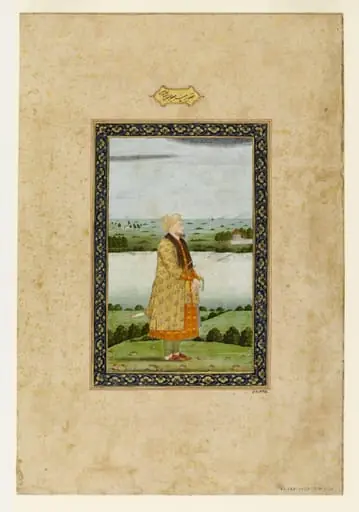
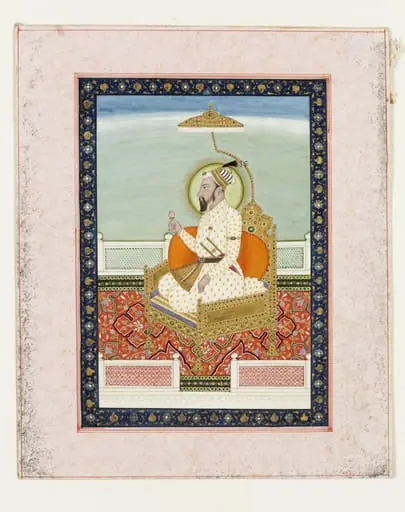
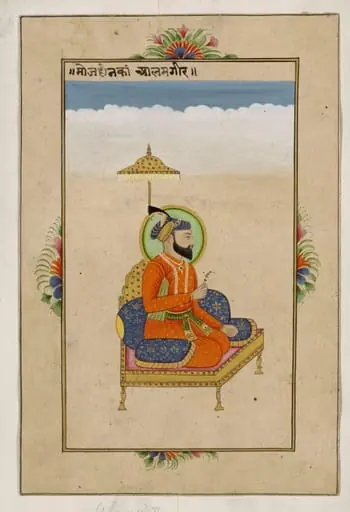
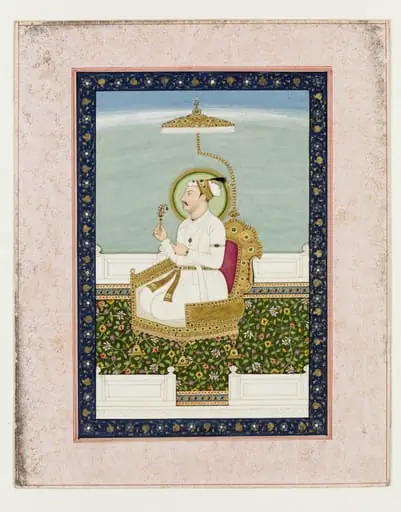
Raja Dilip Singh of Guler on a dais is an unspecified painting by the Baroque artist Unknown. It dates from 1707 and is held in the collection of the Cleveland Museum of Art. Raja Dilip Singh of Guler is depicted seated on a golden throne, wearing a red robe and holding a manuscript page.
- Accession no.
- 1960.49
- Credit line
- Mr. and Mrs. William H. Marlatt Fund
About this work
The artist worked in a style that mixed local traditions with techniques from Mughal workshops, where fine details and soft colors were prized.
A man in a red robe sits on a golden throne, holding a page of writing. His forehead bears a small mark, and his fingers rest on a sword.
This is Raja Dilip Singh of Guler, painted around 1707. The page he holds has red and black lines, likely a sacred Hindu text. The artist worked in a style that mixed local traditions with techniques from Mughal workshops, where fine details and soft colors were prized.
To see more works like this, look up northern india, pahari kingdoms.
Overview
Raja Dilip Singh of Guler is depicted seated on a golden throne, wearing a red robe and holding a manuscript page. A mark on his forehead signifies his devotion to Vishnu. The painting, dated around 1707, showcases a blend of local and Mughal artistic influences.
Subject & Meaning
The subject, Raja Dilip Singh (reigned 1695–1741), is portrayed with symbols of his religious and royal identity: a Vishnu mark on his forehead and a sword. The manuscript page he holds, featuring alternating red and black ink lines, likely represents a sacred Hindu text, underscoring his piety.
Technique & Style
The painting exhibits a fusion of styles, with naturalism and refinement characteristic of Mughal influences (evident in the facial features, Mughal-style tunic, and floral carpet) blended with local Pahari traditions, resulting in soft colors and fine details.
History & Provenance
Commissioned by Raja Dilip Singh, this work inaugurated the royal collection's practice of acquiring paintings and manuscripts at Guler. The artist, possibly from a family with ties to the Mughal imperial workshop in Lahore, brought external techniques to the regional style.
Context
Created around 1707, the painting reflects the cultural exchange between the Pahari kingdoms and the Mughal Empire, with artists moving between Lahore and Guler, influencing each other's styles.
Legacy
This painting represents an early example of the Guler royal collection's emphasis on visual arts. It also highlights the artistic exchanges between northern Indian kingdoms and the Mughal Empire, contributing to the development of Pahari painting styles.
Artist & collection