Artwork
"Seventh Month" from the Odes of Bin

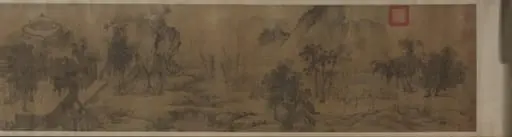
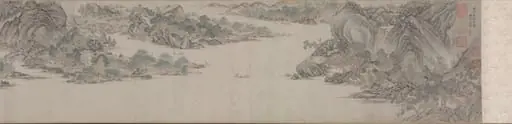
"Seventh Month" from the Odes of Bin is an unspecified painting by the Song dynasty landscape artist Unknown. It dates from 1204 and is held in the collection of the Cleveland Museum of Art.
- Accession no.
- 1980.187
- Credit line
- Mr. and Mrs. William H. Marlatt Fund
About this work
The poem describes how people worked through the year, and the emperor wanted these scenes painted to show he cared for his people.
You see a long scroll with tiny farmers plowing, harvesting, and sewing under a big sky.
This painting illustrates an old poem from the Book of Poetry. The poem describes how people worked through the year, and the emperor wanted these scenes painted to show he cared for his people. We don’t know who painted it, but it’s one of the earliest pictures of this poem.
To see more like this, look up Southern Song Dynasty (1127-1279).
Overview
The hand‑scroll titled “Seventh Month” visualizes a passage from the ancient Book of Poetry that records seasonal labor such as plowing, harvesting, hunting, textile work and ritual observances. Executed during the Southern Song period, the work presents a panoramic view of agrarian life under an expansive sky, rendered in a compact, narrative style typical of court‑commissioned illustrations.
Subject & Meaning
The depicted scene follows the poem’s enumeration of yearly occupations, emphasizing the ruler’s responsibility for the populace’s welfare through agricultural stewardship. By portraying peasants engaged in productive tasks, the image reinforces Confucian ideals that link good governance with the prosperity of the land and its people.
Technique & Style
Created as a long, continuous scroll, the painting employs delicate brushwork and fine line drawing to render numerous figures at a miniature scale. The composition is organized in a rhythmic sequence, guiding the viewer’s eye across the landscape while maintaining a uniform visual language characteristic of Southern Song court artists.
History & Provenance
The illustration was commissioned by Emperor Gaozong (r. 1127–1162), who sought to legitimize his rule after relocating the capital to the lower Yangzi delta. Court workshops produced the work as part of a broader program to revive dynastic authority and appeal to the Confucian bureaucracy. The artist’s identity remains unknown, but the piece is among the earliest surviving visual accompaniments to the Odes of Bin.
Context
During the Southern Song, the imperial court emphasized cultural projects that aligned with Confucian doctrine, using art to convey moral and political messages. The scroll reflects this climate, linking poetic literature with visual representation to underscore the emperor’s role as caretaker of agricultural cycles.
Legacy
As one of the first illustrated renditions of a classical poem, the scroll set a precedent for later literati paintings that combined text and image. Its survival provides valuable insight into Song‑era court patronage, the visual language of agrarian themes, and the intertwining of poetry and painting in Chinese art history.
Artist & collection