Artwork
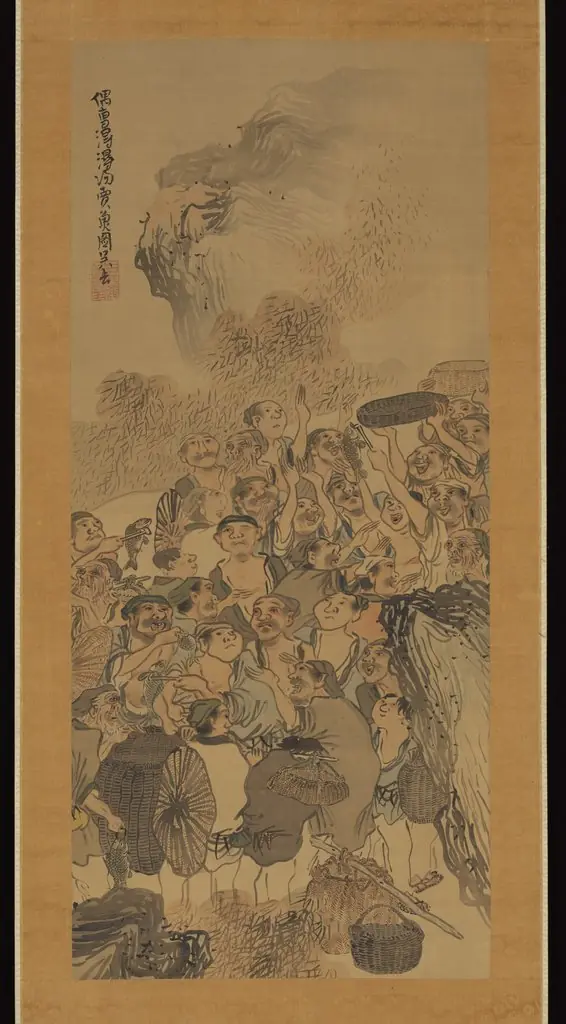
Happy Forest, from Water Margin
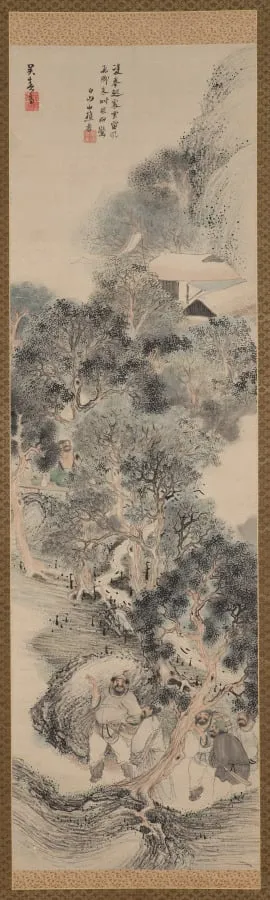
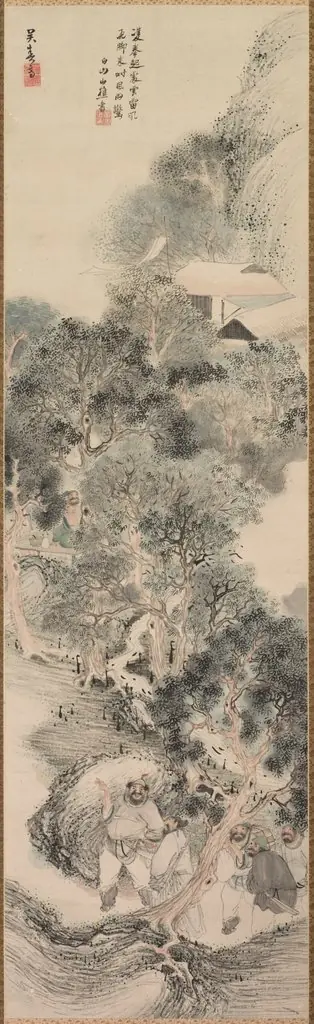
Happy Forest, from Water Margin is an unspecified painting by the Joseon dynasty painting artist Matsumura Goshun. It dates from 1704 and is held in the collection of the Cleveland Museum of Art. This ink painting illustrates a moment from the Chinese epic Water Margin, composed in the 14th century but set in the early 12th century.
- Accession no.
- 1986.95
- Credit line
- Mr. and Mrs. William H. Marlatt Fund
About this work
Overview
This ink painting illustrates a moment from the Chinese epic Water Margin, composed in the 14th century but set in the early 12th century.
This ink painting illustrates a moment from the Chinese epic Water Margin, composed in the 14th century but set in the early 12th century. It captures Wu Song, one of the 108 outlaws, preparing to reclaim a tavern named Happy Forest. The scene emphasizes his physical readiness through the consumption of wine, a customary prelude to combat in the narrative. An accompanying inscription praises his martial prowess in poetic terms, linking his movements to natural forces.
Subject & Meaning
The painting centers on Wu Song’s act of restoring justice by reclaiming the tavern from a corrupt official. His ally, Shi En, the prison warden’s son, has been displaced, and Wu Song’s intervention restores rightful ownership. The scene is not merely a display of strength but a moral act, upholding loyalty and order against exploitation.
The inscribed verse elevates the fight to a cosmic scale, framing violence as a force of natural retribution.
Technique & Style
Executed in ink on silk, the painting employs fluid brushwork to convey motion and tension. Figures are rendered with expressive lines, emphasizing posture and gesture over detailed anatomy. The composition directs attention to Wu Song’s poised stance and the surrounding chaos, using negative space to heighten drama.
While not employing Western chiaroscuro, the work achieves depth through tonal gradation and layered ink washes characteristic of Song and Yuan dynasty figure painting.
History & Provenance
The painting likely dates to the Ming dynasty, when illustrated editions of Water Margin became popular. It may have originated as part of a scroll series depicting key episodes from the novel. Inscriptions suggest it was created for an audience familiar with the text, possibly commissioned by a collector or literati patron.
Its survival indicates continued cultural reverence for the outlaws’ narrative, even as political attitudes toward rebellion shifted over centuries.
Context
Water Margin emerged during a period of social unrest and foreign rule, resonating with audiences who saw in its outlaws a reflection of resistance against corruption. The tale’s blend of heroism, loyalty, and moral ambiguity made it a staple of popular culture. Paintings like this one served both as entertainment and moral instruction, reinforcing Confucian ideals of righteousness through the lens of outlaw justice, even as the characters operated outside official law.
Legacy
This work contributes to a broader tradition of narrative painting in China, where literature and visual art intersected to reinforce cultural values. It helped standardize the visual identity of Wu Song and other Water Margin figures across later media, including woodblock prints and opera. Though not widely known outside China, it remains a significant example of how storytelling shaped artistic expression during the late imperial period.
Artist & collection


- Clouds and Waves at the Wu Gorge
 Farmer Returning Home in Autumn
 明 陳洪綬 樹下高士圖 軸|Scholar-recluse in blue-green landscape
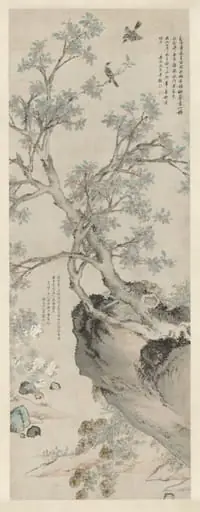 Yellow Chrysanthemums and Red Osmanthus in the Style of Wang Yuan
 Autumn Boating on a Maple River
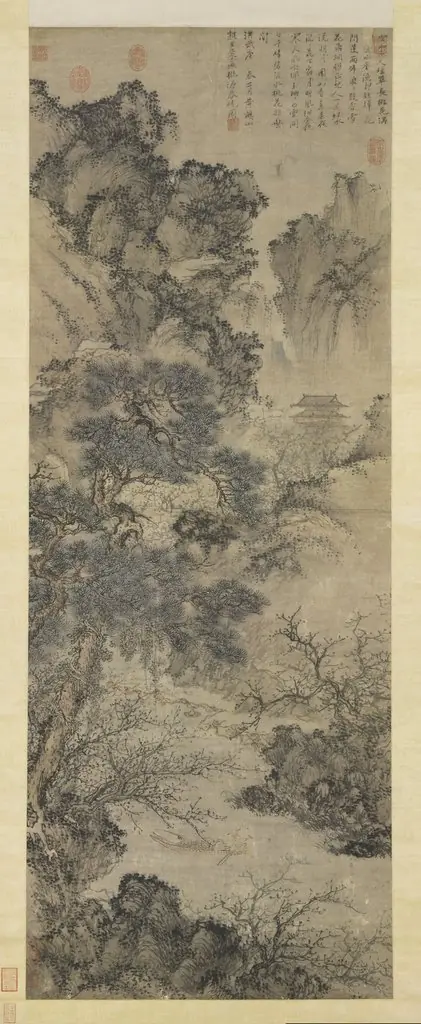 Vernal Dawn at the Peach Blossom Spring
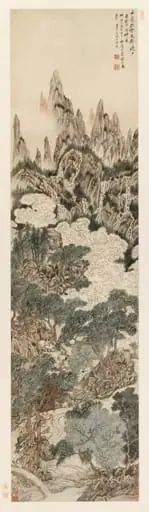 Morning Sun over Heavenly Citadel Peak
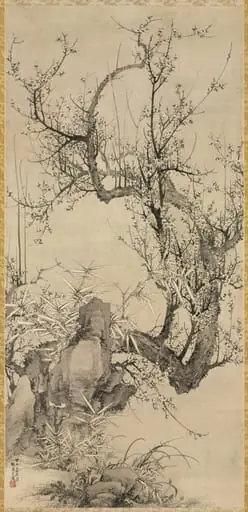 Plums, Bamboo, and Orchid
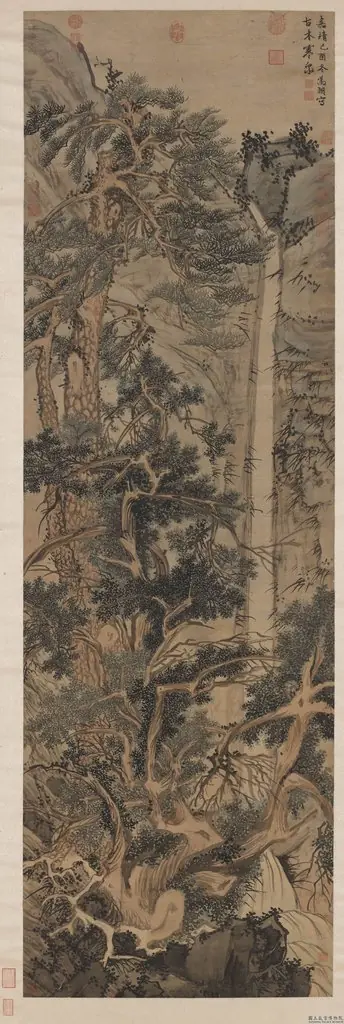 Old Trees by a Cold Waterfall
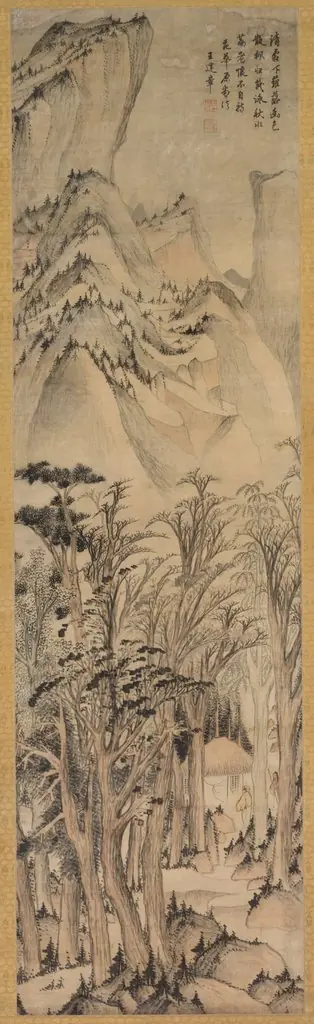 Solitary Colors of the Autumn Woods
 Solitary Colors of the Autumn Woods