Artwork
Shakyamuni Triad: Buddha Attended by Manjushri and Samantabhadra
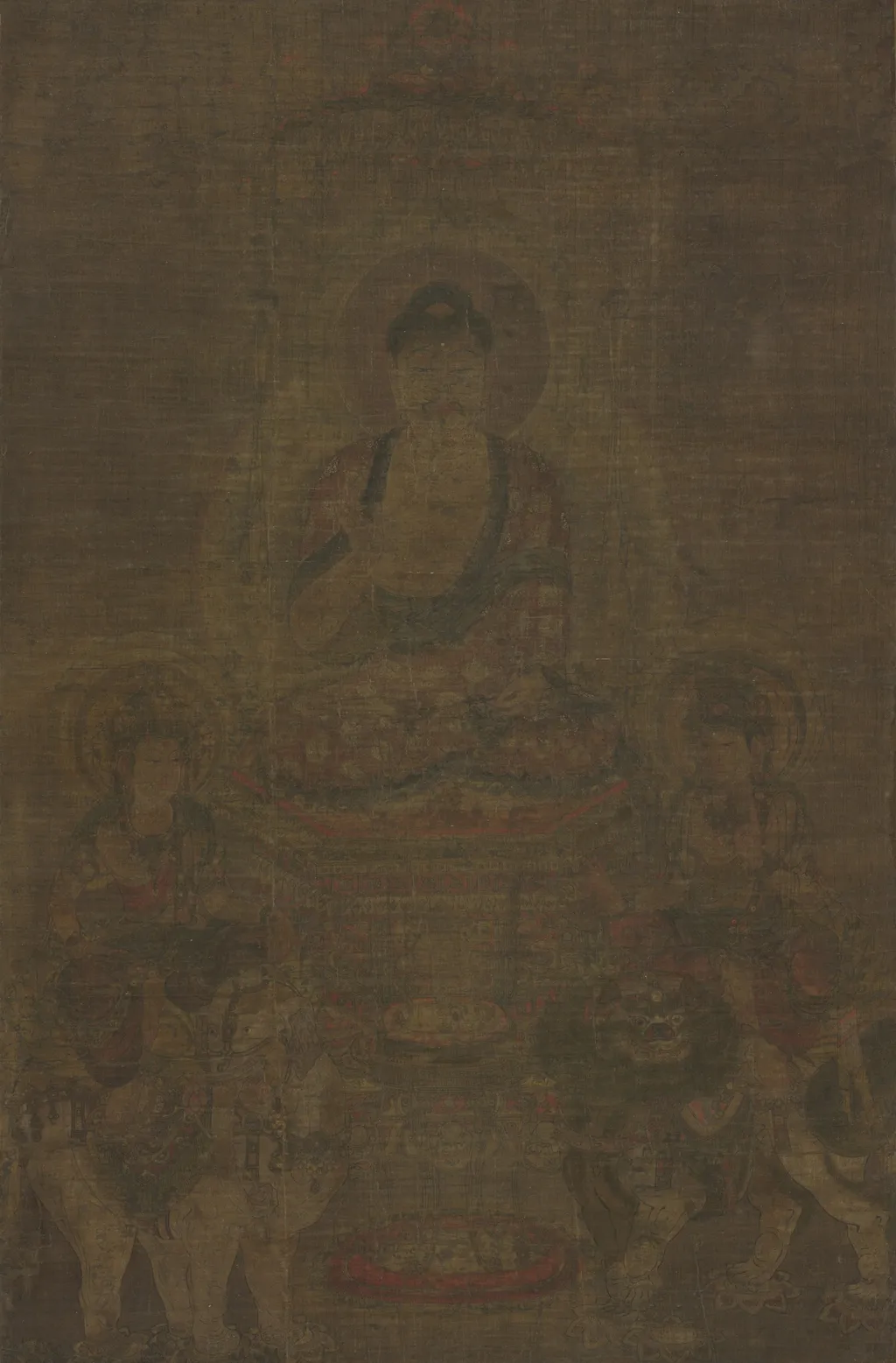
Shakyamuni Triad: Buddha Attended by Manjushri and Samantabhadra is an unspecified painting. It dates from 900 and is held in the collection of the Cleveland Museum of Art. The work presents a seated figure in the classic cross‑legged posture, draped in unadorned robes and encircled by a subtle aureole.
About this work
Subject & Meaning
This composition presents the enlightened teacher flanked by the embodiments of wisdom and universal practice, as conveyed by the attendant bodhisattvas.
The painting depicts the Shakyamuni Triad, showing the Buddha Shakyamuni attended by the bodhisattvas Manjushri and Samantabhadra. The title indicates a central Buddha figure with the two bodhisattvas positioned on either side, a standard triadic arrangement in Buddhist art. This composition presents the enlightened teacher flanked by the embodiments of wisdom and universal practice, as conveyed by the attendant bodhisattvas. The sources do not elaborate further on specific symbolic interpretations beyond this iconographic description.
Technique & Style
The Shakyamuni Triad depicts the historical Buddha flanked by the bodhisattvas Manjushri and Samantabhadra. Executed as a painting on a support typical of early medieval Buddhist art, the work measures 90 centimeters in height and 60 centimeters in width. Its formal composition emphasizes frontal, hieratic figures set within a shallow spatial framework, reflecting a stylized iconography characteristic of the period.
The surface exhibits fine brushwork and restrained pigment application, suggesting careful handling and preservation over centuries. The painting’s condition is stable, with minimal craquelure and no visible overpainting, indicating careful stewardship by the Cleveland Museum of Art, where it is housed.
History & Provenance
The Shakyamuni Triad: Buddha Attended by Manjushri and Samantabhadra is dated to 900 CE, a dating recorded as the work's inception in the Cleveland Museum of Art's records. The painting is classified as a painting within the museum's holdings and is identified by the accession number 1975.92. Its creation is attributed to an unknown artist, with no documented commission or workshop association surviving in the available records.
The provenance prior to its acquisition by the Cleveland Museum of Art is not detailed in the available sources, and the ownership chain leading to the 1975 accession is not documented here.
The painting is held in the collection of the Cleveland Museum of Art, where it is accessioned under the inventory number 1975.92.
It was exhibited in the museum’s 1975 exhibition of Asian artworks.
The work is a painting dated to 900, created by an unknown artist.
Context
The work Shakyamuni Triad: Buddha Attended by Manjushri and Samantabhadra was created in 900 and classified as a painting. It is attributed to an unknown artist and is part of the Cleveland Museum of Art's collection, accessioned in 1975.92, with its inception recorded as 0900-01-01. The painting is held at the Cleveland Museum of Art and is studied within the broader context of Buddhist iconography in early medieval Indian art.
Scholars examine its composition and stylistic elements to understand the transmission of Mahayana Buddhist themes in regional artistic traditions.
Overview
The work presents a seated figure in the classic cross‑legged posture, draped in unadorned robes and encircled by a subtle aureole. Flanking the central presence are two attendant figures, each rendered in flowing garments and positioned slightly behind. A dark, textured backdrop frames the scene, while a lower register contains a procession of stylized animals and human forms.
Artist & collection

- Shakyamuni Triad: Buddha Attended by Manjushri and Samantabhadra
 Amitābha Triad
 Triad of the Medicine Master Buddha Yakushi (Bhaisajya Buddha)
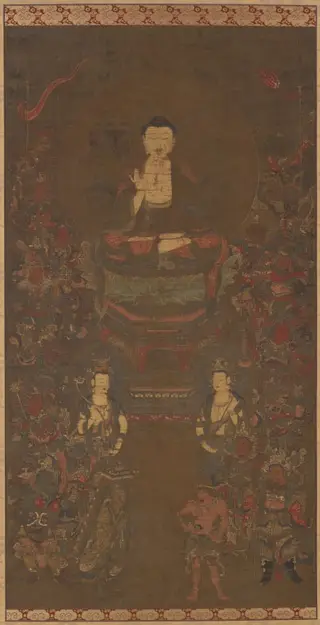 Shakyamuni with the Sixteen Benevolent Deities
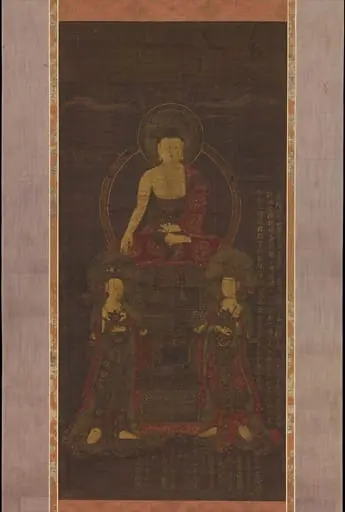 석가삼존도 조선|釋迦三尊圖 朝鮮|Shakyamuni triad
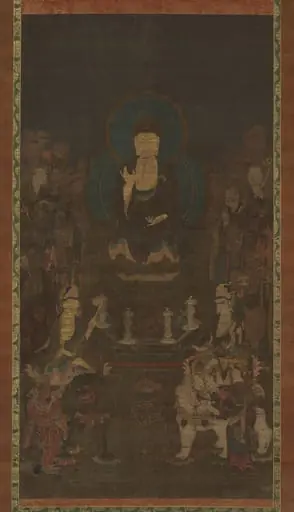 釈迦三尊十大弟子像|Shaka (Shakyamuni), the Historical Buddha, with Two Attendant Bodhisattvas and the Ten Great Disciples
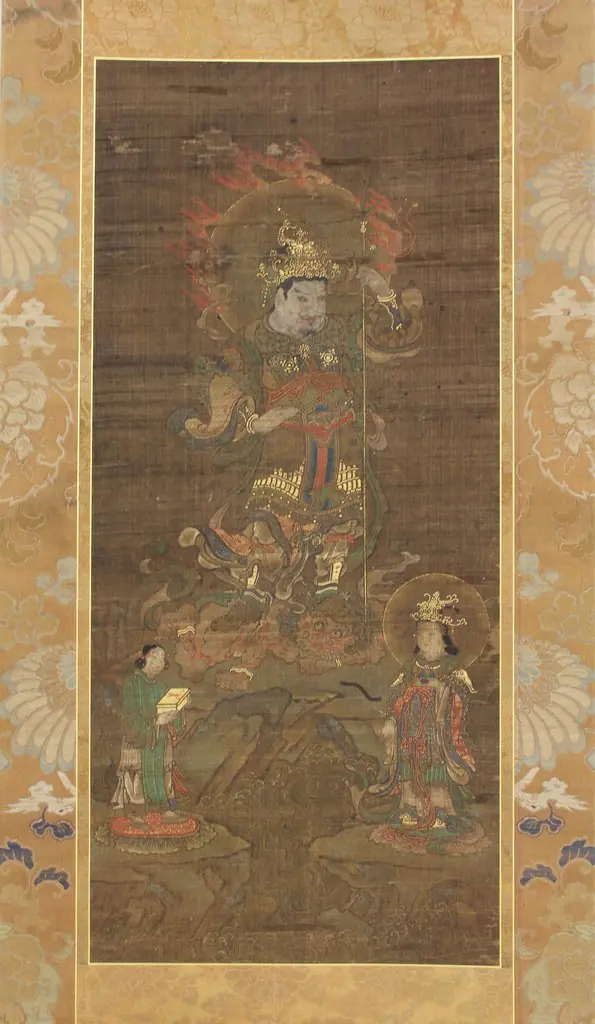 Mount Kurama Mandala: Bishamonten Triad (Kuramayama mandara: Bishamonten sanzonzō)
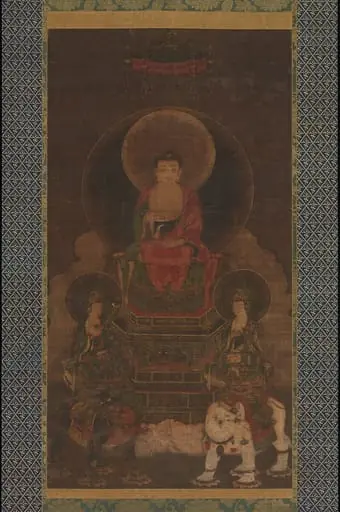 釈迦三尊像|Shaka (Shakyamuni) Triad
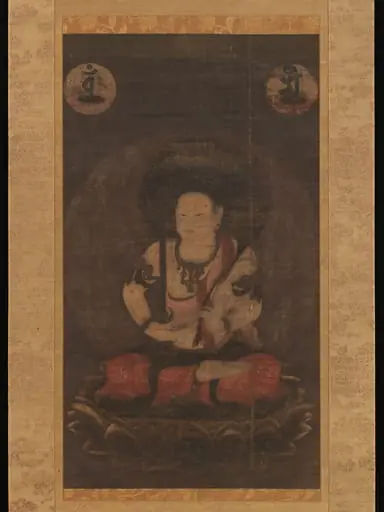 五髻文殊菩薩像|The Bodhisattva Monju (Manjushri) with Five Topknots
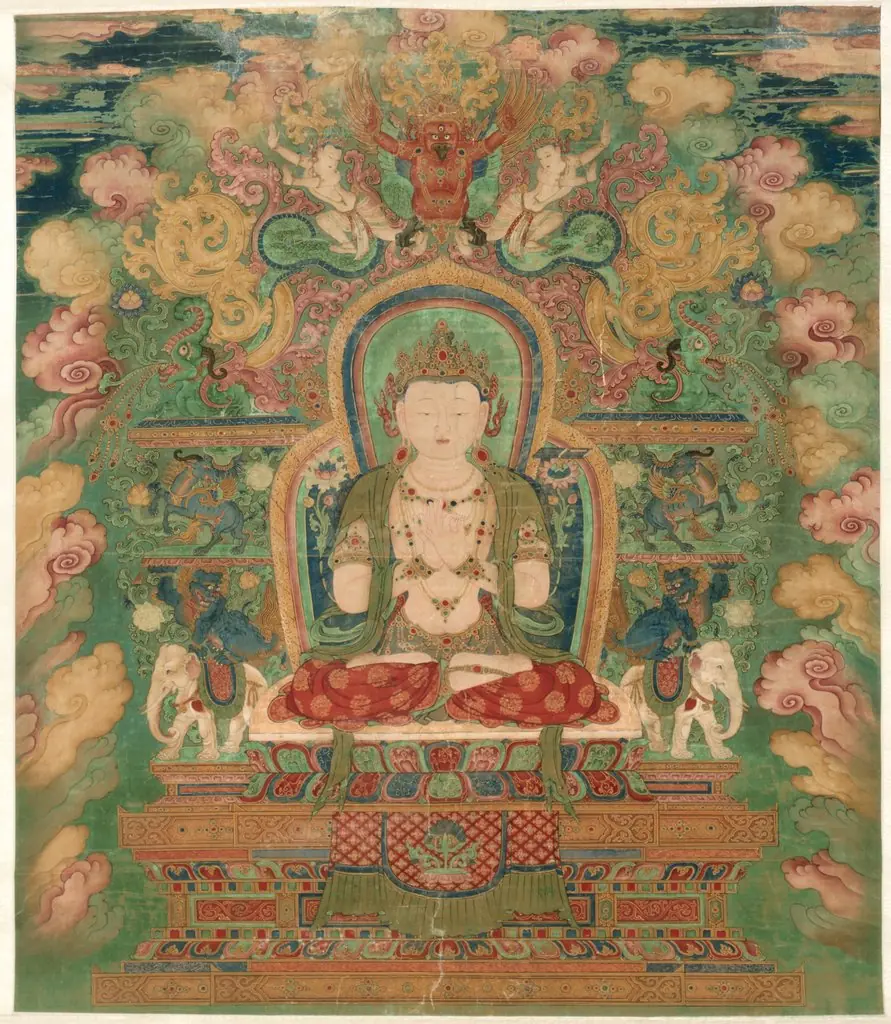 Manjushri
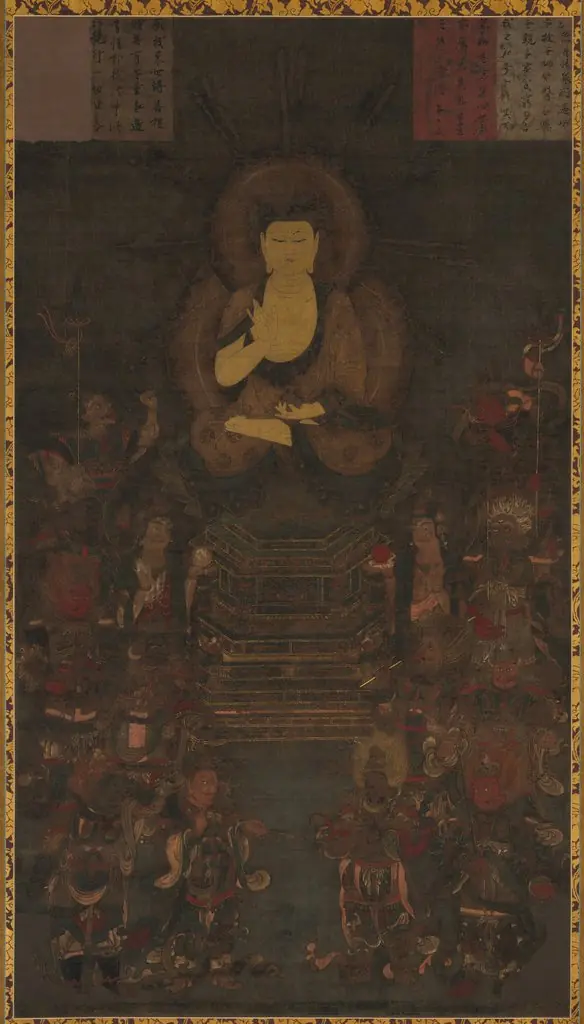 Medicine Master Buddha and the Twelve Divine Generals
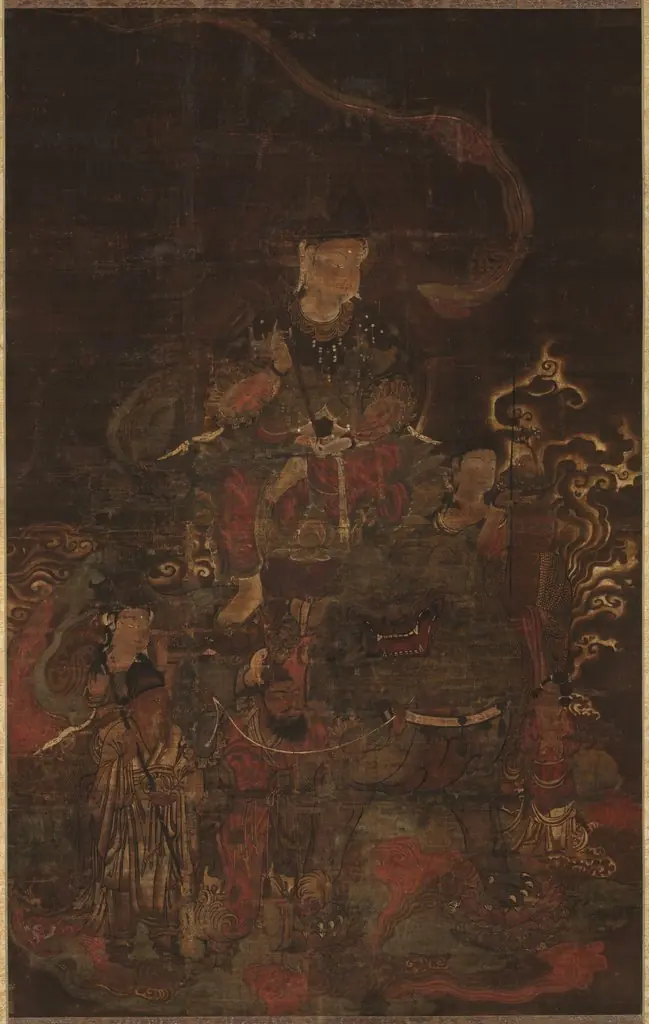 Monju Riding Lion with Attendants
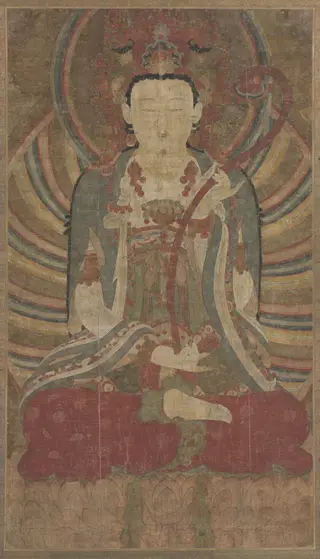 Seated Manjusri
 Shaka, the Historical Buddha, Preaching on Vulture Peak
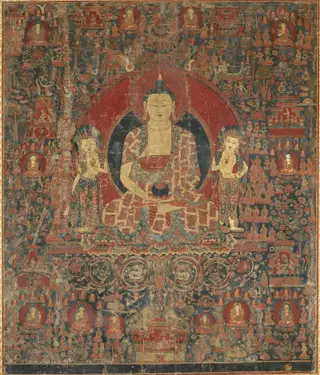 The Jina Buddha of Infinite Light (Amitabha) in His Pure Land Paradise (Sukhavati)
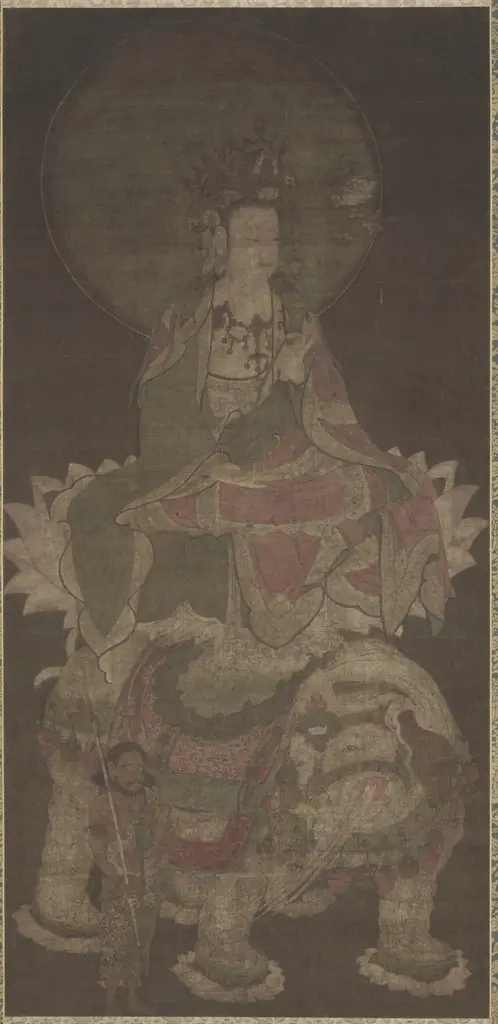 Samantabhadra
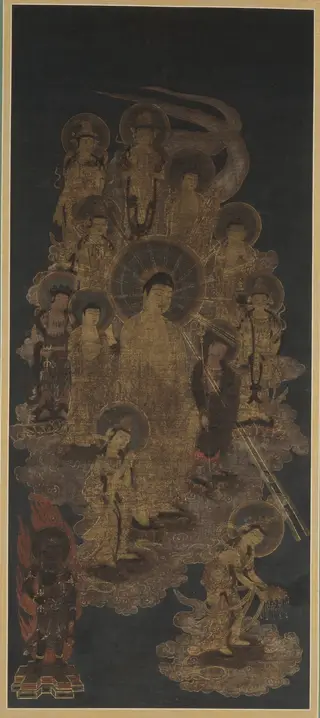 Thirteen Buddhas Welcoming the Dying Believer to the Western Pure Land
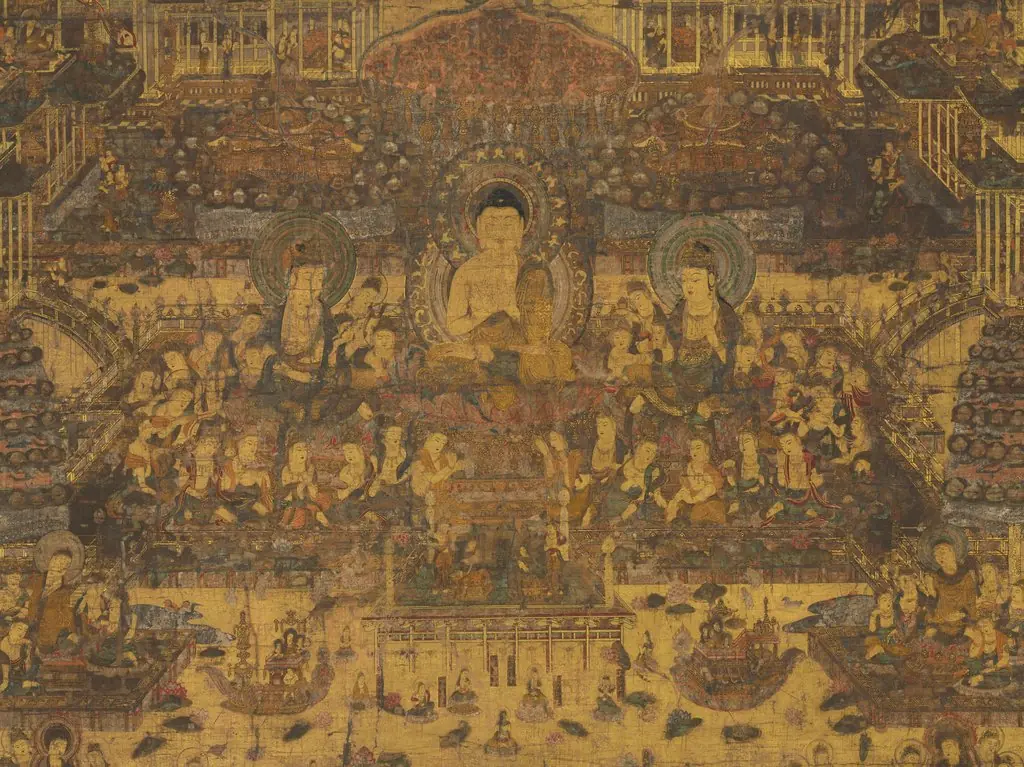 Taima Mandala