Artwork
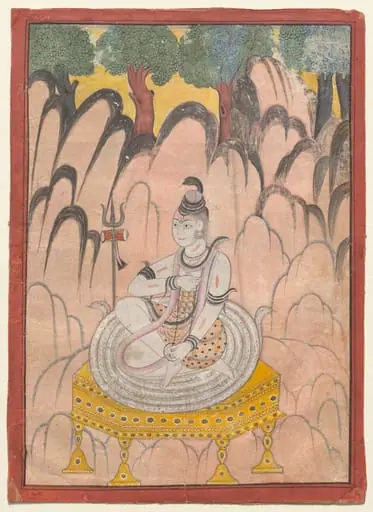
Shiva under trees
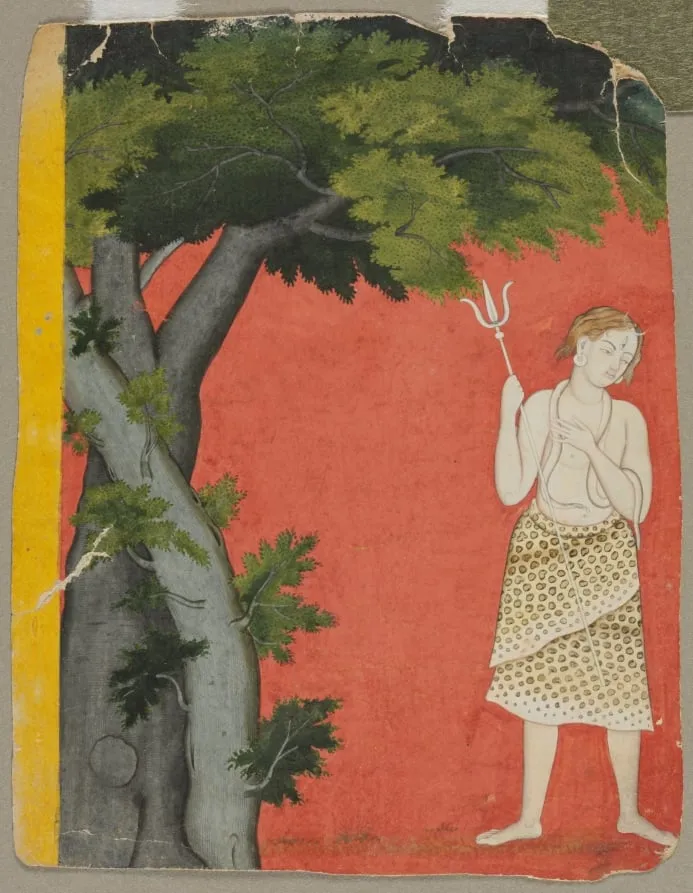
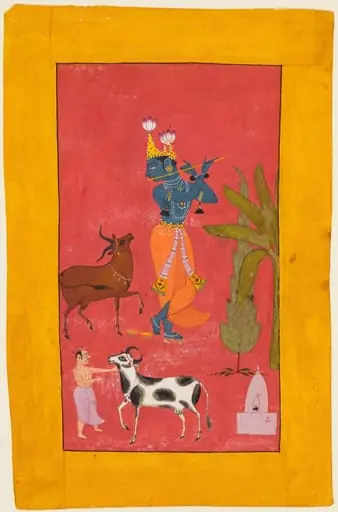
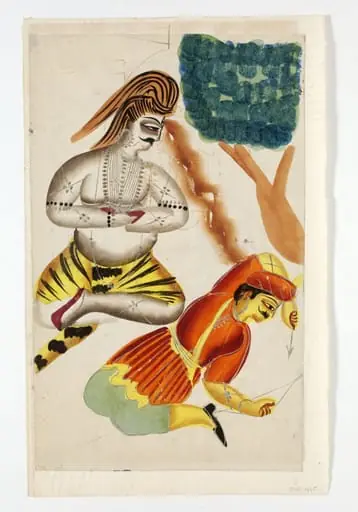
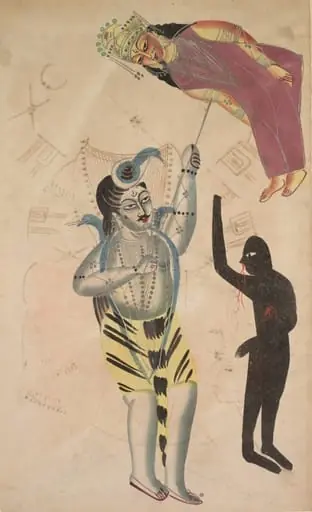
Shiva under trees is an unspecified painting by the Pahari Painting artist Unknown. It dates from 1780 and is held in the collection of the Cleveland Museum of Art. This painted fragment originates from a larger narrative scene, likely part of a series depicting Hindu deities in earthly settings.
- Accession no.
- 1960.48
- Credit line
- Mr. and Mrs. William H. Marlatt Fund
About this work
Overview
This painted fragment originates from a larger narrative scene, likely part of a series depicting Hindu deities in earthly settings.
This painted fragment originates from a larger narrative scene, likely part of a series depicting Hindu deities in earthly settings. Shiva, recognizable by his distinctive iconography, is isolated here as a solitary figure beneath twin trees. The vivid red background contrasts sharply with his pale form, drawing focus to his presence while detaching him from a detailed landscape, emphasizing his divine yet intimate appearance.
Subject & Meaning
Shiva appears in a moment of quiet contemplation, his divine attributes, third eye, crescent moon, serpent, and animal-skin garment, present but not overwhelming. The entwined trees suggest a metaphor for union or longing, subtly implying a yearning for earthly connection. His demeanor, relaxed and accessible, softens his fearsome symbolism, portraying him not as distant deity but as a figure capable of human emotion.
Technique & Style
The painting employs flat, saturated color fields, typical of Pahari miniature traditions, with minimal modeling and no perspective. Shiva’s form is rendered with fine, precise lines, while the trees are stylized into rhythmic, interlacing forms. The lack of depth enhances the symbolic nature of the scene, prioritizing spiritual meaning over naturalistic representation.
History & Provenance
This fragment likely belonged to a manuscript or album painting produced in one of the Pahari hill kingdoms during the 18th century. Such works were often commissioned by local rulers or devotional patrons. Its separation from the original composition suggests it was later removed, possibly for private collection or aesthetic appreciation, a common practice among collectors of Indian miniatures.
Context
Pahari painters frequently depicted Hindu gods in natural settings, blending devotional themes with lyrical landscapes. Shiva’s portrayal here aligns with regional interpretations that emphasized his role as both ascetic and lover. The emphasis on trees and intimacy reflects a broader trend in Himalayan art to humanize divine figures through subtle environmental symbolism.
Legacy
The fragment exemplifies how regional Indian painting traditions reimagined classical iconography with emotional nuance. Its survival as a standalone piece highlights shifting tastes in collecting, where isolated figures gained value for their aesthetic harmony rather than narrative function. It remains a key example of Pahari art’s capacity to convey spiritual depth through quiet, personal moments.
Artist & collection