Artwork
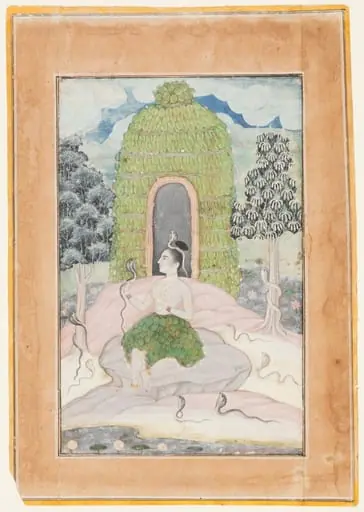
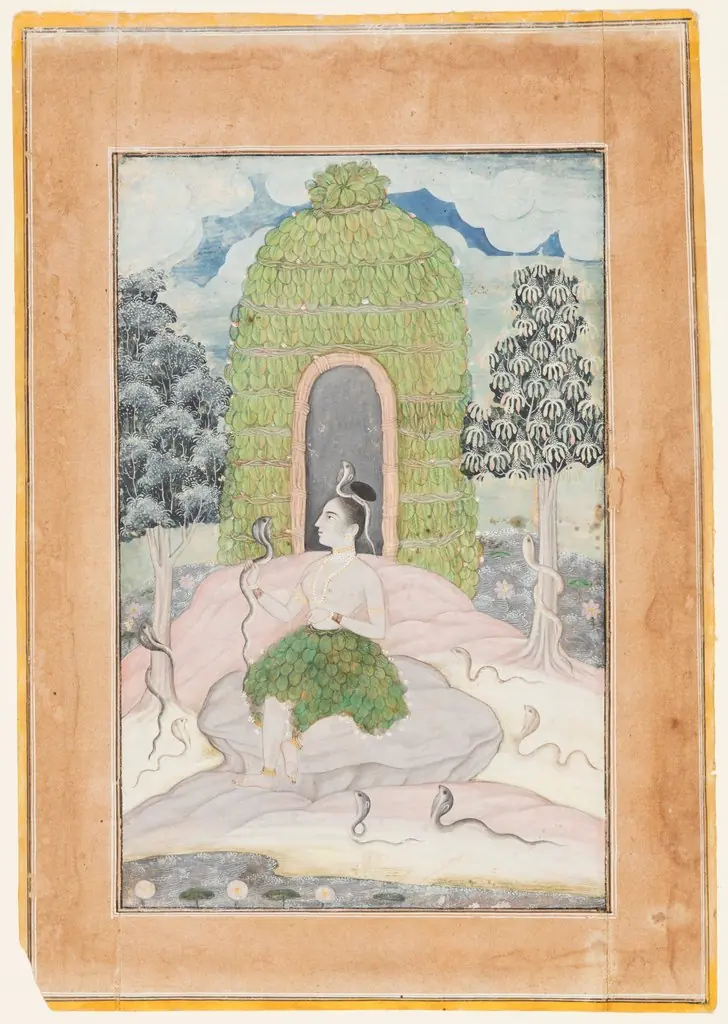
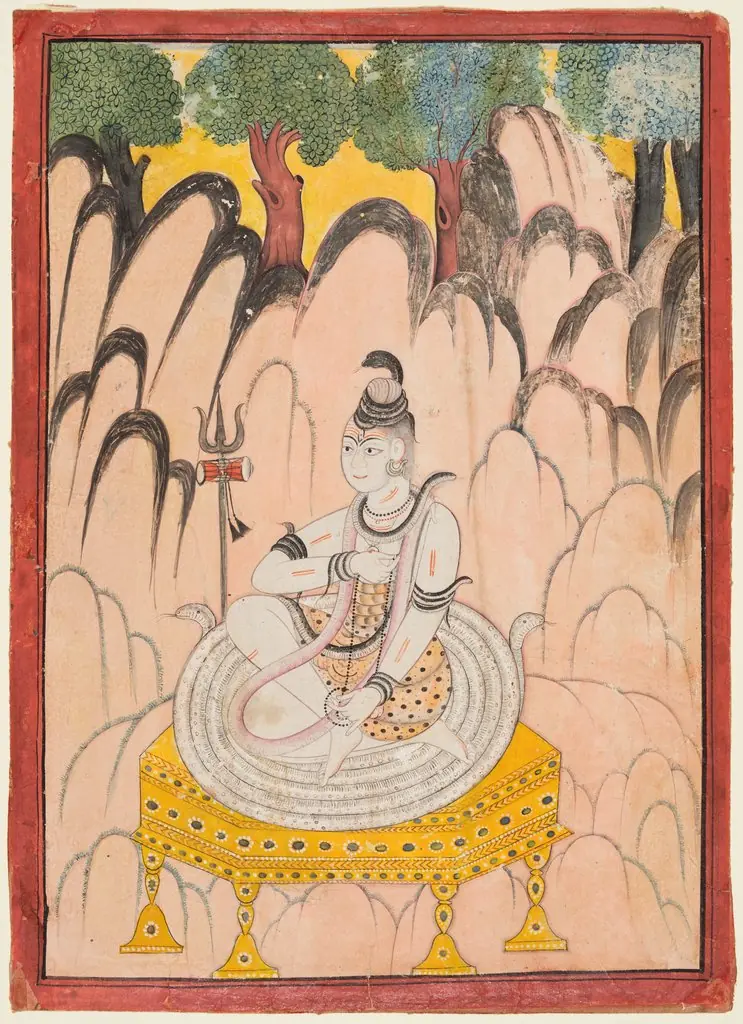
Shiva Seated on a Throne in a Landscape
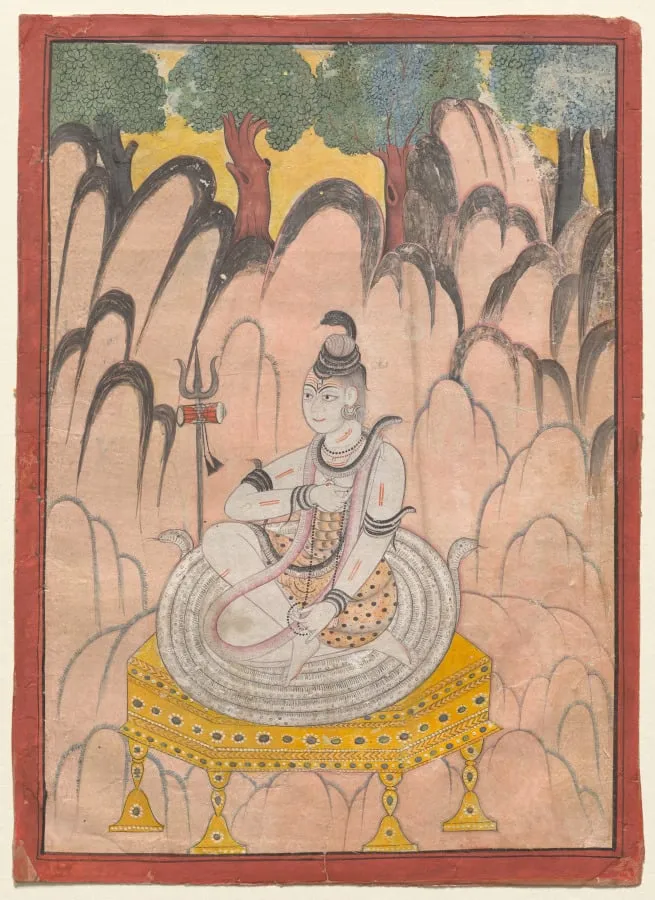
Shiva Seated on a Throne in a Landscape is an unspecified painting by the Pahari Painting artist Unknown. It dates from 1755 and is held in the collection of the Cleveland Museum of Art.
- Accession no.
- 2018.113
- Credit line
- Purchase and partial gift from the Catherine and Ralph Benkaim Collection; Severance and Greta Millikin Purchase Fund
About this work
Overview
The deity is shown seated on a throne formed by entwined snakes, set against a rugged mountain landscape with a linear row of trees.
This painting originates from the Pahari hill kingdoms of northern India, where artists maintained a consistent visual language for depicting Shiva over more than a century. The deity is shown seated on a throne formed by entwined snakes, set against a rugged mountain landscape with a linear row of trees. The composition adheres to a regional formula, emphasizing stability and tradition over innovation.
Subject & Meaning
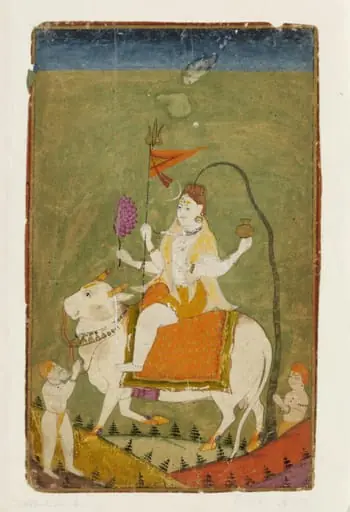
Shiva, the Hindu deity of transformation and cosmic balance, is portrayed in a meditative pose, his half-closed eyes suggesting inner stillness. The snakes beneath him symbolize his dominion over death and rebirth, while the rocky terrain reflects his association with asceticism and the wild. His white face contrasts with his blue body, distinguishing his divine nature from earthly forms.
Technique & Style
Artists employed fine brushwork and mineral pigments to render Shiva’s serene expression and the textured landscape. The use of a consistent three-quarter view, pale complexion, and stylized mountains reflects a localized aesthetic passed through generations. Color choices and compositional elements were standardized, prioritizing symbolic clarity over naturalistic detail.
History & Provenance
The painting emerged from the small royal courts of the Chamba and neighboring Pahari regions during the 17th to 19th centuries. These courts patronized artists who preserved established iconographic models, resulting in minimal stylistic change over time. The work’s continuity suggests a devotional context, likely created for private worship or courtly ritual.
Context
Within the Pahari kingdoms, religious painting served both spiritual and cultural functions. Shiva’s recurring depiction in this specific form reinforced local devotional practices and linked regional identity to broader Hindu traditions. The persistence of the style reflects a preference for inherited forms, valued as vessels of sacred continuity rather than vehicles for individual expression.
Legacy
This painting exemplifies a regional artistic tradition that endured for generations with remarkable consistency. Its visual language influenced later Pahari works and remains a reference point for understanding how devotional art in northern India preserved form across centuries. Today, such works are studied for their role in sustaining religious iconography through localized practice.
Artist & collection