Artwork
Sinan the Jew and Haireddin Barbarossa
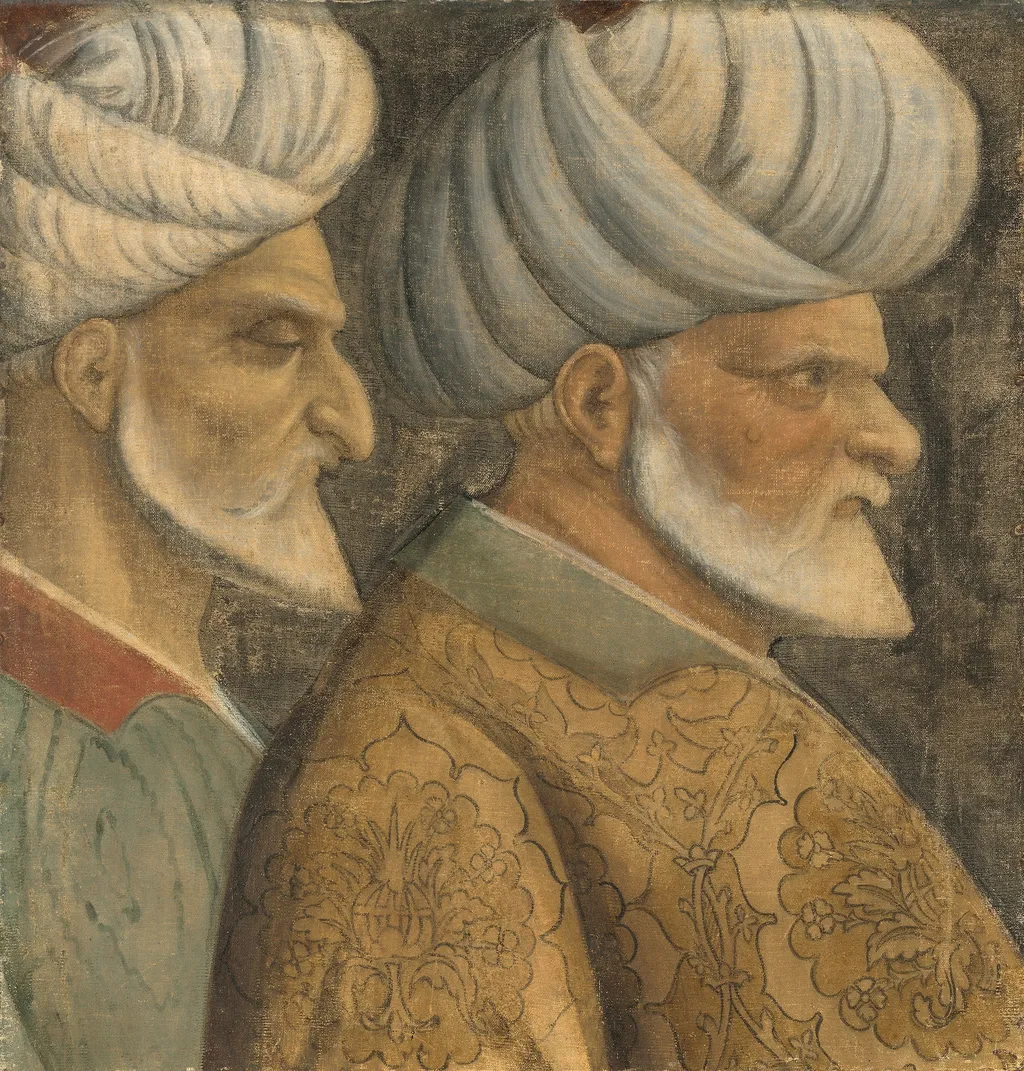
Sinan the Jew and Haireddin Barbarossa is an unspecified painting by the Mannerist artist Unknown. It dates from 1535 and is held in the collection of the Art Institute of Chicago. This painting portrays two male figures in profile, both facing right, rendered with careful attention to costume and lighting.
About this work
Overview
This painting portrays two male figures in profile, both facing right, rendered with careful attention to costume and lighting.
This painting portrays two male figures in profile, both facing right, rendered with careful attention to costume and lighting. The foreground figure wears a richly patterned gold robe, while the figure behind is clad in green. Their white turbans and beards suggest Middle Eastern or North African identity. The composition relies on chiaroscuro to model form and create spatial depth, emphasizing volume over flat decoration.
Subject & Meaning
The figures are identified as Sinan the Jew and Haireddin Barbarossa, historical figures associated with the Ottoman court. Sinan, a Jewish financier and advisor, and Barbarossa, an Ottoman admiral, represent the diverse power structures within the empire. Their side-by-side depiction may reflect political alliances or administrative collaboration, though the painting’s exact narrative context remains unconfirmed.
Technique & Style
The artist employs chiaroscuro to define the contours of the figures, using strong contrasts between light and shadow to give the forms a sculptural presence. The textures of fabric are suggested rather than meticulously detailed, favoring atmospheric effect over realism. The profile view and restrained palette contribute to a formal, almost ceremonial tone, typical of portraiture from this tradition.
History & Provenance
The painting’s origin is linked to a 16th-century Ottoman artistic milieu, though its precise date and commissioning context are undocumented. It likely emerged from a courtly workshop where artists documented key figures in the empire’s administration. Its survival suggests it was preserved within a private or institutional collection, possibly in the eastern Mediterranean or Europe.
Context
During the 16th century, the Ottoman Empire integrated diverse religious and ethnic groups into its governance, including Jewish advisors and Muslim military leaders. This painting reflects that pluralism, portraying two men of different backgrounds in positions of influence. Such portraits were rare in Ottoman art, making this work a notable example of cross-cultural representation in visual form.
Legacy
The painting stands as a rare visual record of non-royal, multi-ethnic figures in Ottoman administrative life. While not widely reproduced or studied, it contributes to scholarly understanding of how identity and authority were visually negotiated in early modern empires. Its preservation offers insight into the visual culture of a pluralistic court beyond official imperial imagery.
Artist & collection









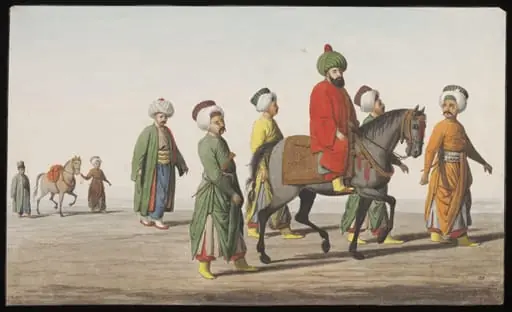 Kaymakam, or Govenor of Istanbul
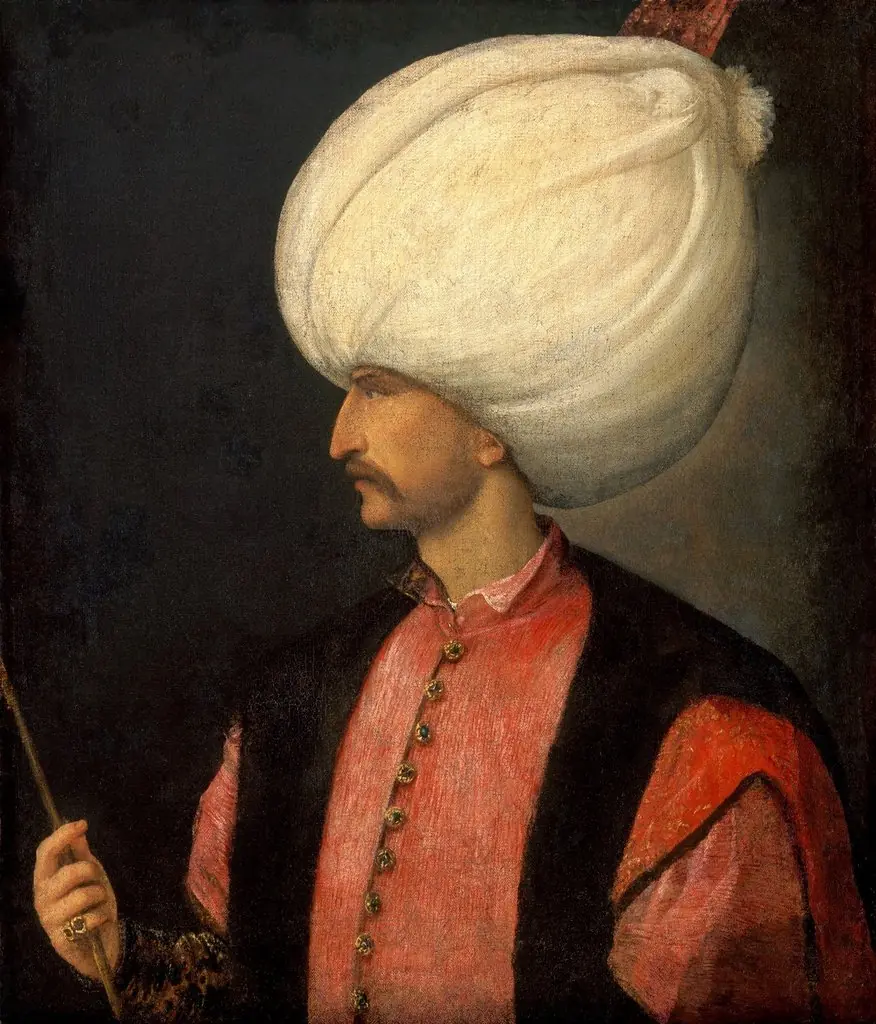 Sultan Suleiman in profile
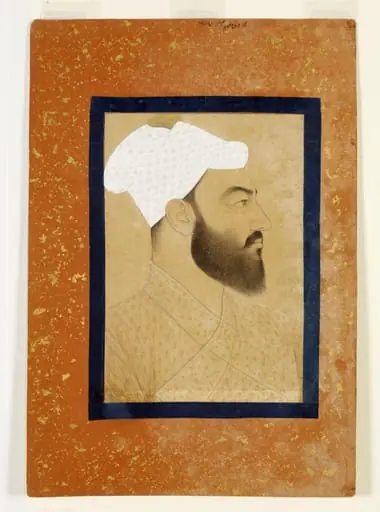 Bahadur Shah I
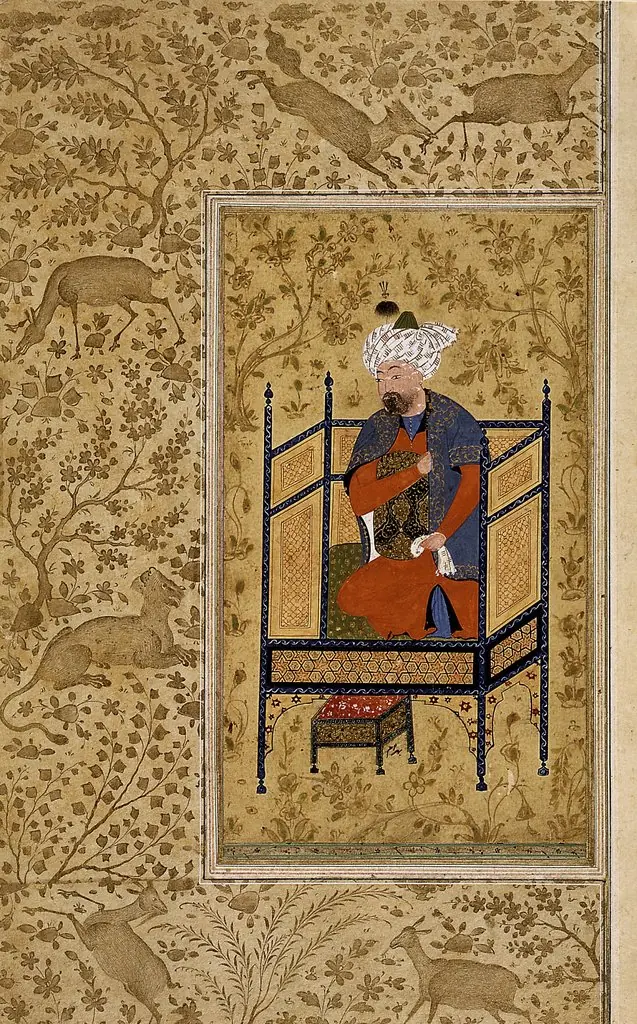 Album Page with Illustrated Margins
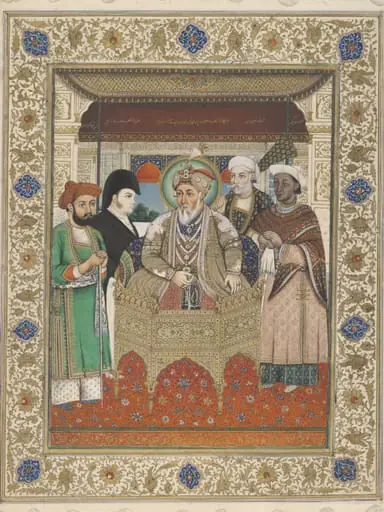 Portrait of Akbar II with Sir Charles Theophilus Metcalf and court dignitaries
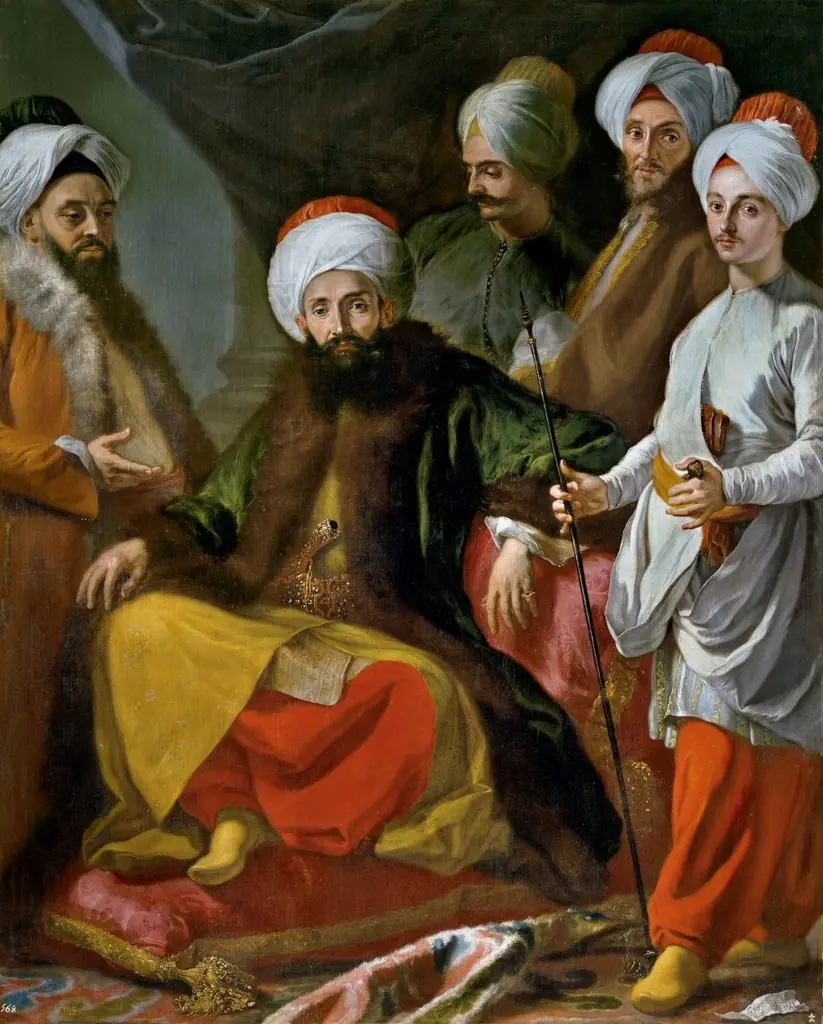 The Turkish Embassy in Naples
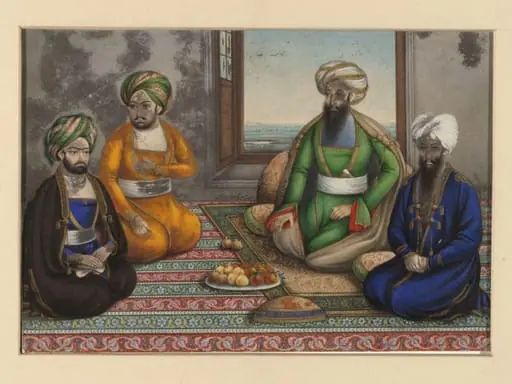 Dost Muhammad (d.1863), Amir of Afghanistan, with his three sons, Muhammad Akram Khan, Haidar Khan and Abdul Ghani Khan, seated on a carpet
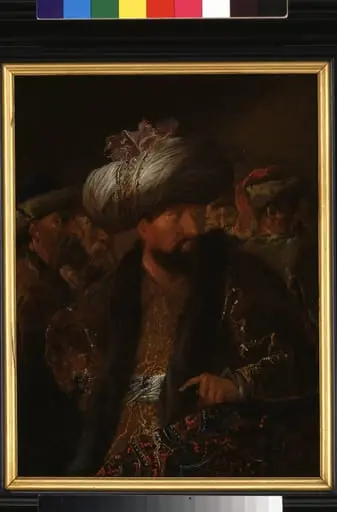 En samling tyrkiske mænd
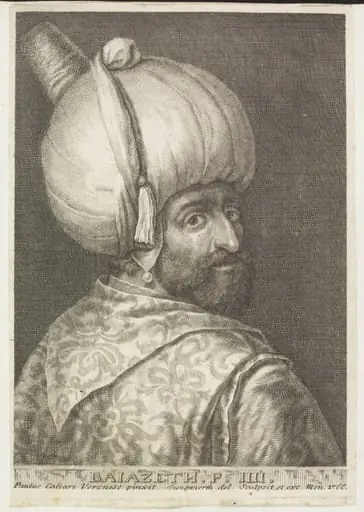 Turkish sultans, sultanas and other historical figures
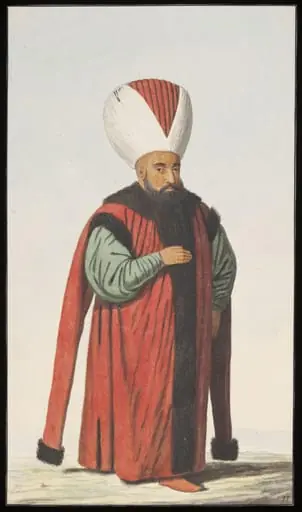 Reis Efendi or Minister