Artwork
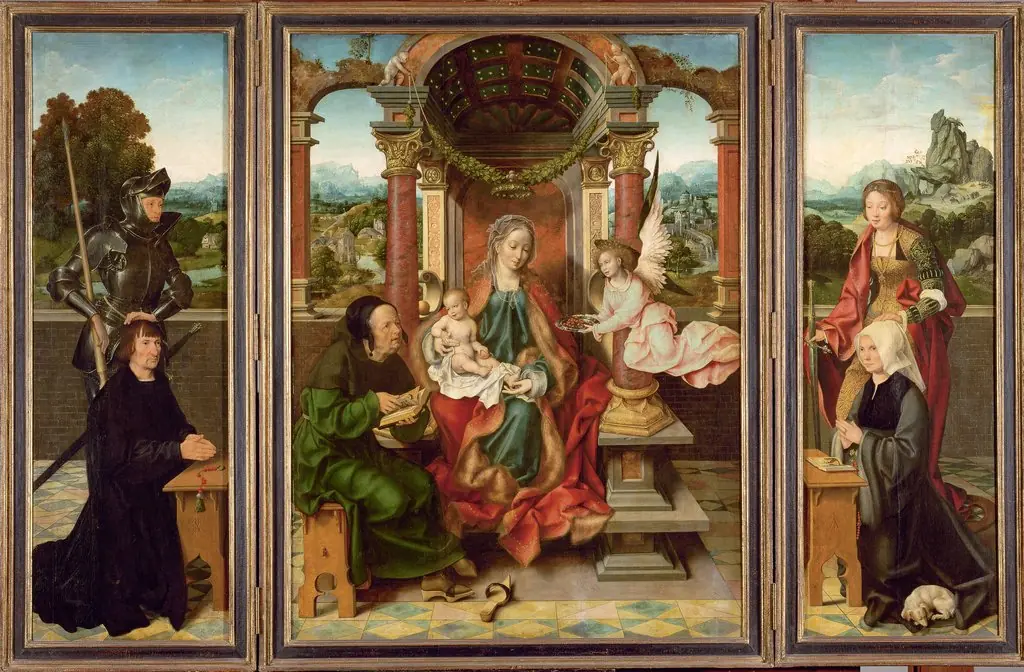
Triptych with the Virgin and Child and saints (centre panel), the donor with St Martin (inner left wing), the donor’s wife with St Cunera (inner right wing) and the Annunciation (outer wings)
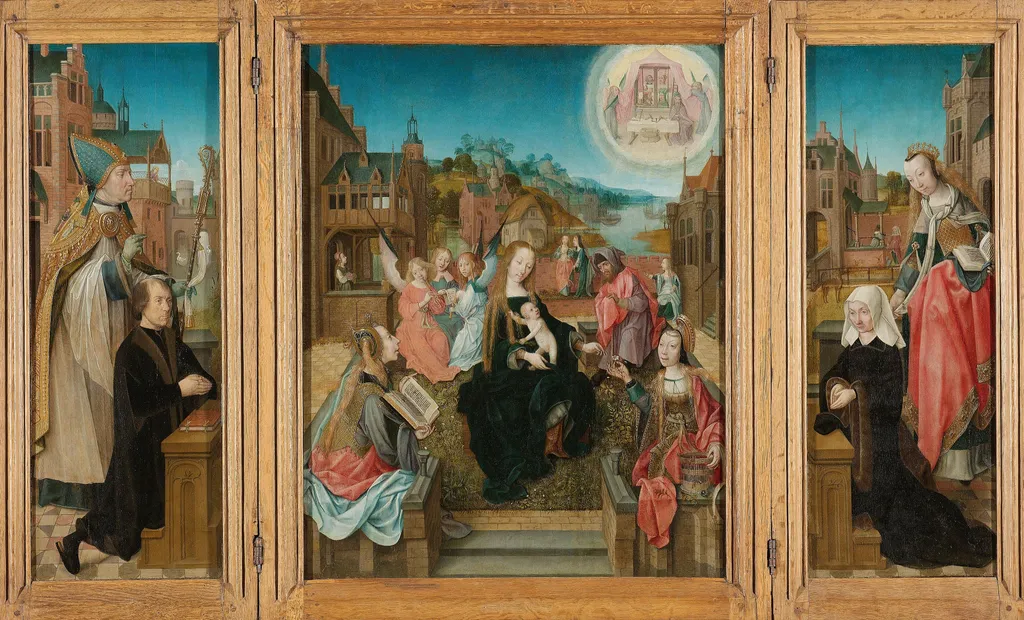
Triptych with the Virgin and Child and saints (centre panel), the donor with St Martin (inner left wing), the donor’s wife with St Cunera (inner right wing) and the Annunciation (outer wings) is an oil painting by the Northern Renaissance artist Master of Delft. It dates from 1500 and is held in the collection of the Rijksmuseum.
About this work
Technique & Style
Executed around 1500 by the Master of Delft, this religious triptych is created using oil paint on a panel support.
Executed around 1500 by the Master of Delft, this religious triptych is created using oil paint on a panel support. The work functions as a devotional object, featuring a central depiction of the Virgin and Child flanked by saints and donor portraits, with an Annunciation scene reserved for the outer wings.
The physical structure comprises panels measuring 86.5 cm in height and 31.5 cm in width. As a piece of Burgundian splendor, the painting utilizes the luminous potential of oil medium to render its sacred figures and narrative details within a format designed for both display and closure.
History & Provenance
The triptych was commissioned in the early sixteenth century by a donor couple for private devotion, reflecting contemporary Burgundian piety and artistic patronage. Painted circa 1500 by the Master of Delft, the work remained in the family’s possession before entering the collection of the Rijksmuseum and the Museum Catharijneconvent, where it is presently housed. Its creation history is documented through stylistic analysis and archival records linking the piece to the Master’s workshop in Delft, establishing its date and attribution.
Overview
Created in 1500, this oil‑on‑panel triptych belongs to the Northern Renaissance and is attributed to the anonymous Master of Delft, an artist active in the Low Countries between roughly 1490 and 1520. The work is composed of a central image of the Virgin and Child with saints, two inner wings showing donor portraits with their patron saints, and outer wings illustrating the Annunciation. It is part of the Rijksmuseum’s collection.
Subject & Meaning
The central panel presents the Virgin enthroned with the infant Christ, surrounded by a group of saints whose identities are suggested by their attributes. On the inner left wing, the city’s burgomaster Dirck Dircksz van Beest Heemskerck appears beside Saint Martin, while the inner right wing shows his wife accompanied by Saint Cunera. The outer wings frame the narrative with scenes of the Angel Gabriel’s announcement to Mary, linking the donors’ piety to the biblical episode.
Context
The piece reflects the transitional phase of Dutch art at the turn of the 16th century, when the detailed realism of the Early Netherlandish tradition began to merge with emerging Renaissance influences. The presence of donor portraits alongside saints follows a common practice of the period, emphasizing personal devotion and social status.
Own this work as a print
Artist & collection
Artist
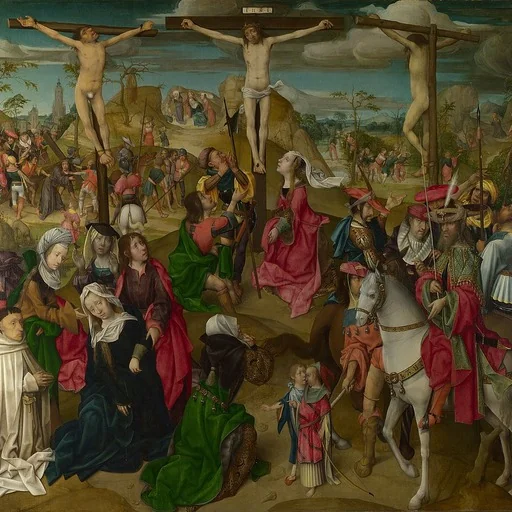
The Master of Delft (fl c. 1490–1520) was a Dutch painter of the final period of Early Netherlandish painting, whose name is unknown. He may have been born around 1470. The notname was first used in 1913 by Max Jakob…

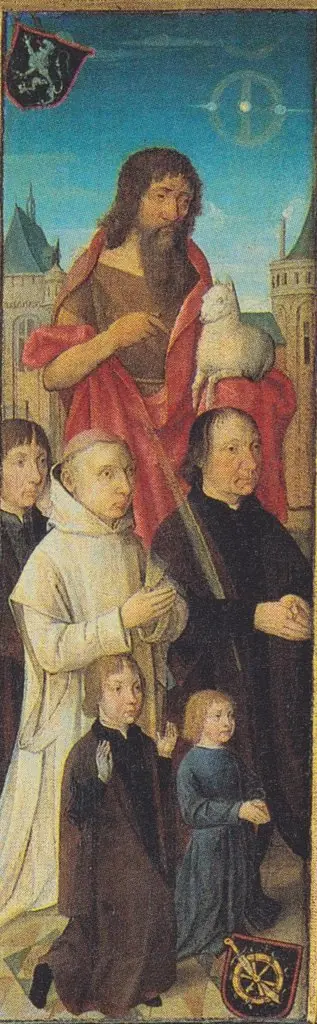
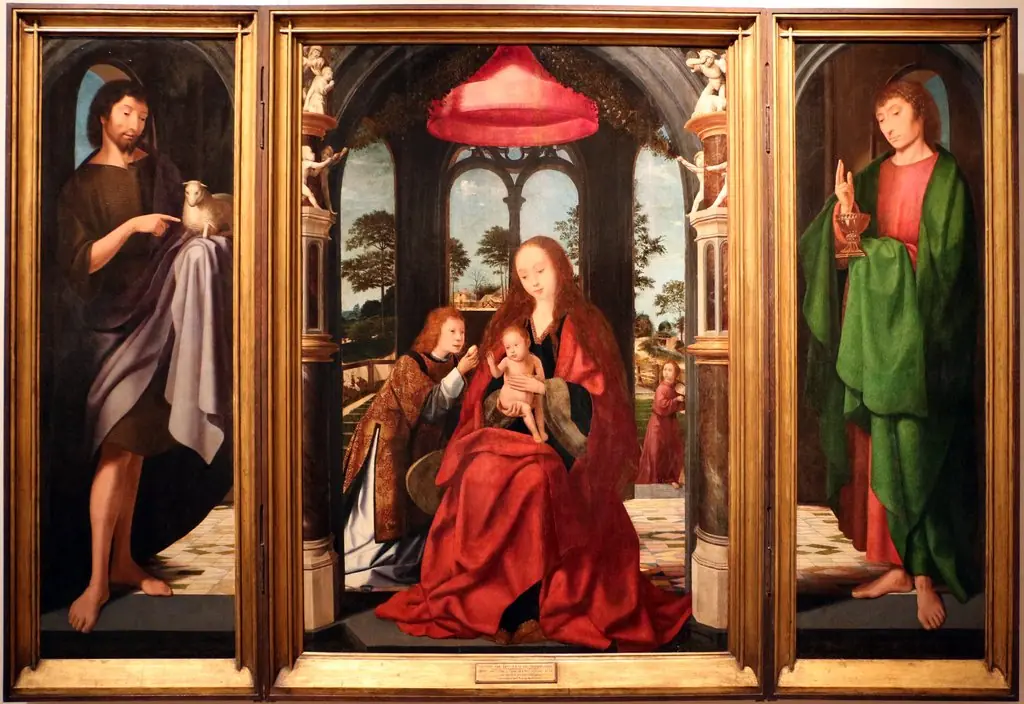 Triptych of the Virgin with the Child and Angels, St. John the Baptist and St. John the Evangelist
 Winged Altar
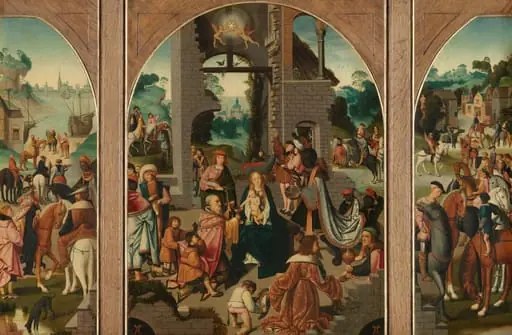 Triptych with Adoration of the Magi (center and inner wings), Saint Antony Abbot (left, outer wing) and Saint Adrian (right, outer wing)
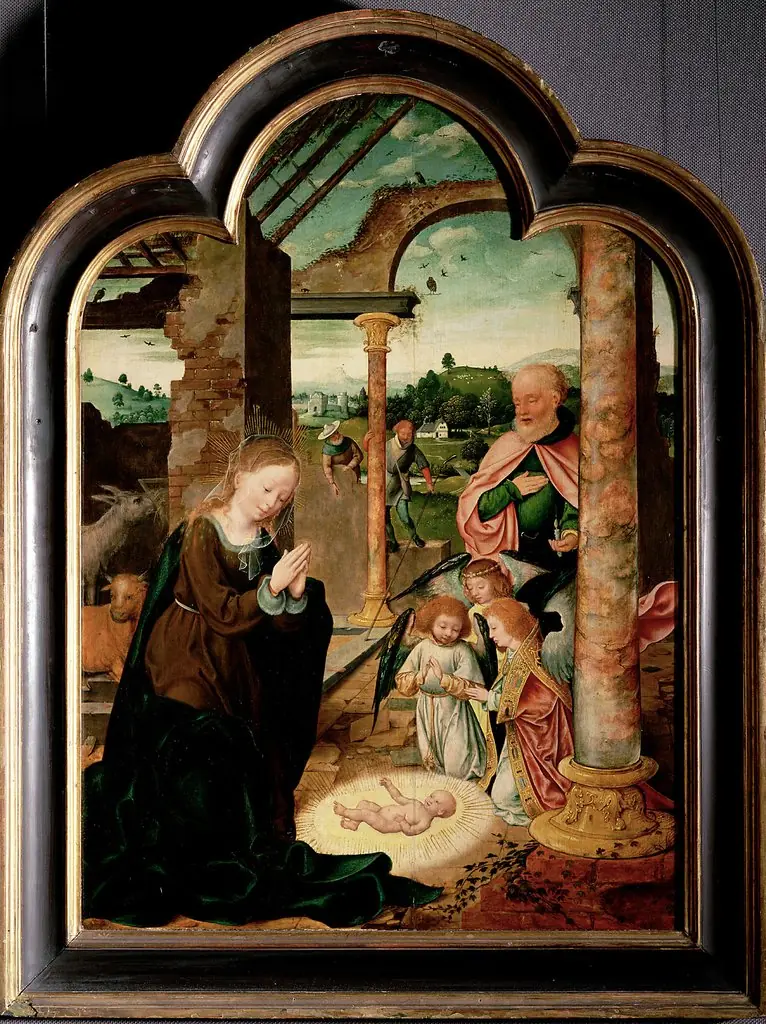 The Birth of Christ
![Altarpiece showing scenes from the Infancy of Christ: The Adoration of the Magi [center]; The Annunciation; The Presentation of Christ in the Temple; The Flight into Egypt; The Nativity [clockwise from upper left], by Master of Hoogstraeten](https://artifactworldgallery.com/img/master-of-hoogstraeten--altarpiece-showing-scenes-from-the-infancy-of-christ-the-ado--6a236bfea3373486-w320.webp) Altarpiece showing scenes from the Infancy of Christ: The Adoration of the Magi [center]; The Annunciation; The Presentation of Christ in the Temple; The Flight into Egypt; The Nativity [clockwise from upper left]
Altarpiece showing scenes from the Infancy of Christ: The Adoration of the Magi [center]; The Annunciation; The Presentation of Christ in the Temple; The Flight into Egypt; The Nativity [clockwise from upper left]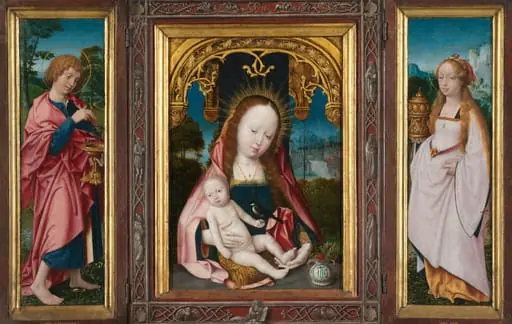 Triptych with Virgin and Child, Saint John the Evangelist (left wing) and Mary Magdalene (right wing)
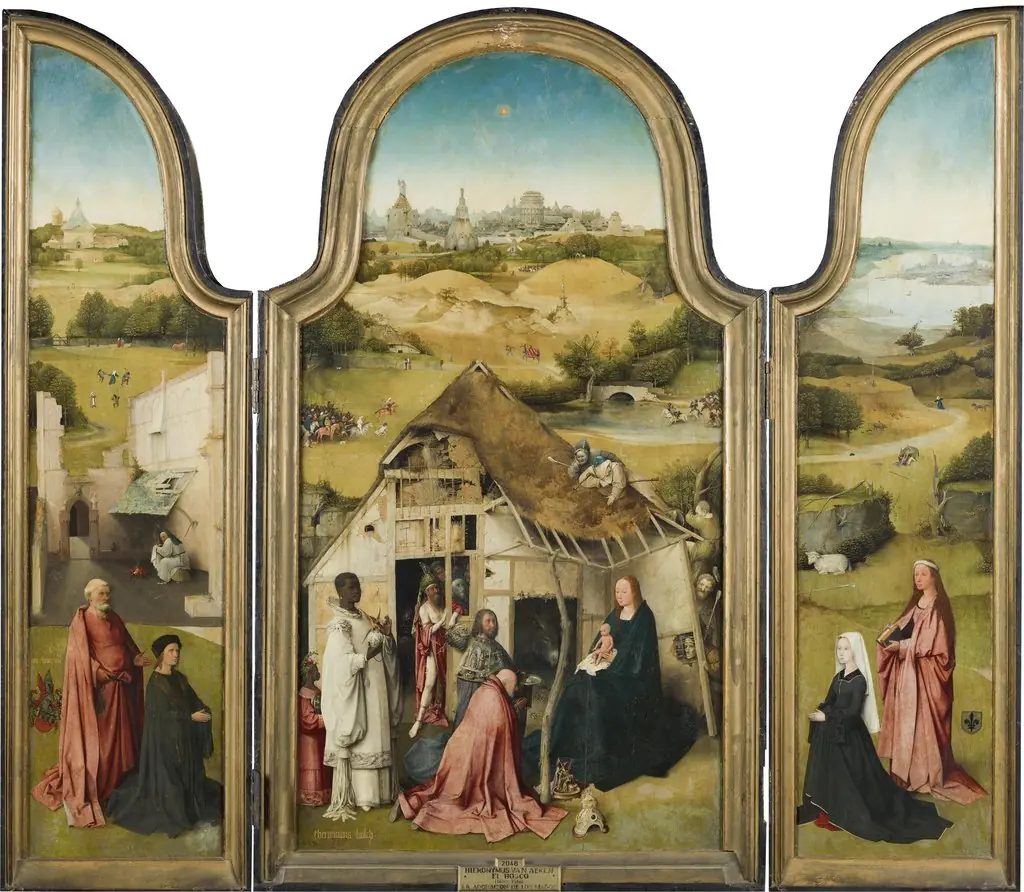 The Epiphany
 Our Lady of the Snows
 The mystic marriage of Saint Catherine