Artwork
The great hall in the Hradschin in Prague
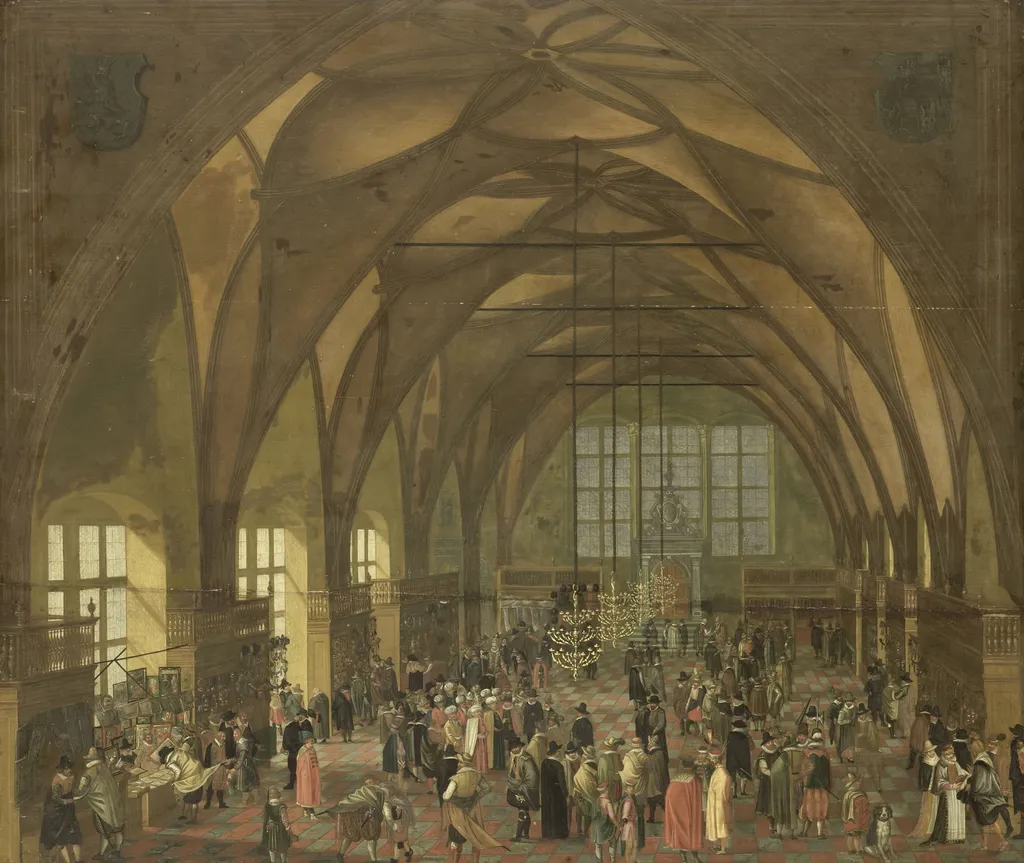
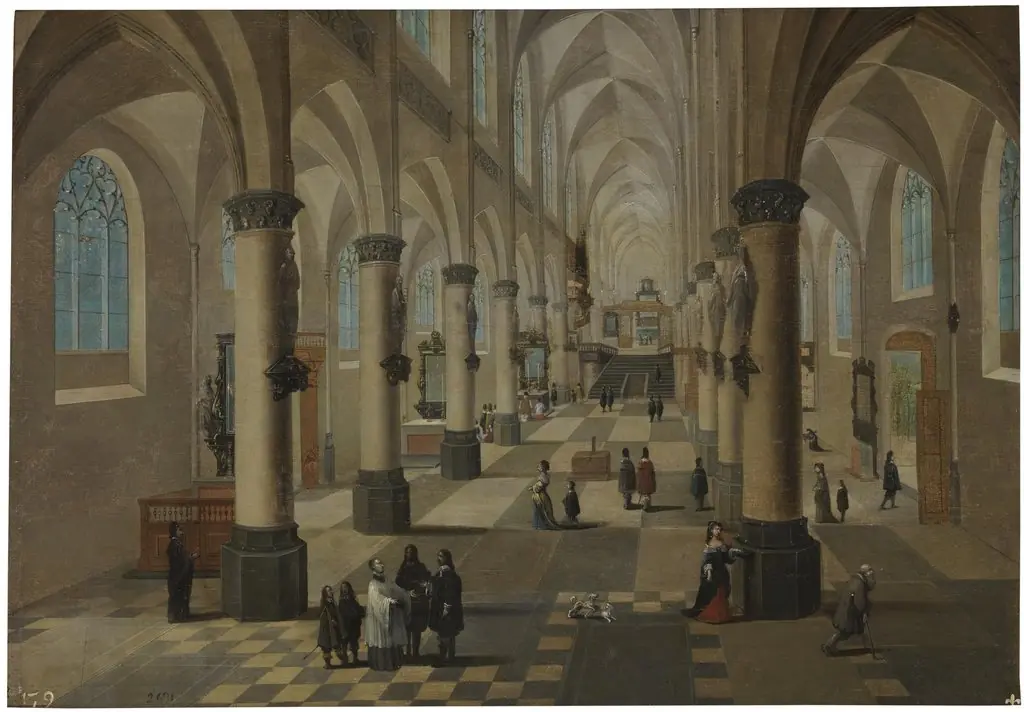
The great hall in the Hradschin in Prague is an oil painting by the Northern Renaissance artist Unknown. It dates from 1611 and is held in the collection of the Rijksmuseum.
About this work
Technique & Style
The handling is fine and controlled, with minimal visible brushwork, emphasizing clarity and spatial illusion over expressive gesture.
The painting The great hall in the Hradschin in Prague was executed in oil paint on a wooden panel support. Dating to 1611, it measures 66 cm in height and 76.5 cm in width. The medium’s luminous, layered glazes allow the artist to render intricate architectural details, such as vaulted ceilings, ornamental stonework, and perspectival recession, with precision and depth.
Stylistically, the work aligns with early seventeenth-century Netherlandish architectural painting, favoring meticulous draftsmanship, cool tonal harmonies, and a restrained palette. The handling is fine and controlled, with minimal visible brushwork, emphasizing clarity and spatial illusion over expressive gesture.
History & Provenance
The painting The great hall in the Hradschin in Prague is held in the collection of the Rijksmuseum in Amsterdam. The work, dated to 1611, is an anonymous oil-on-panel architectural painting measuring 66 cm in height and 76.5 cm in width. While the current institution is the Rijksmuseum, the provenance records indicate the work was previously owned by Cornelia Elisabeth Anna de Lange. The sources do not provide specific accession numbers or a detailed chronological exhibition history for this piece.
Overview
The canvas depicts an expansive hall within Prague’s Hradčany complex, its lofty vaulted ceiling and tall windows admitting abundant daylight. A checkerboard floor stretches beneath a central chandelier that diffuses light across the space. Figures in elaborate attire populate the scene, some gathered in conversation, others moving through the room, while a few children engage in play, conveying a lively social atmosphere.
Subject & Meaning
The work captures a moment of aristocratic or courtly life, emphasizing the grandeur of the setting and the interaction of its occupants. The juxtaposition of formal gatherings with informal child’s play suggests a layered social hierarchy, while the architectural splendor underscores the power and cultural significance of the venue within the Bohemian capital.
Context
The scene reflects the baroque fascination with opulent interiors and the social rituals of the European elite during the period when Hradčany functioned as a royal residence. The inclusion of children and varied social interactions aligns with contemporary genre paintings that sought to portray both the splendor and everyday life of courtly environments.
Artist & collection









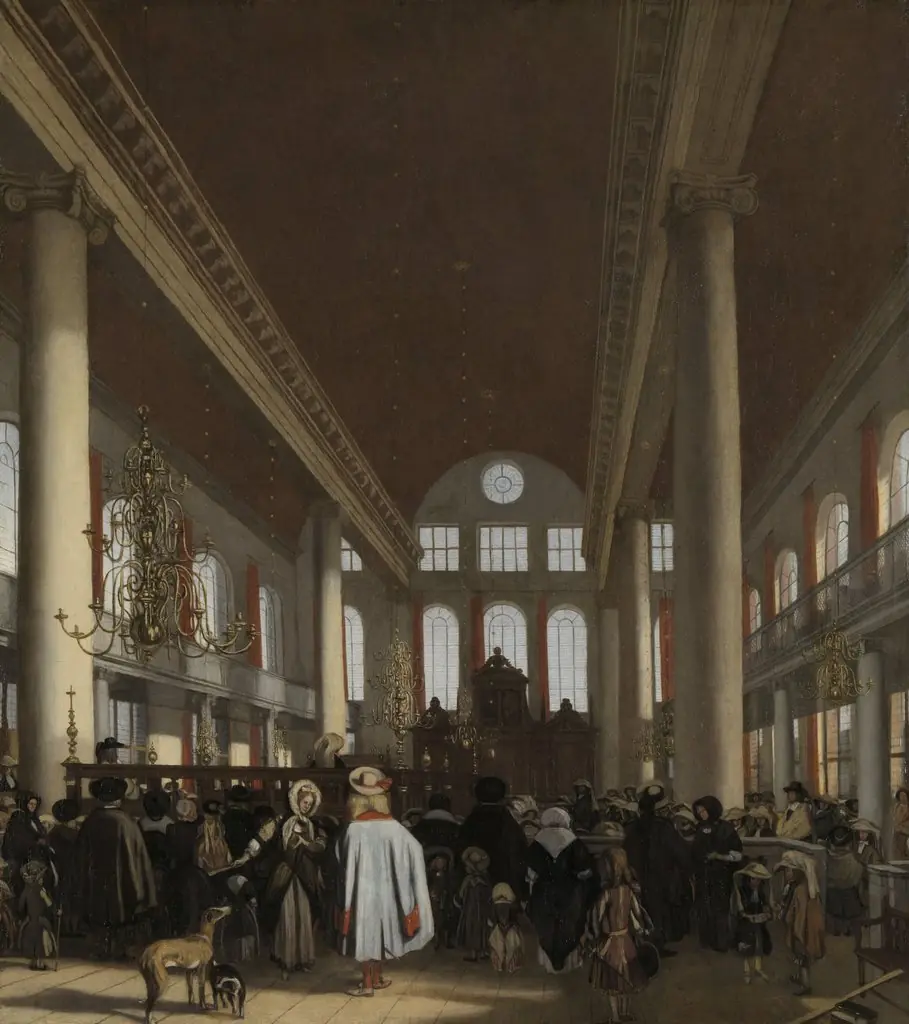 Interior of the Portuguese synagogue in Amsterdam
 The Interior of the Dominican Church, Antwerp, Looking East, with the Procession of the Holy Sacrament
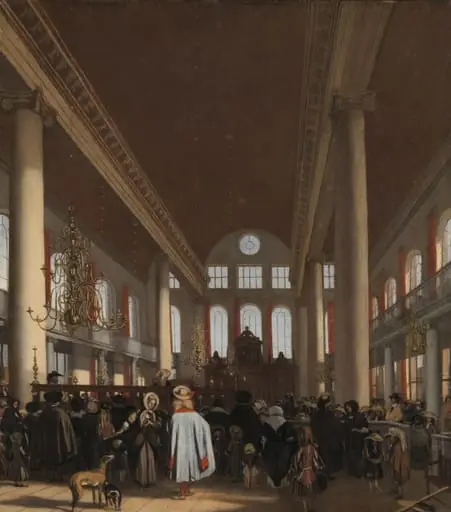 Interior of the Portuguese Synagogue in Amsterdam
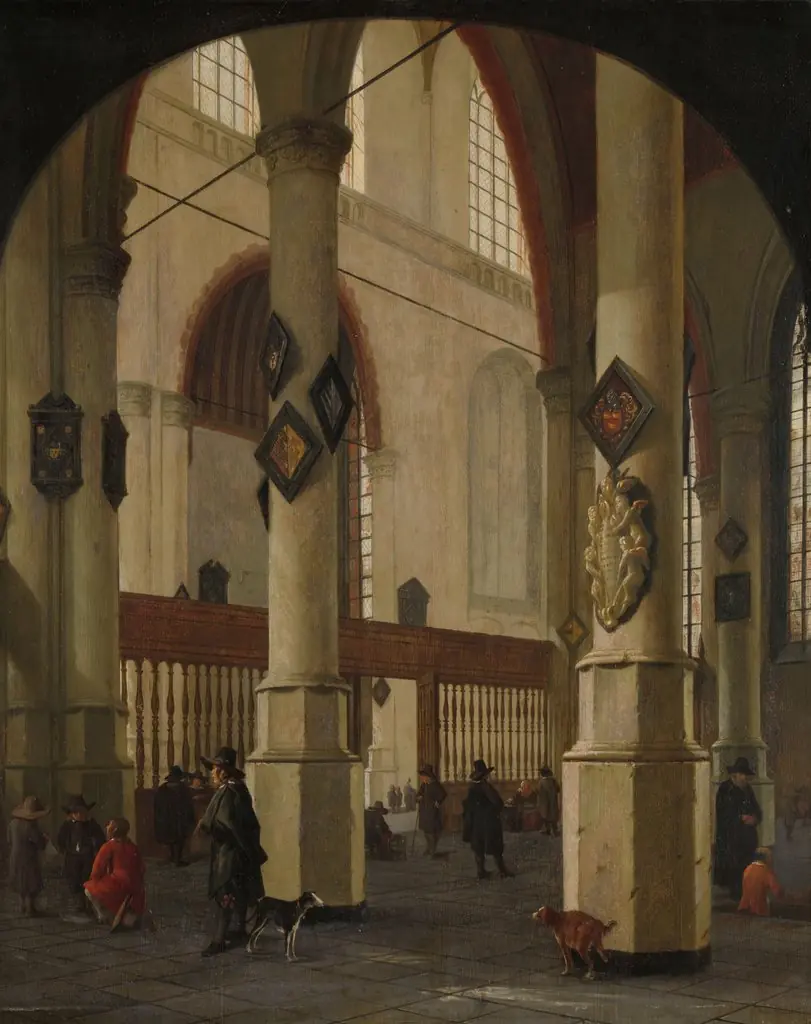 View in the Oude Kerk, Delft
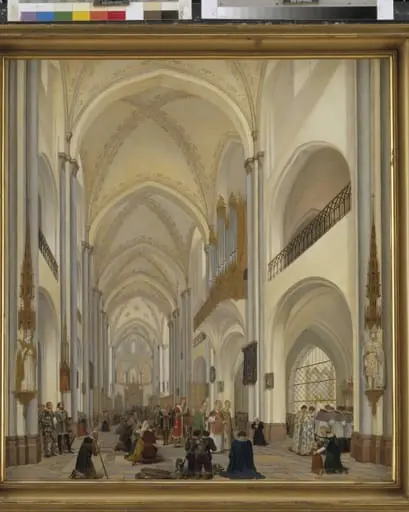 The Interior of Roskilde Cathedral
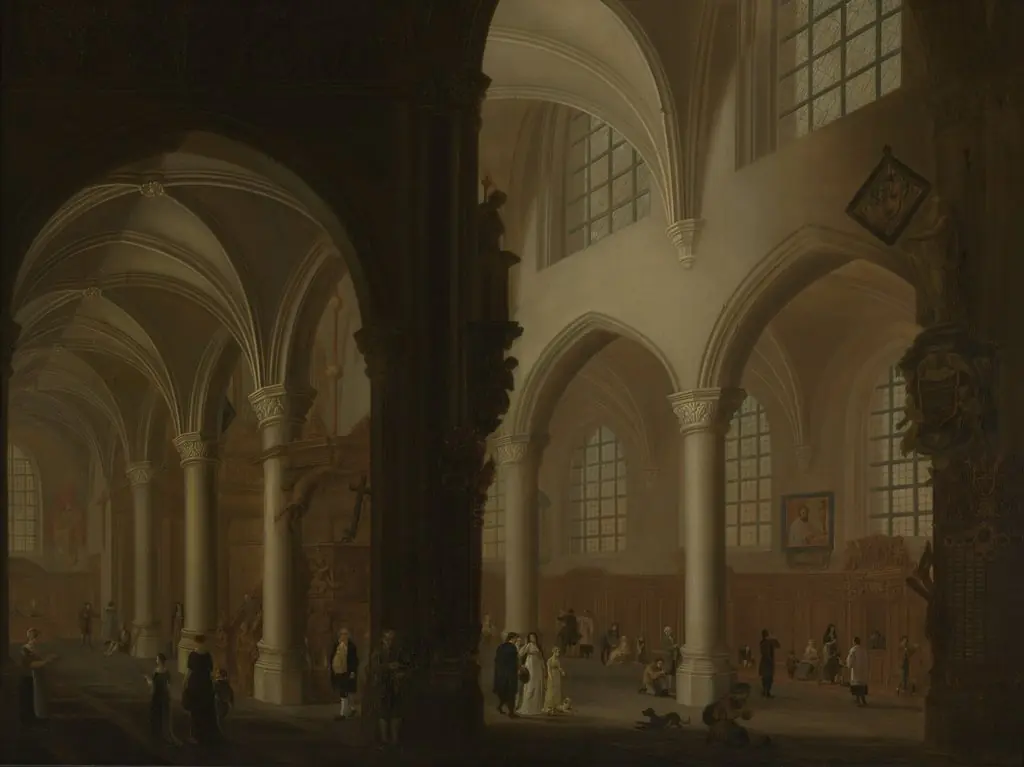 Interior of the Former Church of Saint George in Antwerp
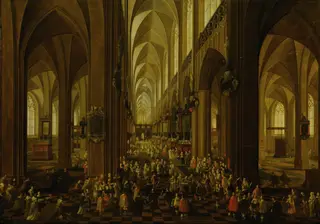 Interior of the Cathedral of Our Lady of Antwerp (Archduke Leopold Wilhelm received by the clergy)
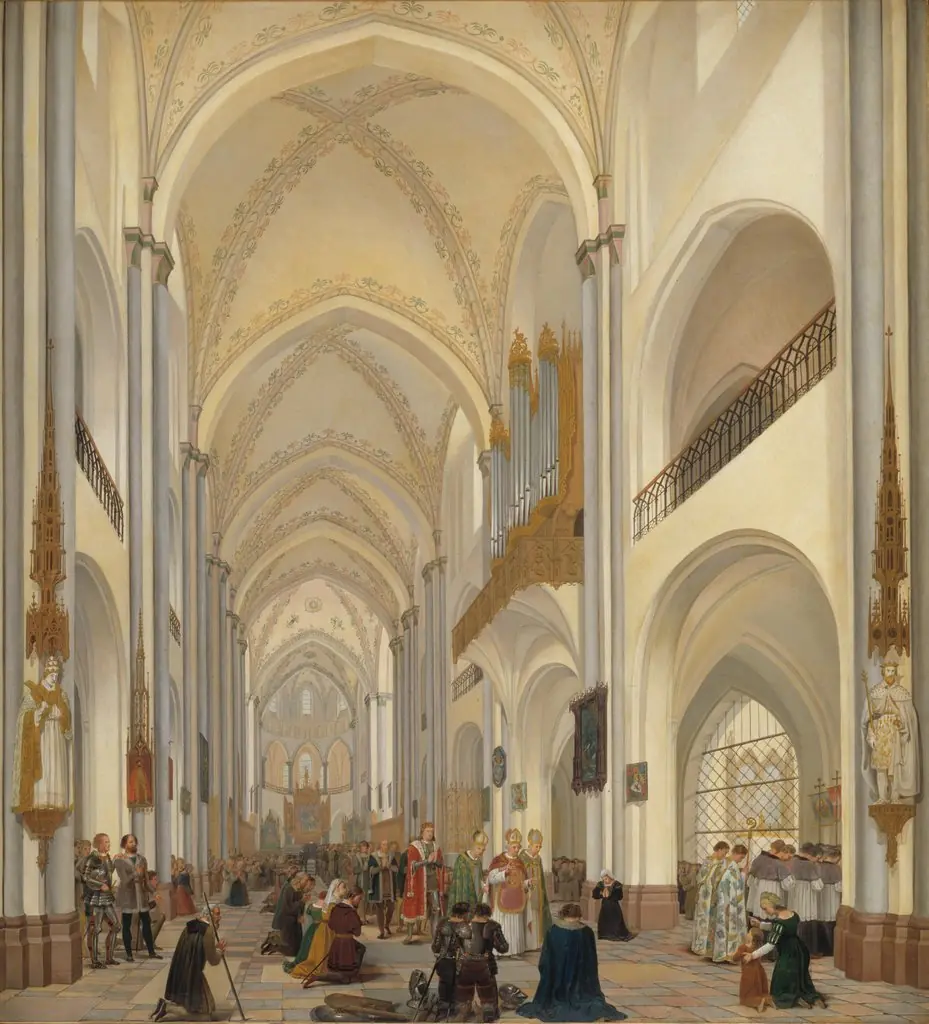 Det indre af Roskilde Domkirke
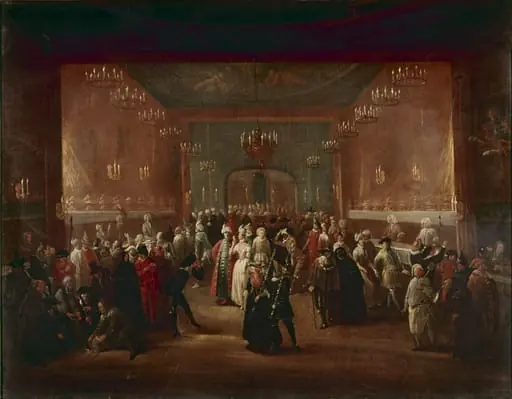 A Masquerade at the King's Theatre, Haymarket
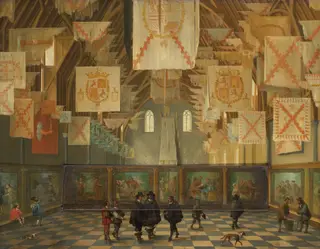 The Great Assembly of 1651
 Interior of a church in Flanders
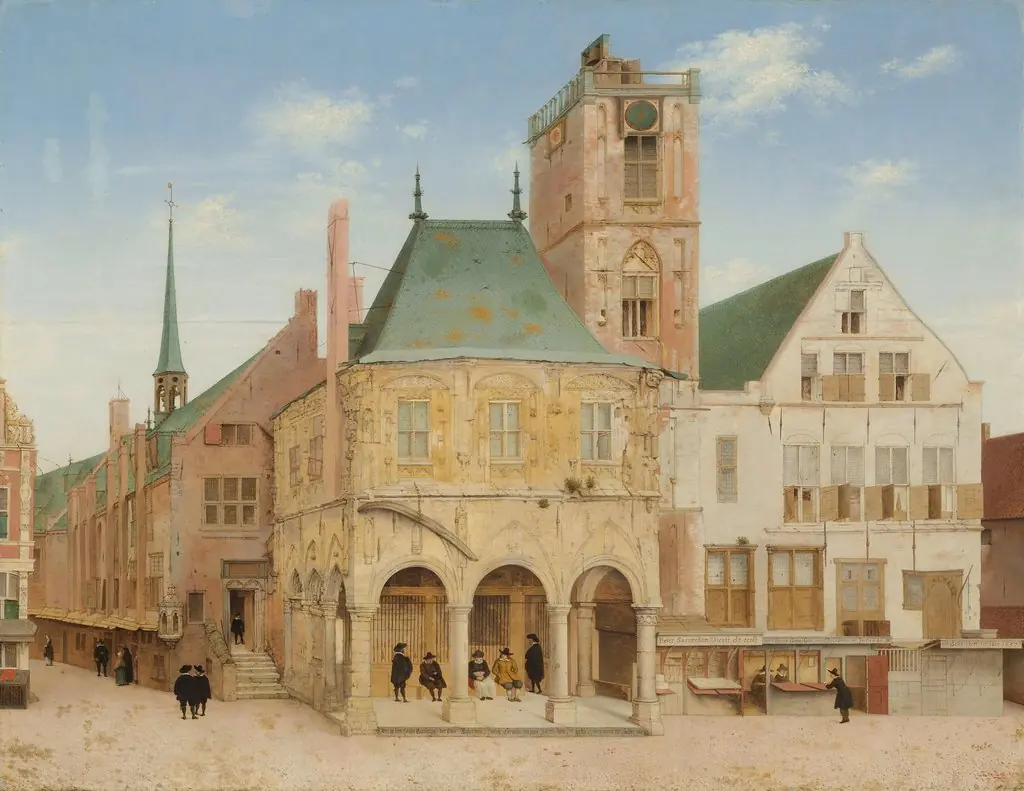
- The Old Town Hall of Amsterdam