Artwork
The infant son of the king of Isfahan responds to music, from a Tuti-nama (Tales of a Parrot): Thirteenth Night
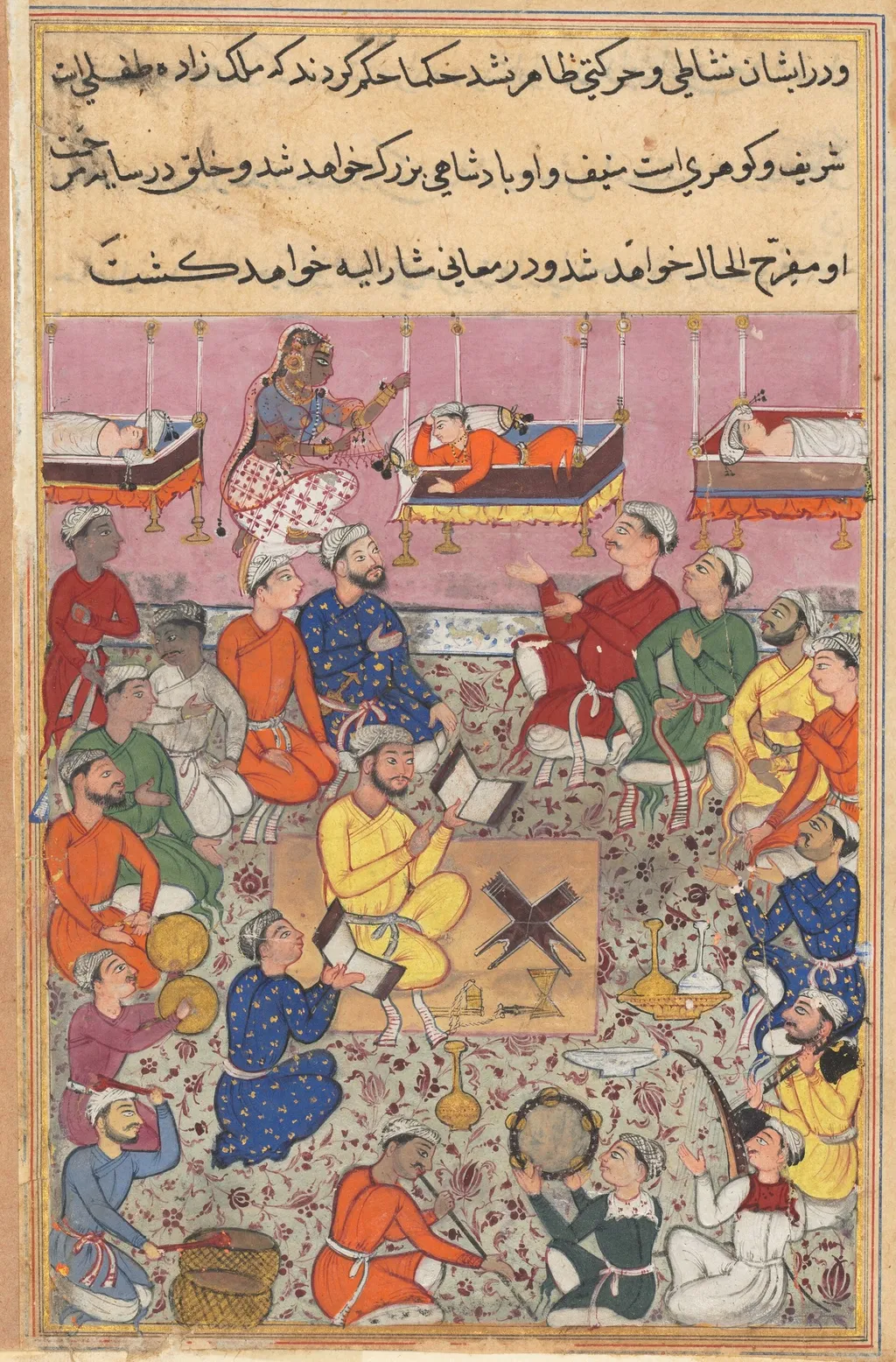
The infant son of the king of Isfahan responds to music, from a Tuti-nama (Tales of a Parrot): Thirteenth Night is an unspecified painting. It dates from 1560 and is held in the collection of the Cleveland Museum of Art.
About this work
Subject & Meaning
The child's attentive posture underscores innocence and the courtly value placed on aesthetic education.
The miniature depicts the infant heir of the Isfahan monarch reacting to music, a visual metaphor for youthful responsiveness and the transmission of royal refinement. The child's attentive posture underscores innocence and the courtly value placed on aesthetic education. As part of the Tuti-nama, the scene illustrates a didactic narrative in which sound nurtures moral and intellectual growth, reflecting Safavid ideals of harmonious governance and cultural sophistication.
Technique & Style
The painting is executed in tempera and ink on paper, employing fine brushwork to delineate figures and intricate decorative patterns. The composition centers the infant king reacting to musical instruments, rendered with delicate line and muted palette characteristic of Mughal manuscript illumination. The handling of space emphasizes narrative flow, while stylistic elements reflect Persian artistic conventions adapted within the Mughal context.
History & Provenance
The painting, titled The infant son of the king of Isfahan responds to music, from a Tuti-nama (Tales of a Parrot): Thirteenth Night, was created in 1560 within the Mughal Empire. The work is attributed to an unknown artist. It is currently held in the collection of the Cleveland Museum of Art, where it is cataloged under the accession number 1962.279.105.a.
The museum acquired the piece in 1962, though the specific details regarding its commission or the chain of ownership prior to its arrival at the institution are not detailed in the provided records.
Overview
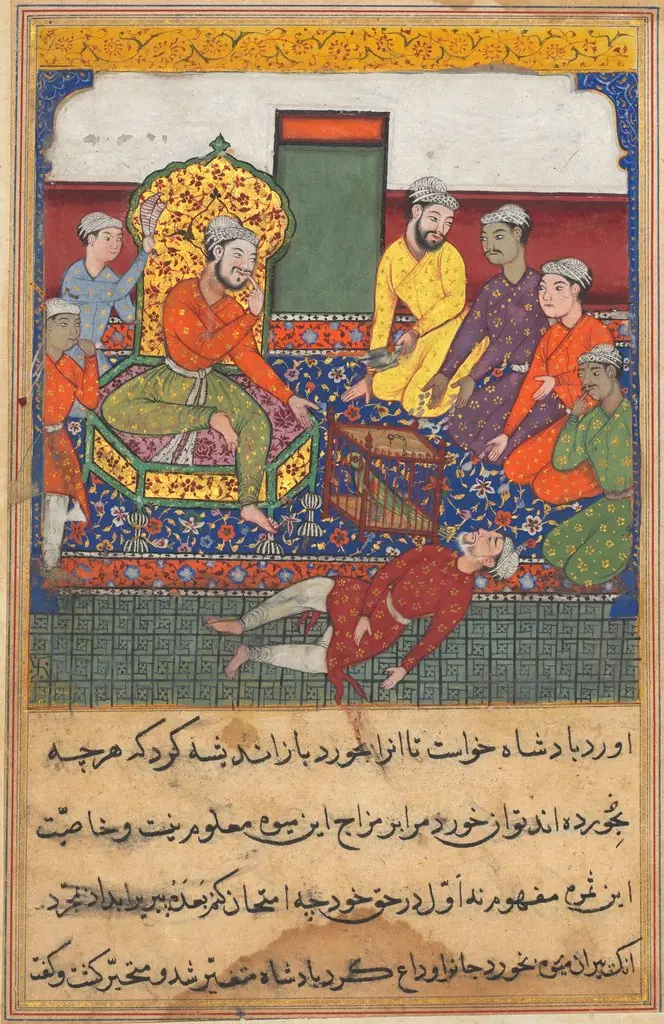
The work, titled The infant son of the king of Isfahan responds to music, from a Tuti‑nama (Tales of a Parrot): Thirteenth Night, is a miniature painting that captures a lively interior scene inside a tent. A central figure in a yellow garment sits cross‑legged, holding a small book and a cross‑shaped instrument, while a crowd of vividly dressed men and women surround him, some playing music, others gesturing or conversing.
Context
The Tuti‑nama combined moral instruction with entertaining stories, often featuring animals and royal figures. This scene reflects the cultural emphasis on music and scholarly instruction within the royal household, illustrating how courtly education was presented as a communal, multisensory experience for both children and adults.
Artist & collection

- The infant son of the king of Isfahan responds to music, from a Tuti-nama (Tales of a Parrot): Thirteenth Night
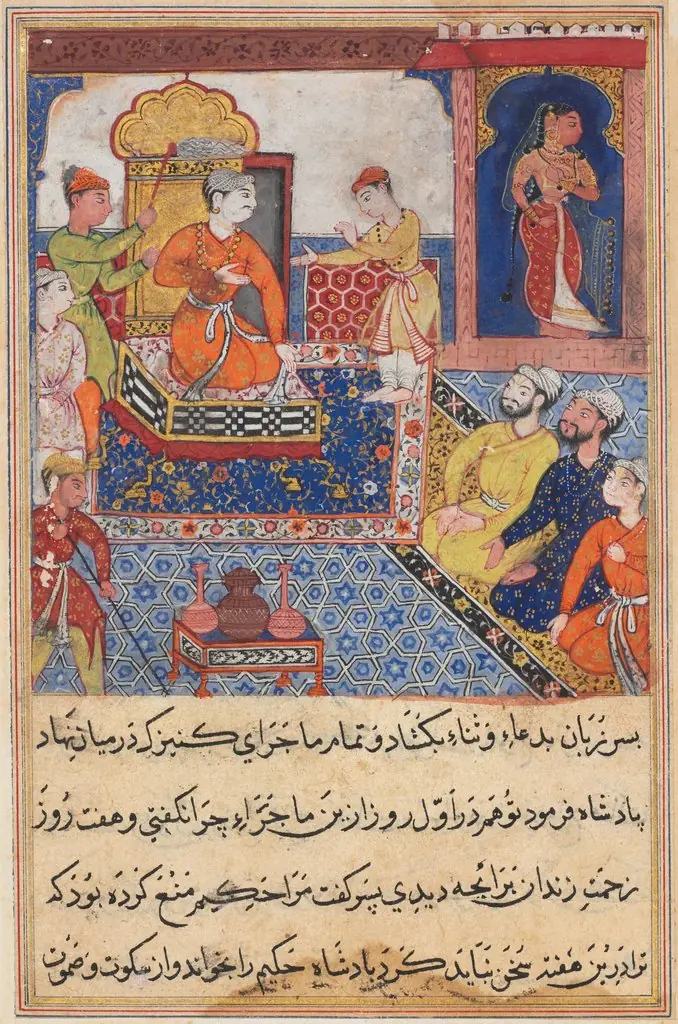 The young prince recounts his experiences to his father, the king, from a Tuti-nama (Tales of a Parrot): Eighth Night
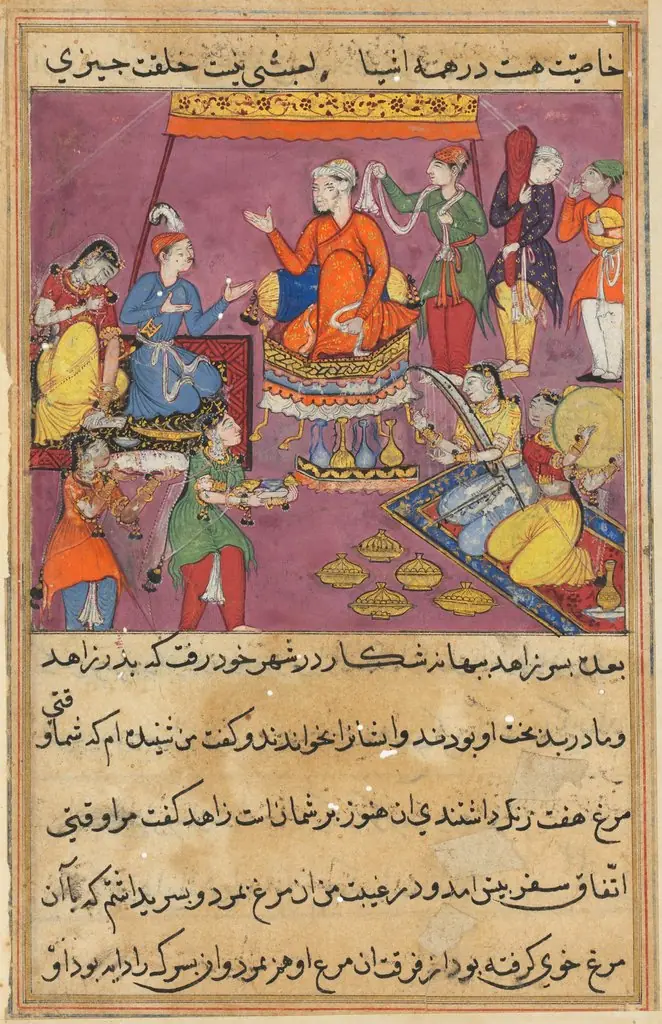 The king gives his daughter in marriage to the pious man’s son, from a Tuti-nama (Tales of a Parrot): Fifty-second Night
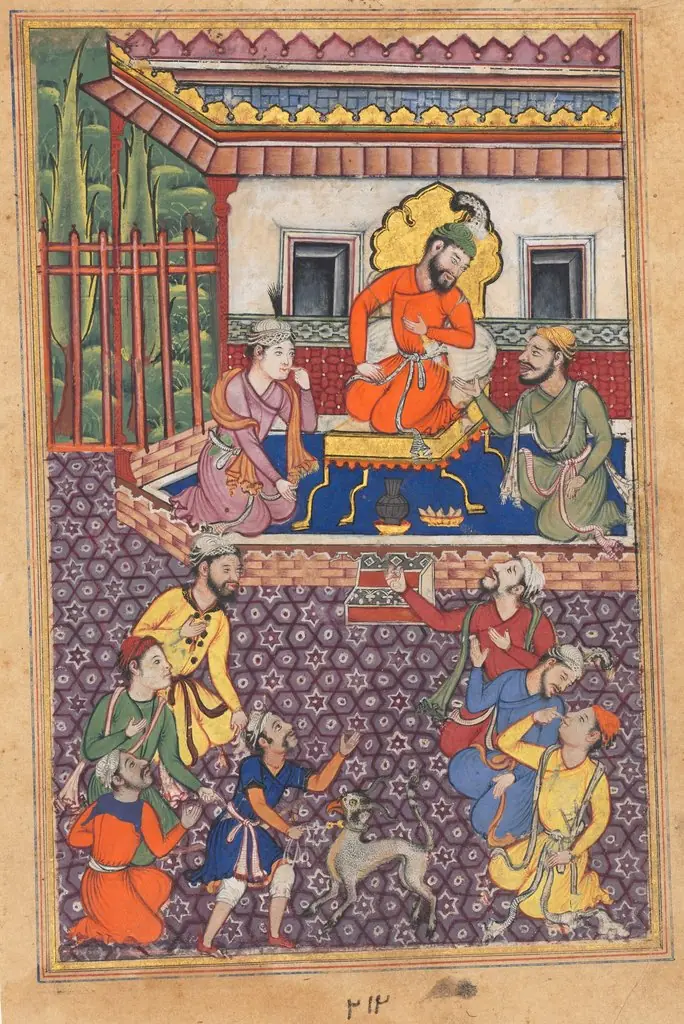 The court of the Raja of Ujjain, from a Tuti-nama (Tales of a Parrot): Forty-sixth Night
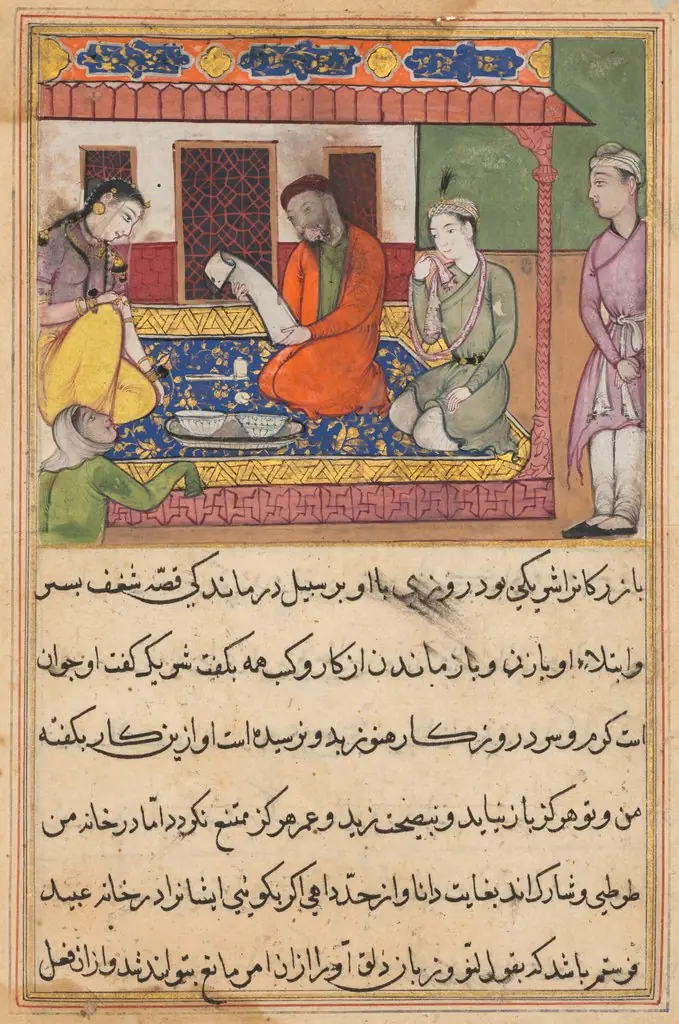 The marriage of ‘Ubaid, son of a merchant of Tirmiz, from a Tuti-nama (Tales of a Parrot): Forty-second Night
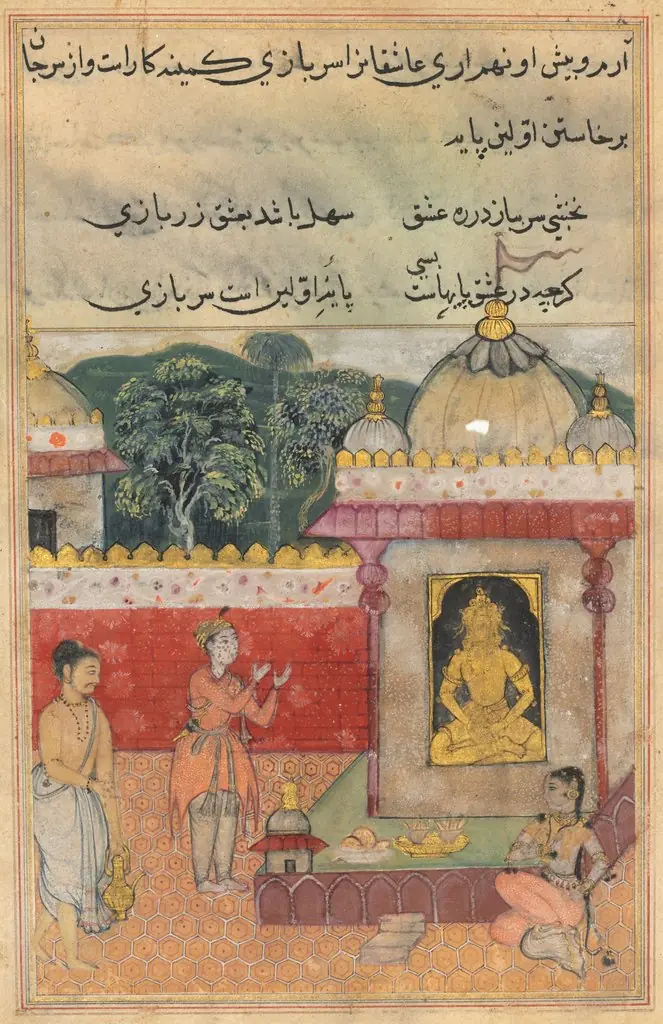 The Raja’s son vows to sever his head and offer it to the image if he is united with the princess he has seen in the temple, from a Tuti-nama (Tales of a Parrot): Thirty-fourth Night
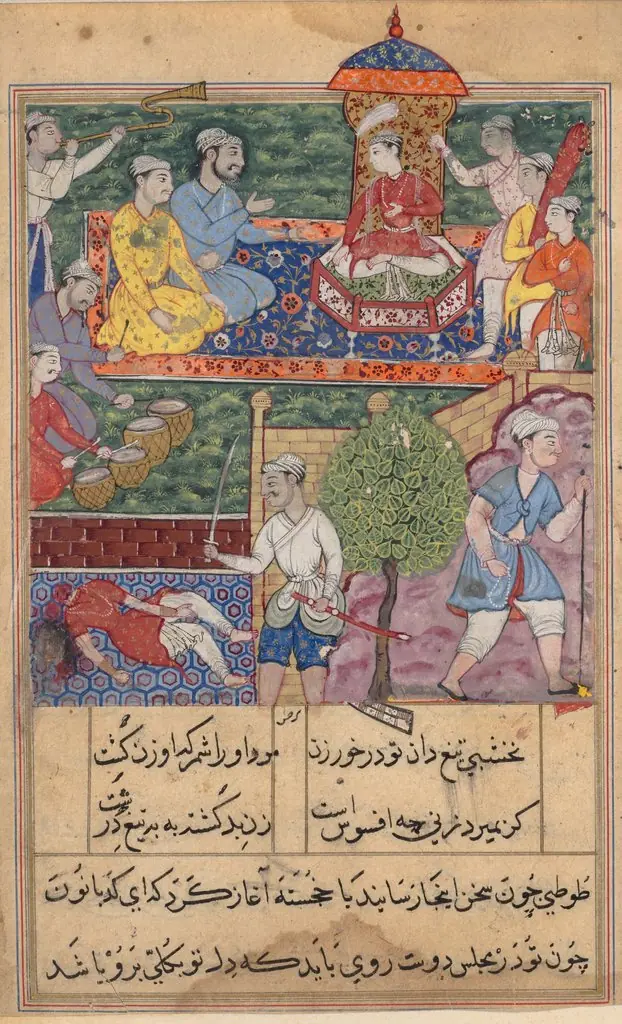 Page from Tales of a Parrot (Tuti-nama): text page
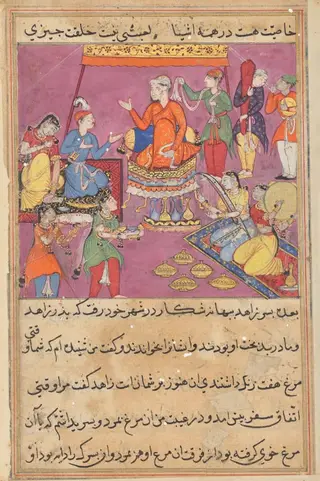 The king gives his daughter in marriage to the pious man’s son, from a Tuti-nama (Tales of a Parrot): Fifty-second Night
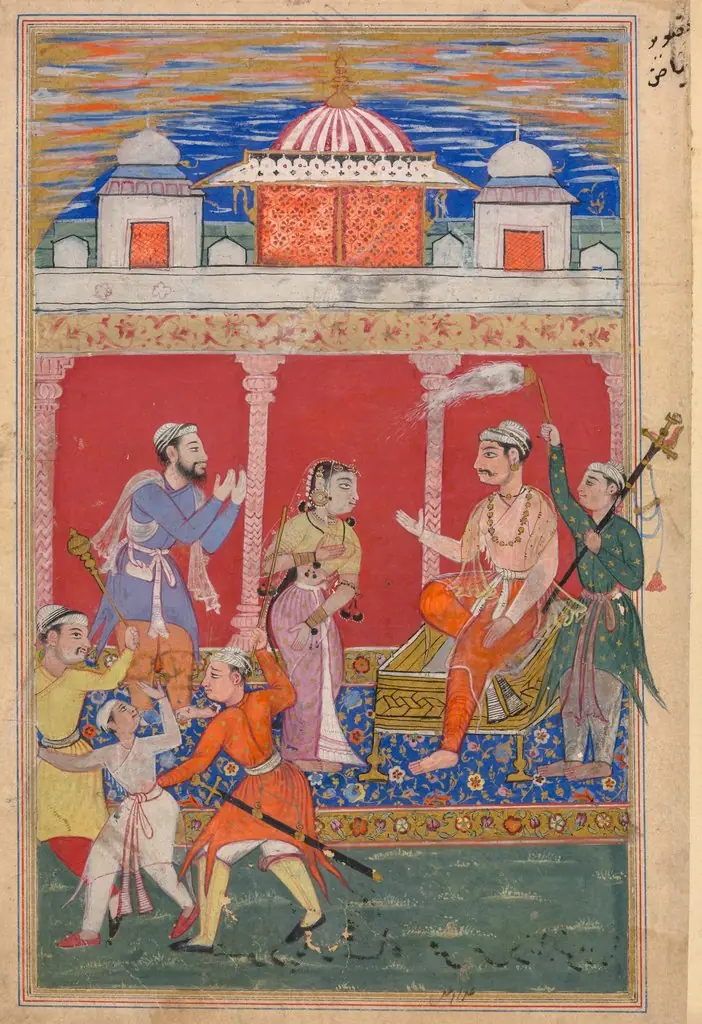 Page from Tales of a Parrot (Tuti-nama): text page
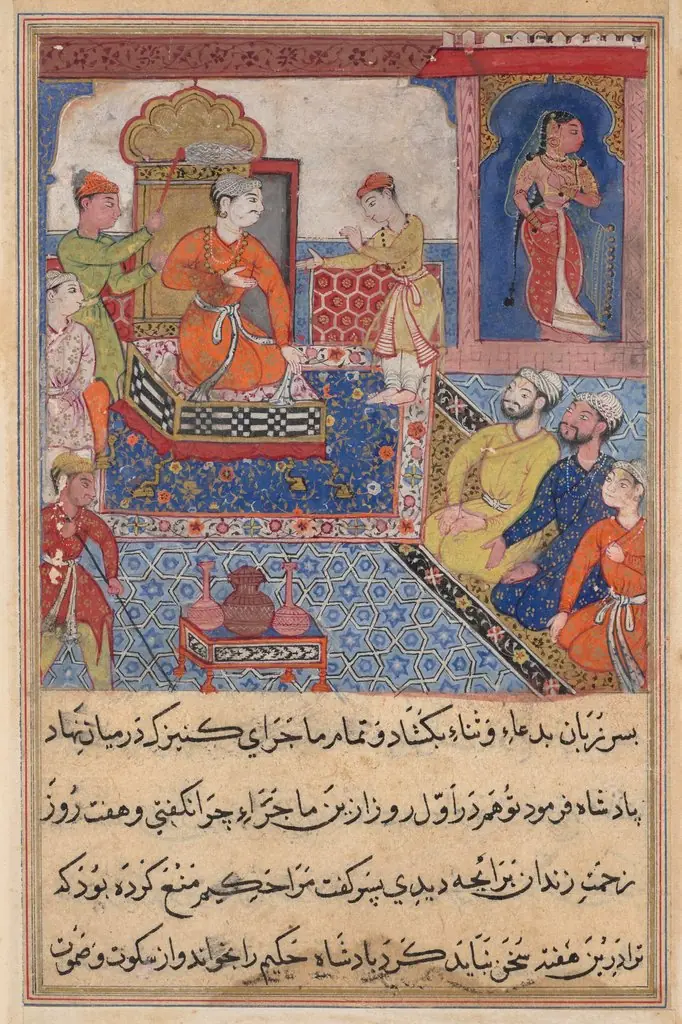 Page from Tales of a Parrot (Tuti-nama): text page
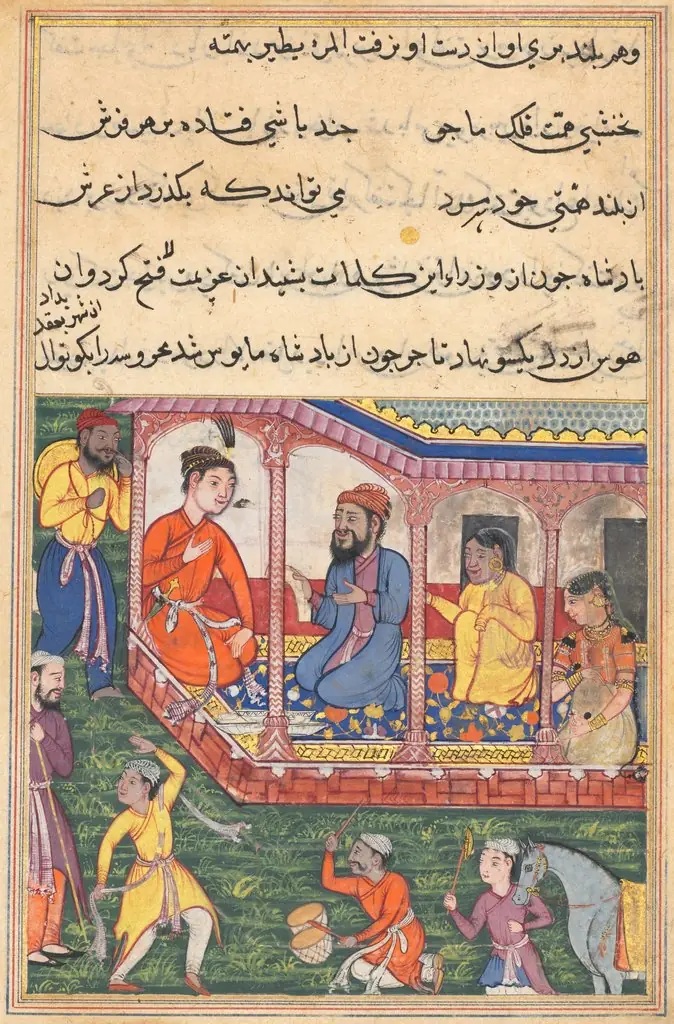 Mahrusa’s marriage to the prefect of the city, from a Tuti-nama (Tales of a Parrot): Thirty-sixth Night
 The old man eats of the fruit of the Tree of Life, but drops dead, from a Tuti-nama (Tales of a Parrot): Ninth Night