Artwork
The Raja’s son vows to sever his head and offer it to the image if he is united with the princess he has seen in the temple, from a Tuti-nama (Tales of a Parrot): Thirty-fourth Night
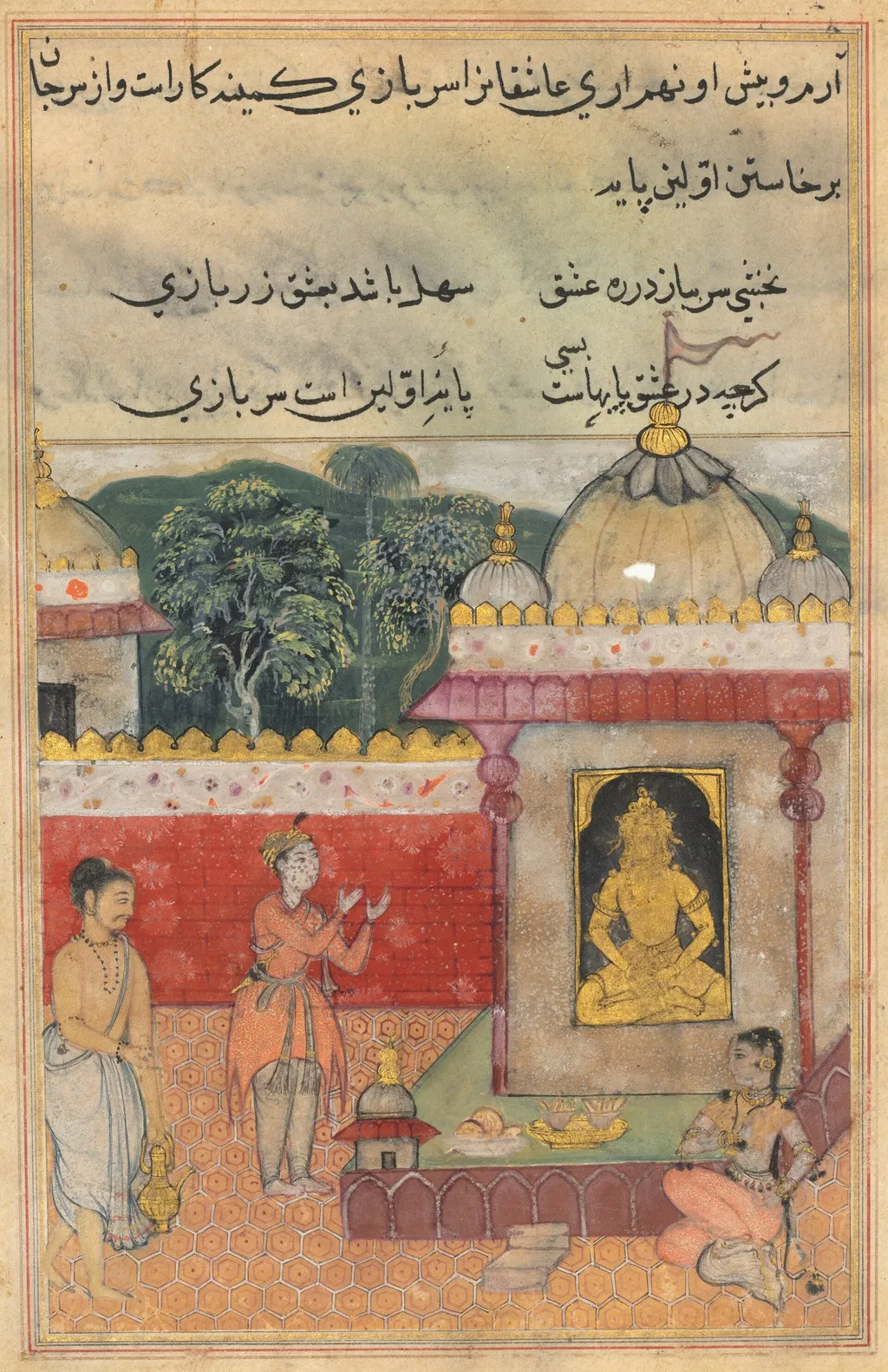
The Raja’s son vows to sever his head and offer it to the image if he is united with the princess he has seen in the temple, from a Tuti-nama (Tales of a Parrot): Thirty-fourth Night is an unspecified painting. It dates from 1560 and is held in the collection of the Cleveland Museum of Art. The work depicts an intimate interior where three figures engage in a solemn exchange before a gilded frame that houses a seated deity.
About this work
History & Provenance
The painting is attributed to an unknown artist and is classified within the Cleveland Museum of Art’s collection of Indian miniature paintings.
The miniature was created in the Mughal Empire around 1560, depicting a scene from the Tuti-nama where the Raja’s son vows to sever his head and offer it to the image if united with the princess he has seen in the temple. It was commissioned as part of a manuscript cycle produced for the Mughal court, reflecting the artistic patronage of the period. The work entered the collection of the Cleveland Museum of Art, where it remains on view today.
The painting is attributed to an unknown artist and is classified within the Cleveland Museum of Art’s collection of Indian miniature paintings.
The painting is held in the collection of the Cleveland Museum of Art, where it is catalogued under accession number 1962.279.227.a. It was created in 1560 within the Mughal Empire and has not been recorded in any major exhibition history beyond its inclusion in the museum’s permanent holdings.
Overview
The work depicts an intimate interior where three figures engage in a solemn exchange before a gilded frame that houses a seated deity. A man in a vivid red garment gestures as if pledging a vow, while a second figure in a lighter robe holds a pot, and a child sits on the floor eating. Beyond a window, a cityscape of domed structures and foliage can be seen, situating the scene within a palace or temple setting.
Subject & Meaning
The central figure appears to be a prince who promises to decapitate himself and present his own head to the divine image if his desire to unite with a princess, seen earlier in a temple, is fulfilled. The presence of the child and the attendant with the pot suggests a domestic or ritual context, underscoring the gravity of the vow within a narrative drawn from the Tuti‑nama, a collection of Persian tales.
Technique & Style
Executed in miniature painting tradition, the composition employs fine brushwork and a limited palette dominated by reds, golds, and muted earth tones. The gilded frame and intricate detailing of the architectural backdrop reflect the lavish aesthetics of Persian court art, while the right‑to‑left script above the scene indicates the integration of calligraphic elements typical of manuscript illustration.
Context
Narrative miniatures such as this were produced for elite patrons who commissioned illustrated books to convey moral and romantic stories. The depiction of a royal vow to a deity reflects the intertwining of courtly love and religious devotion characteristic of Persian literary culture during the Safavid era.
Artist & collection

- The Raja’s son vows to sever his head and offer it to the image if he is united with the princess he has seen in the temple, from a Tuti-nama (Tales of a Parrot): Thirty-fourth Night
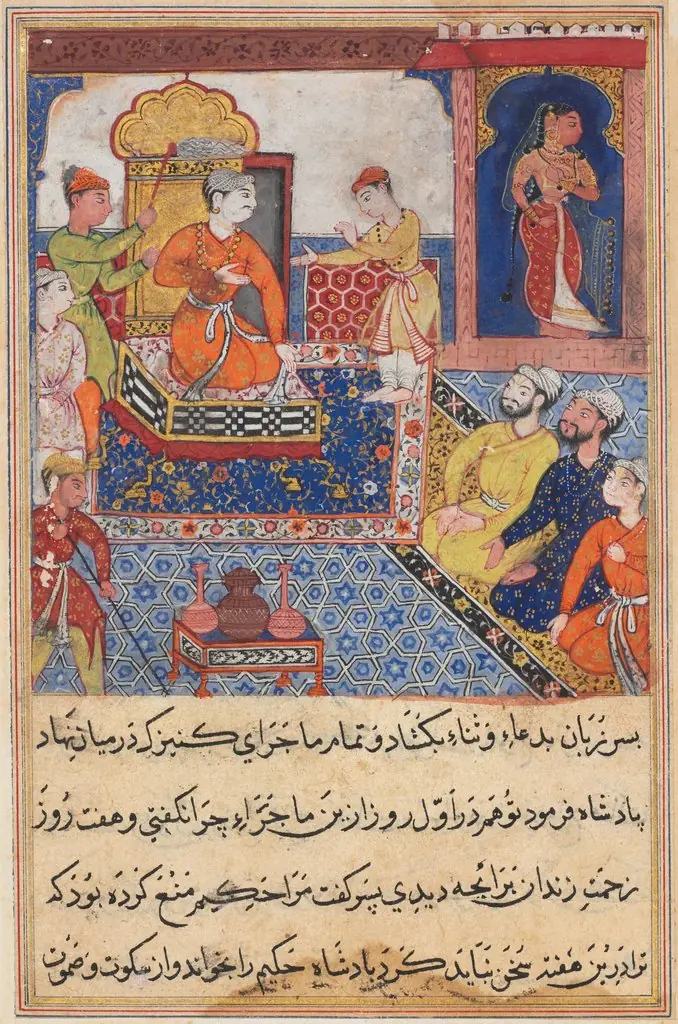 The young prince recounts his experiences to his father, the king, from a Tuti-nama (Tales of a Parrot): Eighth Night
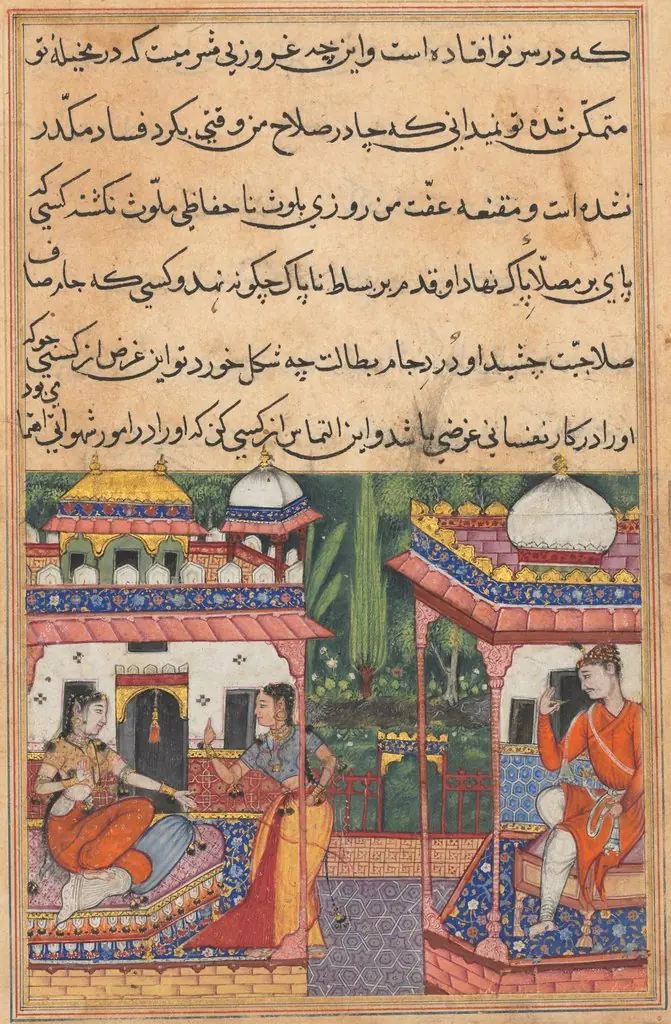 Kaiwan sends a message of love to Khurshid, wife of his brother Utarid who is away on a journey, from a Tuti-nama (Tales of a Parrot): Thirty-second Night
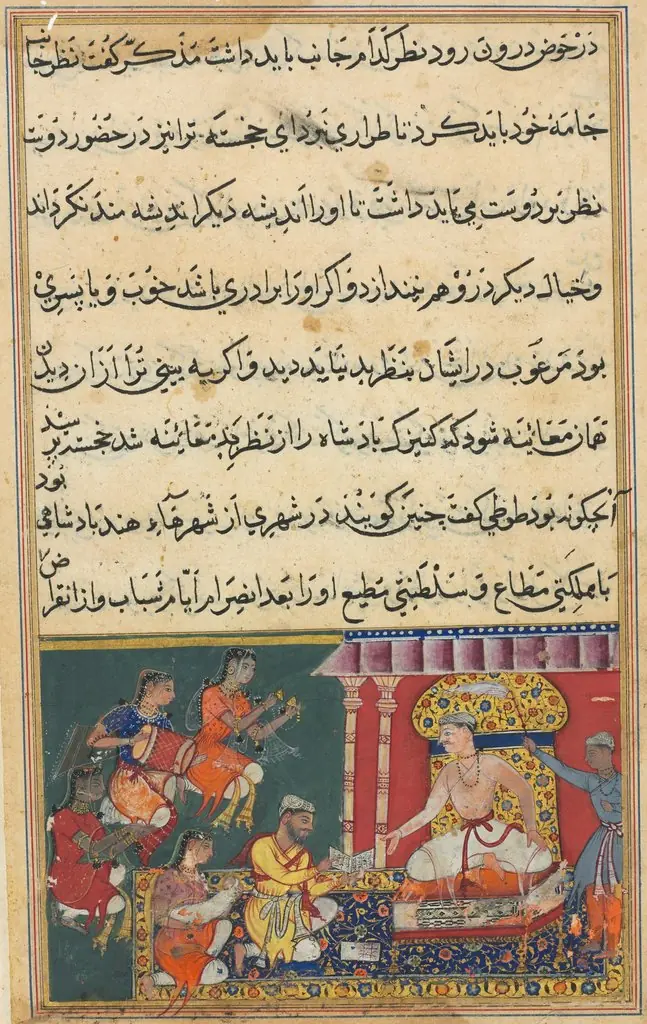 The astrologer predicts a calamity for the newly born prince in his thirteenth year, but one which he would be able to overcome, from a Tuti-nama (Tales of a Parrot): Eighth Night
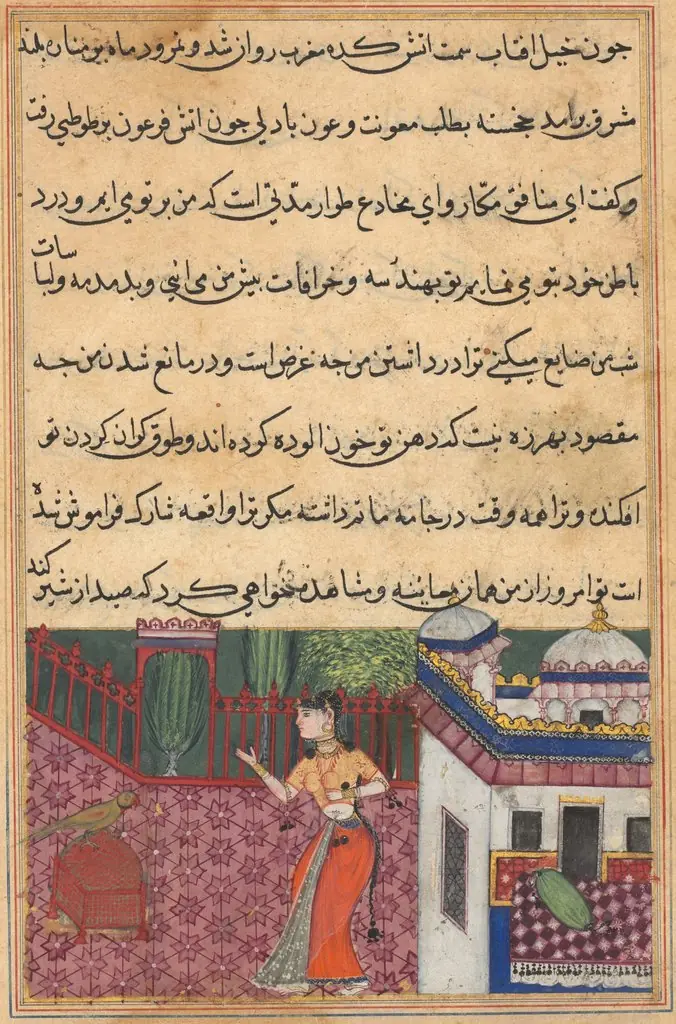 The parrot addresses Khujasta at the beginning of the thirty-third night, from a Tuti-nama (Tales of a Parrot)
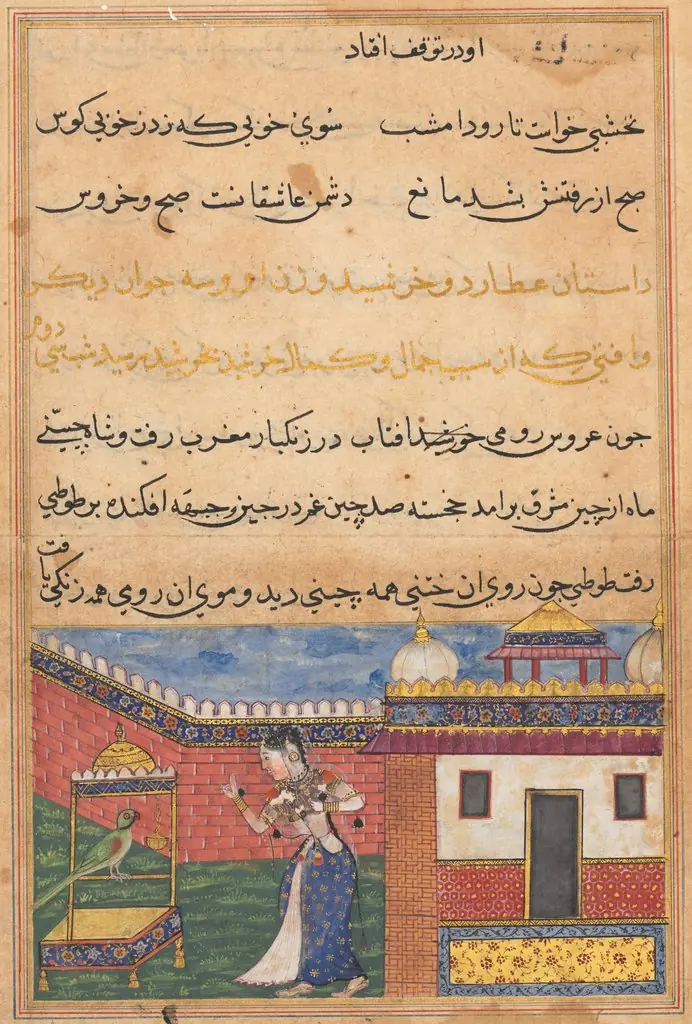 The parrot addresses Khujasta at the beginning of the thirty-second night, from a Tuti-nama (Tales of a Parrot)
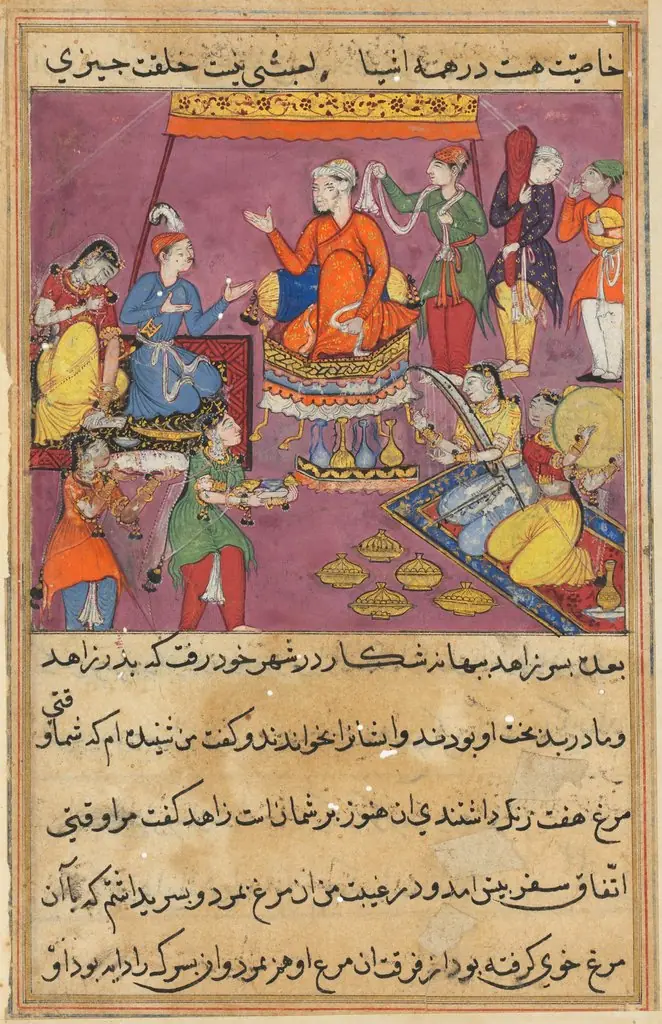 The king gives his daughter in marriage to the pious man’s son, from a Tuti-nama (Tales of a Parrot): Fifty-second Night
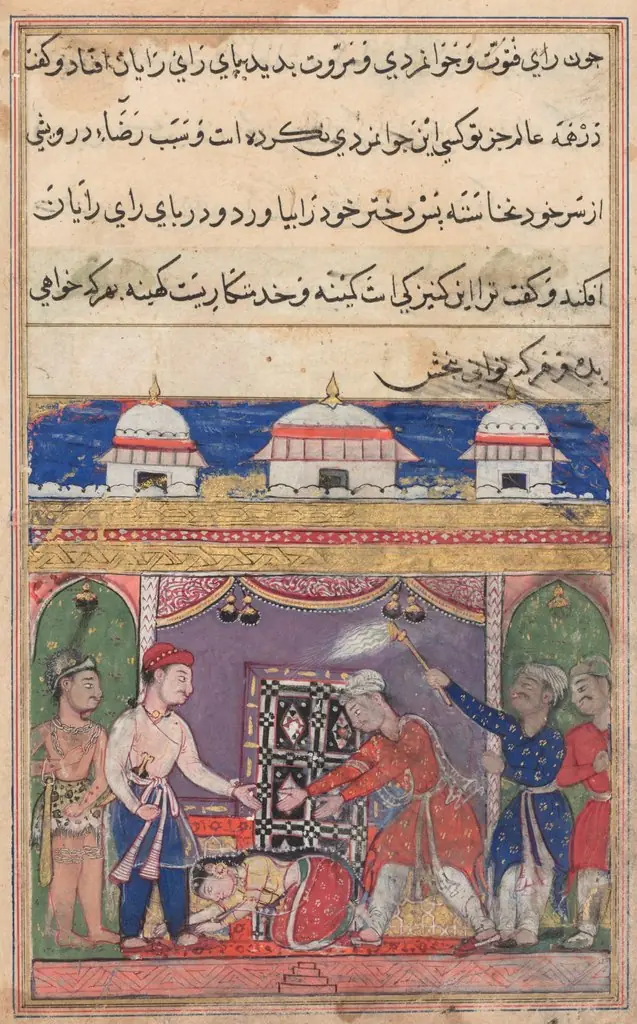 The king of Bahilistan offers his daughter to the King of Kings, from a Tuti-nama (Tales of a Parrot): Seventh Night
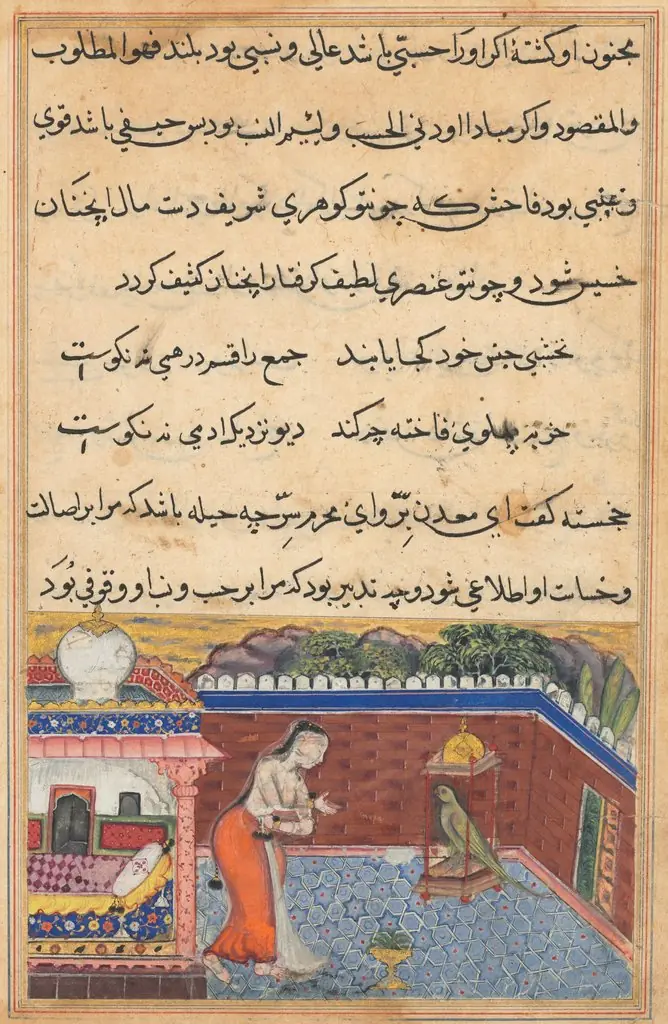 The parrot addresses Khujasta at the beginning of the thirty-first night, from a Tuti-nama (Tales of a Parrot)
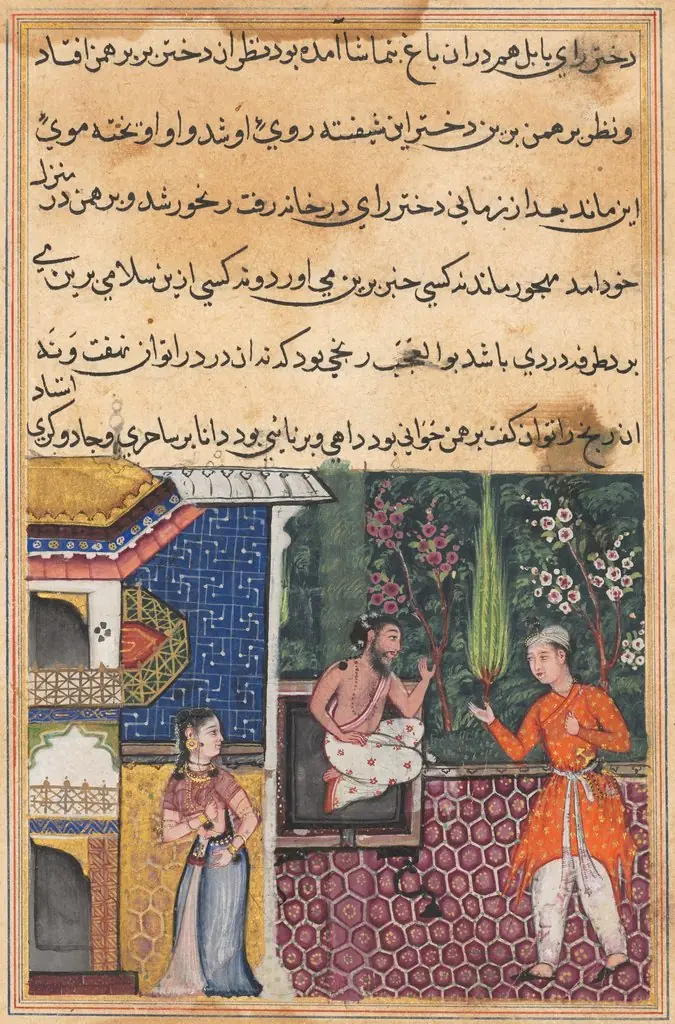 The Brahman gives an account of his falling in love with the king of Babylon’s daughter to his friend, the magician, from a Tuti-nama (Tales of a Parrot): Thirty-fifth Night
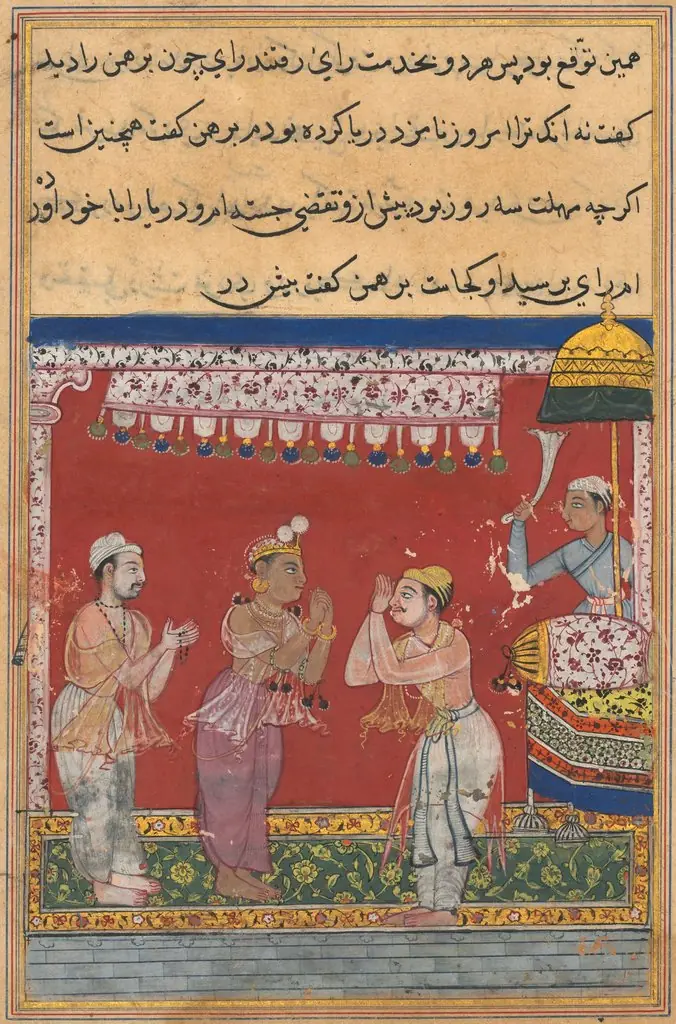 The king of the Ocean, having assumed human form, arrives at the court of the Raja, from a Tuti-nama (Tales of a Parrot): Eleventh Night
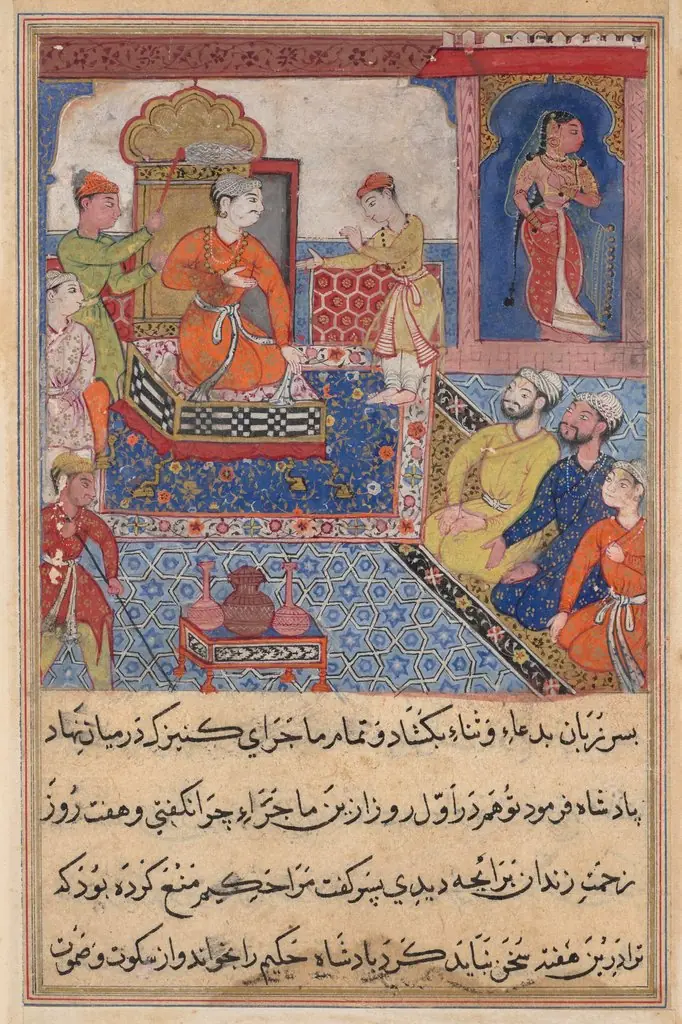 Page from Tales of a Parrot (Tuti-nama): text page
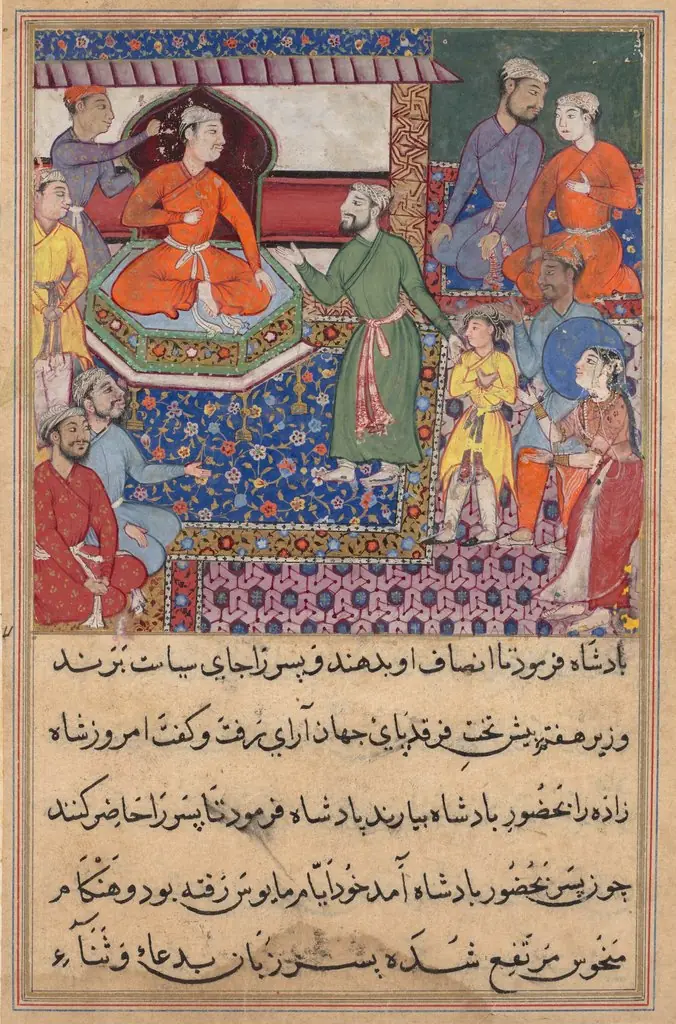 Page from Tales of a Parrot (Tuti-nama): text page
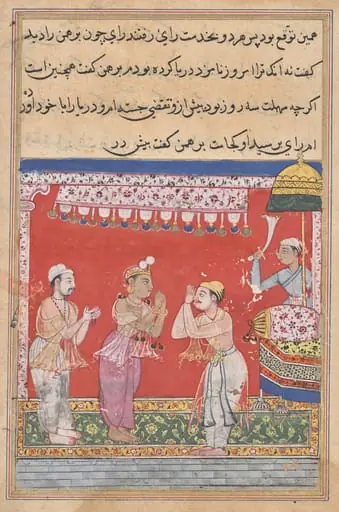 The king of the Ocean, having assumed human form, arrives at the court of the Raja, from a Tuti-nama (Tales of a Parrot): Eleventh Night
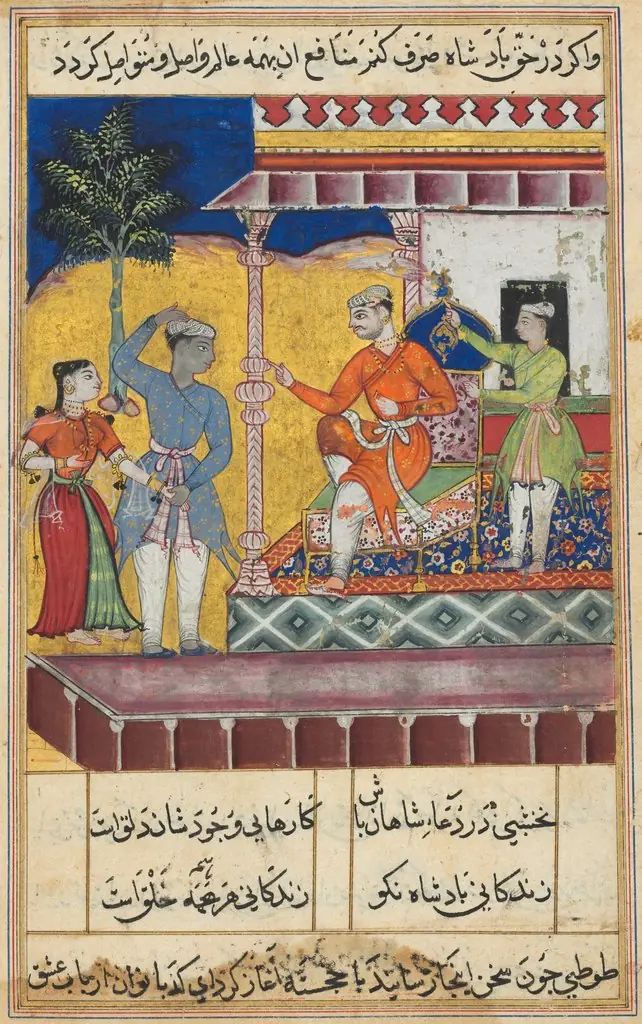 The rejuvenated old man and the daughter of the king of the jinns take leave of the King of Kings, from a Tuti-nama (Tales of a Parrot): Seventh Night
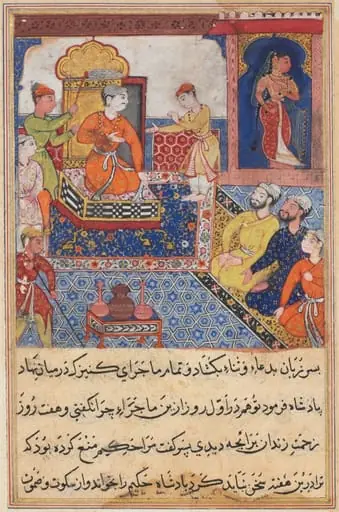 The young prince recounts his experiences to his father, the king, from a Tuti-nama (Tales of a Parrot): Eighth Night
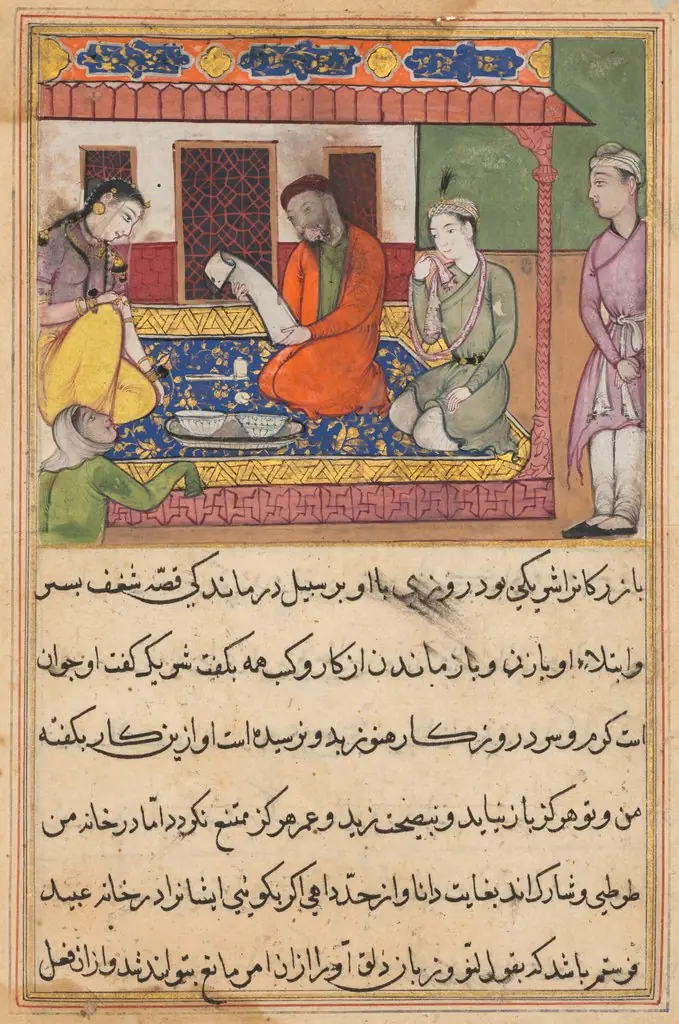 The marriage of ‘Ubaid, son of a merchant of Tirmiz, from a Tuti-nama (Tales of a Parrot): Forty-second Night
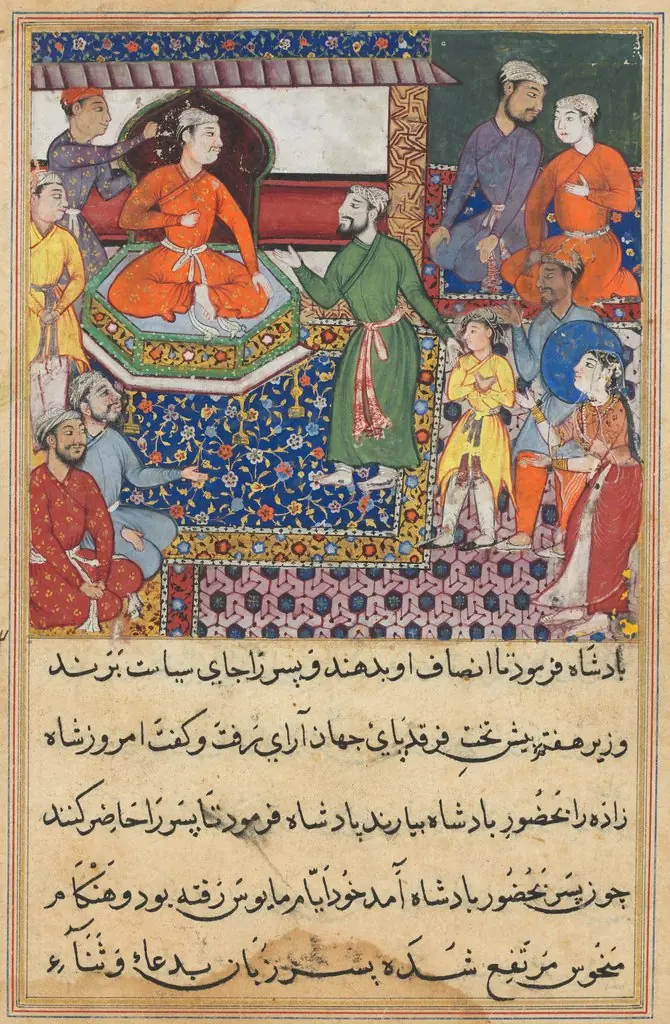 The handmaiden again pleads for the death of the prince, from a Tuti-nama (Tales of a Parrot): Eighth Night
 The handmaiden again pleads for the death of the prince, from a Tuti-nama (Tales of a Parrot): Eighth Night