Artwork
The invention of musical instruments from the intestines of a monkey, from a Tuti-nama (Tales of a Parrot): Fourteenth Night
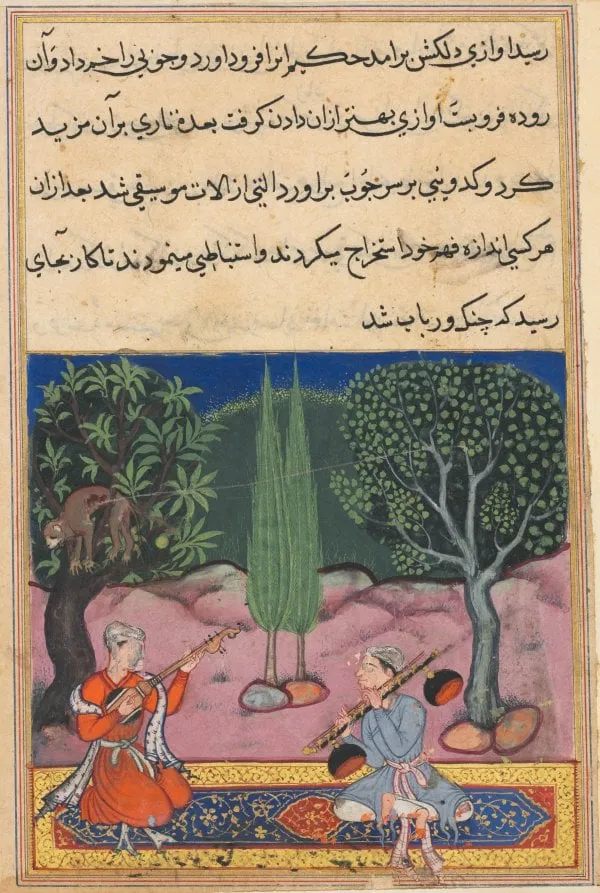
The invention of musical instruments from the intestines of a monkey, from a Tuti-nama (Tales of a Parrot): Fourteenth Night is an unspecified painting by the Mughal Painting artist Unknown. It dates from 1560 and is held in the collection of the Cleveland Museum of Art.
- Accession no.
- 1962.279.108.b
- Credit line
- Gift of Mrs. A. Dean Perry
About this work
To see more paintings like this, look up Mughal India, court of Akbar (reigned 1556–1605).
You see a monkey leaping between trees, its belly slit open. Below, musicians pluck stringed instruments made from dried intestines. The scene is small, packed with bright greens and golds.
This painting comes from a book of parrot tales told in Akbar’s court. The story says the first instrument was made by accident, then turned into music. The artists who worked for Akbar loved mixing real life with wild tales.
To see more paintings like this, look up Mughal India, court of Akbar (reigned 1556–1605).
Overview
This small painting illustrates a tale from a collection of parrot stories created for Akbar's court, depicting the origin of musical instruments.
Subject & Meaning
The scene shows a monkey being disembowelled while jumping between trees, with musicians below playing instruments made from its dried intestines, symbolizing the accidental invention of music.
Technique & Style
The painting is characterized by vibrant greens and golds, showcasing the artist's skill in blending realism with fantastical elements.
Context
The artwork is part of a manuscript from Akbar's court, where artists were known to merge everyday life with extraordinary stories, reflecting the cultural and artistic tastes of Mughal India during Akbar's reign (1556–1605).
Artist & collection









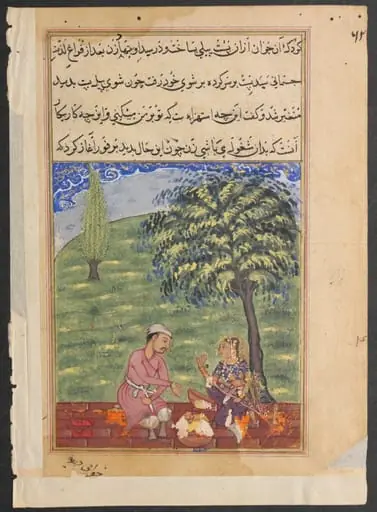 The unfaithful wife explaining away the presence of the dough elephant, from a Tuti-nama (Tales of a Parrot): Eighth Night
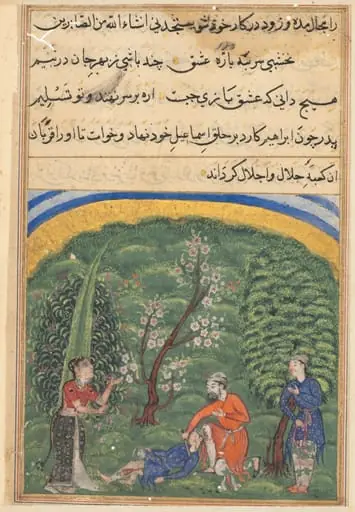 The sentinel in the employ of the Shah of Tabaristan prepares to sacrifice his son to the ghost of the Shah’s soul, from a Tuti-nama (Tales of a Parrot): Second Night
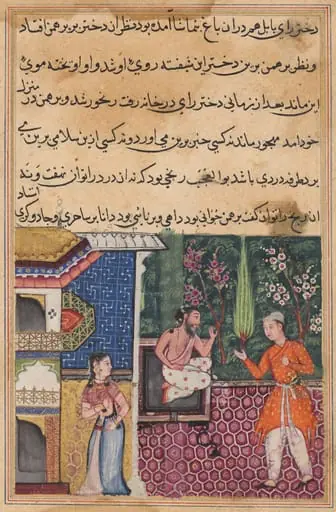 The Brahman gives an account of his falling in love with the king of Babylon’s daughter to his friend, the magician, from a Tuti-nama (Tales of a Parrot): Thirty-fifth Night
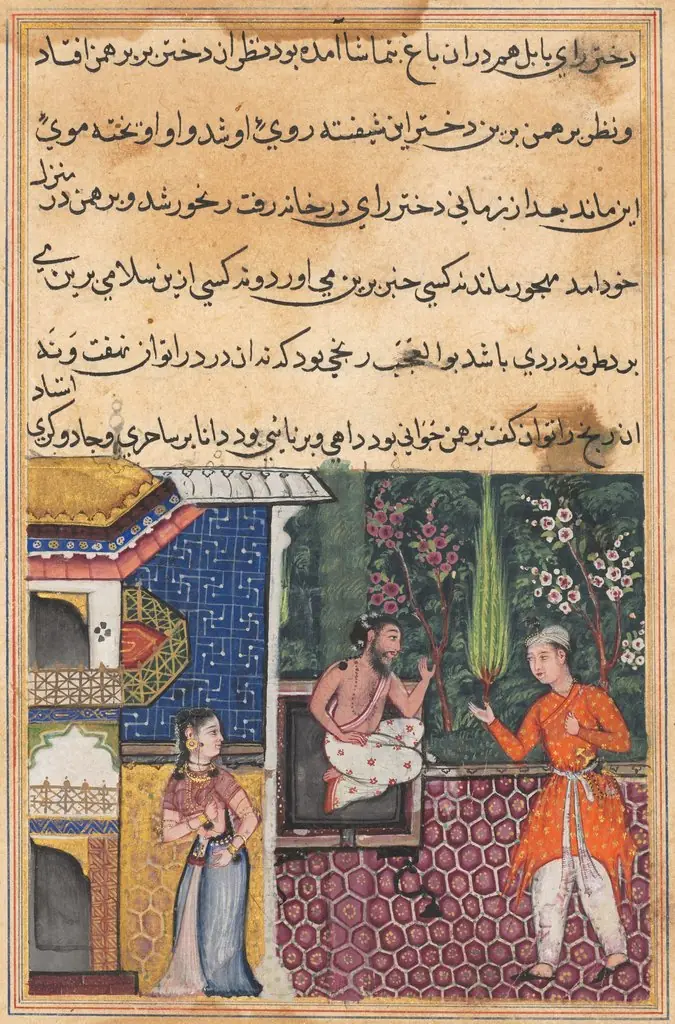 The Brahman gives an account of his falling in love with the king of Babylon’s daughter to his friend, the magician, from a Tuti-nama (Tales of a Parrot): Thirty-fifth Night
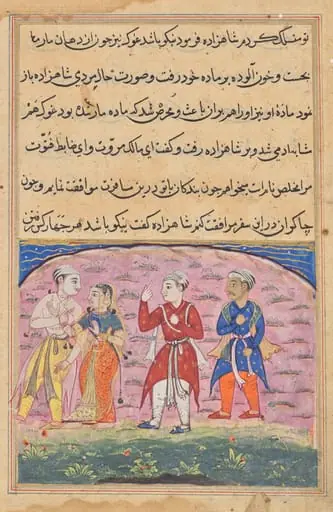 The prince and Nikfal are joined by Khalis and the Mukhlis who are the grateful snake and frog in human form, from a Tuti-nama (Tales of a Parrot): Eighteenth Night
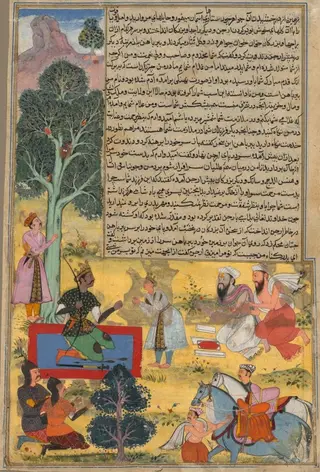 Vabhruvahana Approaches Arjuna, page from the Khan Khanan's Razm-nama
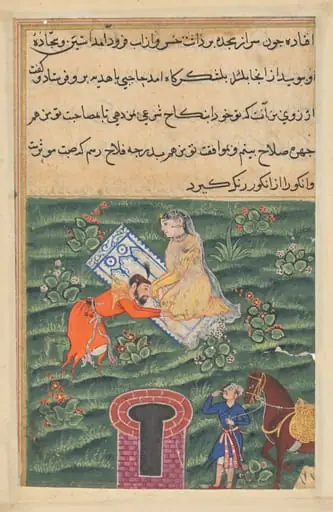 Khusrau, the King of Kings, pays homage to the pious daughter of Khassa, from a Tuti-nama (Tales of a Parrot): Fifty-first Night