Artwork
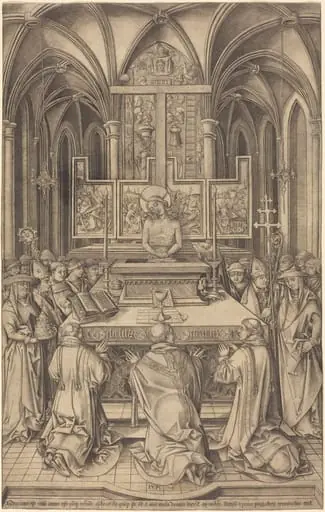
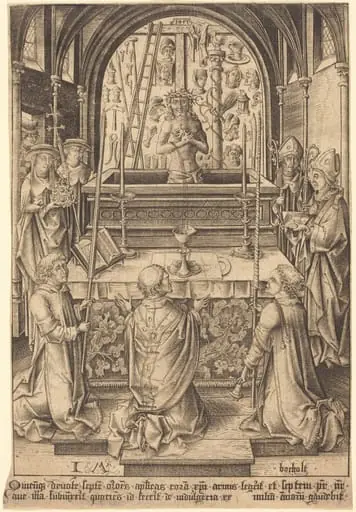
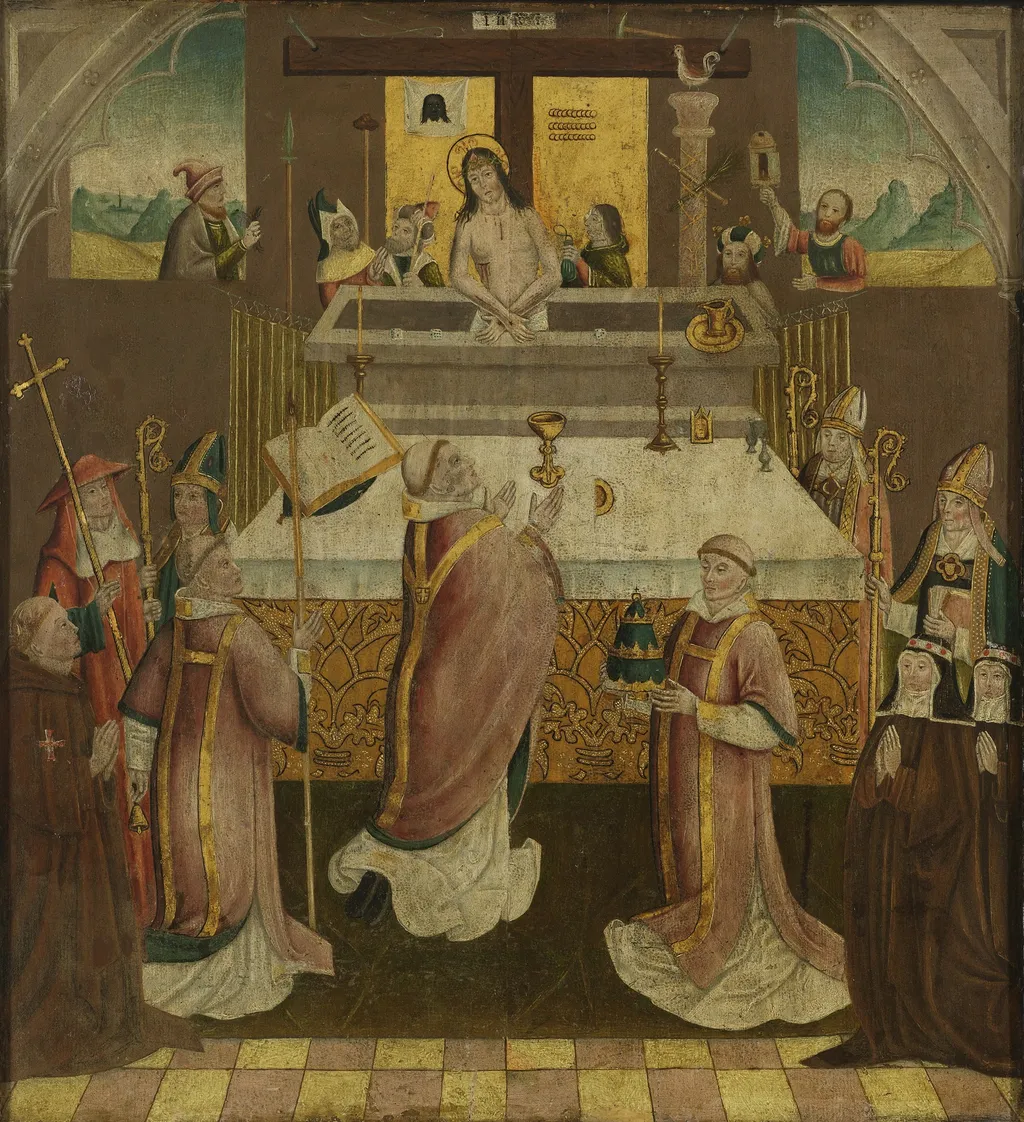
The mass of St. Gregory
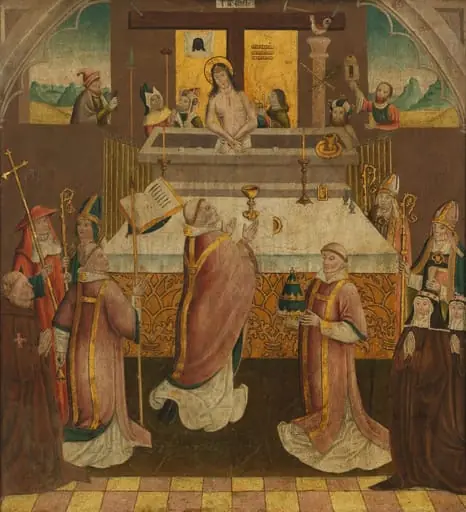
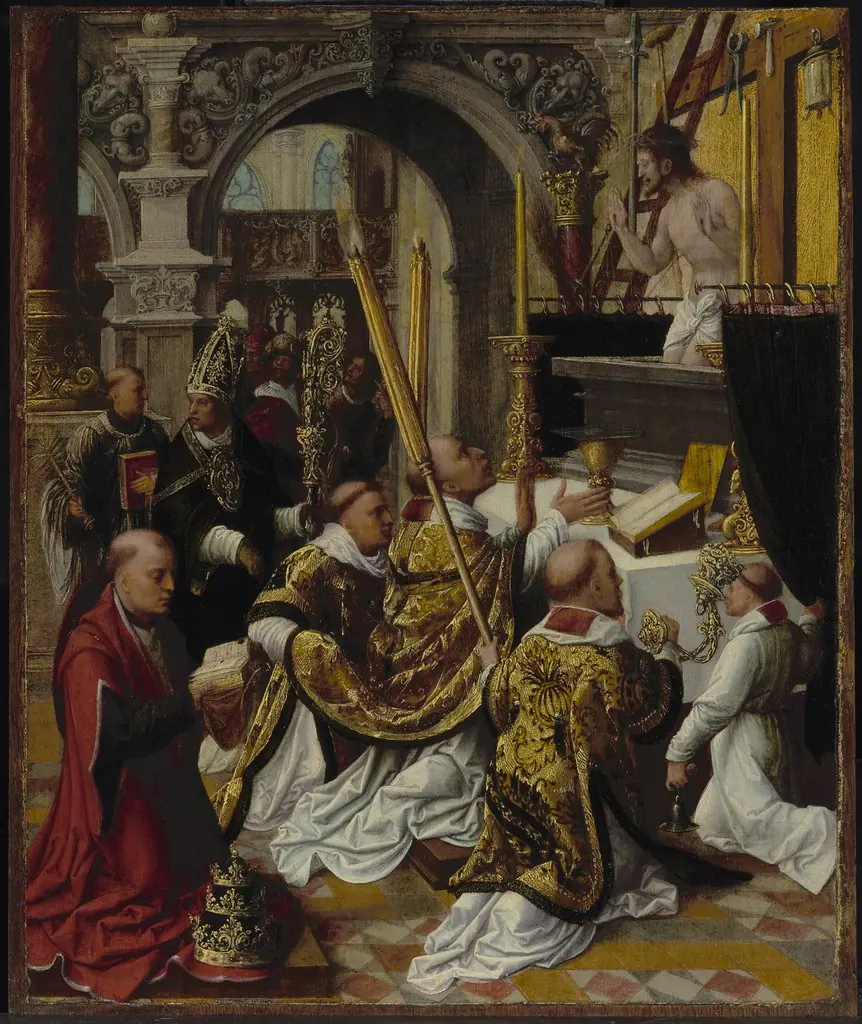
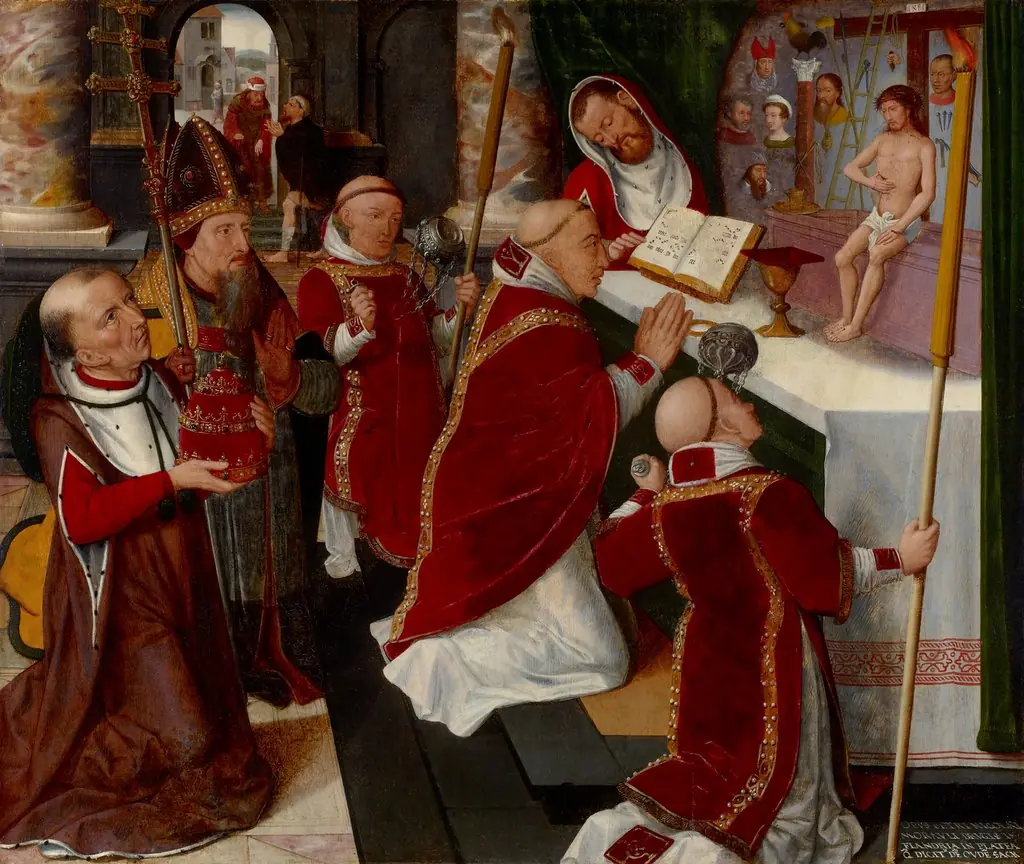
The mass of St. Gregory is an oil painting by the Northern Renaissance artist Unknown. It dates from 1500 and is held in the collection of the Rijksmuseum. The Mass of St.
About this work
Technique & Style
Created around 1500, this anonymous religious work is executed in oil paint on a wooden panel. The painting measures 66.8 cm in height and 62 cm in width. As a depiction of the Mass of Saint Gregory, the piece utilizes the oil medium to render its sacred subject matter on a rigid support, characteristic of Netherlandish or German devotional art from the turn of the sixteenth century.
History & Provenance
The painting is held by the Rijksmuseum in Amsterdam, where it forms part of the museum's collection of religious art.
Created around the year 1500, this oil painting on panel depicts the Mass of Saint Gregory. The work is currently held in the collection of the Rijksmuseum, where it remains on display. While the specific circumstances of its original commission and the identity of its creator are not detailed in the available records, the piece is recognized as an anonymous religious work from the turn of the sixteenth century.
The painting is held by the Rijksmuseum in Amsterdam, where it forms part of the museum's collection of religious art. According to the Wikidata record, it is catalogued under the entry for an anonymous oil-on-panel work depicting the Mass of Saint Gregory, dated to around 1500, with recorded dimensions of 66.8 cm in height and 62 cm in width.
The available sources do not provide a specific inventory or accession number for the work, nor do they document any exhibition history beyond its current presence in the Rijksmuseum collection.
Context
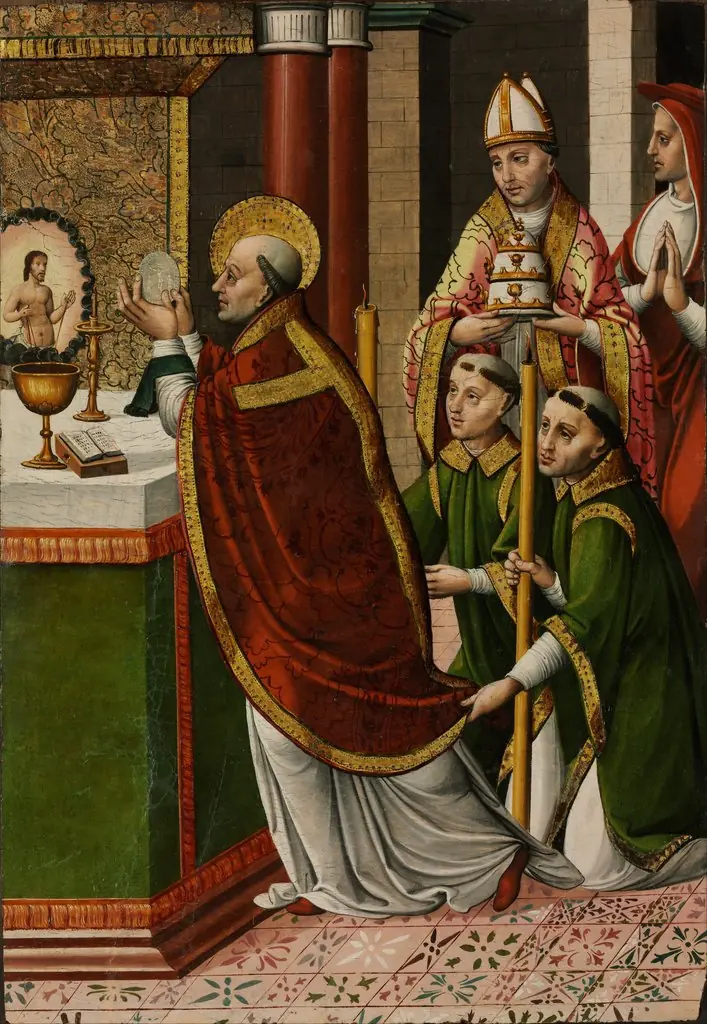
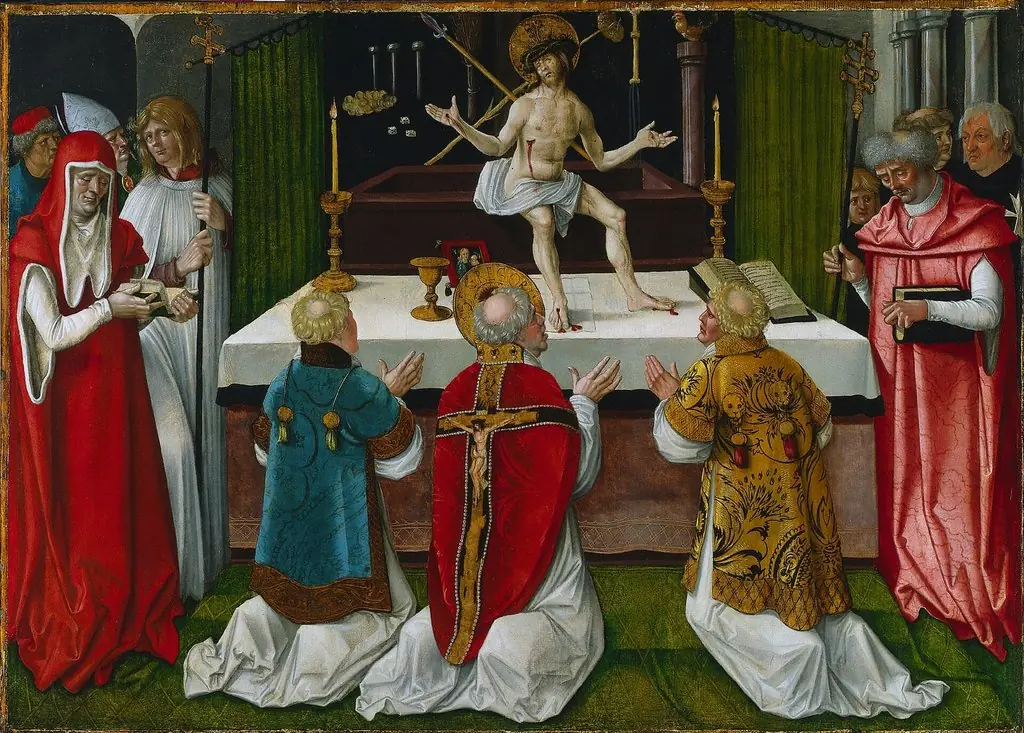
The work stands as a representative example of early 16th-century Netherlandish religious painting, reflecting the devotional practices and stylistic conventions of the period. It is housed in the Rijksmuseum collection, where it is catalogued as an anonymous religious composition dating to around 1500, executed in oil on panel. The painting's subject, the Mass of Saint Gregory, draws from a hagiographic legend in which the saint witnessed a vision of the Crucifixion during Mass, a theme recurrent in contemporary ecclesiastical art.
Stylistically, it aligns with transitional works bridging late medieval panel traditions and the emerging naturalism of the Renaissance, though its anonymous authorship limits direct attribution to named masters of the era.
Overview
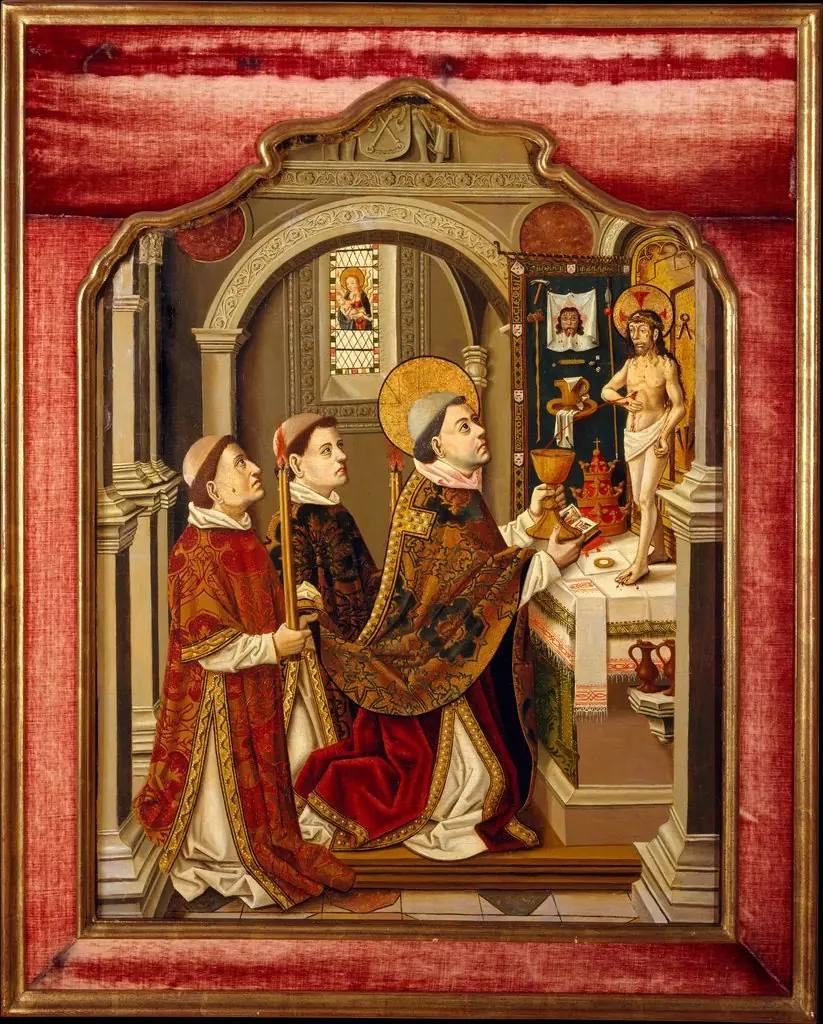
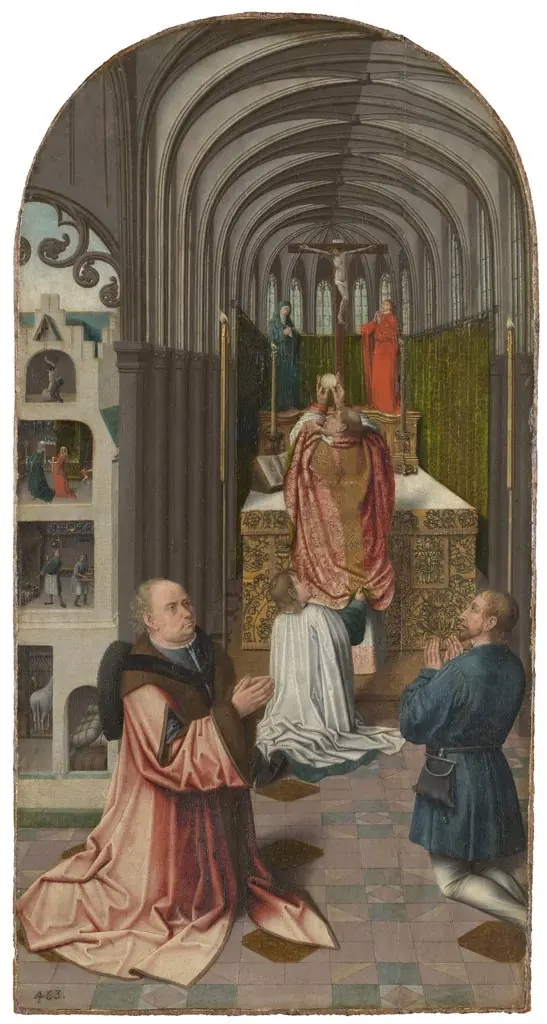
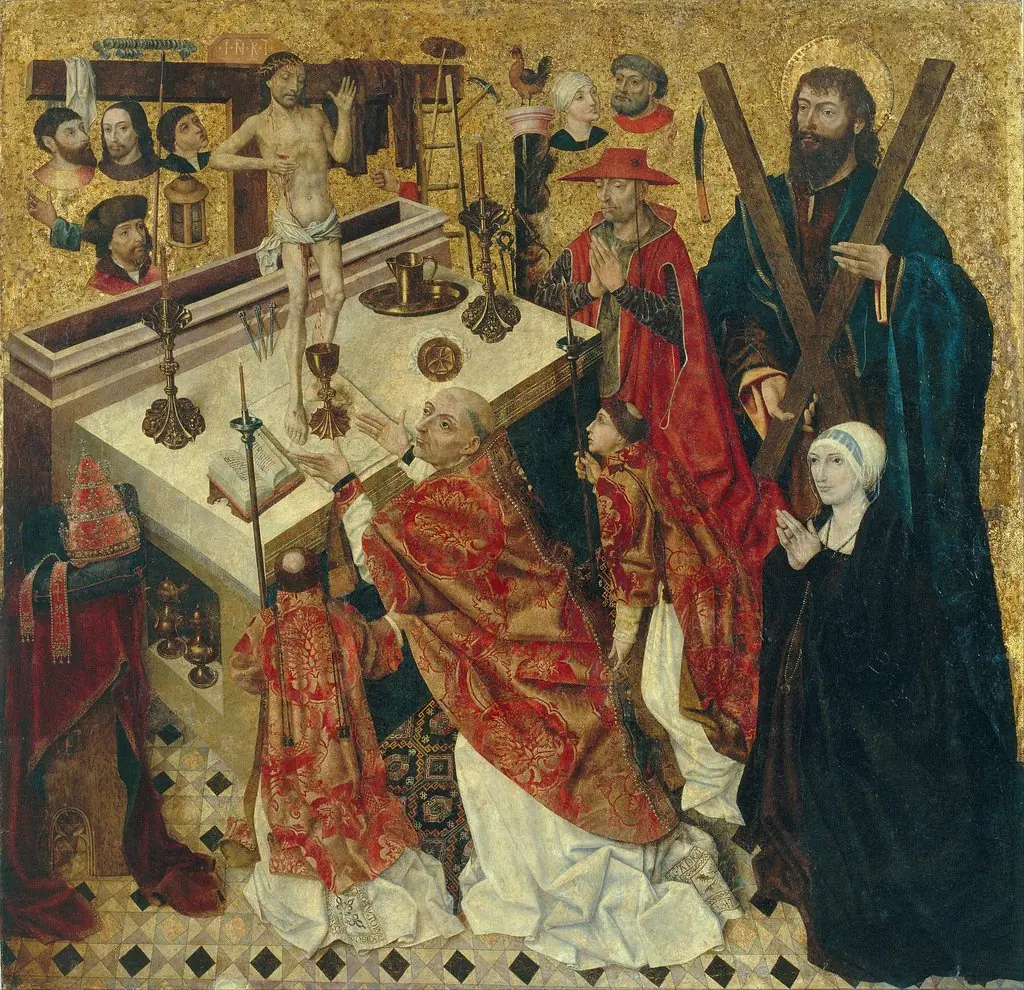
The Mass of St. Gregory is an oil painting depicting a densely populated church scene, characterized by a mix of lavishly attired figures engaged in various activities.
Subject & Meaning
At the composition's core, a priest in red robes kneels at an altar, elevating a golden cup, while a group of dignitaries nearby surround a table adorned with books and a chalice. A woman in white, seated upstairs, is shown in prayer amidst others displaying symbolic objects (keys, scroll), suggesting a narrative of spiritual convergence and possibly alluding to the legend of St. Gregory, where the saint's prayer results in a vision, often interpreted as a miracle validating the Eucharist.
Legacy
While specific influence and reception details are not provided, the painting's adherence to and successful execution of chiaroscuro techniques, alongside its detailed, layered composition, contribute to its significance within the continuum of European art exploring light, shadow, and religious themes.
Artist & collection









![The Mass of Saint Gregory [recto], by French 15th Century](https://artifactworldgallery.com/img/french-15th-century--the-mass-of-saint-gregory-recto--366c997f6d630640-w320.webp)