Artwork
The Parrot Addresses Khujasta at the Beginning of the Twentieth Night, from a Tuti-nama (Tales of a Parrot)
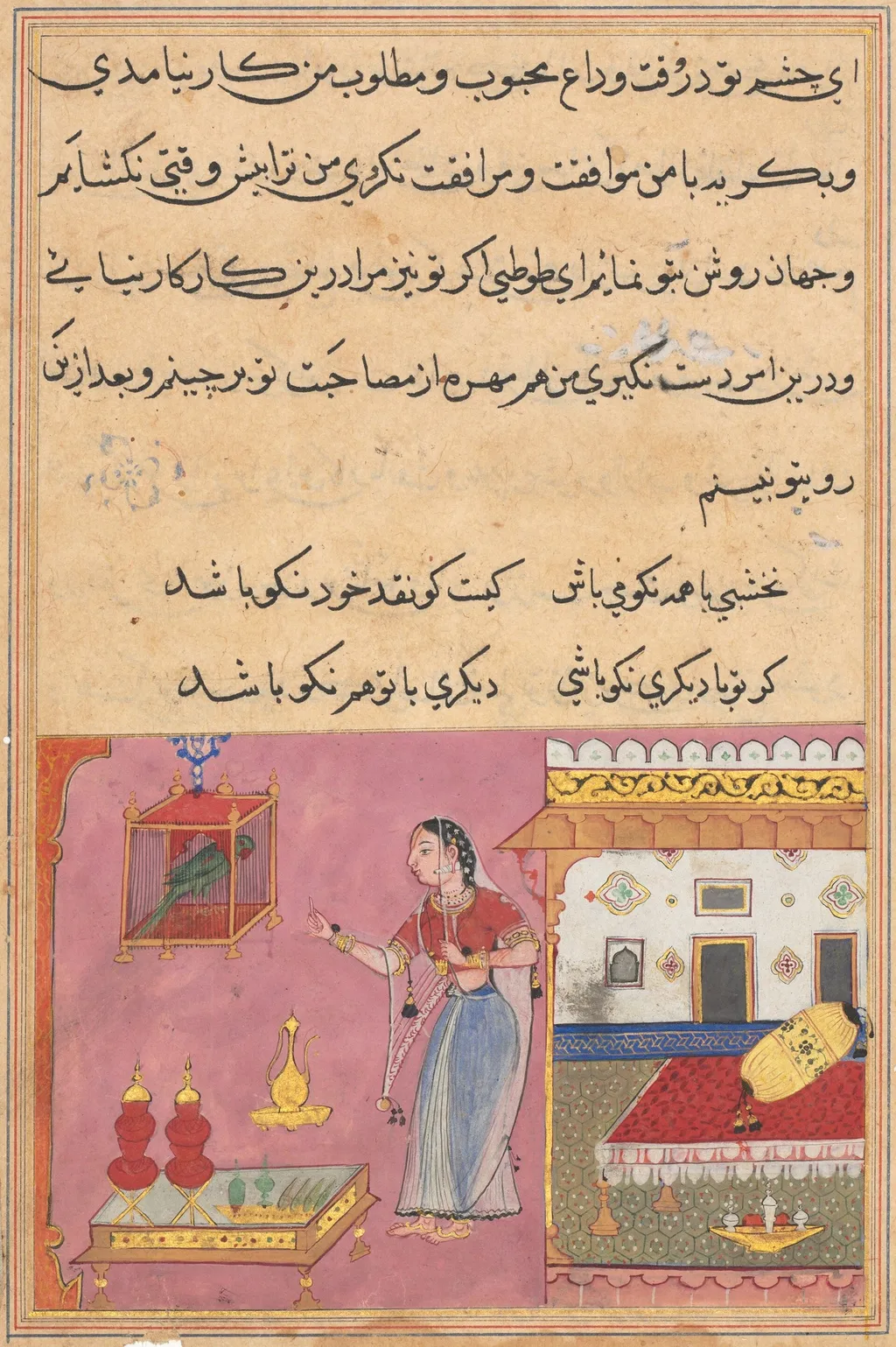
The Parrot Addresses Khujasta at the Beginning of the Twentieth Night, from a Tuti-nama (Tales of a Parrot) is an unspecified painting. It dates from 1560 and is held in the collection of the Cleveland Museum of Art. The work depicts a woman in traditional dress standing beside a caged parrot, engaged in a quiet conversation.
About this work
Technique & Style
The composition emphasizes decorative patterning and spatial flattening, reflecting Persianate aesthetic principles adapted within the Mughal atelier.
The painting is executed in tempera on paper, forming part of a dispersed Tuti-nama manuscript produced in Mughal India around 1560. The work depicts a narrative moment from a Persian literary tradition, showing a parrot speaking to Khuzasta on the twentieth night of a tale. It is painted with fine linear detail and flat areas of color, characteristic of early Mughal book arts, with gold and mineral pigments applied to a paper support.
The composition emphasizes decorative patterning and spatial flattening, reflecting Persianate aesthetic principles adapted within the Mughal atelier. The Cleveland Museum of Art holds the fragment, cataloged as 1962.279.143.a, and it was acquired as part of a dispersed manuscript collection.
The painting's condition is stable but shows minor foxing and edge loss consistent with its age and material. No modern restoration is recorded, and handling has been limited to conservation-grade practices to preserve the delicate pigments and paper fibers.
History & Provenance
The painting dates to 1560, produced within the Mughal Empire during the early years of that court tradition. It was created as a folio for a Tuti-nama (Tales of a Parrot) manuscript, depicting the parrot addressing Khujasta at the opening of the twentieth night of the cycle.
The work subsequently entered the collection of the Cleveland Museum of Art, where it is catalogued under accession number 1962.279.143.a. No further details about its earlier ownership history, commissioning circumstances, or chain of custody prior to the Cleveland acquisition are documented in the available sources.
The painting The Parrot Addresses Khujasta at the Beginning of the Twentieth Night, from a Tuti-nama is held in the collection of the Cleveland Museum of Art in Cleveland. The work is cataloged under the accession number 1962.279.143.a. Created around 1560 within the Mughal Empire, this manuscript illumination remains a significant part of the museum's holdings of Indian art. No specific exhibition history is provided in the available records.
Legacy
The painting's influence, reputation, and legacy are anchored in its role within the Tuti-nama manuscript tradition and its presence in a major museum collection. It exemplifies Mughal narrative painting from 1560 and has informed scholarly study of manuscript illumination, with its composition cited in discussions of narrative techniques in Persian art. The work's attribution to an anonymous artist and its inclusion in the Cleveland Museum of Art's collection have contributed to its recognition as a representative example of 16th-century manuscript painting, supporting ongoing research into cross-cultural artistic exchanges.
Its legacy is reflected in its continued relevance to studies of manuscript culture and the transmission of artistic motifs, particularly in relation to the Tuti-nama's didactic themes. The painting's provenance and conservation history underscore its significance as a physical artifact of Mughal artistic practice, offering insight into the patronage and production of illustrated texts during this period.
The work's enduring presence in a public collection has facilitated its use in exhibitions and academic discourse, reinforcing its status as a key reference point for understanding the evolution of narrative art in Islamic manuscript traditions.
Overview
The work depicts a woman in traditional dress standing beside a caged parrot, engaged in a quiet conversation. She wears a long skirt and a red upper garment, her hair modestly covered, and holds a small object while addressing the bird. The interior is richly patterned, featuring a low table laden with assorted items, all rendered in vivid blues, reds, and yellows that convey depth and texture.
Subject & Meaning
The scene illustrates a moment from a Persian narrative tradition, specifically a tale in which a parrot relays stories to a character named Khujasta. The woman's interaction with the bird suggests a conveyance of moral or didactic content, a common motif in illustrated manuscripts where animals serve as narrative agents.
Context
During the era of its creation, Persian visual culture experienced a resurgence of interest in historic literary themes, often rendered in a style that blended classic miniature conventions with contemporary color sensibilities. This work exemplifies that synthesis, situating a timeless story within a visual language familiar to early‑twentieth‑century audiences.
Artist & collection

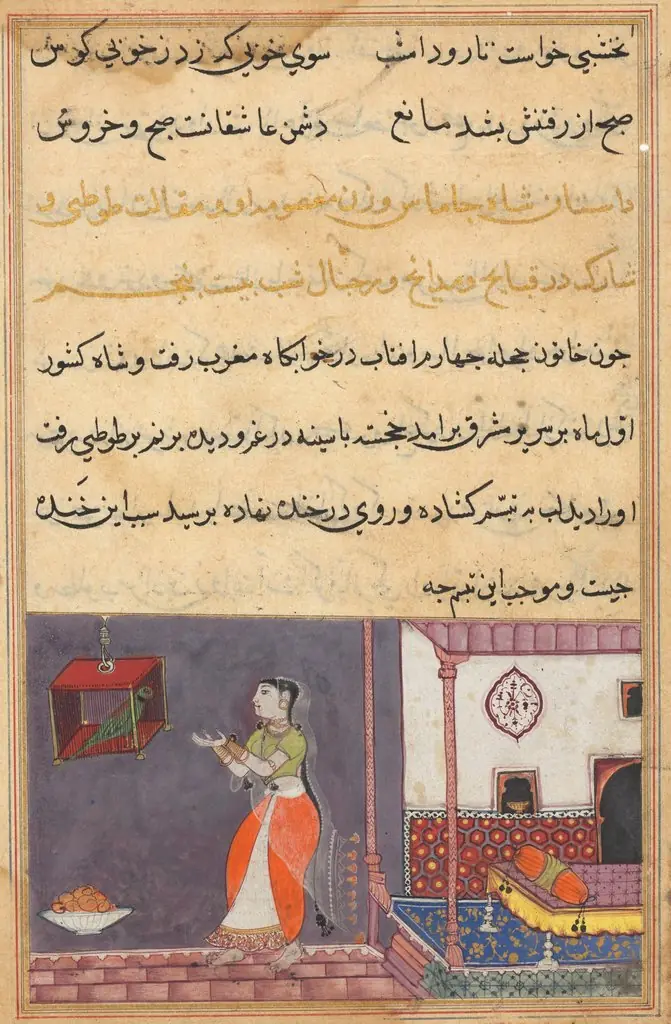
- The Parrot Addresses Khujasta at the Beginning of the Twenty-fifth Night, from a Tuti-nama (Tales of a Parrot)
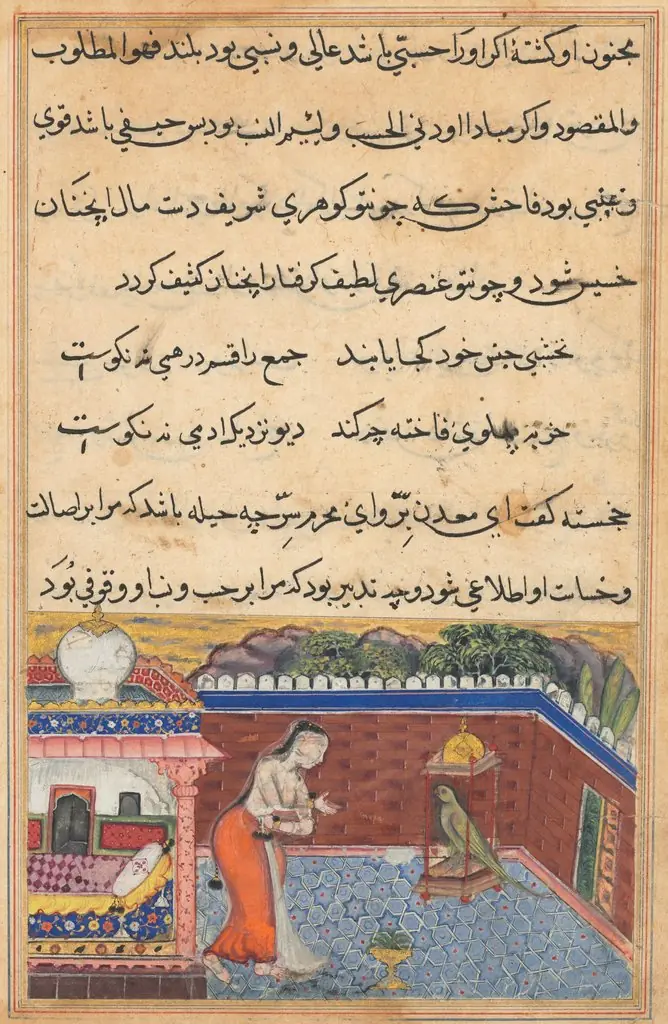 The parrot addresses Khujasta at the beginning of the thirty-first night, from a Tuti-nama (Tales of a Parrot)
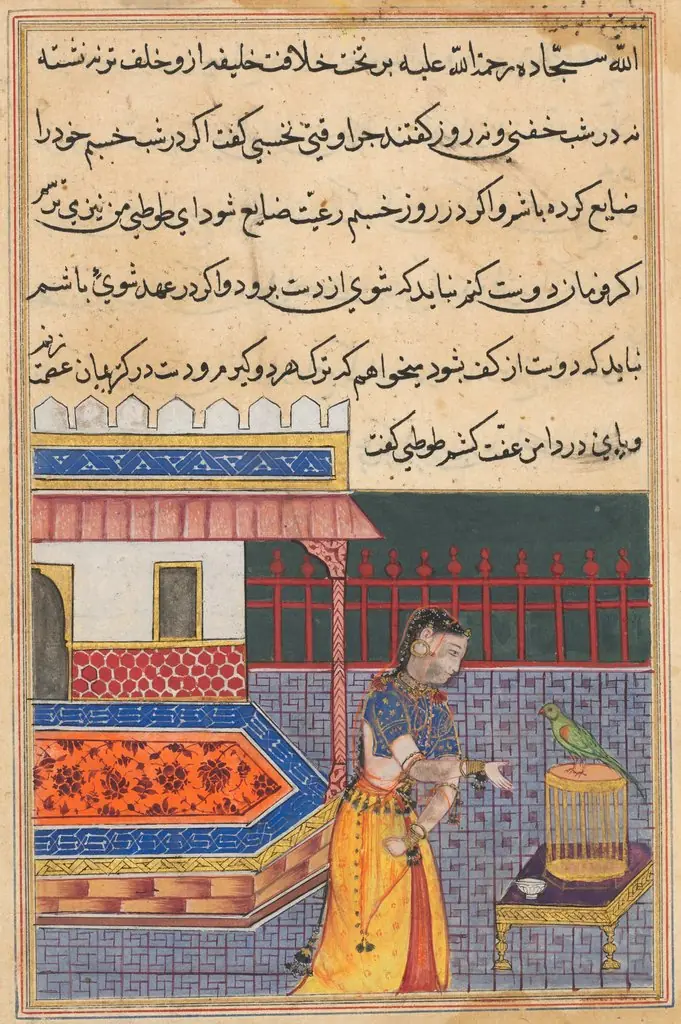 The parrot addresses Khujasta at the beginning of the forty-first night, from a Tuti-nama (Tales of a Parrot): Forty-first Night
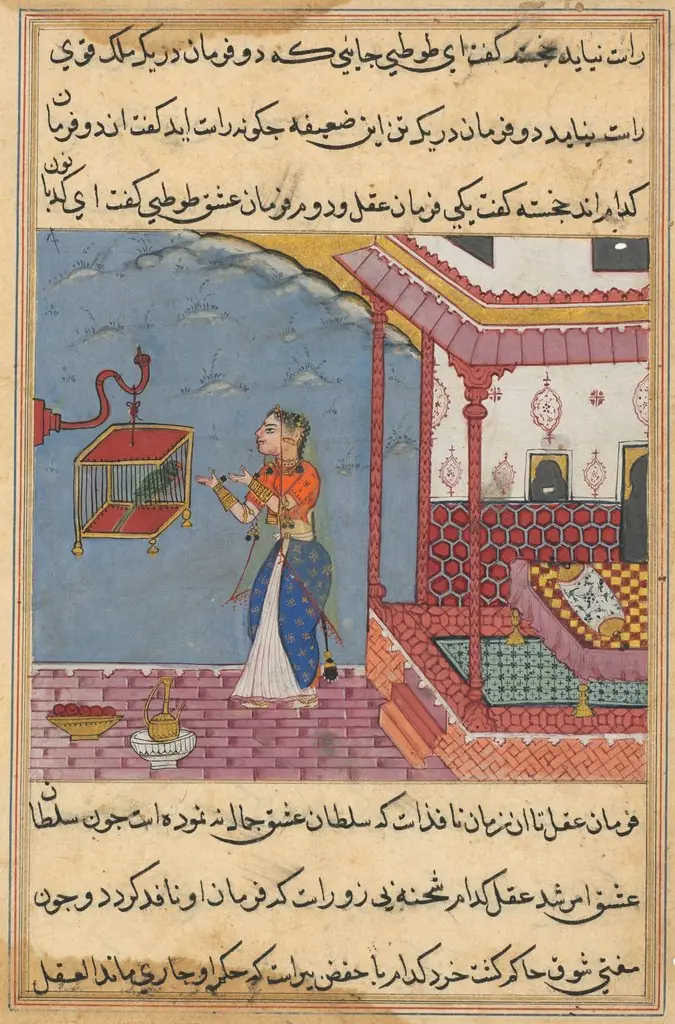 The Parrot Addresses Khujasta at the Beginning of the Twenty-Fourth Night, from a Tuti-nama (Tales of a Parrot)
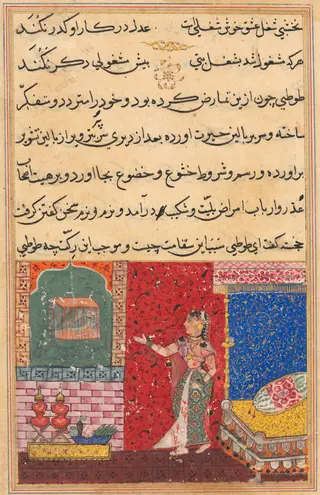 The Parrot Addresses Khujasta at the Beginning of the Fifteenth Night, from a Tuti-nama (Tales of a Parrot)
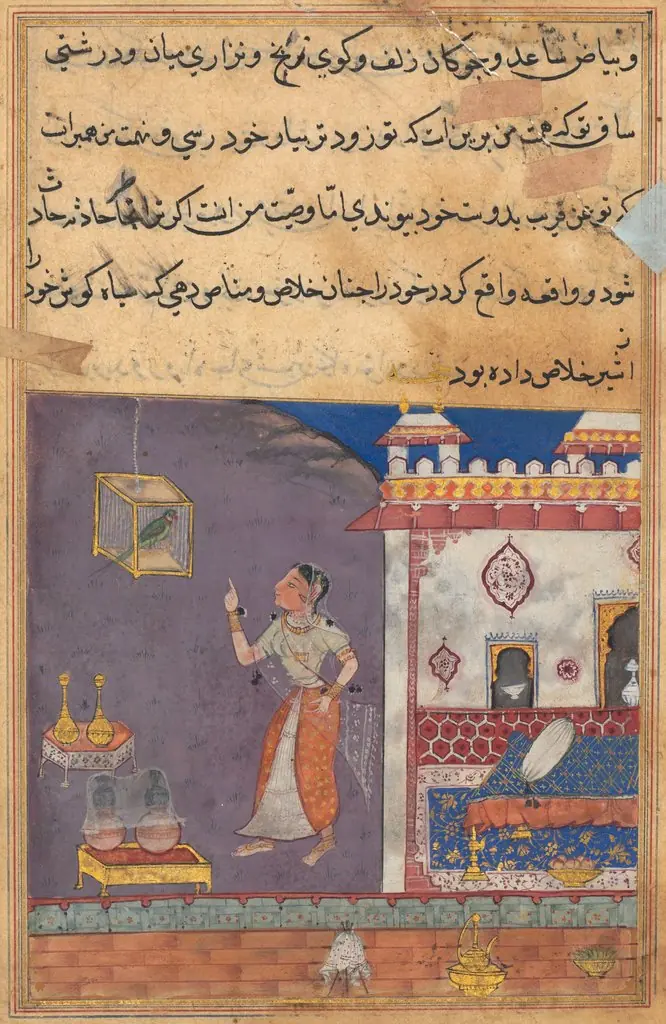 The Parrot Addresses Khujasta at the Beginning of the Twenty-ninth Night, from a Tuti-nama (Tales of a Parrot)
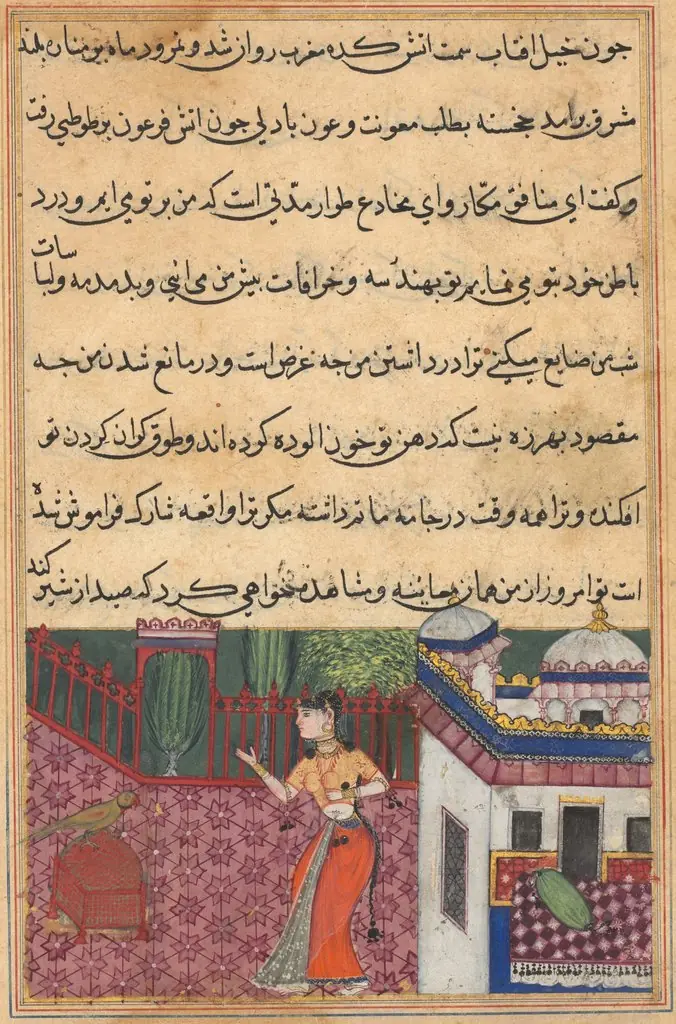 The parrot addresses Khujasta at the beginning of the thirty-third night, from a Tuti-nama (Tales of a Parrot)
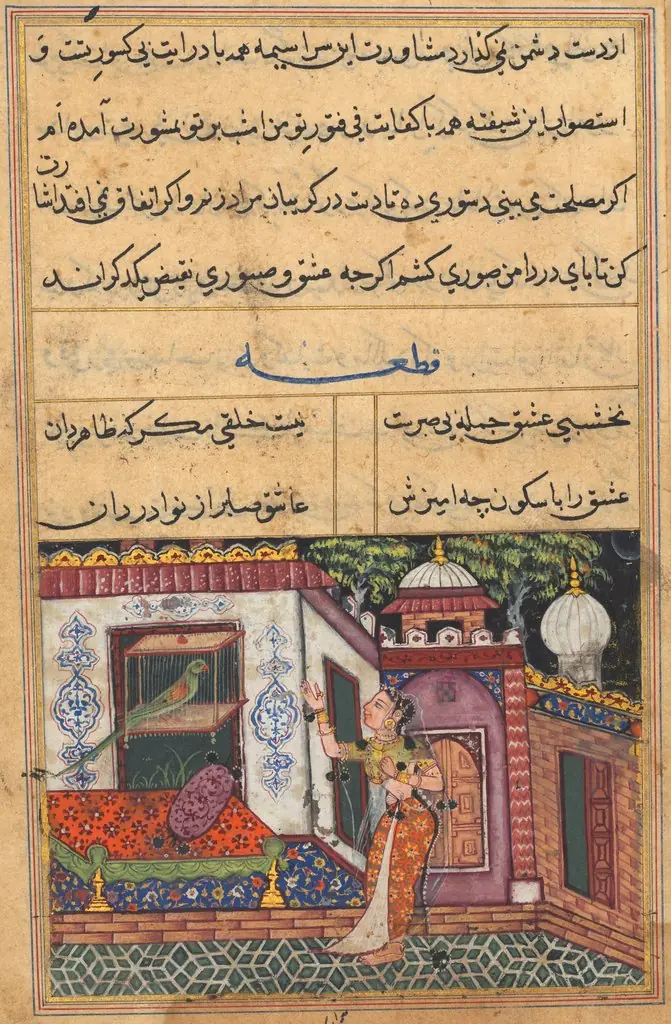 The Parrot Addresses Khujasta at the Beginning of the Eleventh Night, from a Tuti-nama (Tales of a Parrot)
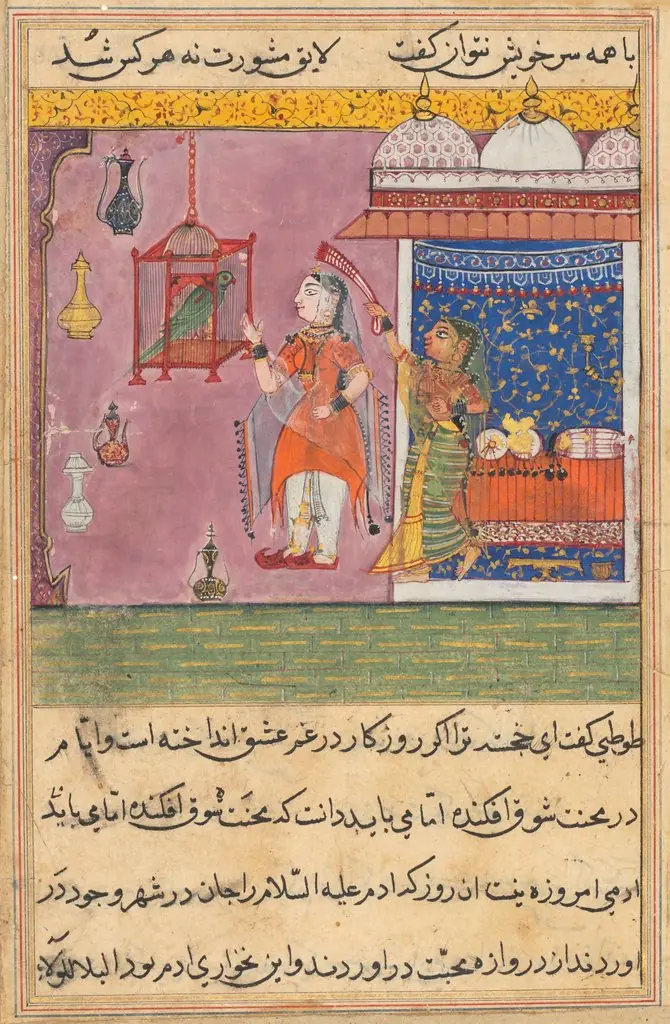 The Parrot Addresses Khujasta at the Beginning of the Nineteenth Night, from a Tuti-nama (Tales of a Parrot)
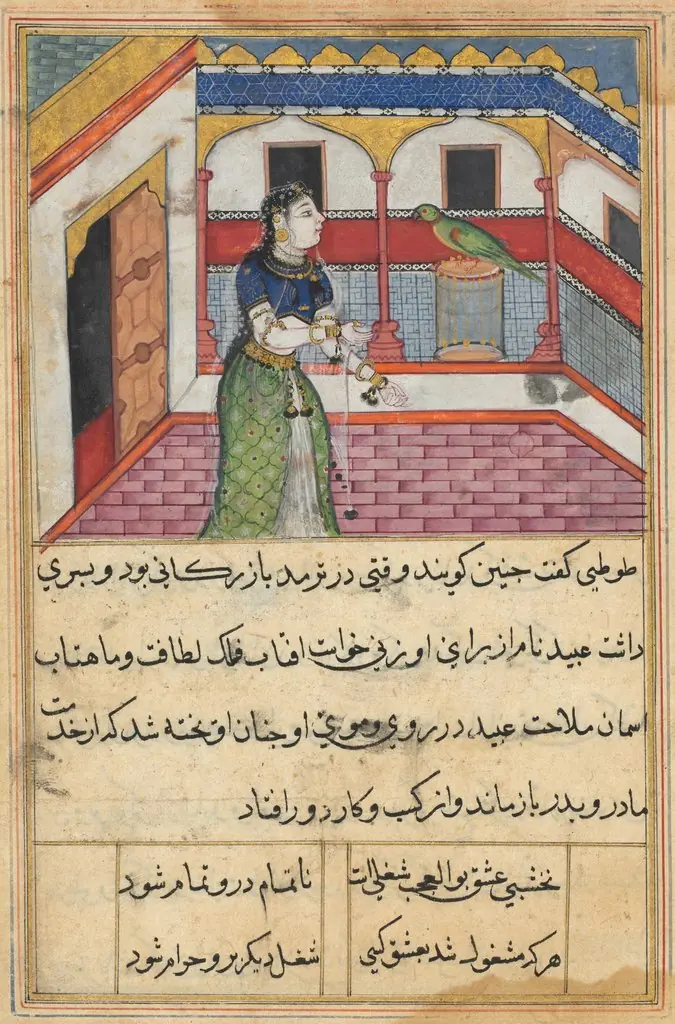 The parrot addresses Khujasta at the beginning of the forty-second night, from a Tuti-nama (Tales of a Parrot)
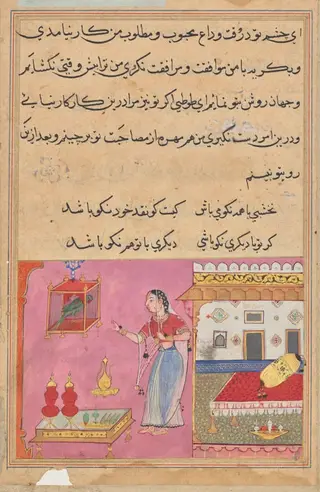 The Parrot Addresses Khujasta at the Beginning of the Twentieth Night, from a Tuti-nama (Tales of a Parrot)
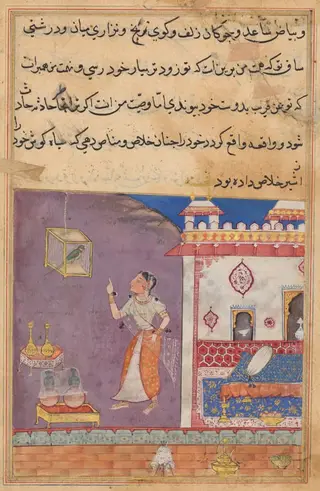 The Parrot Addresses Khujasta at the Beginning of the Twenty-ninth Night, from a Tuti-nama (Tales of a Parrot)
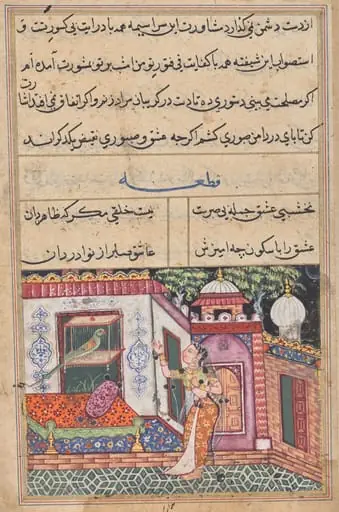 The Parrot Addresses Khujasta at the Beginning of the Eleventh Night, from a Tuti-nama (Tales of a Parrot)
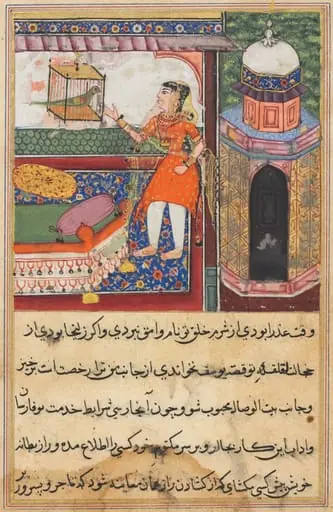 The Parrot Addresses Khujasta at the Beginning of the Tenth Night, from a Tuti-nama (Tales of a Parrot)