Artwork
The parrot addresses Khujasta at the beginning of the forty-first night, from a Tuti-nama (Tales of a Parrot): Forty-first Night
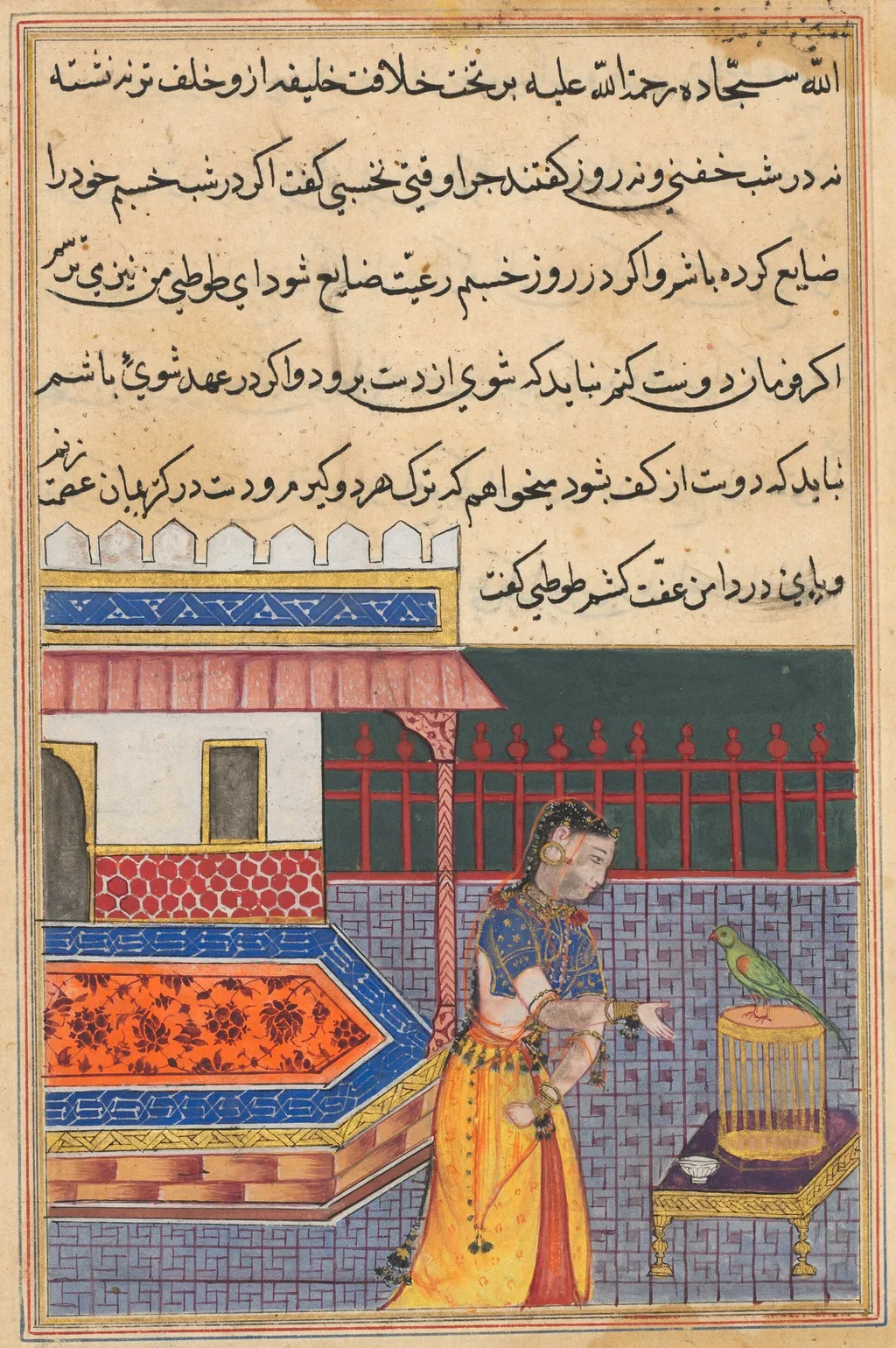
The parrot addresses Khujasta at the beginning of the forty-first night, from a Tuti-nama (Tales of a Parrot): Forty-first Night is an unspecified painting. It dates from 1560 and is held in the collection of the Cleveland Museum of Art. The work portrays a seated woman in a blue blouse and yellow skirt, adorned with jewelry, standing before an architectural façade.
About this work
Subject & Meaning
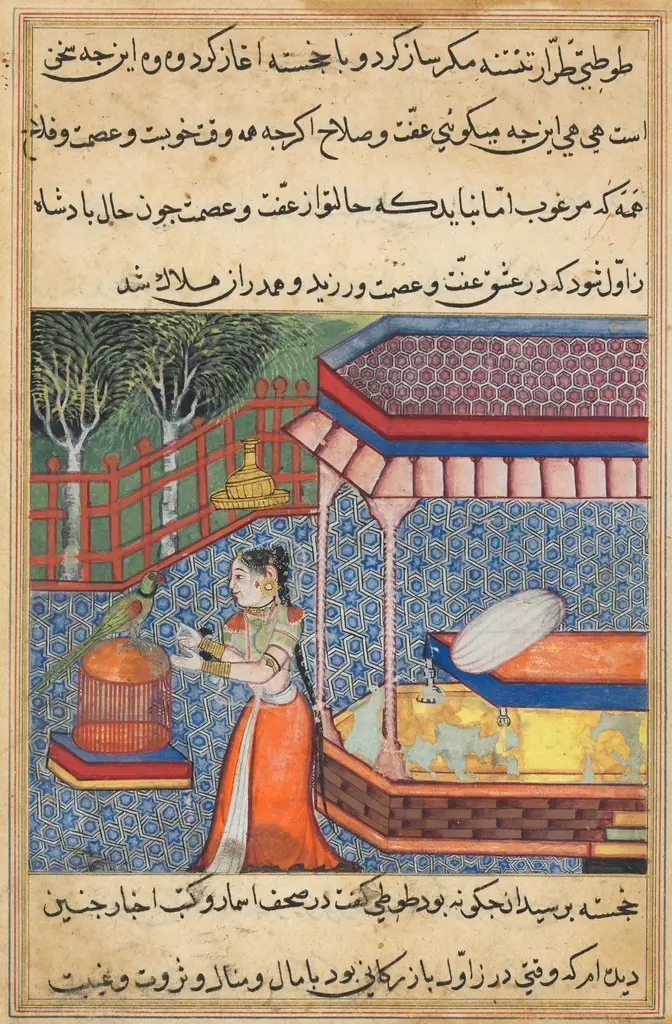
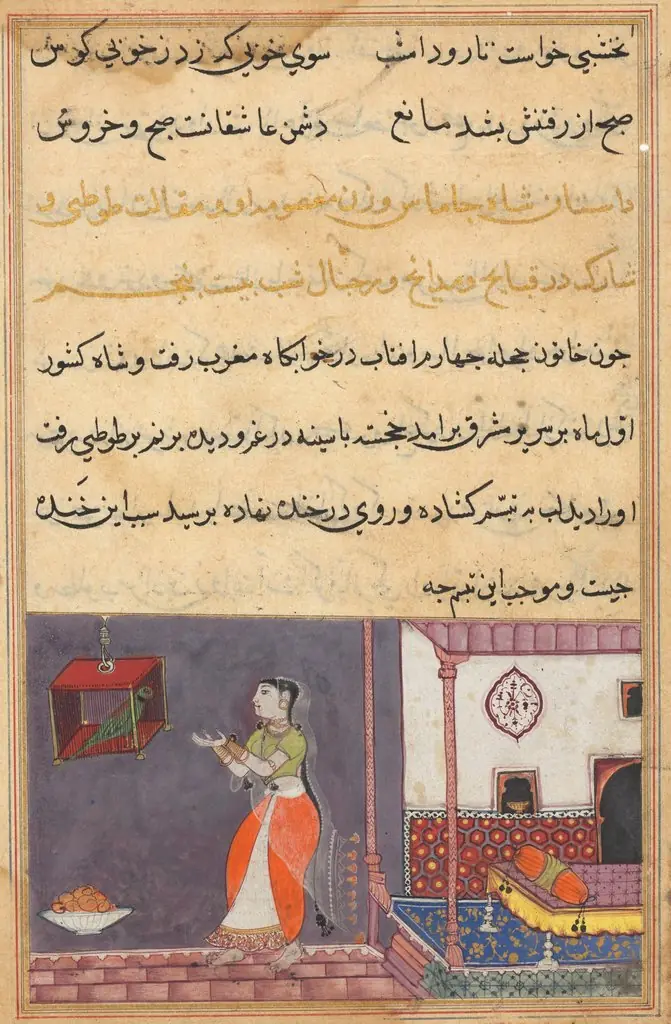
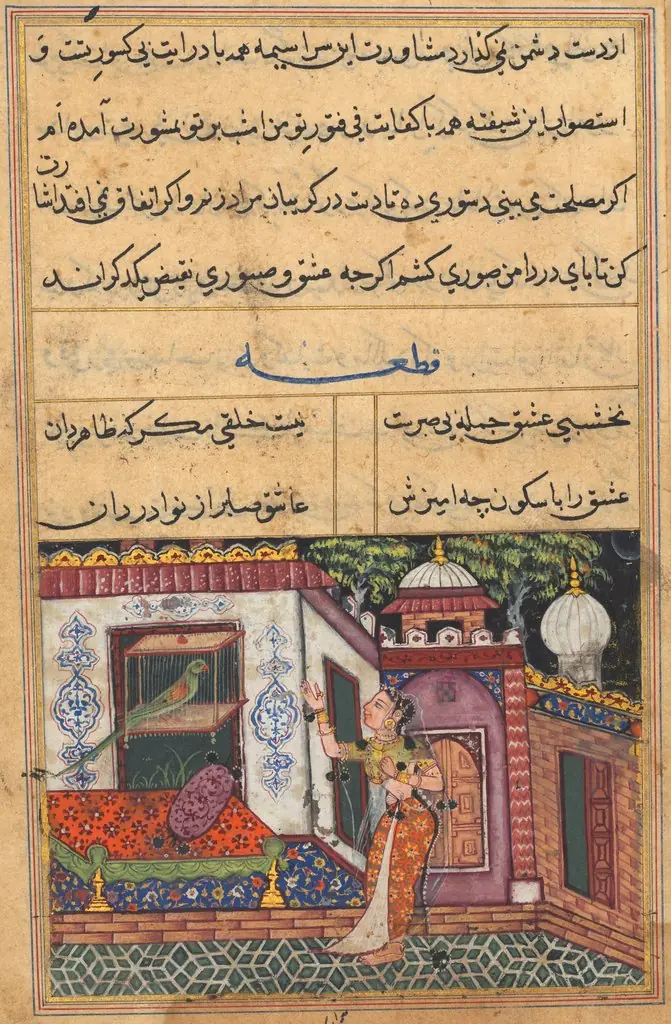
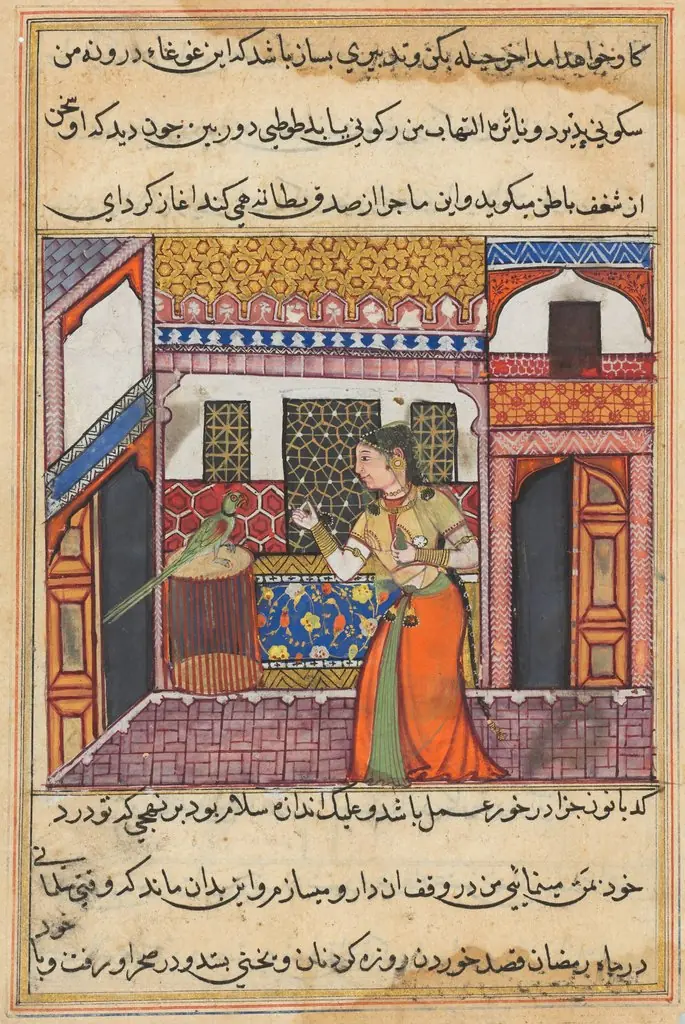
The painting portrays a parrot speaking to the lady Khujasta at the opening of the forty-first night of the Tuti-nama, a narrative frame in which the bird recounts moral tales. In the Persian miniature tradition the parrot functions as a didactic messenger, symbolising eloquent counsel and the transmission of wisdom, while Khujasta embodies the receptive listener. The scene thus illustrates the literary device of a nightly parrot story and underscores themes of guidance and moral instruction within the Mughal artistic milieu.
Context
a, and reflects the Indo-Persian sensibilities of early Mughal manuscript illumination.
The painting depicting the parrot addressing Khujasta at the start of the forty-first night in the Tuti-nama is a 1560 miniature in the Mughal artistic tradition. It forms part of a Cleveland Museum of Art manuscript, catalogued as 1962.279.263.a, and reflects the Indo-Persian sensibilities of early Mughal manuscript illumination. The work is studied as an exemplar of sixteenth-century Persianate narrative painting in which animal protagonists convey moral tales, situating it within broader scholarship on manuscript production under Akbar's patronage.
It illustrates the transmission of Persian and Safavid artistic motifs into the North Indian courts, informing analyses of cross-cultural visual storytelling in early modern South Asia.
Overview
The work portrays a seated woman in a blue blouse and yellow skirt, adorned with jewelry, standing before an architectural façade. A caged parrot perches nearby, its presence central to the composition. The background features a wall decorated in red and blue patterns, punctuated by a window and a doorway, creating a refined interior setting.
Technique & Style
Executed in a detailed, figurative manner, the artist employs a balanced palette of cool blues and warm yellows for the figure, contrasting with the vivid red‑blue motifs of the wall. Fine brushwork renders the jewelry and the parrot’s feathers, while the architectural elements are rendered with linear precision, underscoring a decorative yet realistic approach.
History & Provenance
The piece is catalogued as a painting titled “The parrot addresses Khujasta at the beginning of the forty‑first night, from a Tuti‑nama (Tales of a Parrot): Forty‑first Night.” Its origins trace to a tradition of illustrating Persian literary manuscripts, though specific details of its creation date, artist, and ownership history remain undocumented in the available record.
Artist & collection

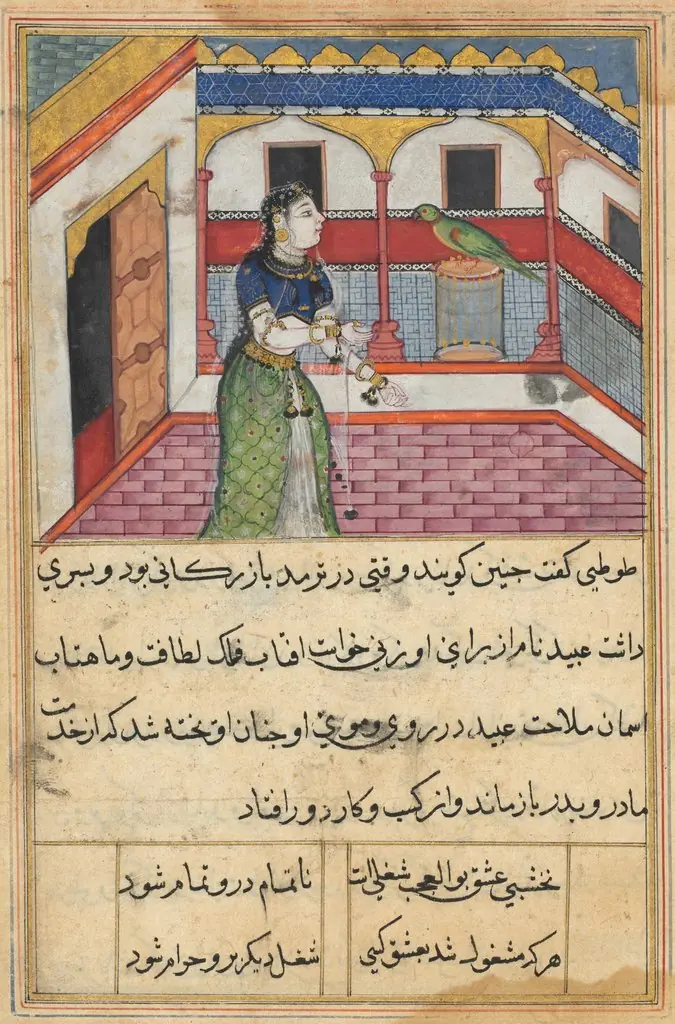
- The parrot addresses Khujasta at the beginning of the forty-second night, from a Tuti-nama (Tales of a Parrot)
 The parrot addresses Khujasta at the beginning of the forty-first night, from a Tuti-nama (Tales of a Parrot): Forty-first Night
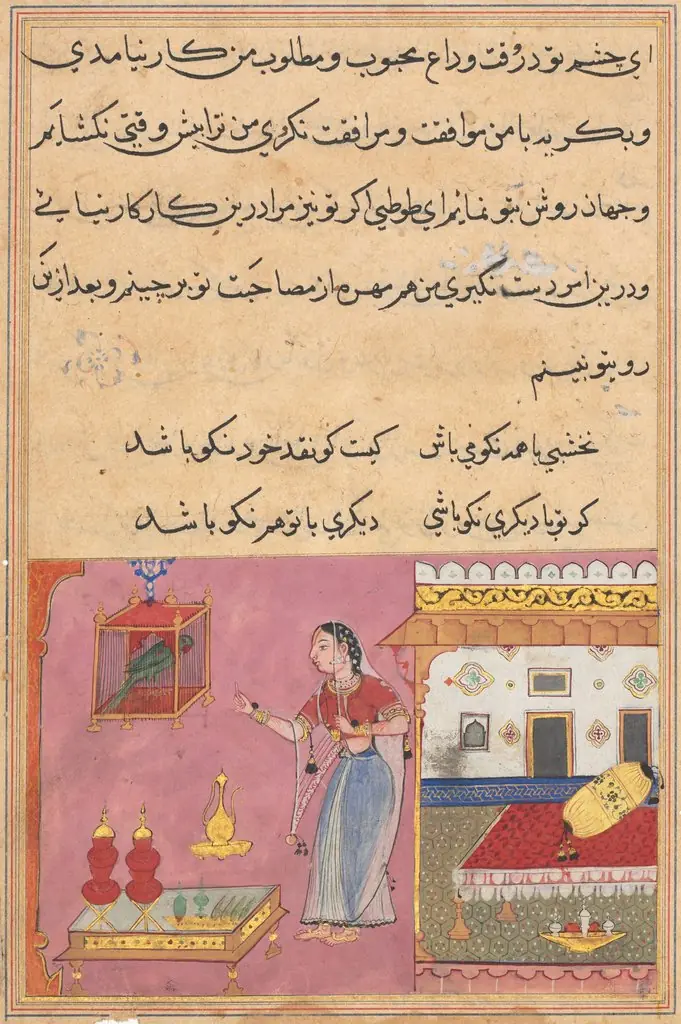 The Parrot Addresses Khujasta at the Beginning of the Twentieth Night, from a Tuti-nama (Tales of a Parrot)
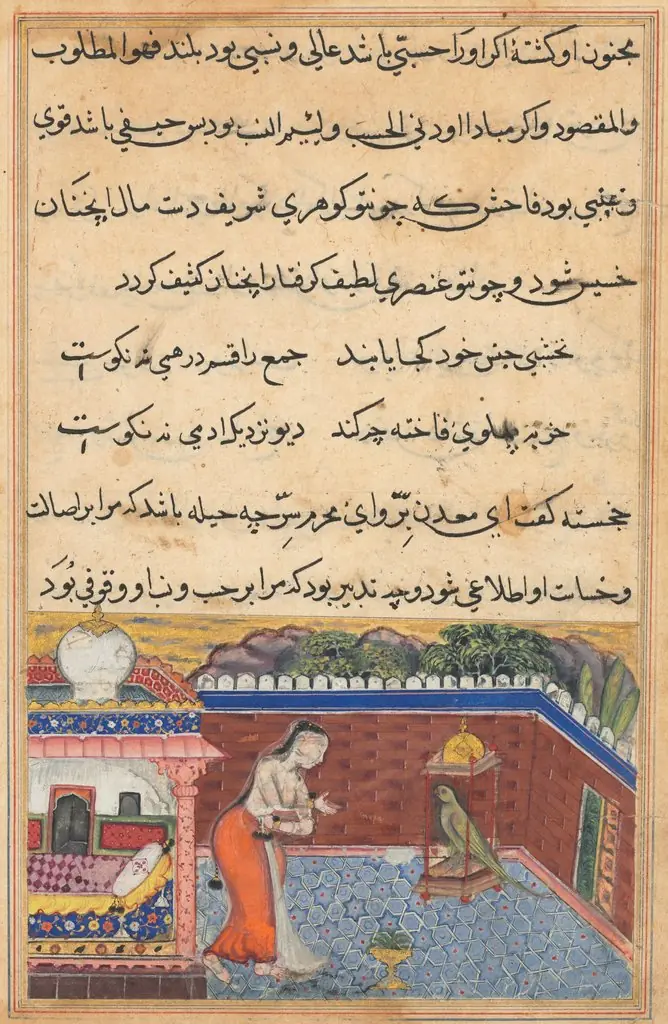 The parrot addresses Khujasta at the beginning of the thirty-first night, from a Tuti-nama (Tales of a Parrot)
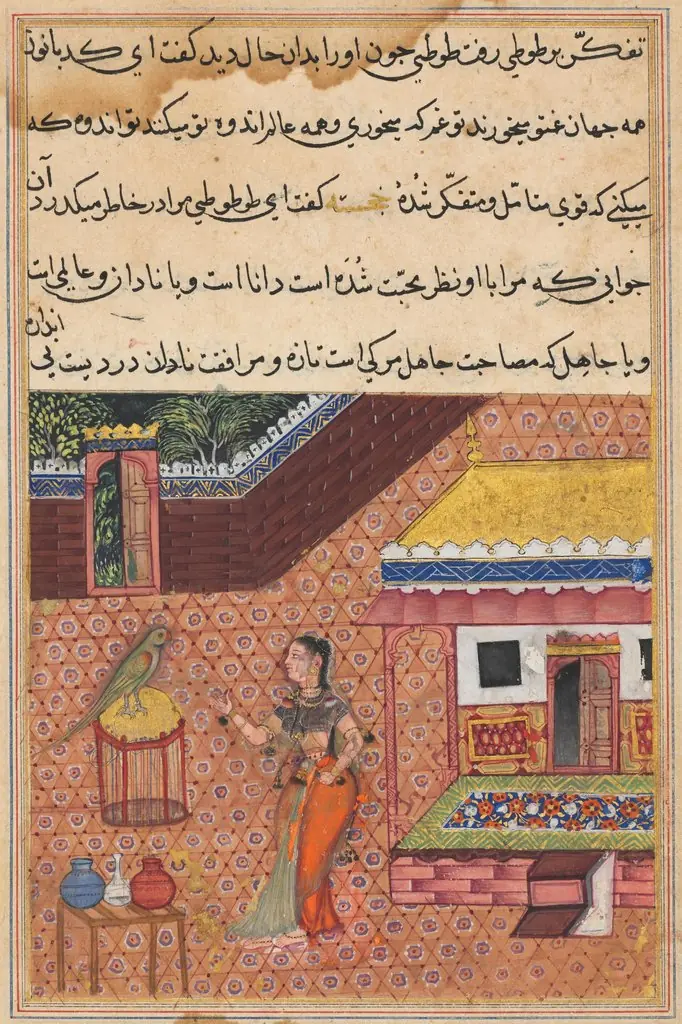 The parrot addresses Khujasta at the beginning of the thirty-fourth night, from a Tuti-nama (Tales of a Parrot)
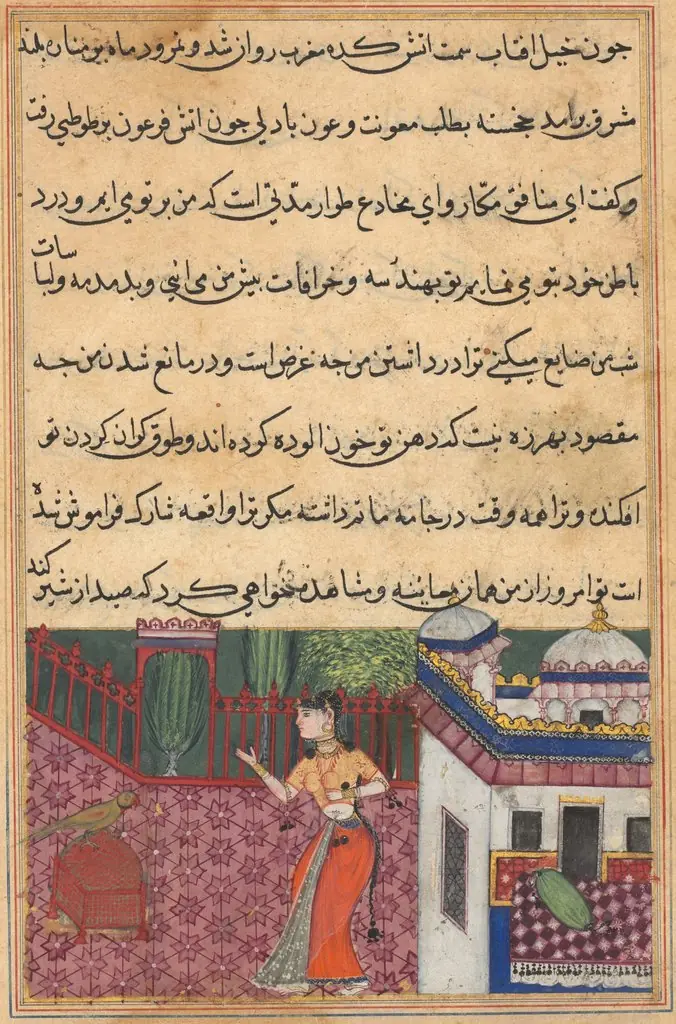 The parrot addresses Khujasta at the beginning of the thirty-third night, from a Tuti-nama (Tales of a Parrot)
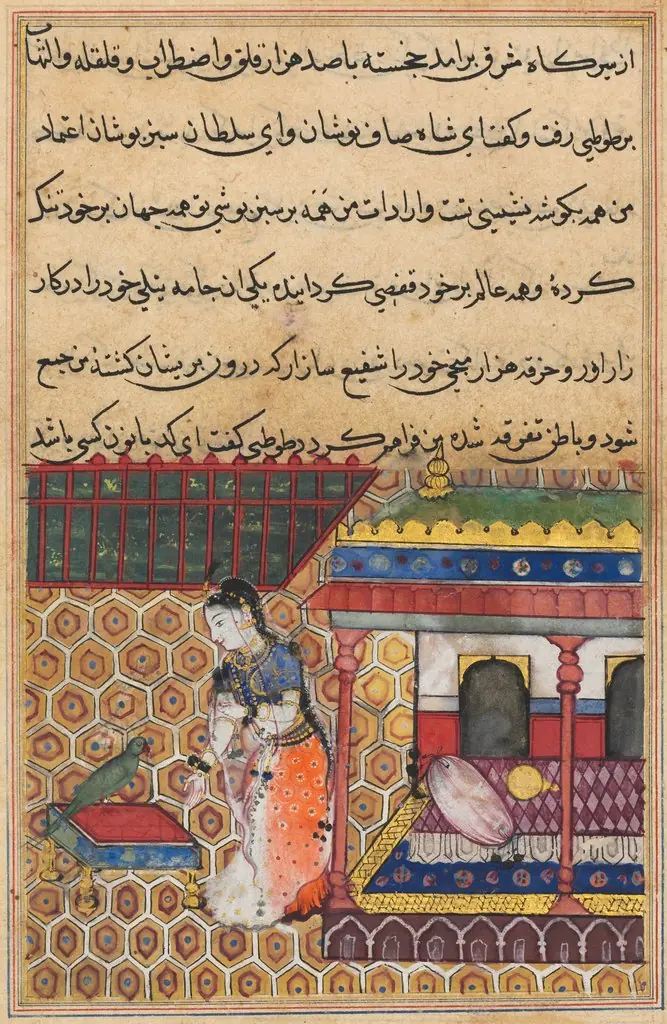 The parrot addresses Khujasta at the beginning of the thirty-eighth night, from a Tuti-nama (Tales of a Parrot)
 The parrot addresses Khujasta at the beginning of the thirty-sixth night, from a Tuti-nama (Tales of a Parrot)
 The Parrot Addresses Khujasta at the Beginning of the Twenty-fifth Night, from a Tuti-nama (Tales of a Parrot)
 The Parrot Addresses Khujasta at the Beginning of the Eleventh Night, from a Tuti-nama (Tales of a Parrot)
 The parrot addresses Khujasta at the beginning of the forty-third night, from a Tuti-nama (Tales of a Parrot)
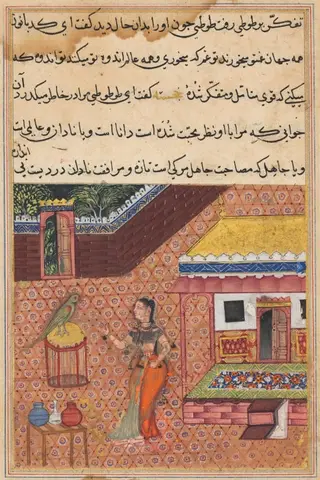 The parrot addresses Khujasta at the beginning of the thirty-fourth night, from a Tuti-nama (Tales of a Parrot)
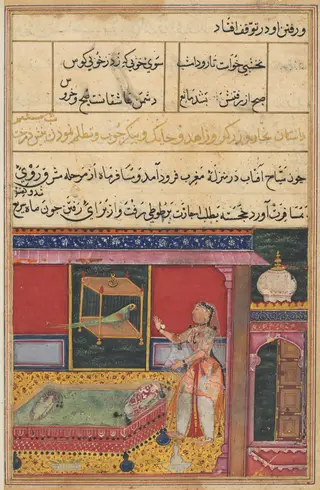 The Parrot Addresses Khujasta at the Beginning of the Sixth Night, from a Tuti-nama (Tales of a Parrot)
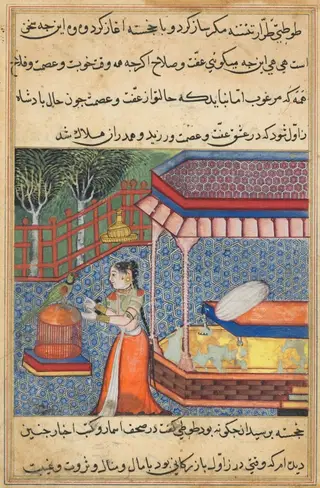 The parrot addresses Khujasta at the beginning of the thirty-sixth night, from a Tuti-nama (Tales of a Parrot)
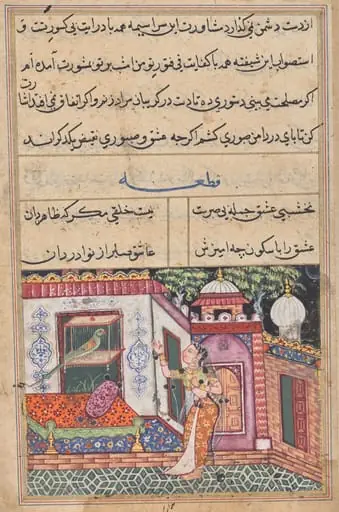 The Parrot Addresses Khujasta at the Beginning of the Eleventh Night, from a Tuti-nama (Tales of a Parrot)